
Daniel had 340 contacts sitting in his contractor CRM. He had accumulated them over three years: homeowners who requested quotes, commercial property managers who enquired during slow seasons, referrals from past clients who never quite converted. He called them dead leads. He hadn't touched most of them in six to eighteen months.
On a slow Tuesday in February, his business partner suggested they run a re-engagement campaign through their new AI platform before spending another dollar on paid advertising. They were skeptical. These were old contacts. Cold contacts. People who had already said no, or more accurately, people who had simply stopped responding.
Within three weeks, eleven of those 340 contacts had booked jobs. Two of them were large commercial repaint contracts. The total revenue from that single campaign was $61,000. No new advertising spend. No cold outreach to strangers. Just a smarter conversation with people who already knew who they were.
That is the hidden revenue problem sitting inside almost every contractor CRM right now, and AI is finally making it possible to unlock it systematically.
Table of Contents
Why Old Leads Are Not Dead Leads
The Real Reason Old Leads Go Cold in Contractor CRMs
How AI Recovers Old Contractor Leads: The Core Mechanisms
Setting Up Your AI Re-engagement System: A Practical Starting Point
The Hidden Revenue Calculation Every Contractor Should Run
Common Mistakes When Trying to Revive Cold Leads in Construction
Why AI Is the Missing Piece for Hidden CRM Revenue
About fatcamel.ai
Frequently Asked Questions
References
1. Why Old Leads Are Not Dead Leads
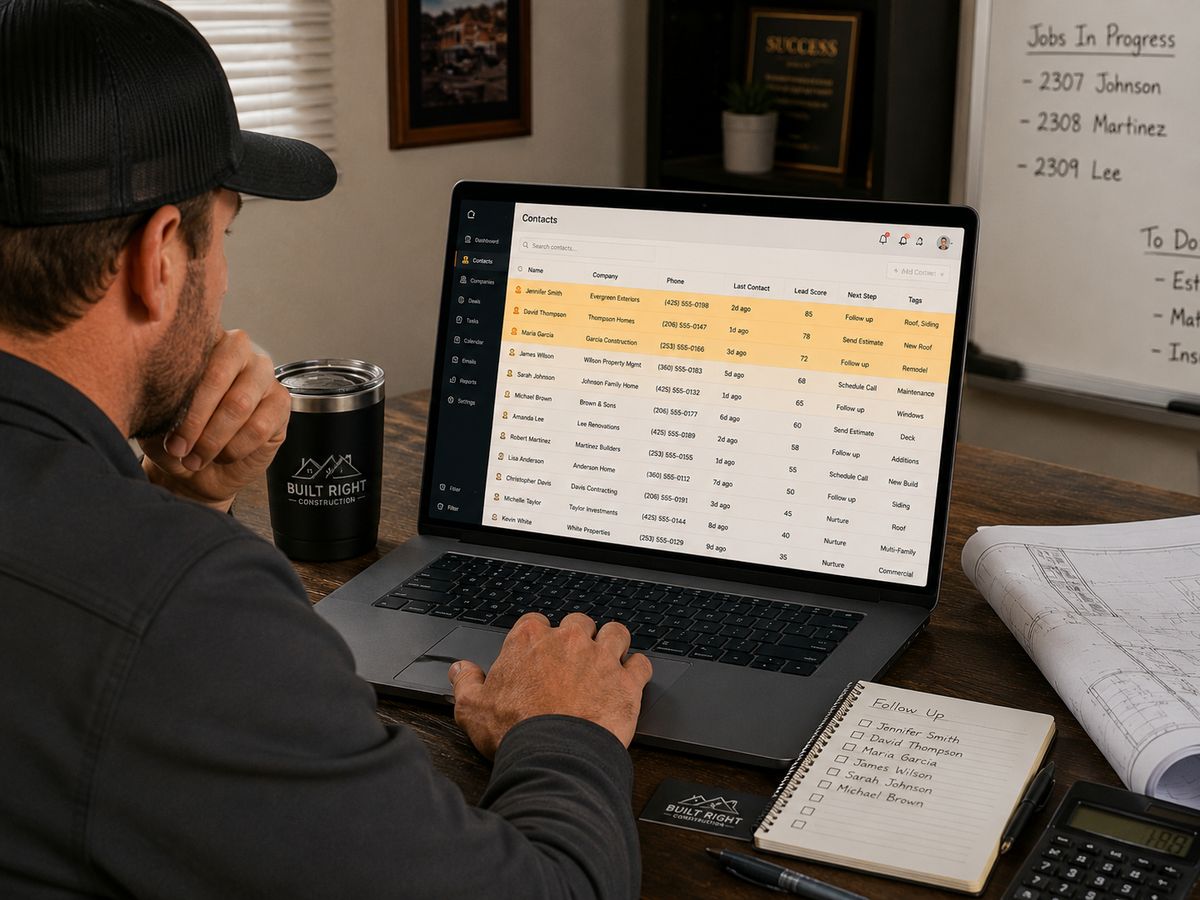
The construction and contracting industry has a persistent myth: if a lead did not convert within a few weeks of first contact, it is gone. Move on. Spend money finding new ones.
This thinking is expensive. Acquiring a new lead costs anywhere from five to twenty-five times more than re-engaging someone who already expressed interest in your business. A homeowner who requested a painting quote eight months ago and went quiet did not necessarily choose a competitor. They may have run into a budget delay, a family situation, a renovation that got pushed back, or simply got busy and forgot to follow up. Life intervenes. Genuinely interested people often remain genuinely interested, just dormant.
The problem has never been the quality of old leads. It has been the capacity to follow up with them intelligently, at scale, at the right moment, with the right message. That is precisely what AI changes.
2. The Real Reason Old Leads Go Cold in Contractor CRMs
Before understanding how to recover old contractor leads, it helps to understand why they go cold in the first place. In most contracting businesses, the CRM is used as a storage system rather than a working tool. Leads get entered during busy periods, receive one or two follow-up attempts, and then get quietly abandoned when the next wave of active jobs demands attention.
There is no system for monitoring lead temperature over time. No trigger fires when a contact has been inactive for 90 days. There is no personalized re-engagement sequence that goes out automatically when spring arrives, and homeowners start thinking about exterior projects. The follow-up depends entirely on a human remembering to do it, and humans running busy contracting operations rarely have the bandwidth to systematically work through a list of 300 old contacts while managing active crews.
This is not a discipline problem. It is a systems problem. And system problems are exactly what AI is designed to solve.
Read More: AI Receptionist for Painting Companies: Never Miss a Painting Lead Again
3. How AI Recovers Old Contractor Leads: The Core Mechanisms
When AI is applied to a dormant CRM, it works across several layers simultaneously. Understanding each one helps you see why this approach produces results that manual re-engagement simply cannot match.
Lead Scoring and Prioritization
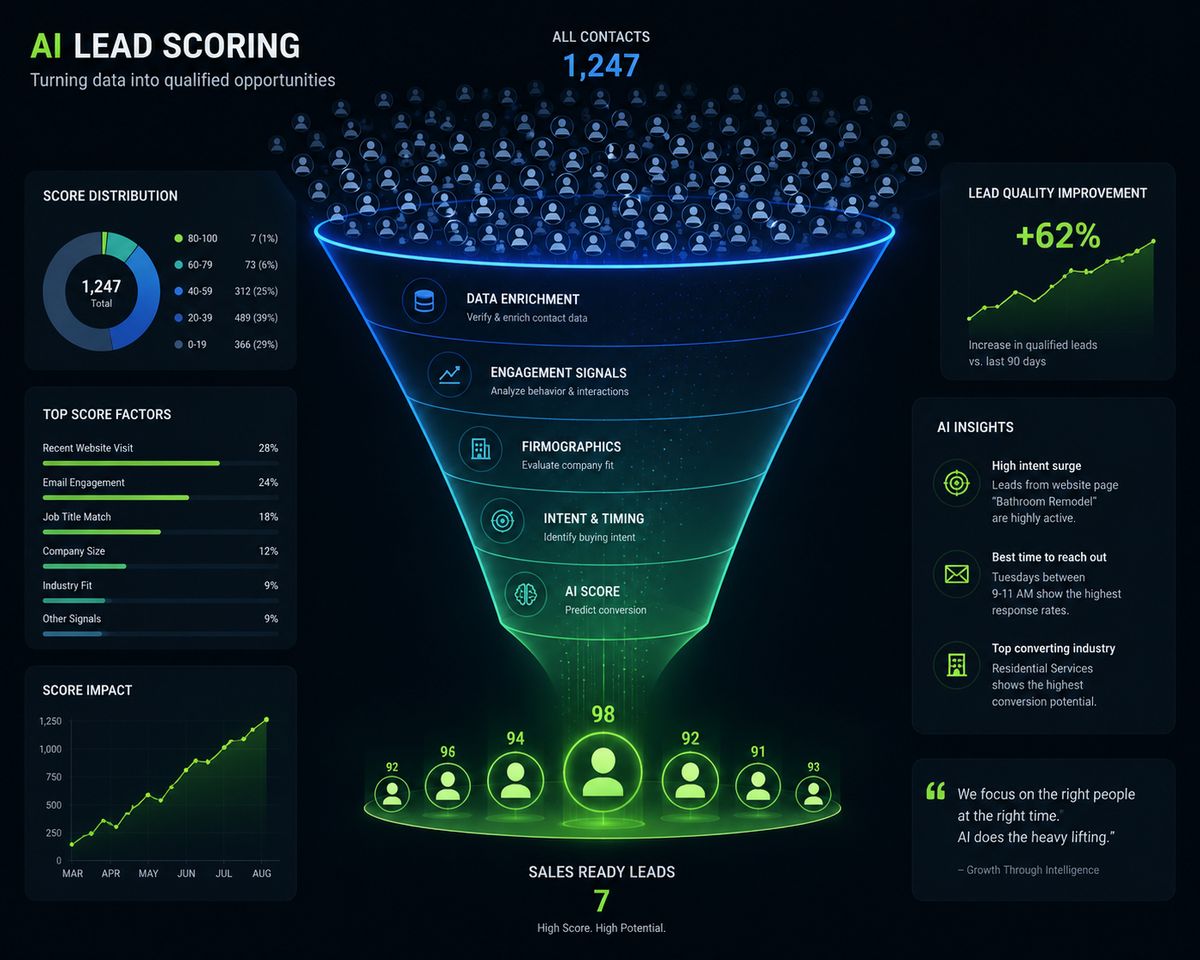
Not all cold leads are equally worth pursuing. AI tools can analyze your historical data and score dormant contacts based on factors like job size, how far they progressed in your original sales process, how long ago they enquired, their location relative to your current active areas, and any interactions they had with your emails or website since going quiet. This means instead of working through 300 contacts in random order, you start with the 40 most likely to convert. Your energy goes where the probability is highest.
Personalized Re-engagement Sequences
Generic "just checking in" emails do not work on cold leads. They feel like exactly what they are: a mass email blast from a contractor who ran out of new leads. AI-powered outreach is different because it personalizes communication at scale. It references the specific job type the contact originally enquired about, acknowledges the time that has passed without making it awkward, and offers something genuinely useful: an updated quote, a seasonal promotion, or a relevant piece of advice about their specific project type.
The message a homeowner who enquired about interior painting receives is different from the one going to a property manager who asked about a multi-unit exterior job. Personalization at this level, across hundreds of contacts, is only possible with AI doing the work.
Timing Intelligence
One of the most underestimated factors in lead re-engagement is timing. AI platforms can analyze patterns in your conversion data to identify when re-engaged leads are most likely to respond. They factor in seasonality, local weather patterns, and even the day of the week and time of day that generates the best response rates for your specific audience. A homeowner is more likely to engage with an exterior painting message in late March than in November. A commercial property manager is more likely to respond on a Tuesday morning than on a Friday afternoon. AI makes these calls automatically.
Behavioral Trigger Responses
When a dormant lead opens your re-engagement email, visits your website, or clicks a link in your message, that is a signal. A human-managed system might not catch it for days. An AI-powered system responds within minutes, automatically sending a timely follow-up that strikes while interest is warm. This kind of behavioral triggering transforms passive re-engagement into an active, responsive conversation.
Image Prompt: An abstract visualization of AI lead scoring: a funnel graphic with hundreds of small contact icons entering the top and a smaller set of glowing green highlighted contacts emerging at the bottom, modern data dashboard aesthetic, dark background with neon accents.
Read More: How to Automate Your Painting Business (Step-by-Step System)
4. Setting Up Your AI Re-engagement System: A Practical Starting Point
You do not need to rebuild your entire operation to start recovering old contractor leads. The process can be straightforward if you approach it in stages.
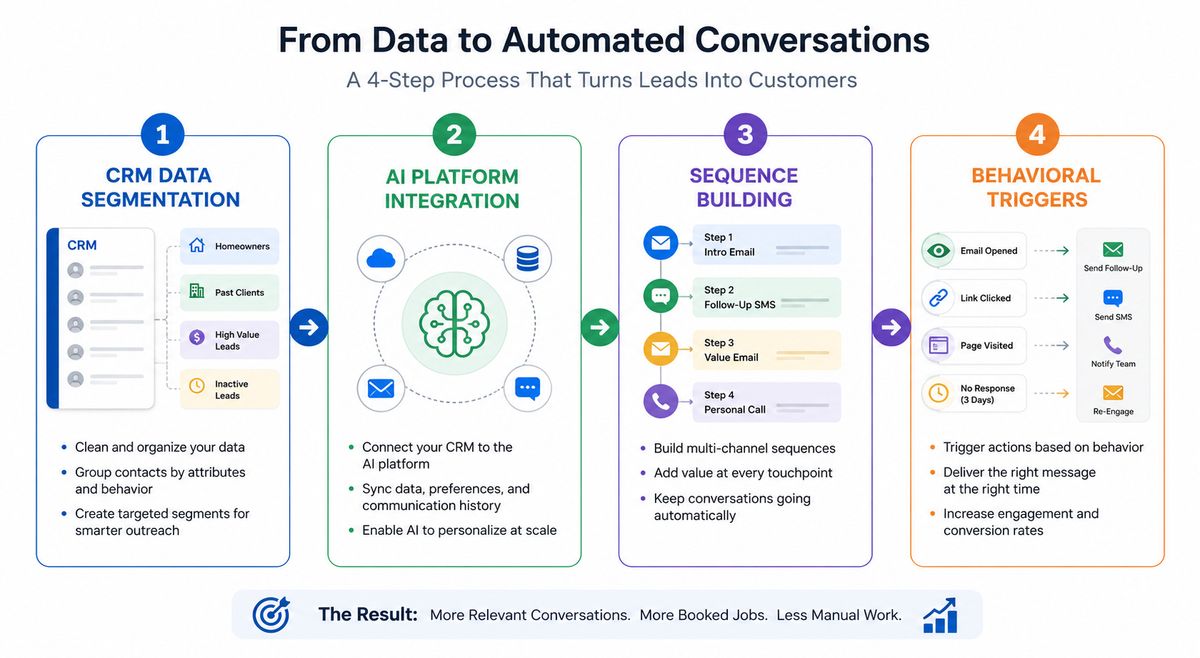
Start by cleaning your CRM data. Pull every lead that has had no activity in the past 90 days and organize them into broad categories: residential enquiries, commercial enquiries, referrals that never converted, and quote requests that went quiet after the proposal stage. This segmentation matters because each group needs a different re-engagement approach.
Next, connect your CRM to an AI workflow platform. Tools built on automation frameworks similar to those powering the top AI repositories in 2026 can integrate with most contractor CRM systems and pull your segmented lists into intelligent outreach sequences. Platforms like fatcamel.ai are designed to make this integration accessible without requiring technical expertise, connecting your existing data to AI-powered workflows that can run continuously in the background.
Then build your re-engagement sequences. Three to five touchpoints over two to three weeks tend to perform well for contracting businesses. The first message acknowledges the original enquiry and offers genuine value. The second provides social proof through a recent project case study or a cluster of strong reviews. The third creates a soft sense of urgency through a seasonal hook or a limited availability window. Each message should be short, specific, and written in the voice of a contractor rather than a marketing department.
Finally, set your behavioral triggers. When someone opens, clicks, or responds, the system should immediately route that contact to active follow-up, whether that means an automated call scheduling prompt, a notification to your salesperson, or a direct calendar booking link.
5. The Hidden Revenue Calculation Every Contractor Should Run
Here is a simple exercise worth doing with your own CRM data before spending another dollar on lead generation.
Count the number of dormant leads in your system that are more than 60 days old. Multiply that number by your average job value. Now multiply that result by a conservative re-engagement conversion rate of 3 to 5 percent, which is what most contracting businesses see with a properly structured AI re-engagement campaign.
For a contractor with 200 old leads and an average job value of $4,500, a 4 percent conversion rate produces $36,000 in recovered revenue. That is not revenue from new advertising. That is revenue from people who have already raised their hand and expressed interest in hiring you.
For a contractor sitting on 500 dormant leads with an average job value of $8,000, even a 3 percent conversion rate produces $120,000 in recovered pipeline. The math is consistently surprising to contractors who run it for the first time, because the leads were always there. The system to activate them simply was not.
Most contractors who complete this calculation immediately understand why re-engagement deserves to sit at the top of their growth strategy rather than the bottom. New lead generation will always have its place, but it should never be the first option when there is a recoverable pipeline sitting untouched in your existing system.
6. Common Mistakes When Trying to Revive Cold Leads in Construction
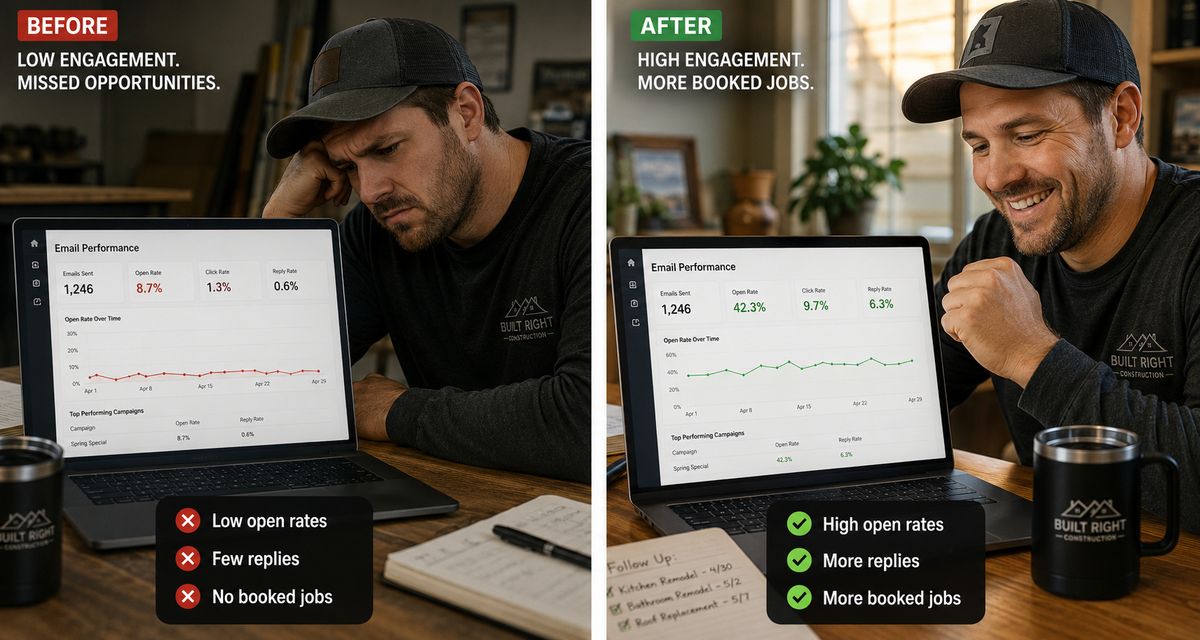
Several patterns consistently undermine re-engagement efforts, and being aware of them saves time and protects your sender reputation.
Reaching out to everyone at once is the most common mistake. Blasting your entire dormant list with a single email on the same day signals low quality to email providers and produces poor results across the board. Stagger your outreach and let the AI manage pacing intelligently over days and weeks rather than hours.
Being too apologetic about the gap in communication is another consistent pitfall. Acknowledging the time that has passed is fine and can even build trust, but excessive apology draws attention to the silence in a way that undermines professional confidence. A value-forward re-engagement message performs better every time than one that opens with a lengthy explanation.
Giving up after one or two touches is where most manual re-engagement efforts ultimately fail. Research consistently shows that the majority of re-engaged leads respond between the third and fifth touchpoints. AI-powered sequences run the full course automatically, without anyone having to remember to send the fourth email while managing an active job schedule.
Sending the same message to every segment ignores the reality that a homeowner considering a bedroom refresh and a facilities manager overseeing a commercial portfolio have fundamentally different concerns, timelines, and motivations. The more specific and relevant your outreach is to each contact's original enquiry, the higher your response rate will be. Segment, personalize, and let AI do the heavy lifting of making each message feel individual rather than broadcast.
Read more: Why Fast Response Wins Painting Jobs (And How to Automate It in 2026)
7. Why AI Is the Missing Piece for Hidden CRM Revenue
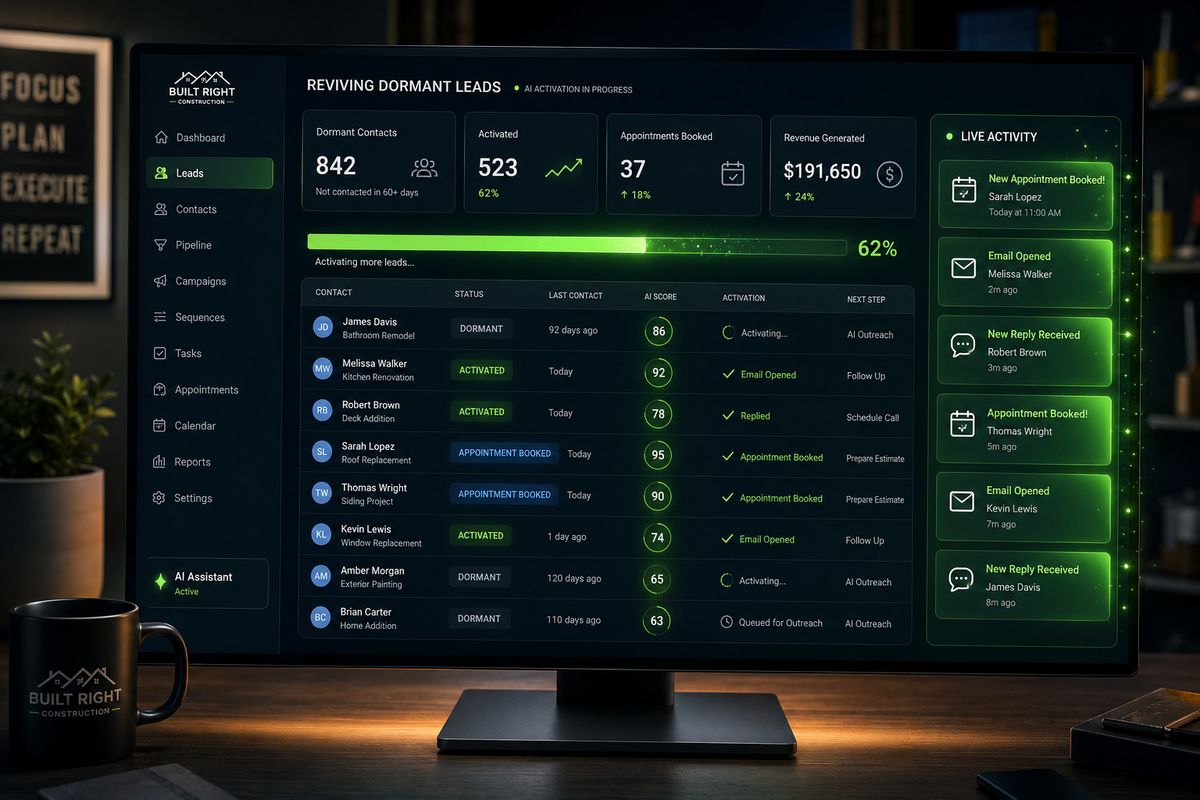
Manual follow-up systems rely on human memory, available time, and consistent discipline across weeks and months of competing priorities. AI-powered re-engagement relies on none of those things. It runs continuously, personalizes at scale, responds to behavioral signals in real time, and never gets too busy with a big job to send the fourth email in a sequence.
The contrast becomes especially clear during peak season, when most contractors are simultaneously their busiest and most likely to let their CRM gather dust. An AI re-engagement system does not slow down when you are at full capacity. It keeps working through your dormant list, identifying warm signals, and routing interested contacts back into your sales process, even when your attention is entirely on active projects.
For contractors using platforms built on intelligent automation, the CRM transforms from a digital filing cabinet into an active revenue engine. Every contact in the system becomes a genuine opportunity being worked intelligently, rather than a name on a list waiting for someone to have a spare afternoon that never arrives.
The hidden revenue in your CRM has always been there. The contacts were real, the interest was real, and in many cases, the need is still real. The difference in 2026 is that AI gives contracting businesses a practical, scalable, and genuinely affordable way to go and get it, without adding headcount, without increasing ad spend, and without asking an already stretched team to somehow do more.
About fatcamel.ai
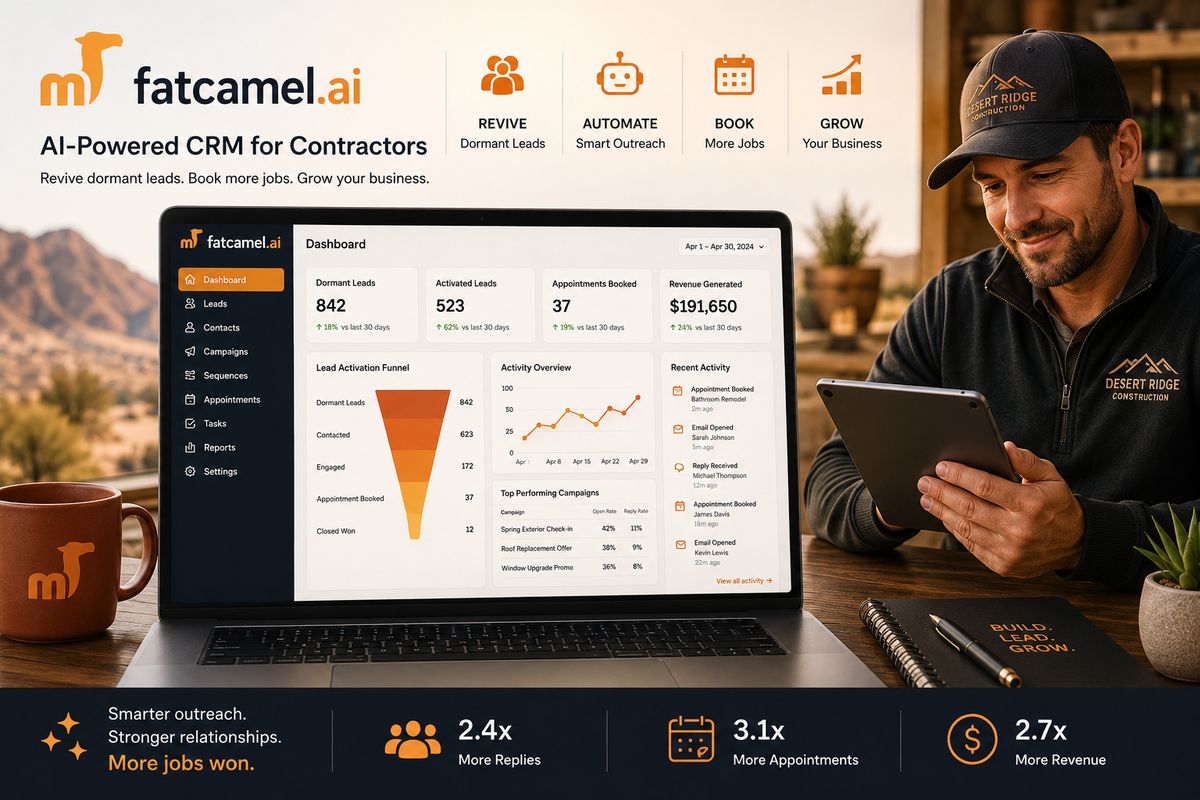
Most contractors who understand the value of AI re-engagement still face one practical obstacle: finding a platform that actually works for the way a contracting business operates, without requiring a marketing team or a developer to set it up.
fatcamel.ai is built for exactly this situation. It connects to your existing CRM data, helps you segment your dormant contacts intelligently, and runs personalized re-engagement sequences automatically in the background while you focus on running your crews and winning active jobs. The platform is designed around the reality that a contractor's most valuable resource is time, and every feature is built to give more of it back.
Beyond re-engagement, fatcamel.ai brings together AI-powered workflow automation, lead scoring, behavioral triggers, and communication tools in a single platform that grows with your business. Whether you are a solo operator with a modest contact list or a multi-crew operation sitting on thousands of past enquiries, the system scales to match your needs without requiring you to scale your team alongside it.
The revenue sitting in your CRM right now is not gone. It is waiting for a smarter conversation. fatcamel.ai is how you start having it.
Visit fatcamel.ai to see how it works for contracting businesses like yours.
Read More: How to Build Recurring Revenue in a Painting Business
Frequently Asked Questions
1. How old is too old when trying to recover old contractor leads?
There is no universal expiry date on a lead. Contacts from two or even three years ago can and do convert when approached with the right message at the right time. The more useful filter is context: did the original enquiry reflect a genuine project need, and is that need still relevant? A homeowner who enquired about an exterior repaint two years ago may simply be revisiting the project now that their budget has freed up. Recency matters less than relevance.
2. What is a realistic conversion rate when trying to revive cold leads in construction?
Most contracting businesses see re-engagement conversion rates between 3 and 8 percent with a well-structured AI campaign. That figure may sound modest, but applied to a list of several hundred dormant contacts with a reasonable average job value, it typically represents a significant revenue figure from zero additional advertising spend. The ROI on re-engagement almost always outperforms new lead acquisition when measured by cost per converted job.
3. Will reaching out to old leads damage my reputation or annoy people?
Done correctly, no. The key is personalization, relevance, and a respectful cadence. An AI-powered sequence that references a contact's original enquiry, offers genuine value, and spaces messages thoughtfully is received very differently from a generic bulk email blast. Most recipients either engage positively or simply ignore it without negative feelings. Opt-out rates for well-crafted re-engagement campaigns in the contracting space are typically very low.
4. Do I need to replace my current CRM to use AI for lead re-engagement?
In most cases, no. AI workflow platforms are designed to integrate with the CRM systems contractors already use. The AI layer sits on top of your existing data, pulling in your dormant contacts and running intelligent outreach without requiring you to migrate to an entirely new system. Platforms like fatcamel.ai are built to integrate with existing tools rather than replace them, so you can be up and running without disrupting your current workflow.
5. How much time does it take to set up an AI re-engagement campaign?
An initial setup, including data segmentation, sequence creation, and integration with your CRM, typically takes a few hours spread across a couple of working sessions. Once running, the system operates automatically. The ongoing time investment is minimal: reviewing response data, adjusting messaging based on what is working, and routing warm leads into your active sales process when the system flags them as ready.
6. What should the first re-engagement message actually say?
Keep it short, specific, and forward-looking. Reference the original enquiry without over-explaining the contact gap. Offer something of immediate value, such as an updated quote, a relevant seasonal consideration, or a recent project example similar to what they originally asked about. End with a single, low-friction call to action such as booking a quick call or requesting a refreshed estimate. Avoid lengthy introductions and never open with an apology for the time elapsed.
7. How does AI know the right time to reach out to a dormant lead?
AI platforms analyze patterns across your historical conversion data to identify when contacts in different segments are most likely to engage. They factor in seasonality relevant to your trade, day-of-week and time-of-day response patterns specific to your audience, and real-time behavioral signals like email opens and website visits. Over time, the system learns what works specifically for your business and adjusts its timing logic accordingly, improving results as it accumulates more data.
References
https://github.com/langgenius/dify
https://www.hubspot.com/research
https://github.com/langchain-ai/langchain
https://www.marketingdonut.co.uk