

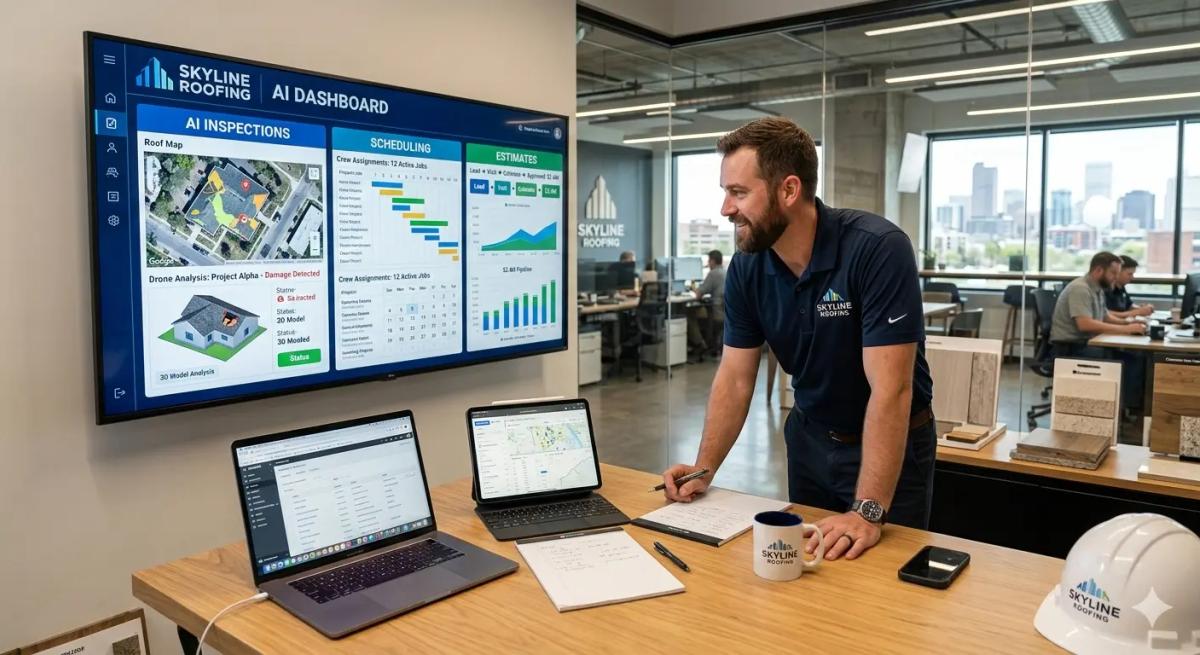
The roofing industry has relied on experience, instinct, and long hours for decades. A competent contractor was able to supervise personnel with pure hustle, estimate by memory, and identify damage visually. When there was local competition and patient clients, that model was successful.
However, roofing companies now work in a different setting. In just a few minutes, homeowners compare estimates online. Insurance documentation must be accurate. Prices for materials fluctuate rapidly. Crews are overworked due to labor shortages. There is more pressure than before.
It is no longer enough to work harder in this new environment. Growing businesses are distinguished from failing ones by their ability to work more intelligently.
AI comes into play at this point.
Not as an eye-catching phenomenon. Not as a substitute for creativity. However, as a useful tool that facilitates quicker inspections, more precise estimations, office job automation, enhanced marketing, and smooth scaling for roofing companies.
AI for roofing is not a concept of the future.
It is increasingly serving as the operating system for contemporary roofing companies.
Additionally, it is now essential to comprehend how roofing AI systems operate if you want to remain competitive in 2026 and beyond.
Read more here about Free WhatsApp Automation Using n8n
AI for Roofing Contractors: What It Actually Means
Let’s clear something up first.
AI for roofing contractors does not mean robots replacing crews. It does not mean removing craftsmanship. It means using AI-driven solutions to automate repetitive tasks, improve accuracy, and remove operational bottlenecks.
Roofing AI typically works in five main areas:
Estimating and inspections
Marketing and lead generation
Customer communication
Workflow automation and admin
Supply chain and project management
When contractors say they want the best AI for roofers, what they really want is higher productivity and operational efficiency without increasing overhead.
That’s exactly where roofing AI systems shine.
AI for Estimating, Inspections, and Reporting
This is where AI roofing makes an instant difference.
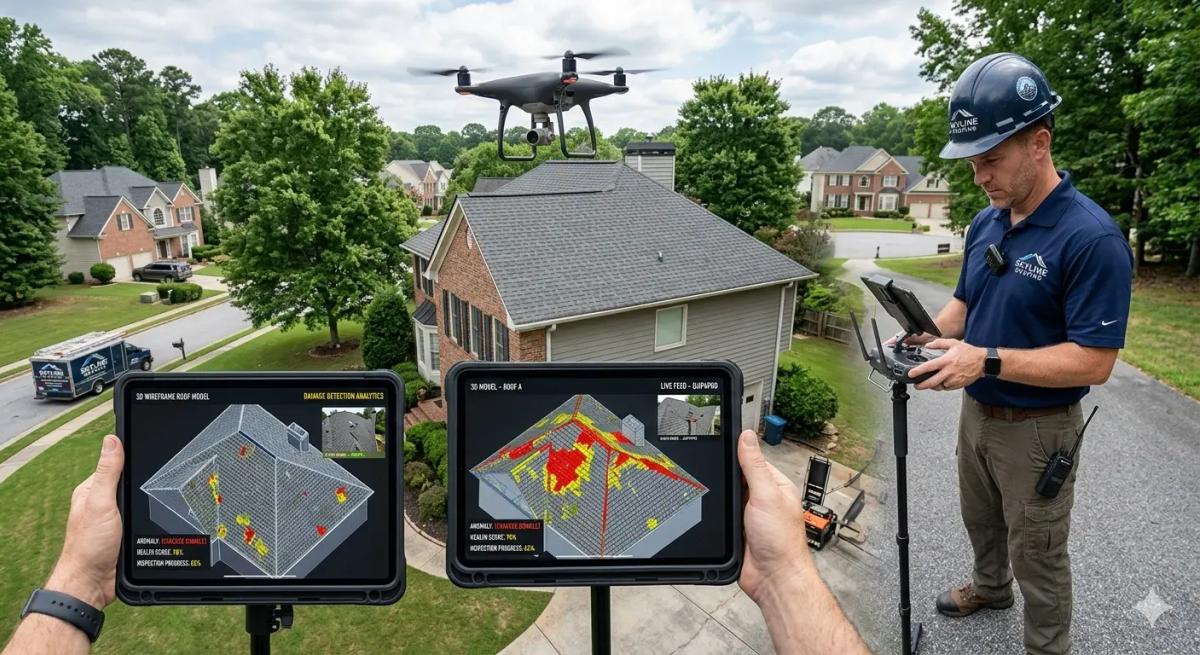
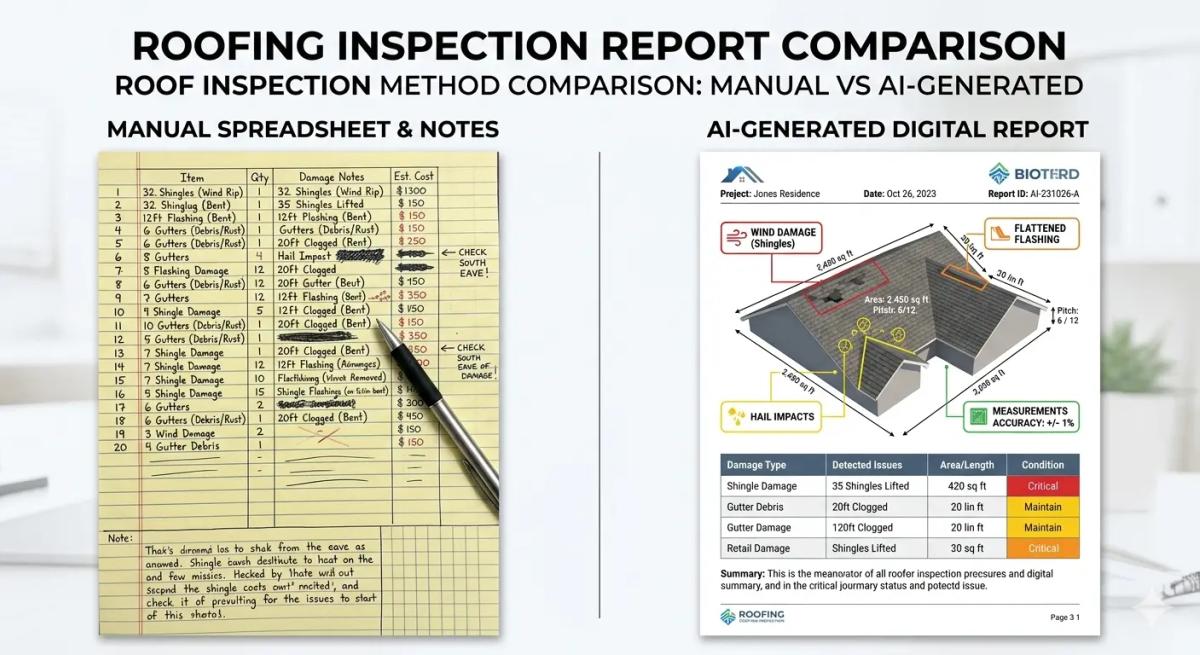
Manual, time-consuming, and occasionally inconsistent are the characteristics of traditional inspections. Drone analytics, computer vision damage identification, and 3D roof modeling are all used in AI-powered roof inspections to create easier and more precise evaluations.
Contractors can take precise measurements without going on the roof through programs like EagleView, Hover, RoofSnap, and MapMeasure Pro. AI evaluates photos, identifies regions that are damaged, and helps provide quotations instantly.
An AI estimator may produce structured ideas in minutes as an alternative to measuring pitch, surface area, and shingle damage by hand. AI-generated estimations shorten the sales cycle and decrease human error.
Automated insurance claim paperwork guarantees that damage images are appropriately prepared, captioned, and arranged for insurance work. AI job documentation and photo tagging save hours of back-office work.
The outcome?
Timely approvals, expert reports, and increased rates of closure.
Additionally, predictive maintenance is growing in popularity. AI systems monitor weather exposure, roof age, and material type to anticipate probable failure sites before leaks occur.
Contractors move from reactive repairs to proactive service contracts as a result.
Read more here about Free LinkedIn Automation Tool – A Complete Guide
Roofing AI Software: The Tools Contractors Are Actually Using
Let's discuss actual tools.
AccuLynx, JobNimbus, CompanyCam, QuoteIQ, SumoQuote, and Whippy are among the software programs that many roofing contractors currently employ. With the addition of AI-enhanced technologies, these platforms are developing.
For instance:
Follow-ups can be automatically drafted by AI-powered communication solutions.
Incoming calls are answered by AI virtual call teams when office employees are not present.
AI-driven call inbox systems log conversations into CRM records after summarizing them.
In order to maintain alignment between sales and operations, roof AI systems are progressively interacting with production and estimating interfaces.
Contractors employ AI-integrated dashboards to consolidate data rather than managing spreadsheets, emails, and text threads.
Adding more software is not the objective. The objective is to create a cohesive AI stack.
Workflow Automation and Operational Efficiency
Let's now discuss the invisible work.
One of the biggest hidden expenses in roofing companies is administrative work. Hours are spent each week on follow-ups, scheduling, job updates, order monitoring, and invoice reminders.
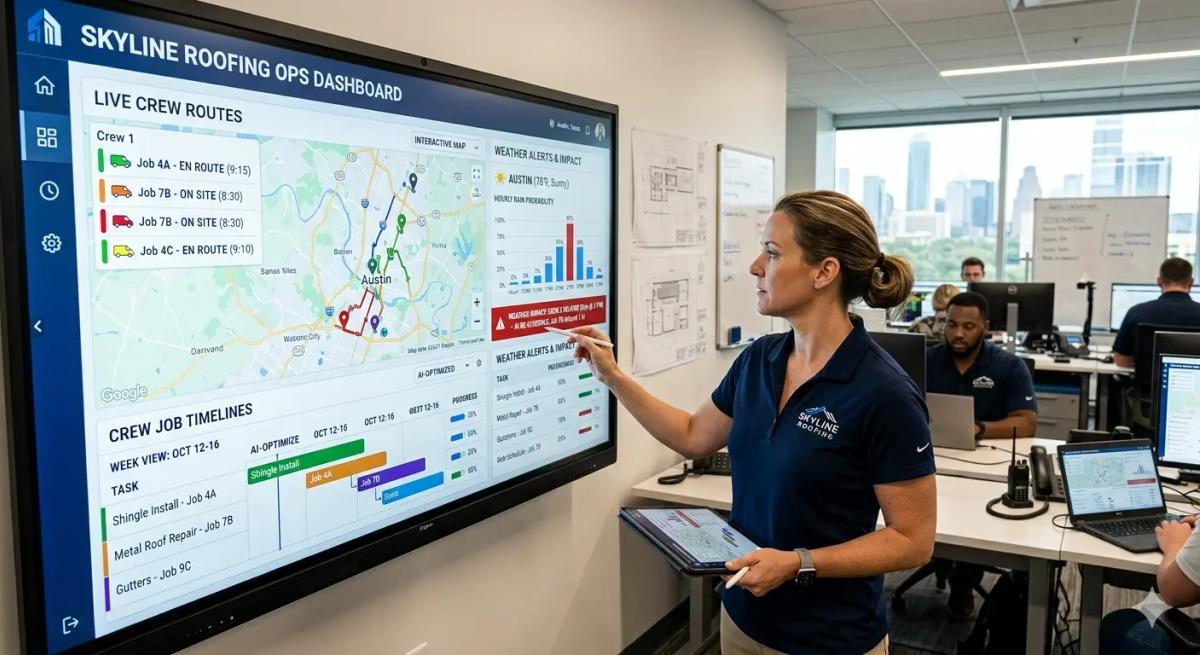
AI for roofing modifies that.
Leads can be automatically qualified by an AI intake assistant. It can use a roofing appointment booking AI to schedule appointments, screen serious requests, and ask simple questions.
Based on the location and urgency of the job, intelligent scheduling and route planning maximize staff movements. To enhance production estimations, machine learning examines previous job schedules.
Without employing a developer, contractors can automate routine roofing office tasks by using a no-code workflow builder.
For example:
The system assigns a sales representative, generates a job in the CRM, provides an automatic confirmation, and sets up a reminder when a prospect completes a form.
There is no need for human input.
AI-powered order management dashboards may monitor material deliveries and identify possible supply chain delays.
AI-powered supply chain optimization is particularly helpful during hurricane seasons when demand for materials rises. AI is able to predict shortages and recommend different approaches to sourcing.
AI roofing systems lessen operational burden in this way.
Read more here about Free Telegram Automation Using n8n
AI in Marketing and Lead Generation
The majority of roofing businesses suffer from uneven marketing rather than poor quality.
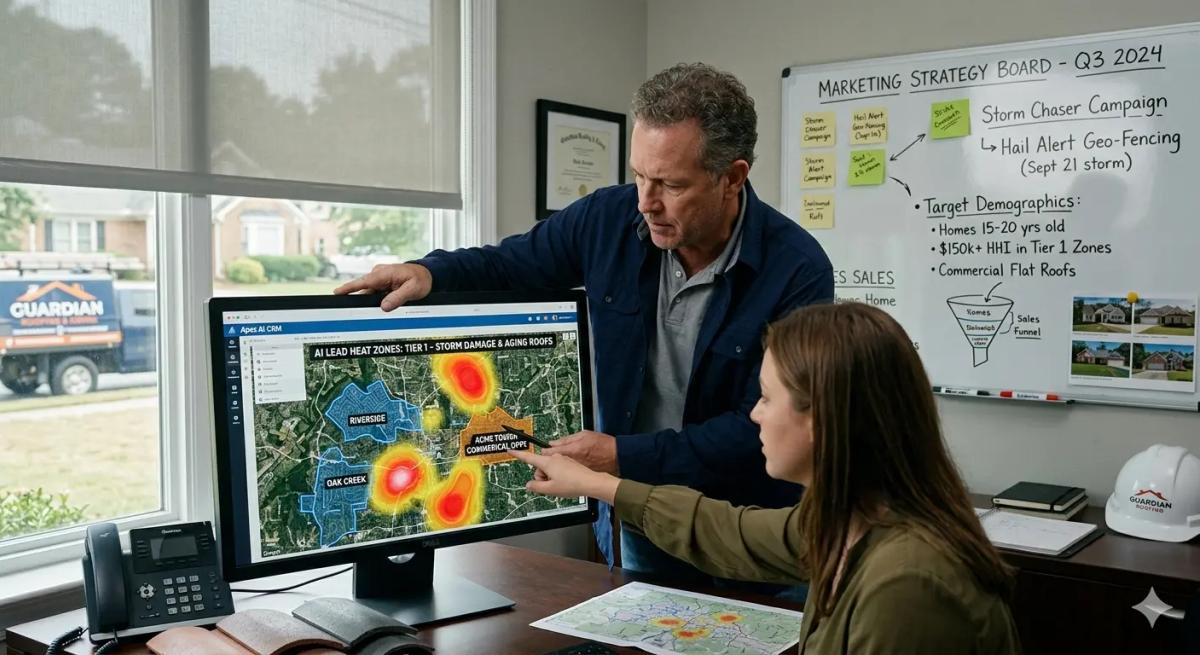
This is being changed by advertising channels driven by AI.
AI CRMs monitor lead intelligence, forecast which prospects are most likely to convert, and initiate timely automated follow-ups.
AI chatbots answer frequently asked questions and gather lead information to offer round-the-clock customer support on websites. Predictive analytics is used by AI-powered marketing funnels to determine which landing pages, keywords, and advertisements have the highest conversion rates.
Instead of guessing what works, roofing contractors can use data-backed strategies.
Dynamic pricing tools can even adjust quotes based on market conditions and material cost changes.
This is where AI for roofing contractors in 2026 is becoming more strategic than ever.
Customer Experience and Engagement
Consumer demands are growing.
Homeowners anticipate prompt responses. They're looking for updates. They desire transparency.
Personalized communication is made possible by AI-powered solutions that use customer analytics and CRM data.
Missed calls don't become missed chances thanks to an AI virtual call team.
Back-and-forth emails are eliminated by automated scheduling. Sales representatives spend time with serious buyers thanks to lead qualifying.
Customers can find answers fast thanks to AI search engines included in business websites.
Over time, AI tracks customer lifetime value and helps contractors understand which customer segments generate the highest long-term revenue.
That is a major shift from transactional roofing to relationship-based roofing.
Read more here about Free LinkedIn Automation
Pilot and Roll-Out Planning for Roofing Tech
When it comes to AI, many contractors are hesitant due to concerns about accuracy, cost, and complexity. The key is to approach AI with a phased pilot and roll-out plan rather than implementing everything at once.
Begin with a single AI-enhanced product, such as scheduling a roofing appointment or estimating, and use it for 60 to 90 days while tracking measurable outcomes. To make sure workflows are in line, perform a CRM audit before progressively expanding.
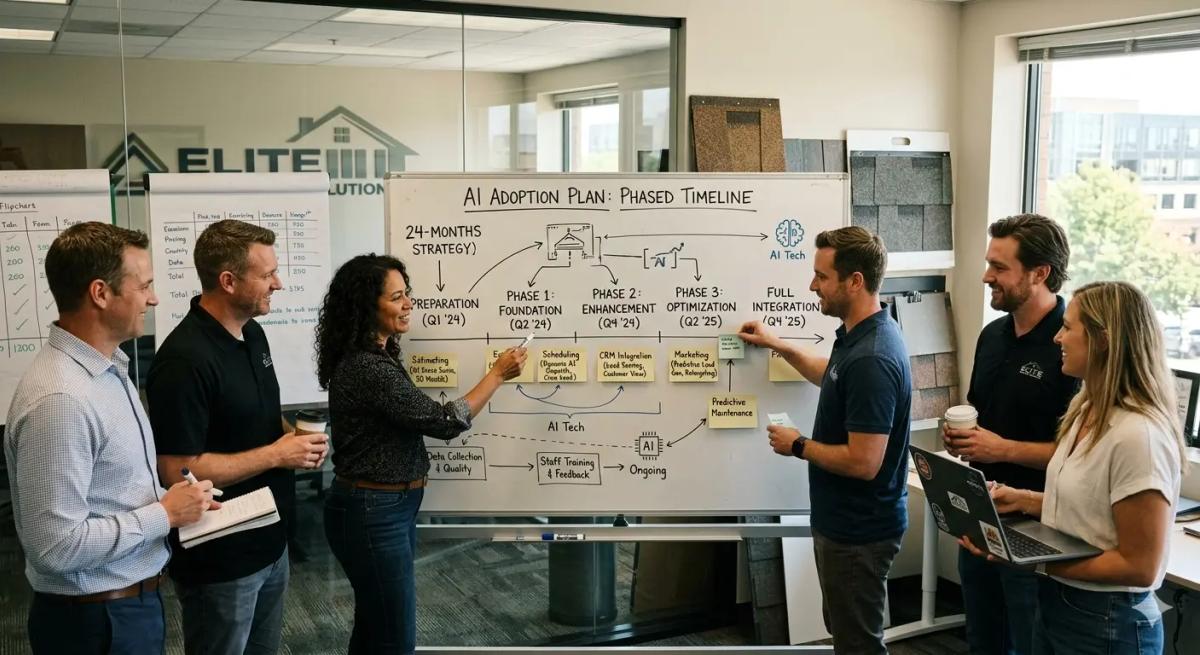
Adoption of AI in construction is more effective when implemented gradually rather than all at once. The AI system that seamlessly fits into current operations is the greatest option for roofers, not the most sophisticated one available.
In project management and production control, where poor coordination frequently results in lost profits rather than inadequate sales, AI becomes even more potent. Miscommunication between sales and production, late personnel, and delayed materials all subtly lower profitability.
With the use of intelligent scheduling and route planning, contemporary roofing AI systems automatically allocate crews, combining estimating, scheduling, and production into a single, organized process. While supply chain optimization with AI helps foresee material demand during peak seasons, machine learning forecasts realistic deadlines and accounts for weather hazards, boosting productivity and operational efficiency without adding more employees.
Read more here about Free Email Automation Using n8n
AI Stack: Building the Right System for Your Business
One mistake contractors make is chasing tools instead of building systems.
An AI stack is not just random software. It is a structured combination of:
AI-powered roofing CRM
AI estimator
AI intake assistant
AI-powered communication tools
Workflow automation layer
Project management integration
The goal is alignment.
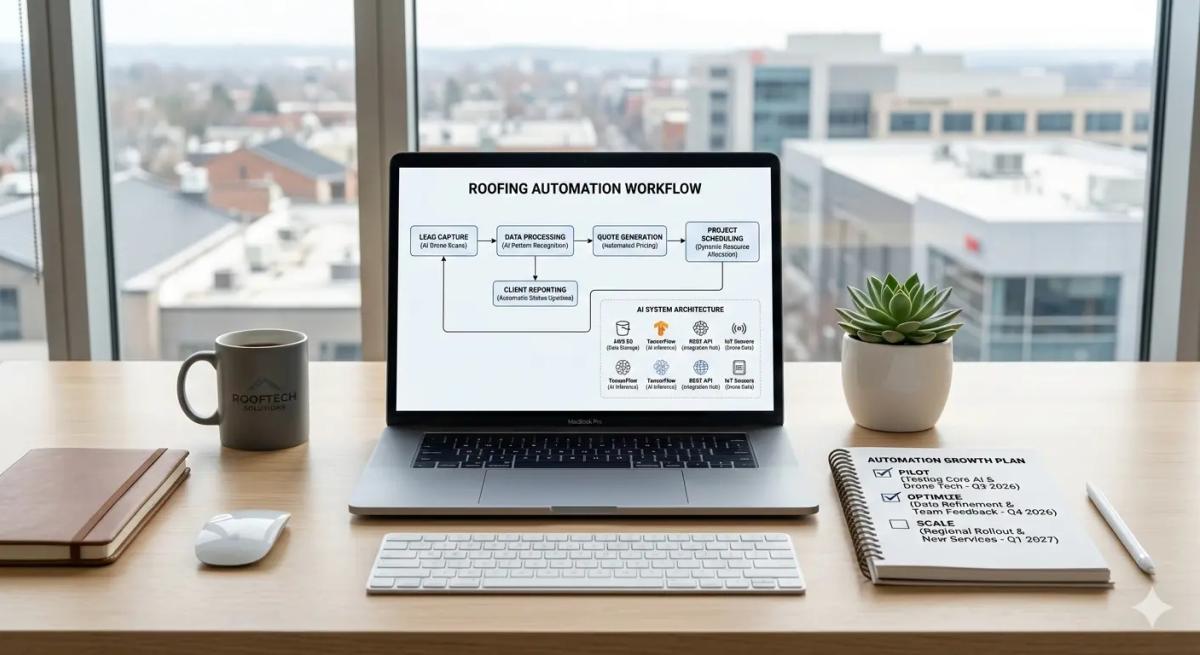
For example, a lead enters through an ad. The AI intake assistant qualifies it. Roofing appointment booking AI schedules the inspection. AI-powered roof inspections generate a report. The AI estimator creates a proposal. The CRM logs everything automatically. Follow-ups are automated if the customer does not respond.
That is not complicated technology.
That is connected logic.
When roofing AI systems are structured correctly, they feel like autopilot. In fact, many contractors describe it as running parts of their business on AI autopilot.
But remember: autopilot still needs a pilot.
The human team remains in control. AI enhances execution.
AI Adoption in Construction: Challenges and Concerns
No technology is perfect.
Accuracy concerns are real, especially when using computer vision damage detection or AI-generated estimates. AI tools must be reviewed and validated by experienced roofers. Human oversight is critical.
Ethical AI use is also important. Customer data must be protected. AI-powered marketing funnels should not mislead or overpromise. Transparency builds trust.
There is also resistance from teams who fear technology may replace jobs. In reality, AI for roofing is about removing repetitive office work and reducing manual data entry. It allows teams to focus on high-value tasks like client relationships and installation quality.
AI adoption in construction succeeds when leadership communicates clearly and trains teams properly.
Educational workshops and internal onboarding programs help crews understand how AI-enhanced tools support their work.
Making AI Roofing Simple with Fatcamel AI
Fatcamel AI is a solution for roofing firms who wish to implement AI without getting stuck down by tools and complicated terms. Rather than promoting random programs, Fatcamel assists roofing companies in creating useful AI solutions that truly complement their operations.
From intelligent CRM integration and process automation to AI-powered estimates and roofing appointment scheduling automation, the goal is to create interconnected systems rather than create additional confusion. Eliminating repetitive tasks, enhancing speed, and assisting contractors in scaling without raising overhead are the straightforward objectives. When AI is used properly, it becomes less like new technology and more like a well-functioning staff that supports your development in the background.
AI for Roofing Contractors 2026: What’s Coming Next
In the future, new technologies will advance roofing AI even more.
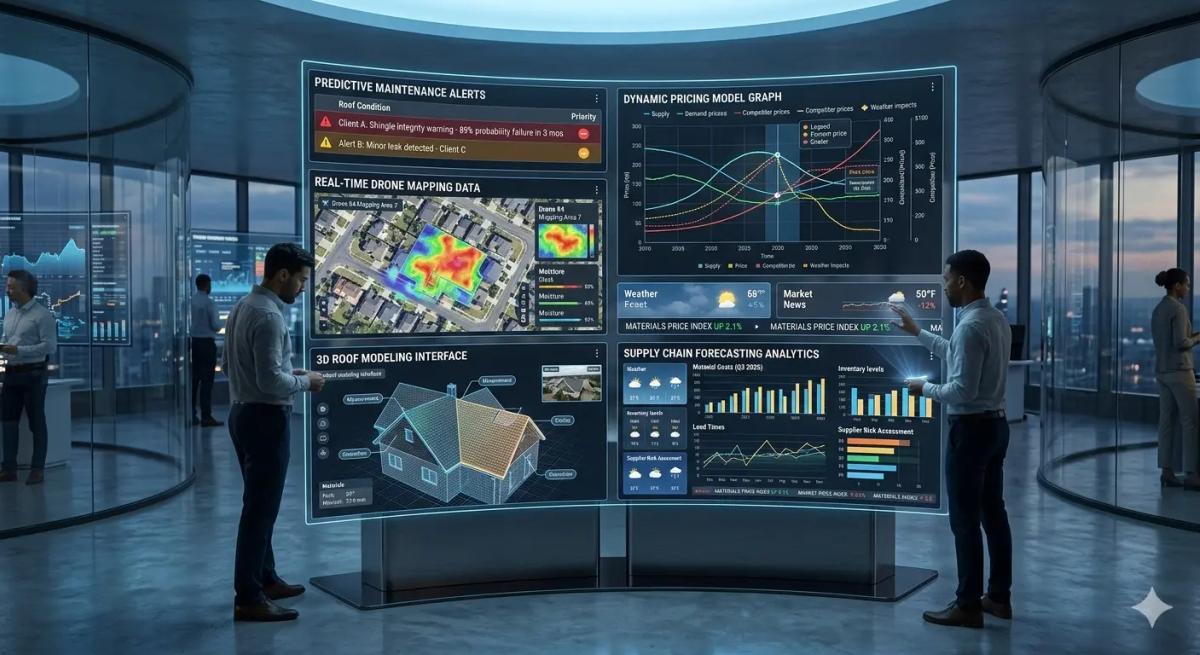
Job progress will be promptly summarized by AI overviews driven by smart dashboards. AI crawlers will keep an eye on competition pricing patterns and recommend changes. To inform inventory choices, installation trends will be monitored in real time across all regions.
Drone analytics and 3D roof modeling will be immediately integrated with sophisticated CAD design tools to provide comprehensive digital blueprints before installation.
Quotes may be modified by dynamic pricing systems in response to material volatility and market information. Conversational AI-powered communication systems will manage client engagement across channels with ease.
In 2026, roofing AI will do more than just help. It will expect.
When these skills develop, contractors who start developing systems now will be in a far better position.
Practical Roll-Out: From Pilot to Full Deployment
If this seems difficult, keep in mind that you don't execute everything at once.
There should be a straightforward framework for the roofing tech pilot and rollout planning:
Examine your present workflow first. Determine which administrative tasks are impeding progress. Examine operational obstacles and perform a CRM audit.
Second, pick one AI technology that improves closing rates or cuts down on time. AI for scheduling roofing appointments and estimating tools frequently yield immediate wins.
Third, evaluate the outcomes. Monitor work cycle duration, response times, and conversion rates.
Fourth, grow gradually. Once the base is solid, incorporate process automation or AI-powered communication solutions.
AI for roofing is more effective when integrated into current procedures rather than introduced suddenly.
Roofing AI Systems and Long-Term Competitive Advantage
AI for roofing contractors is fundamentally about making better use of what you already have. It enables small teams to function like larger businesses without having to increase payroll or hire more employees.
Tasks are completed more quickly, reports appear more polished, and paperwork is completed without building up on someone's desk. Early adopters of AI roofing software benefit from more efficient operations rather than lower prices. Schedules remain orderly, communication increases, reports are more lucid, and inspections occur more quickly.
Those minor enhancements pile up over time. AI-enabled contractors inevitably outperform those who continue to rely solely on manual systems as that disparity widens.
Final Thoughts: Why Your Business Cannot Afford to Ignore This
Roofing has always been a hands-on trade. That will never change.
But the systems around it are evolving rapidly.
AI for roofing contractors isn't about taking the place of labor or ladders. Building resilience in a cutthroat market, increasing precision, and strengthening operations are the goals.
You might be able to survive for a time if you ignore AI. Competitors will, however, react more quickly, close more jobs, and run with less overhead as they use roofing AI systems.
Trends are not the point here. It has to do with structure.
For roofing contractors, the best advice on AI is straightforward: start small, develop smart, assess results, and scale responsibly.
Because having the finest AI for roofers won't be an option in 2026 or later.
It will be commonplace.
And tomorrow's industry will be shaped by the contractors who adopt it today.