
Most painting businesses don't have a lead problem. They have a follow-up problem.
Quotes go out. Calls get missed. Jobs quietly slip away, not because of pricing, but because no one followed up in time. A homeowner requested a quote three weeks ago and said, "We'll decide later." A missed call from someone ready to book. An old estimate is sitting untouched in the CRM.
This is where painting businesses are quietly losing revenue in 2026. Not from a lack of demand. Not from bad marketing. But from small operational breakdowns that happen every single week after the lead arrives.
That's exactly why AI for painting businesses is becoming one of the most practical growth tools available right now. Not to replace your team. Not to pile on more software. But to fix the gaps that keep costing you jobs.
10+ hrs
saved per week
$10K–$50K
recoverable revenue
48 hrs
faster follow-up
Why Manual Operations Are Quietly Costing Painting Businesses Revenue
Most painting contractors think growth means more leads. When things slow down, they try a new lead source, run more ads, or hire a different marketing agency. But if the backend of the business is broken, more leads don't fix anything. They just increase the leakage.
Here's what's actually happening:
- A lead comes in and waits hours for a response
- A quote goes out, and nobody follows up
- A customer shows interest, but the conversation goes cold
- A job is completed, but no review request is ever sent
None of that is a lead generation problem. That's an operations problem. And it's the kind of problem that AI process automation is built to solve.
The real growth opportunity isn't always out there waiting to be generated. A lot of the time, it's already sitting inside the business.
What AI Automation Actually Does for a Painting Business
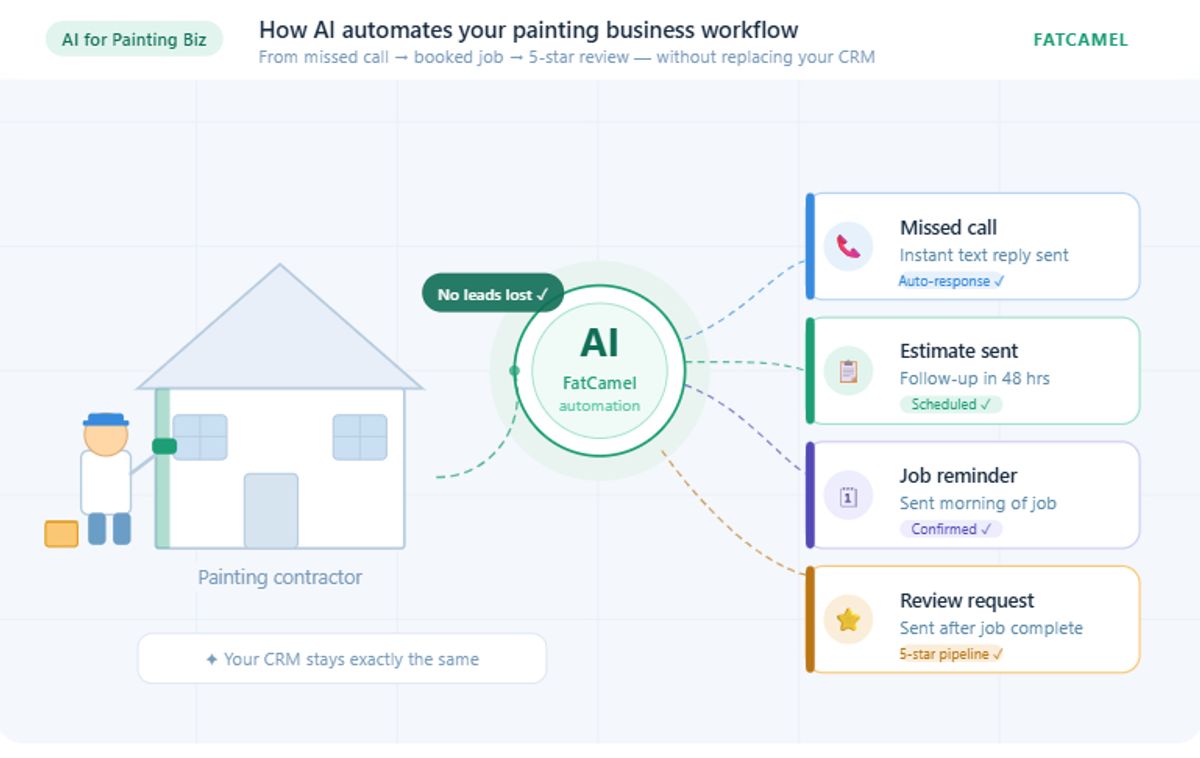
AI sounds complicated until you see what it actually does inside a service business. For a painting company, it should feel simple and useful. Here's what it can handle:
- Instant reply: Missed calls
- AI responds instantly with a text, so the lead doesn't go cold
- Auto-sent: Estimate follow-ups
- Automated messages go out after a quote is sent, no manual chasing required
- Hands-free: Appointment reminders
- Sent automatically so jobs don't get forgotten or rescheduled last-minute
- Triggered: Review requests
- Sent after a job is completed, consistently and without relying on memory
- Automated: Lead reactivation
- Old contacts in your CRM get a nudge that brings dormant opportunities back to life
That's what AI process automation for painting contractors actually looks like in practice. It doesn't make the business feel more technical. It makes it feel more reliable. And reliability is what converts leads into booked jobs, because homeowners aren't just buying a paint job. They're buying confidence, clarity, and responsiveness.
Read More: n8n Pricing in 2026: Cloud vs. Self-Hosted vs. Desktop
How AI Works With Your Existing Painting CRM
One of the biggest misconceptions about automation is that it requires a full software overhaul. It usually doesn't.
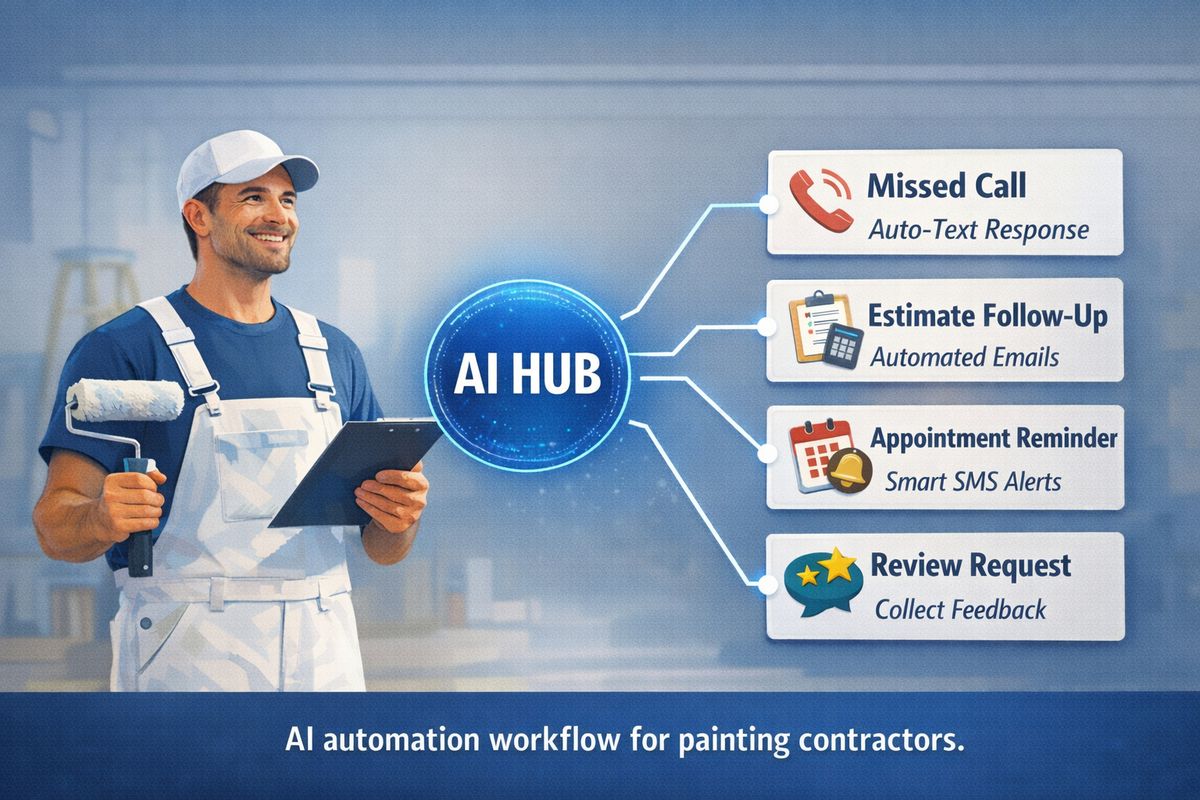
Your CRM already holds the core of your business: contacts, estimate history, customer notes, and follow-up records. Your team already knows how to use it. Ripping it out is almost always more disruptive than helpful.
The smarter move is to build better workflows around what you already have. CRM automation for painting contractors should layer onto your existing system, not replace it. You keep everything that's working. You strengthen the parts that keep slowing you down. That makes adoption easier, reduces team resistance, and produces results much faster than starting from scratch.
Your CRM stays the same. The system around it just gets smarter.
Why Follow-Up Is Where Most Painting Businesses Lose Jobs
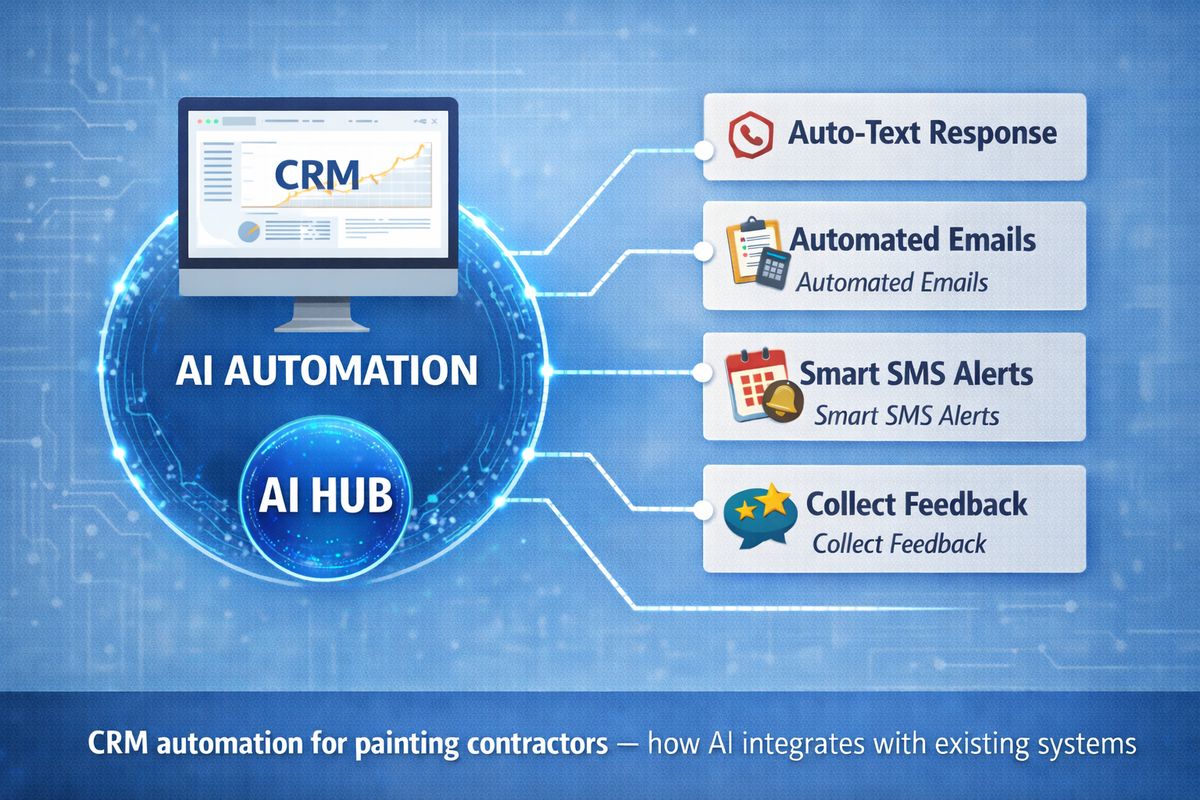
Many painting companies think they're losing clients on price. Sometimes that's true. But more often, the real reason is much simpler: the follow-up stopped too early.
A quote gets sent. The homeowner gets distracted. A few days pass. Nobody checks in. And that job quietly dies without either side ever saying no.
This is one of the easiest areas to fix with AI, and often the one that produces the fastest results. When follow-up is automated:
- Leads keep moving instead of stalling
- Estimates stay warm for longer
- Conversations don't die just because your team was busy for two days
The company that wins the job isn't always the cheapest. It's usually the one that stays present.
Read more: AI Chatbot for Roofing Companies: Capture More Roofing Leads Automatically
A Real Example: What Changes When a Painting Business Automates
Consider a painting business handling around 100 inquiries per week during peak season. Before automation, the office staff spent hours each day manually tracking estimate statuses, returning missed calls, and trying to remember who needed callbacks. Despite working a full day, too many leads still went unanswered.
After a straightforward AI-driven communication pipeline was set up, the shift was immediate:
- Every missed call received an instant acknowledgment
- Follow-ups were sent automatically after every estimate
- Appointment reminders went out without anyone needing to remember
- The team spent more time serving customers and less time chasing admin
Within a few weeks, the business reported saving more than 10 hours per week on repetitive tasks. More importantly, more leads turned into actual conversations, and more quotes stayed active long enough to close.
Their CRM stayed the same. The system around it just got smarter.
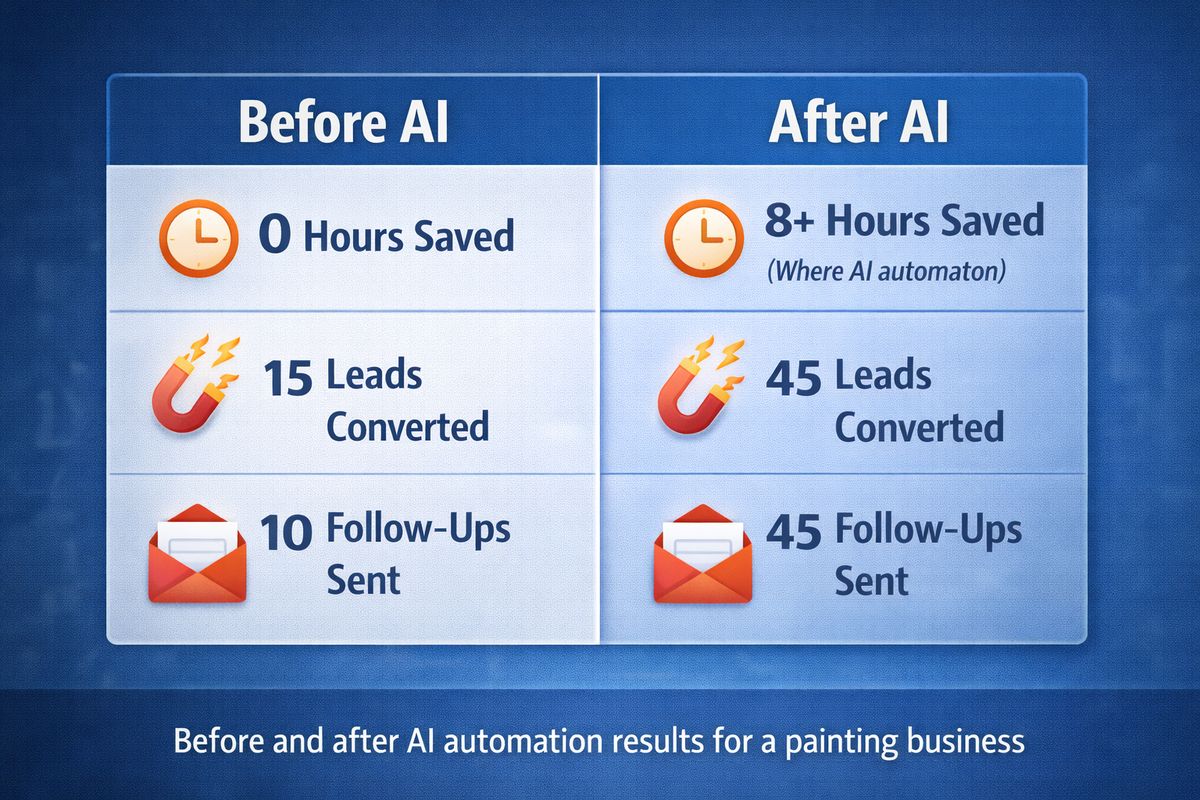
Faster Response Time Creates an Immediate Competitive Edge
In service businesses, speed builds trust faster than any marketing campaign. If a homeowner contacts you for a quote and doesn't hear back for three hours, they've already started losing confidence, before you've had a chance to sell anything. But when they get an instant acknowledgment and a clear next step, the business immediately feels more professional and dependable.
Research on home service purchasing behavior consistently shows that homeowners typically contact multiple contractors at once. The first business to respond has a significant advantage, often regardless of price.
AI-assisted communication makes that speed possible without requiring your team to be available 24/7. Your team doesn't lose jobs just because they were busy on a job site for thirty minutes.
Know More: n8n WhatsApp Integration Free – No Business Account Needed
Why Smaller Painting Businesses Benefit the Most From AI
Many business owners assume automation is better suited for larger operations. The reality is the opposite. Smaller painting businesses often gain more from AI because the stakes per lead are higher. Every delayed response matters more. Every missed estimate hurts more. Every dropped follow-up has a bigger impact on the bottom line.
Larger companies can absorb inefficiencies. Smaller teams usually can't.
AI gives small and mid-sized painting businesses outsized leverage; it allows a lean team to operate with the consistency and responsiveness of a much larger company, without needing to hire more staff or invest in an entirely new tech stack.
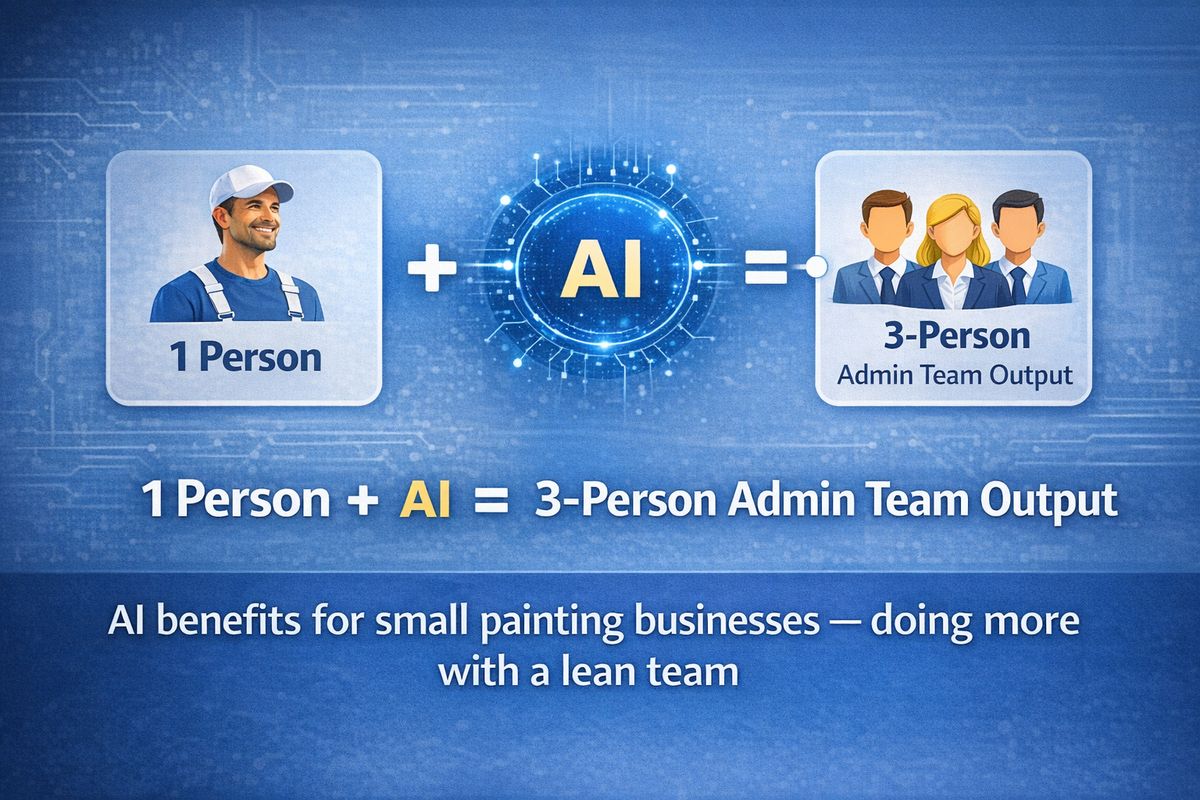
Good Automation Means Less Friction, Not More Tools
Many business owners are skeptical of AI because they assume it means more complexity: more subscriptions, more logins, more things to manage.
But the best automation does the opposite. It removes friction. Your team has fewer things to remember. Repetitive admin tasks disappear. Communication happens in the background without anyone having to trigger it manually.
This is why workflow design matters more than tool selection. A powerful tool that doesn't fit your real process creates more problems than it solves. The businesses seeing the best results aren't "using AI" in a general sense; they're applying it to very specific operational gaps: slow response times, inconsistent follow-up, manual review requests, and lead reactivation.
The goal isn't to make your business more technical. The goal is to make it less messy.
Why a Custom AI Workflow Beats a Generic Tool for Painters
Most businesses approach AI by collecting tools. A chatbot here. A scheduler is there. A few automations that kind of work. The result is usually more confusion, not less.
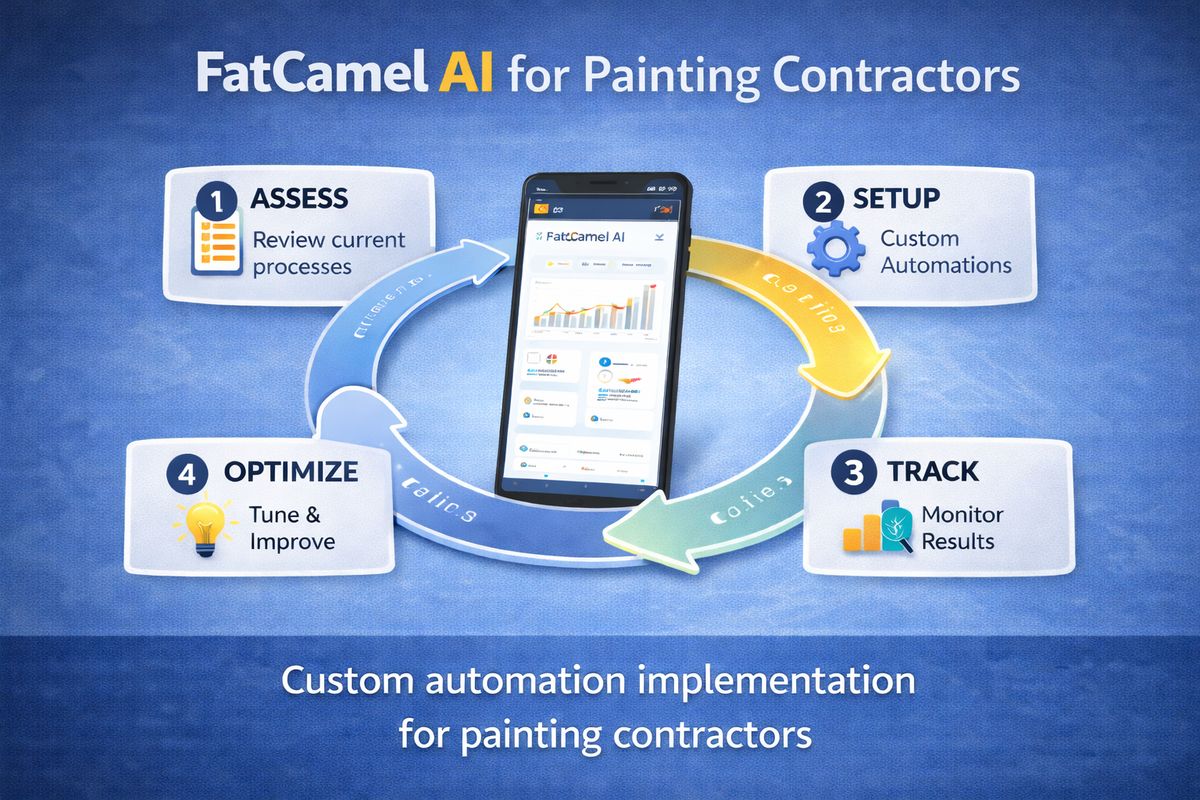
FatCamel takes a different approach. Rather than selling another software subscription, FatCamel works as an AI implementation partner for painting businesses. That means starting by identifying exactly where your business is losing time, leads, and revenue, then building workflows around those specific gaps using the tools you already have.
So instead of asking "What AI tool should we try?" you start asking "What part of our business should work better?" That's a far better starting point. And it's what produces real, lasting results rather than a new tool that gets ignored after the first month.
Final Thoughts
Most painting businesses don't need more leads. They need a better system for managing the ones they already have.
When your business responds quickly, follows up consistently, and keeps opportunities moving without depending on memory or manual effort, growth becomes more predictable. You stop relying purely on hustle and start relying on structure.
That's where AI fits, not as a gimmick, not as a replacement for your team, but as a support system that makes the business run more smoothly every single day.
Book Your Free AI Revenue Audit
Most painting businesses have $10,000–$50,000 in recoverable revenue (based on FatCamel client audits), jobs that were quoted, lost, and never properly followed up on.
Before you spend another dollar on new leads, schedule your free AI Revenue Audit with FatCamel to find out exactly where your business is losing money.
→ fatcamel.ai ←
Frequently Asked Questions
Q1. Can I use AI automation without replacing my current CRM?
Yes. Most automation works around your existing CRM, not instead of it. You keep your contacts, history, and estimates exactly where they are. The smarter move is to build better workflows around that system.
Q2. How quickly can AI improve my follow-up process?
Basic follow-up automation can often be set up within 2 to 3 weeks. Most painting businesses begin to notice more consistent responses and less lead leakage within the first month.
Q3. Will AI handle customer calls on its own?
AI phone systems can answer missed calls, collect basic information, and send instant follow-ups. Your team still handles the real customer conversation. AI simply makes sure no opportunity disappears before it gets the chance.
Q4. Is this only useful for large painting companies?
No. Smaller businesses usually benefit more because every missed lead has a bigger impact. AI helps a lean team operate with the consistency of a much larger business.
Q5. Is AI worth it for small painting businesses?
Yes, if it's applied to the right parts of the business. If your team is losing leads through slow response, weak follow-up, or manual admin overload, even a small automation system can create noticeable returns.
Q6. How do I automate follow-ups for my painting company?
Build a workflow that triggers after key moments, quote delivery, missed calls, form submissions, or completed jobs. That allows reminders and check-ins to happen automatically instead of relying on memory.