
Table of Contents
The Fort Worth Commercial HVAC Market Is Getting Harder to Win
What Commercial Clients in Fort Worth Actually Expect
The Three Gaps That Are Costing HVAC Companies Contracts
Why the Old Way of Winning Commercial Work Is Breaking Down
The Real Cost of a Missed Commercial Inquiry
How AI Is Changing the Game for Fort Worth HVAC Contractors
Before and After: One Inquiry, Two Outcomes
What Else This Infrastructure Unlocks
How FatCamel AI Helps Fort Worth HVAC Companies Win Commercial Work
FAQ
References
The Fort Worth Commercial HVAC Market Is Getting Harder to Win
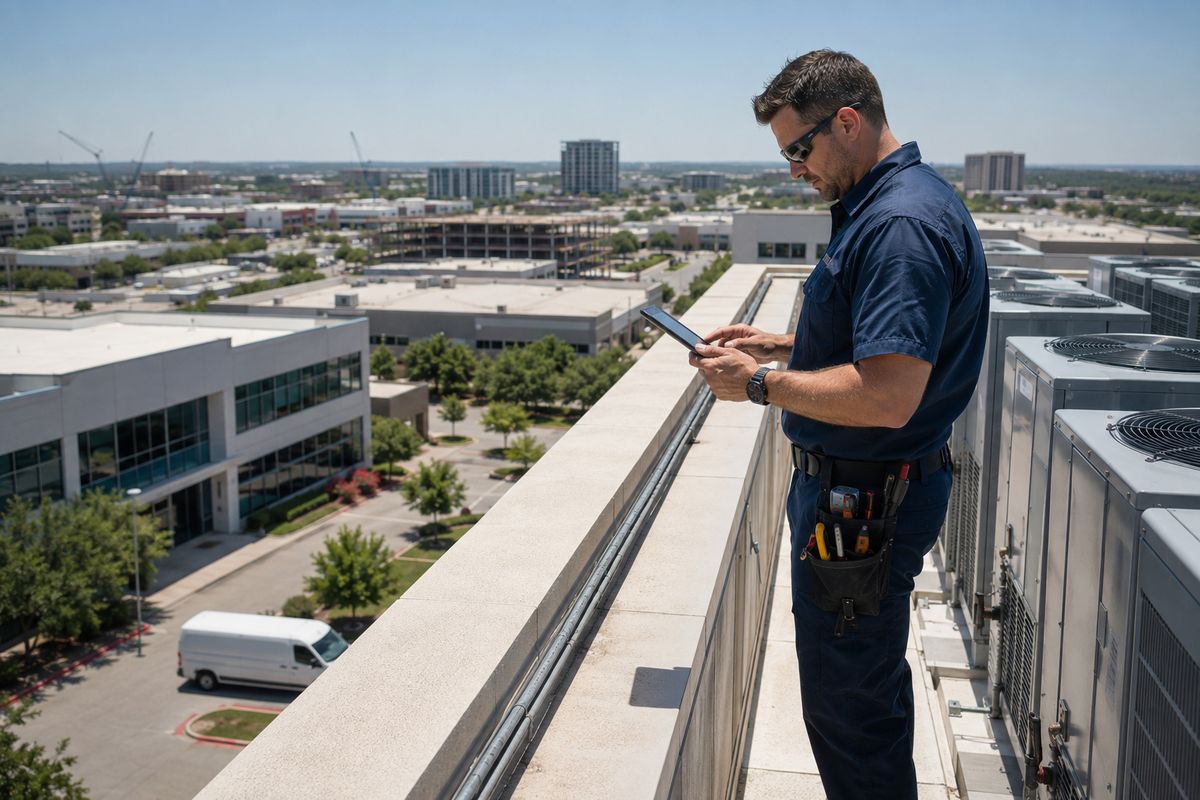
The opportunity in Fort Worth commercial HVAC is real. New construction in the DFW area is growing at 15 percent annually, creating a steady pipeline of office buildings, industrial facilities, healthcare properties, and retail spaces that all need HVAC service contracts. It's one of the stronger commercial HVAC markets in the country right now.
But the competition is real too. Over 9,200 HVAC businesses operate across Texas, and a meaningful portion of them are competing for the same commercial contracts in the same DFW corridor. What's changed in the last two or three years isn't the opportunity it's the standard that commercial clients now expect from the contractors they work with. Faster responses. More professional follow-up. The kind of organized, consistent communication that used to be the hallmark of large operations but is now being delivered by smaller contractors who've built the right systems.
The HVAC companies losing commercial ground in Fort Worth right now aren't losing because their technical work is worse. In most cases, it's because someone else responded faster, followed up more consistently, and made the client feel more confident in the process before the first site visit ever happened. That's a solvable problem and understanding exactly where it's happening is the first step.
Read More: Why the Fastest-Growing Home Service Companies Are Investing in AI
What Commercial Clients in Fort Worth Actually Expect
Commercial HVAC clients property managers, facility directors, office building owners, retail chain operators don't evaluate contractors the same way homeowners do. Price matters, but it's rarely the deciding factor. What commercial clients in Fort Worth are actually evaluating is something closer to operational confidence. They need to believe that the contractor they hire won't create problems for them.
Speed is a bigger part of this than most HVAC owners realize. A facility manager with a failed rooftop unit doesn't have days to wait for a response. They need to know within the hour that someone is on it. Research shows that the first contractor to respond wins 78 percent of commercial service calls not the most experienced, not the lowest priced. The most responsive. That's a significant competitive advantage sitting available to any contractor who can consistently be first.
Professionalism through the whole process matters just as much. Commercial clients are making purchasing decisions that affect their entire building and the people inside it. They want clear communication, reliable follow-up, and documentation they can reference. And reliability over the long term is what turns a single service call into a multi-year maintenance contract worth tens of thousands of dollars annually. Most commercial HVAC companies in Fort Worth are competitive on the technical side. The gap the one that's actually costing contracts is consistently in responsiveness and follow-through, from the first inquiry to the signed agreement.
The Three Gaps That Are Costing HVAC Companies Contracts
The reason most HVAC businesses struggle to win commercial contracts consistently isn't usually about capability. It's about three operational gaps that stack on top of each other and compound across every opportunity in the pipeline.
The first gap is response time. The Dallas-Fort Worth area has over 10,060 HVAC workers competing for the same commercial projects. When a facility manager sends an inquiry at 4:30 PM on a Friday and your team is wrapping up a job across town, who responds first? If it's not you, the contract conversation may already be over by Monday morning. Commercial clients don't always wait for the best option. They often go with the first option that makes them feel taken care of.
The second gap is follow-up consistency. Commercial HVAC deals don't close in one contact. The facility manager needs a quote, their director needs to approve it, procurement gets involved and this process takes days or weeks. Most HVAC companies drop the ball somewhere in that window. Not intentionally, but because they're running crews, managing active jobs, and don't have a system that keeps the follow-up moving automatically. The lead goes cold. A competitor who followed up three more times wins the contract.
The third gap is lifetime value loss. A single commercial HVAC maintenance contract in Fort Worth can run between 8,000 and 40,000 dollars annually. Over a five-year client relationship which is completely normal in commercial HVAC that's 40,000 to 200,000 dollars in recurring revenue from one account. When you lose a commercial lead because of a slow response or a dropped follow-up, you're not losing a one-time job. You're losing years of contracted revenue and every referral that client would have sent.
Read More: AI Receptionist for Painting Companies: Never Miss a Painting Lead Again
Why the Old Way of Winning Commercial Work Is Breaking Down
For a long time, commercial HVAC in Fort Worth was won through relationships. You knew a property manager, they called you first, the work came in steadily. That still matters. But it's not enough on its own anymore and three things have changed that dynamic.
Commercial clients are now comparing contractors online in real time. A facility manager evaluating HVAC contractors in 2026 is Googling "commercial HVAC in Fort Worth," reviewing several companies at once, and sending inquiry forms to multiple contractors simultaneously. The one who responds first with a professional, organized reply anchors the comparison. Everyone else is playing catch-up from that point forward.
AI has raised the baseline expectation for responsiveness. Larger HVAC companies are already using AI to respond to leads instantly, qualify them automatically, and schedule follow-up calls without any human involvement in the first stage. When a property manager experiences that level of responsiveness and then contacts a smaller company that responds the next business day, the comparison isn't flattering regardless of how good the smaller company's actual work is.
And the competitive landscape has gotten more crowded. Jobber's 2026 industry report found that 82 percent of HVAC businesses are already using AI in some form. That tells you where the market is heading. The question isn't whether to adopt these tools. It's whether you're early enough to gain the advantage before it becomes table stakes.
The Real Cost of a Missed Commercial Inquiry

The average commercial HVAC maintenance contract in a market like Fort Worth is worth between 12,000 and 30,000 dollars per year. Emergency commercial service calls rooftop units, chiller systems, large-scale installations regularly run 3,000 to 15,000 dollars per job. These aren't residential numbers.
Now apply the missed-lead math. Industry data shows HVAC companies miss 25 to 27 percent of inbound calls on average. Around 62 percent of those missed callers immediately contact a competitor. And 85 percent never call back. For a commercial HVAC company receiving 30 inquiries per month and missing 27 percent of them, that's roughly eight missed commercial leads. If even two of those would have converted to annual contracts at 15,000 dollars each, that's 30,000 dollars in annual recurring revenue gone every single month.
And that's before you account for what those clients would have been worth over a five-year relationship, or the referrals they would have sent to other property managers in their network. Commercial clients refer commercial clients. One lost inquiry in this market isn't one lost job. It's a potential long-term commercial relationship handed to a competitor because the response came too late or the follow-up stopped too soon.
👉 Get a Free AI Revenue Audit for Your HVAC Business at https://www.fatcamel.ai/contact
How AI Is Changing the Game for Fort Worth HVAC Contractors
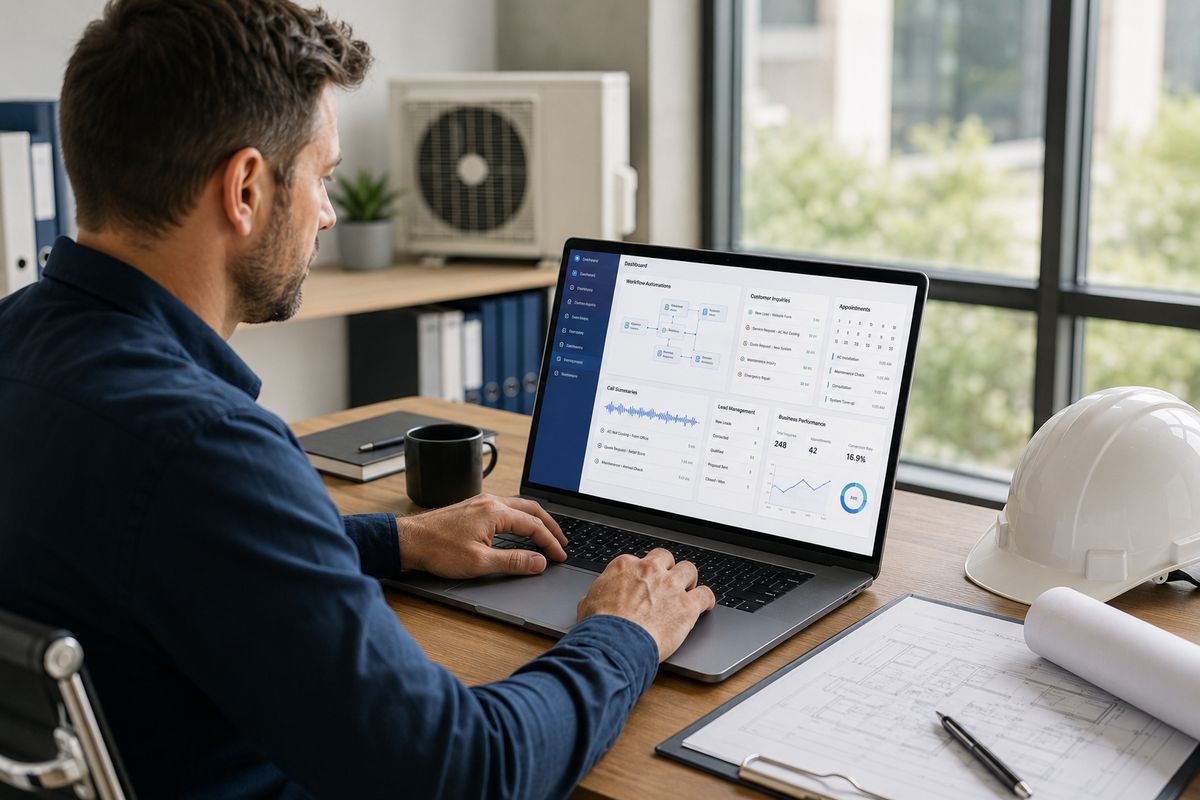
The commercial HVAC companies winning more contracts in Fort Worth right now aren't necessarily the most experienced or the lowest-priced. They've built a system that makes them operate like a much larger company without the overhead that would normally require.
That system runs on AI automation. And at its core, it does three things that manual operations simply can't sustain at any meaningful scale.
It responds to every commercial inquiry immediately. Whether a facility manager submits a contact form at 7 AM or calls at 6 PM on a Friday, they get an immediate, professional response. The inquiry is acknowledged, basic qualifying questions are asked, and next steps are confirmed before a human on your team even knows the lead came in. No inquiry sits unanswered overnight.
It follows up automatically until the deal closes or the lead clearly says no. Commercial HVAC deals don't close in one call. AI handles the entire follow-up sequence email, SMS, scheduled callbacks so no lead falls through the cracks during the weeks-long evaluation process that commercial contracts require. Your competitors are forgetting to follow up. You're not, because the system handles it without anyone having to remember.
And it reactivates dead leads in your CRM. Every commercial HVAC company has a graveyard of contacts property managers who enquired, got a quote, and went quiet. AI can systematically reach back out to those cold contacts, personalized and timed appropriately, bringing them back into the conversation. These are leads you already paid to acquire. AI turns them into revenue instead of letting them sit.
This is exactly what FatCamel AI's Lead Activation Engine enables for home service companies the entire front end of the commercial sales process, running automatically in the background while your technicians focus on the work.
Know More: How to Convert Old Leads in Your Contractor CRM With AI (Hidden Revenue Guide)
Before and After: One Inquiry, Two Outcomes
Here's what the difference actually looks like in practice.
A facilities director at a mid-sized office park in Fort Worth submits an inquiry form for a commercial HVAC maintenance contract three buildings, roughly 22,000 dollars per year in potential work. She submits it on a Thursday afternoon at 4:45 PM and contacts two other HVAC companies at the same time.
Without AI: Your team sees the inquiry Friday morning. Someone calls at 10 AM. The facilities director is in a meeting. A voicemail is left. She calls back at 2 PM your office manager is on another call. By Friday evening, no real conversation has happened. Competitor A responded Thursday at 5:01 PM with an automated message, confirmed her needs, and scheduled a site visit for Monday morning. By the time you reach her on Monday, she's already leaning toward Competitor A. Not because their work is better. Because they were there first and made her feel taken care of immediately.
With AI: Your system responds to her inquiry at 4:46 PM sixty seconds after she submits it. The automated message acknowledges her inquiry, asks two qualifying questions about the buildings and current system age, and offers two available times for a site assessment. She replies at 5:15 PM and picks Tuesday. A confirmation goes out immediately. Your technician shows up Tuesday already briefed on the details. You win the contract 22,000 dollars per year in recurring revenue because you were first and most professional from the very first interaction.
Same inquiry. Same company. Completely different outcome.
What Else This Infrastructure Unlocks
Once you fix the response and follow-up problem, the same AI infrastructure opens up additional revenue streams that most commercial HVAC companies aren't currently capturing.
Proactive commercial outreach becomes possible without a dedicated sales team. AI can systematically reach property managers, facility directors, and commercial building owners in Fort Worth with targeted, personalized sequences building your commercial pipeline proactively rather than just waiting for inbound inquiries to come in.
Maintenance contract renewals stop falling through the cracks. AI handles renewal reminders, pricing updates, and re-engagement with lapsed contracts automatically, so you retain commercial clients without needing a dedicated account manager watching every expiry date.
Emergency service calls become upsell opportunities. When AI captures an emergency service call, it can identify whether the client is already on a maintenance contract and flag upsell opportunities for your team before they arrive on site turning reactive service into proactive relationship building.
And your reputation in search results improves over time. AI can automate review requests after every completed service, which directly impacts your ranking for searches like "commercial HVAC in Fort Worth" feeding more inbound leads into the top of your funnel without additional ad spend.
Read More: AI Systems to Get Repeat Painting Jobs Automatically
How FatCamel AI Helps Fort Worth HVAC Companies Win Commercial Work
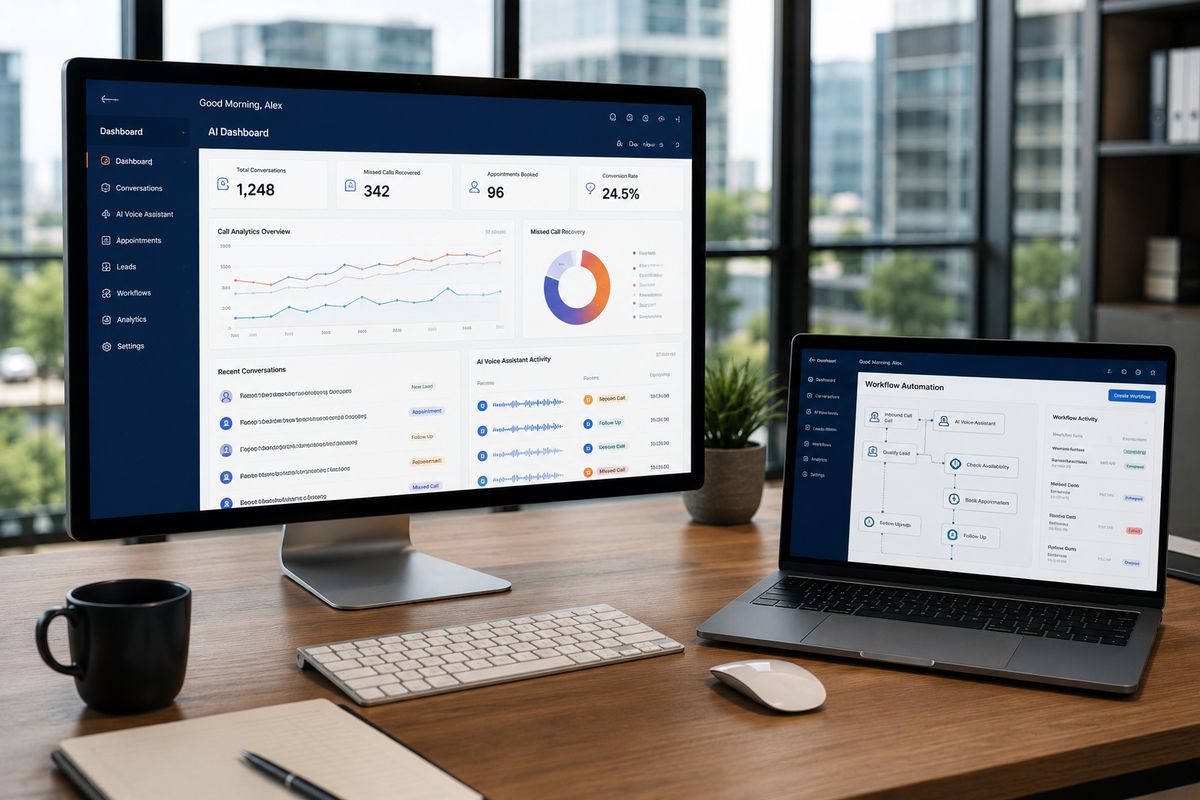
Every element described in this guide the immediate inquiry response, the automated follow-up sequence, the CRM reactivation, the commercial outreach, and the contract renewal management needs to operate as a connected system to produce the kind of compounding results that commercial HVAC lead generation requires. A response tool without follow-up automation misses half the problem. Follow-up automation without CRM integration loses the history. Each component depends on the others.
FatCamel AI's Lead Activation Engine is built to run this complete system for HVAC companies and home service contractors pursuing commercial clients. Every commercial inquiry gets an immediate, professional response regardless of when it arrives. Follow-up sequences run automatically across email and SMS for as long as the sales cycle requires. Cold contacts in the CRM get systematically reactivated with personalized outreach. And every interaction is logged back to the system automatically, so your sales team always has full context before walking into any commercial conversation.
The contractors gaining ground in the Fort Worth commercial market aren't doing it through more advertising or bigger teams. They're doing it by being faster, more consistent, and more professional at every stage of the client relationship from the first inquiry through the signed contract. That's what this system delivers.
👉 Get a Free AI Revenue Audit for Your HVAC Business at https://www.fatcamel.ai/contact
FAQ
1. What makes commercial HVAC sales different from residential in a market like Fort Worth? Commercial HVAC sales involve longer decision cycles, multiple stakeholders, formal approval processes, and a significantly higher emphasis on responsiveness and professional follow-through than residential sales. A homeowner might choose a contractor based on price and availability in a single conversation. A facility manager evaluating HVAC contractors for a multi-building maintenance contract is assessing operational reliability over months or years. The contractor who responds fastest and follows up most consistently not the cheapest or most experienced wins most of those contracts.
2. Why are Fort Worth HVAC companies losing commercial contracts to competitors? In most cases, it's not technical capability. It's response time and follow-up consistency. Commercial clients in the DFW market are now evaluating multiple contractors simultaneously through online searches and contact forms. The first contractor to respond with a professional, organized reply anchors the comparison. HVAC companies that respond the next business day, or that follow up once and stop, lose contracts to competitors who've automated the response and follow-up process.
3. How much is a missed commercial HVAC inquiry actually worth in the Fort Worth market? A missed commercial inquiry in Fort Worth can represent anywhere from 12,000 to 30,000 dollars in annual contract value, depending on the scope of the account. Over a five-year client relationship, which is common in commercial HVAC, a single missed inquiry represents 60,000 to 150,000 dollars in lost recurring revenue before accounting for referrals the client would have generated among other property managers and facility directors in their network.
4. How does AI help HVAC companies respond faster to commercial inquiries? AI automation handles the first-response layer immediately and automatically acknowledging the inquiry, asking qualifying questions, and confirming next steps within seconds of the form being submitted or the call coming in. This happens regardless of the time of day and without requiring any team member to be available. The result is that every commercial inquiry gets a professional, organized response before a competitor has a chance to make first contact.
5. Can a smaller HVAC company realistically compete for commercial contracts in DFW using AI? Yes and this is one of the most significant competitive advantages AI provides for smaller contractors. The operational gap that allows smaller HVAC companies to lose commercial contracts to larger operators is almost entirely in responsiveness and follow-up consistency, not in technical capability. AI automation closes that gap directly, allowing a company with five or six technicians to respond to commercial inquiries with the same speed and professionalism as a company with fifty without the overhead that would normally require.
6. What types of commercial clients should Fort Worth HVAC companies be targeting? The highest-value commercial HVAC targets in the Fort Worth market are property managers overseeing multi-building commercial portfolios, facility directors at corporate campuses and healthcare facilities, commercial real estate asset managers, and hospitality and retail operations directors responsible for maintaining branded spaces. Each of these roles controls significant ongoing HVAC service budgets and represents multi-year contract potential rather than one-off service calls.
7. How does FatCamel AI specifically help HVAC companies win commercial contracts in Fort Worth? FatCamel AI's Lead Activation Engine handles the complete commercial sales process automatically from immediate first response to multi-week follow-up sequences, CRM reactivation of dormant commercial leads, proactive outreach to new commercial prospects, and maintenance contract renewal management. Every interaction is logged and tracked, so the sales team always has full context before any commercial conversation. The result is a commercial sales operation that runs consistently and professionally without requiring a dedicated business development team to manage it.
References
https://cleanfundtx.org/how-hvac-contractors-can-win-big-in-the-texas-market/
https://www.hvacmarketingengine.com/texas-hvac-marketing-trends/
https://www.workyard.com/construction-management/hvac-facts-statistics
https://www.getjobber.com/academy/hvac/hvac-industry-trends/
https://leads4build.com/insights/hvac-statistics-trends
https://downtobid.com/contractors/hvac/fort-worth