

The north side of your house is green again, but the sunny side still looks clean. Does the whole exterior need another pressure wash or just that shaded wall? The answer depends on the surface, the buildup, the local conditions, and the product maker’s cleaning instructions.
A once-a-year wash is common advice, but a yearly inspection is a better starting point. Shade, moisture, pollen, and nearby trees can cause buildup to appear sooner in some areas than others. Depending on the material, a gentle rinse or targeted cleaning may be enough, while some siding should not be cleaned with high pressure.
Quick Answer
Inspect your home’s exterior about once a year, and sooner if shaded or damp areas collect visible buildup. Do not assume that an inspection means an annual pressure wash. Identify the surface, check its manufacturer’s cleaning instructions, and choose the least aggressive method those instructions allow.
Table of Contents
Why “Once a Year” Is Only a Starting Point
Inspect the Wall, Not Just the Calendar
What Makes One Side of a House Get Dirty Faster
Pressure Washing Is Not the Same as Rinsing Siding
How Pressure-Washing Contractors Can Manage Repeat Services
Why “Once a Year” Is Only a Starting Point
Search for how often should you pressure wash your house and you will see “once a year” repeatedly. It is easy to remember, but it does not fit every home, material, climate, or cleaning method.
Better Homes & Gardens describes annual washing as a general average, while noting that humid homes may need cleaning more often and dry homes may go longer. Angi also gives an annual recommendation but points to pollution and precipitation as factors. A New England cleaning provider uses an annual baseline and highlights shade, moisture, and nearby trees. These recommendations help explain why the answer varies; none is a universal manufacturer requirement.
There is also a difference between cleaning an exterior and pressure washing it. A siding manufacturer may recommend a garden hose and soft brush. If a wall is clean, it does not need high pressure simply because twelve months have passed.
Inspect the Wall, Not Just the Calendar
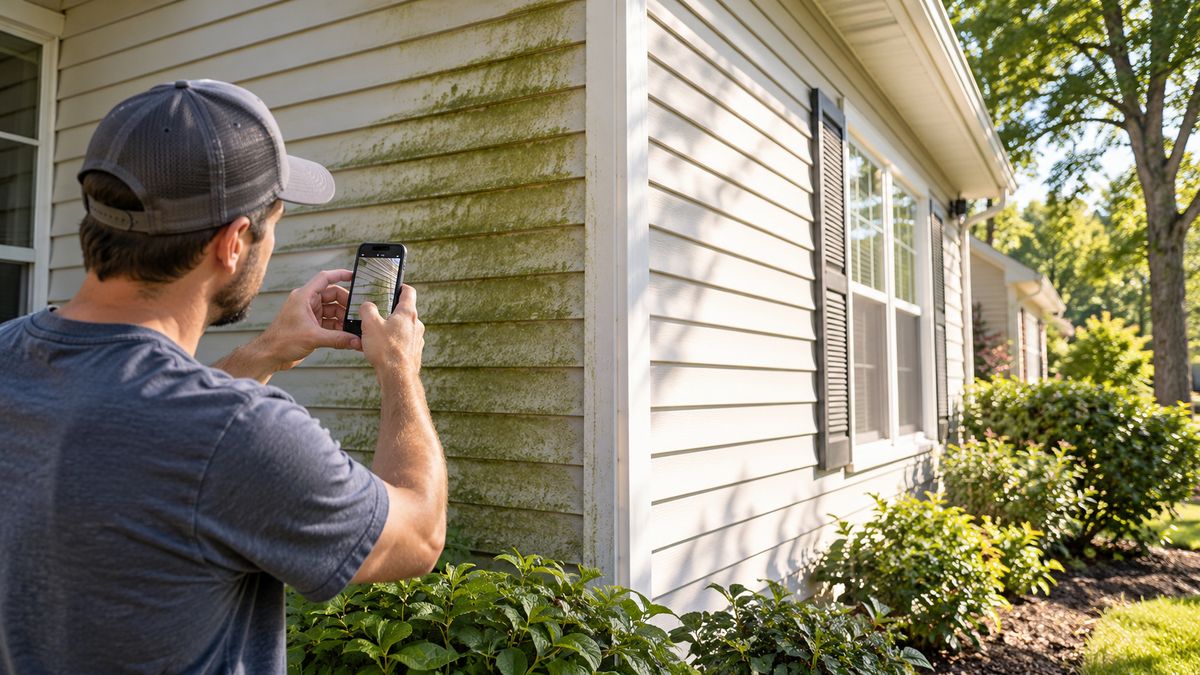
Imagine a homeowner sees green streaks on the shaded side of the house. The driveway is dirty too, but the south-facing siding still looks fine. That is a reason to inspect the affected areas, not automatic proof that every surface needs the same service.
During a seasonal inspection, look for persistent dirt, pollen, or growth. Check whether the buildup is limited to one wall, and note the siding type and condition. Then choose the next step:
- The surface looks clean: Keep it on the exterior maintenance schedule, but do not wash simply to meet an arbitrary date.
- There is light dust or pollen: Check the care guide. A rinse may be enough for some materials.
- Growth keeps returning on shaded or damp surfaces: Inspect that area more often and ask which cleaning method is approved.
- The surface is loose, cracked, peeling, or previously repaired: Get advice before washing. Do not assume pressure is safe for a compromised area.
A recommended house-wash interval should follow the property’s condition. If only one section is affected, ask whether it can be assessed and quoted separately instead of assuming a whole-house wash is necessary.
A Three-Question Check Before You Wash
Before booking a house wash, ask yourself three questions:
Is there visible buildup? If the surface looks clean, a scheduled wash may not be necessary.
What material am I cleaning? Vinyl, wood, fiber cement, brick, and painted surfaces can have different care requirements.
What cleaning method does the manufacturer allow? A gentle rinse may be sufficient for some materials, while others require a more specific approach.
If you are unsure about the surface or the type of staining, get it assessed before applying pressure or cleaning chemicals. These checks can help you decide whether to clean the entire exterior, address one affected area, or wait.
What Makes One Side of a House Get Dirty Faster
Local climate and moisture
Humidity, repeated rain, and coastal exposure can leave some walls damp longer. Shaded or damp areas may show mildew or algae sooner than a sunny wall. Climate and moisture are two reasons the general annual recommendation can change.
Shade, tree cover, and nearby vegetation
Overhanging branches and dense landscaping reduce airflow around a wall. Trees can also contribute pollen and leaf debris. If the north-facing wall turns green while the rest of the house stays clean, mention that pattern when asking for advice. It may call for targeted cleaning rather than a whole-house treatment.
Dust, pollen, and siding condition
Dust, seasonal pollen, and the age or condition of the siding all affect what you see. Look at the surface itself: loose panels, damaged paint, or previous repairs may change what can safely be done. Do not choose a method based only on the stain; the material underneath matters too.
Pressure Washing Is Not the Same as Rinsing Siding
People often use “pressure washing” to mean any kind of exterior wash. That can lead to an unnecessarily aggressive method.
For routine vinyl-siding care, Polymeric Exteriors describes periodic cleaning with mild soap and water from a garden hose. It says a power washer may be used only with caution and with the siding and washer manufacturers’ instructions in mind.
For James Hardie siding specifically, the manufacturer recommends rinsing with a garden hose and using a soft brush when needed. It advises against using a high-pressure power washer on its siding. That instruction applies to James Hardie products; other products may have different rules. Check the instructions for your exact siding before deciding how often it should be cleaned or whether pressure is suitable.
Guides do not always agree on masonry. Angi warns against pressure washing brick and masonry, while Better Homes & Gardens says brick may tolerate pressure in some conditions but calls for caution if it is eroding. That disagreement is a good reason not to treat “brick” as one uniform surface. Check the brick and mortar condition and follow manufacturer guidance or ask a qualified professional before using pressure.
When to Pressure Wash a House

Spring can be a convenient time to check for winter dirt and debris. Early fall may also work if a wall needs attention, but consider leaf debris and the weather before booking. Angi favors spring or fall and advises choosing mild, dry conditions; Better Homes & Gardens also identifies spring as a common cleaning window and cautions against washing when water could freeze. A seasonal inspection can focus on different things throughout the year:
- Spring: Look for winter dirt, pollen, and visible growth.
- Summer: Check shaded or damp areas where buildup may return.
- Fall: Consider existing buildup and nearby leaf debris before scheduling.
- Winter: Avoid washing when water could freeze on or around the property.
These are inspection suggestions, not a fixed cleaning schedule. The surface's care instructions and the weather conditions should guide the actual cleaning decision.
House-washing seasons matter less than the surface condition and the weather on the day. Avoid cleaning when water could freeze on or around the home. If you are unsure what the stain is, or whether it is safe to wash, ask before applying pressure or cleaning products.
For a technique example, see How to Clean Vinyl Siding from This Old House. It demonstrates one cleaning method; it is not evidence for a universal washing frequency and does not replace the care instructions for your siding.
What to Ask Before Booking
If you decide to hire a local service, ask for a recommendation based on your property rather than a standard annual package. Find out which surfaces are included, what method the company plans to use on each material, and whether it has checked the siding instructions.
Also confirm what the quote includes: the full exterior or selected surfaces, trim or add-ons, areas that will be excluded, and what you should move or protect before the appointment. A useful estimate should explain the scope. It should not rely only on a claim that every house needs pressure washing each year.
How Pressure-Washing Contractors Can Manage Repeat Services
For homeowners, keeping track of when the exterior was last cleaned can make maintenance easier. For pressure-washing businesses, managing those schedules across dozens or hundreds of customers can be more challenging.
A CRM automation workflow can help contractors organize previous service dates, track customer follow-ups, and send maintenance reminders when another cleaning may be due. It can also help teams reconnect with past customers instead of relying entirely on new enquiries.
FatCamel AI provides CRM automation solutions that businesses can explore to streamline customer follow-ups and recurring service workflows.
For homeowners, the takeaway remains simple: inspect your exterior regularly and schedule cleaning based on the surface and its actual condition not just the calendar.
FAQ
1. Is it necessary to pressure wash a house every year?
No. A yearly inspection is a useful maintenance habit, but it does not mean every home needs an annual pressure wash. Let visible buildup, the condition of the surface, and the manufacturer's cleaning instructions guide your decision.
2. How often should siding be cleaned?
It depends on the material and its surroundings. For example, James Hardie’s care guidance recommends rinsing its siding with a garden hose every 6–12 months and advises against high-pressure washing. Polymeric Exteriors describes routine vinyl-siding cleaning as periodic, using mild soap and a garden hose. Follow the instructions for your exact product.
3. What is the best time of year for house washing?
Spring is a common choice after winter, and early fall can work if there is visible buildup and suitable weather. Consider whether leaves will soon cover the surfaces again, and do not wash when water could freeze.
4.Can you pressure wash brick or roof shingles?
Do not assume either surface is suitable for pressure washing. The sources reviewed give different advice about brick, making its condition and exact material important. Better Homes & Gardens also notes that roof shingles should not be pressure washed. Follow the manufacturer’s instructions or ask a qualified specialist before cleaning either surface.
5. What signs mean a house needs cleaning sooner?
Look for dirt or pollen that remains after rain or a gentle rinse, visible growth that is spreading, or buildup concentrated on shaded and damp walls. If the siding is damaged or you cannot identify the mark, get advice before washing.
References
https://www.bhg.com/how-often-to-pressure-wash-house-11702077
https://www.angi.com/articles/how-often-pressure-wash-house.htm
https://www.durlingcleaning.com/how-often-to-pressure-wash-house
https://polymericexteriors.org/why-polymeric/cleaning-and-maintenance/
https://www.jameshardie.com/blog/siding-durability/tips-for-cleaning-your-siding/
https://www.fatcamel.ai/blog/hvac-estimate-quote-invoice-automation