
Most painting businesses do not have a lead generation system. They have a collection of habits. Post occasionally on Instagram, ask happy clients for referrals, and run a Google Ad when things get slow. It works just enough to stay busy, but never enough to grow predictably.
Commercial painting is where the real growth lives. Bigger contracts, longer relationships, and clients who come back every year. But commercial clients do not find you through Instagram or word of mouth. They come through consistent, professional outreach in the right channels, at the right time, with the right message.
The difference between a painting business that chases work and one that attracts it is a system. A real lead generation system that runs every day, finds the right decision makers, builds relationships automatically, and books meetings without your team lifting a finger.
This guide breaks down exactly how to build that system using LinkedIn automation, email marketing, and AI-powered outreach. By the time you finish reading, you will know what the system looks like, how each piece connects, and how to get it running for your painting business.
Table of Contents
Why Commercial Lead Generation Needs Its Own System
The Foundation: Knowing Your Ideal Commercial Client
LinkedIn as Your Primary Outreach Channel
- Automated Daily Engagement
- Auto Connection Requests
- Automated Outreach Sequences
- Auto Posting Around Commercial Services
Email Marketing as Your Follow-Up Engine
How FatCamel AI Ties the Whole System Together
Measuring What Is Working
What You Need to Get Started
FAQ
References
Why Commercial Lead Generation Needs Its Own System
Residential lead generation is reactive. Someone needs a room painted, they search Google, they call three contractors, and the cheapest one wins. The margin is thin, and the relationship ends when the job does.
Commercial lead generation is proactive. Property managers are not searching for painters when they need one. They are calling the contractor they already know, the one who has been showing up in their inbox and LinkedIn feed for the past three months. By the time they are ready to hire, the decision is already half made.
That is why a system matters. You cannot build that kind of familiarity through occasional outreach. You need something running consistently in the background, showing up for your business every single day, even when your team is heads down on a job site.
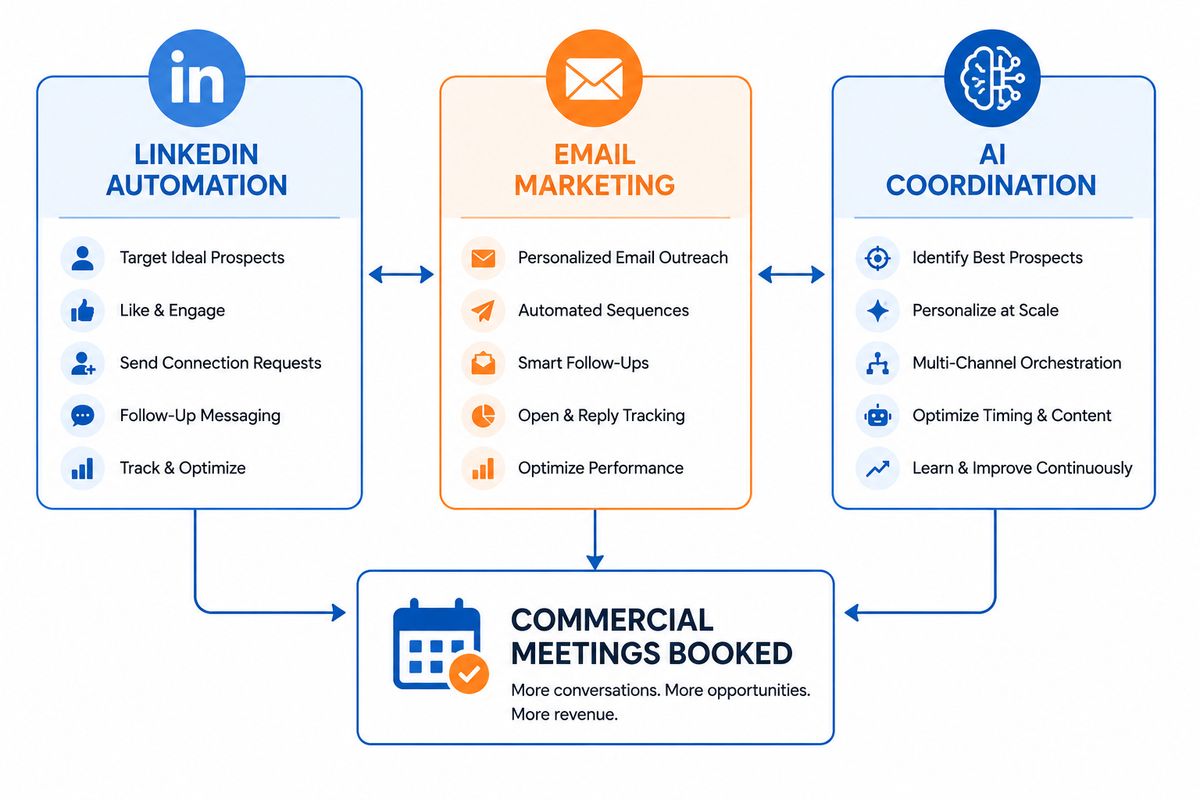
A commercial lead generation system for a painting business has three core components working together:
- LinkedIn automation for daily engagement, connection building, outreach, and content posting
- Email marketing for nurturing leads and staying top of mind
- AI-powered coordination that connects both channels, manages follow-up, and books meetings automatically
When these three work together, your painting business becomes visible to commercial decision makers consistently, without depending on any one person to keep it going.
Read More: Why Your Painting Business Is Losing Jobs - And How AI Fixes the Lead Leakage Problem
The Foundation: Knowing Your Ideal Commercial Client
Before any automation goes live, you need to know exactly who you are targeting. A lead generation system is only as good as the list it is built on. Spray and pray outreach wastes time and damages your reputation. Targeted outreach to the right people produces results.
Your ideal commercial client for a painting business typically looks like this:
- Job titles: Property Manager, Facility Manager, Asset Manager, Building Operations Director, Retail Operations Manager
- Industries: Commercial real estate, property management, hospitality, healthcare, retail chains, office building management
- Company size: Businesses managing five or more properties or facilities
- Location: Your serviceable geographic radius
- Buying signals: New property acquisitions, lease renewals, building renovations, seasonal maintenance cycles
When your system is built around this profile, every piece of outreach, every LinkedIn post, every email, speaks directly to the person most likely to hire you. That specificity is what separates a system that books meetings from one that generates silence.
LinkedIn as Your Primary Outreach Channel
LinkedIn is where commercial decision makers live professionally. Property managers post about their buildings. Facility directors share vendor experiences. Asset managers discuss market conditions. They are active, they are reachable, and almost no painting contractor is talking to them there.
LinkedIn works as the primary channel because it builds familiarity before you ask for anything. By the time your message lands in someone's inbox, they already know your name. That changes everything about how they respond.
Here is how each piece of the LinkedIn automation system works.
Automated Daily Engagement
Every day, the system scans LinkedIn for posts from your target decision makers and engages with their content automatically. Likes and reactions on posts from property managers, facility directors, and commercial real estate professionals in your target area.
This is the warm-up phase. Your name starts appearing in their notifications regularly before you ever reach out. You are not a cold contact. You are a familiar name they have seen around. When your connection request arrives, it lands differently.
This step is skipped by almost every contractor who tries LinkedIn outreach, and it is the reason most of them fail. Consistency in engagement is what earns the right to reach out.
Auto Connection Requests
Once the engagement phase has run for several days on a set of profiles, the system sends personalized connection requests to those contacts. Each request includes a short, specific note referencing their role or a recent post so it feels deliberate rather than automated.
The system manages daily limits to keep your account within LinkedIn's acceptable usage range. Connection requests go out steadily, not in bulk, so the activity looks natural and your account stays in good standing.
Every accepted connection is a commercial decision maker permanently inside your network, reachable at any time without a paid ad.
Automated Outreach Sequences
Once a connection is accepted, the contact enters a structured message sequence.
Message 1, Day 1: A warm introduction. No pitch. Acknowledges the connection and references something relevant to their work.
Message 2, Day 4: A value-first message. A useful insight about commercial painting project planning, a case study from a similar property type, or a tip about scheduling exterior work around commercial lease cycles.
Message 3, Day 9: A soft ask for a short call. Framed around whether there might be a fit, not a hard sell.
Message 4, Day 15: A final light-touch follow-up for non-responders. Short, friendly, and leaves the relationship intact for future outreach.
Every message is personalized using real data from the contact's LinkedIn profile. Company name, job title, and property types they manage. The AI builds each message from that information so it reads like individual outreach, not a template blast.
When a prospect replies with interest, the system sends a meeting link, books the call on your sales team's calendar, and logs the contact in your CRM automatically.
To Know more: Best CRM for Painting Contractors: 7 Tools to Boost Client Satisfaction In 2026
Auto Posting Around Commercial Services
Beyond outreach, the system publishes content to your LinkedIn profile automatically on a set schedule. This is a piece most painting contractors skip entirely, and it is one of the highest-leverage activities for building long-term commercial authority.
Posts are written and scheduled around topics that matter to your target audience:
- Before and after project showcases from commercial jobs
- Tips for property managers planning annual painting schedules
- Case studies from specific verticals like hospitality or commercial real estate
- Industry insights about coating longevity, weather timing, and surface preparation for commercial buildings
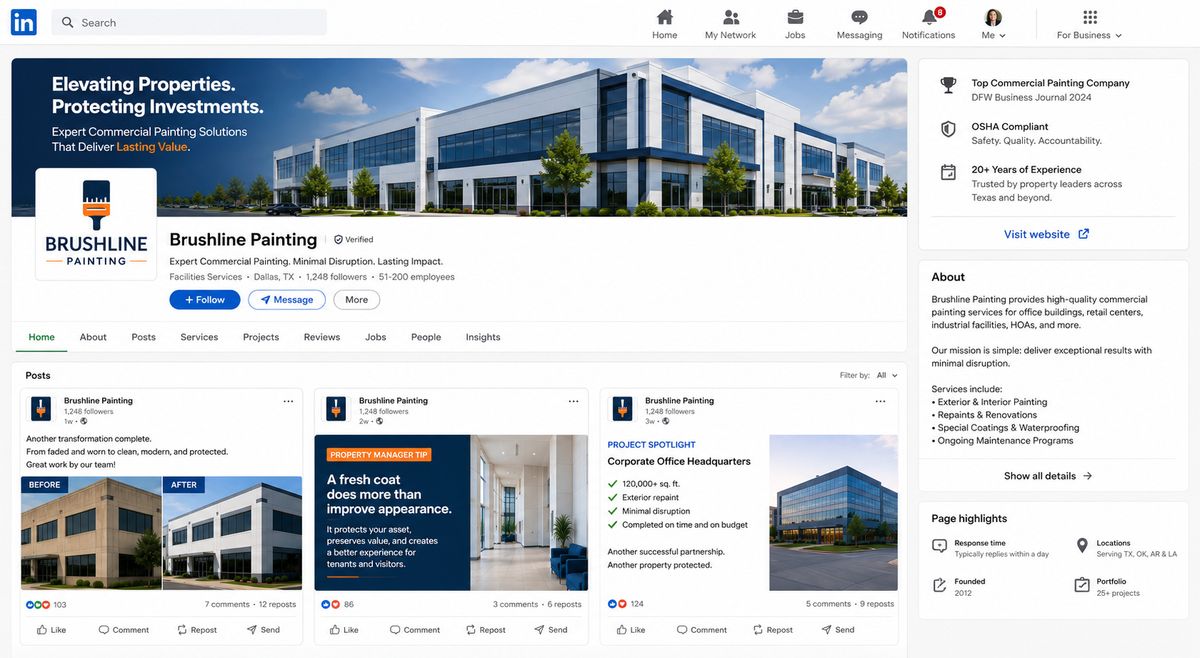
When a property manager receives your connection request or outreach message and visits your profile, they see a feed full of relevant, professional content about commercial painting. That content does more selling than any message could. It shows that you understand their world and that you do this kind of work regularly.
Consistent posting also builds organic visibility on LinkedIn over time. Decision makers who were never part of your outreach list start seeing your content through their network connections, and inbound interest begins to grow alongside your active outreach.
Read More: Best AI Tools for Painting Contractors in 2026
Email Marketing as Your Follow-Up Engine
LinkedIn gets you in the door. Email keeps you there.
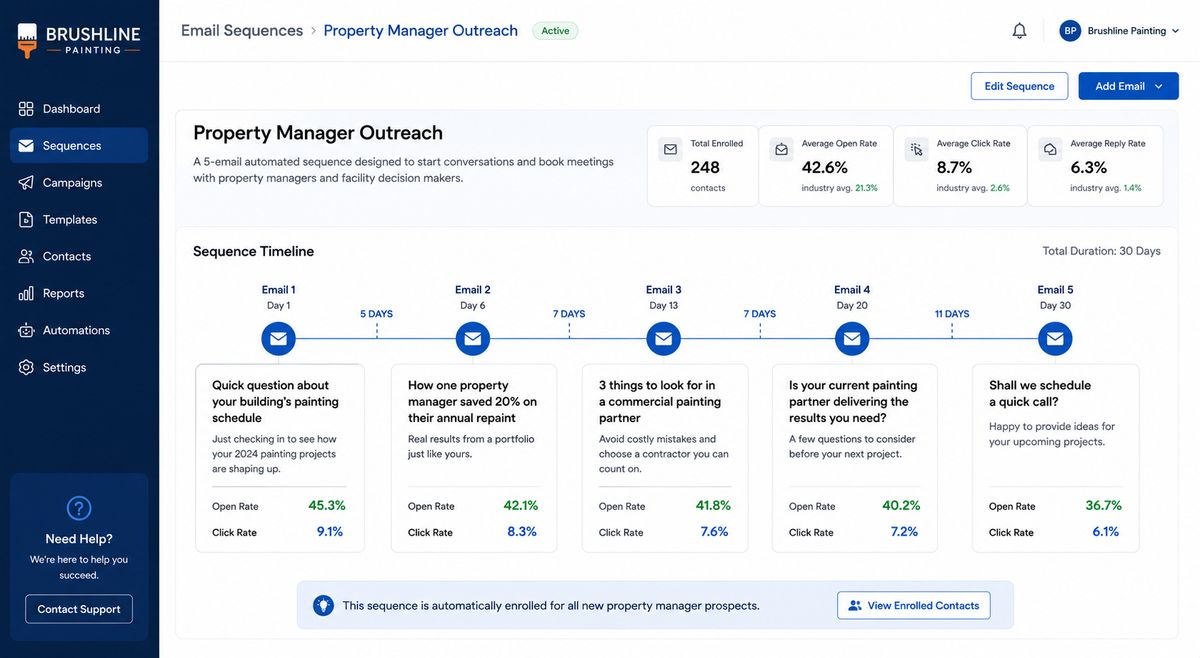
Not every commercial prospect will be ready to book a call the first time they hear from you. Commercial painting decisions often follow a cycle tied to lease renewals, budget approvals, and seasonal planning windows. A prospect who is not ready in February might be the perfect client in August. Email marketing makes sure you are still top of mind when that moment arrives.
Here is how the email side of the system works alongside LinkedIn:
Lead capture from LinkedIn: When a prospect engages with your LinkedIn content or accepts a connection, they can be moved into an email sequence through an integrated CRM workflow. You are not starting from scratch with email. You are continuing a relationship that LinkedIn already began.
Nurture sequences for non-converted leads: Prospects who did not book a call from LinkedIn outreach enter a longer email nurture sequence. Monthly or bi-monthly emails with useful content, project showcases, and seasonal reminders keep your painting business in front of them without being pushy.
Estimate follow-up sequences: When a commercial estimate goes out and does not convert immediately, an automated email sequence follows up at day 3, day 7, and day 14. Each message adds a small piece of value rather than just asking if they made a decision. This alone recovers a significant percentage of deals that would otherwise go cold.
Reactivation campaigns: Old leads who have not engaged in 60 to 90 days receive a reactivation email designed to restart the conversation. A single well-timed reactivation email regularly produces booked meetings from contacts who seemed completely gone.
The email system does not replace LinkedIn outreach. It extends it. Together, they create multiple consistent touchpoints across two channels, which is exactly the kind of presence that makes your painting business the first call a property manager makes when a project comes up.
How FatCamel AI Ties the Whole System Together
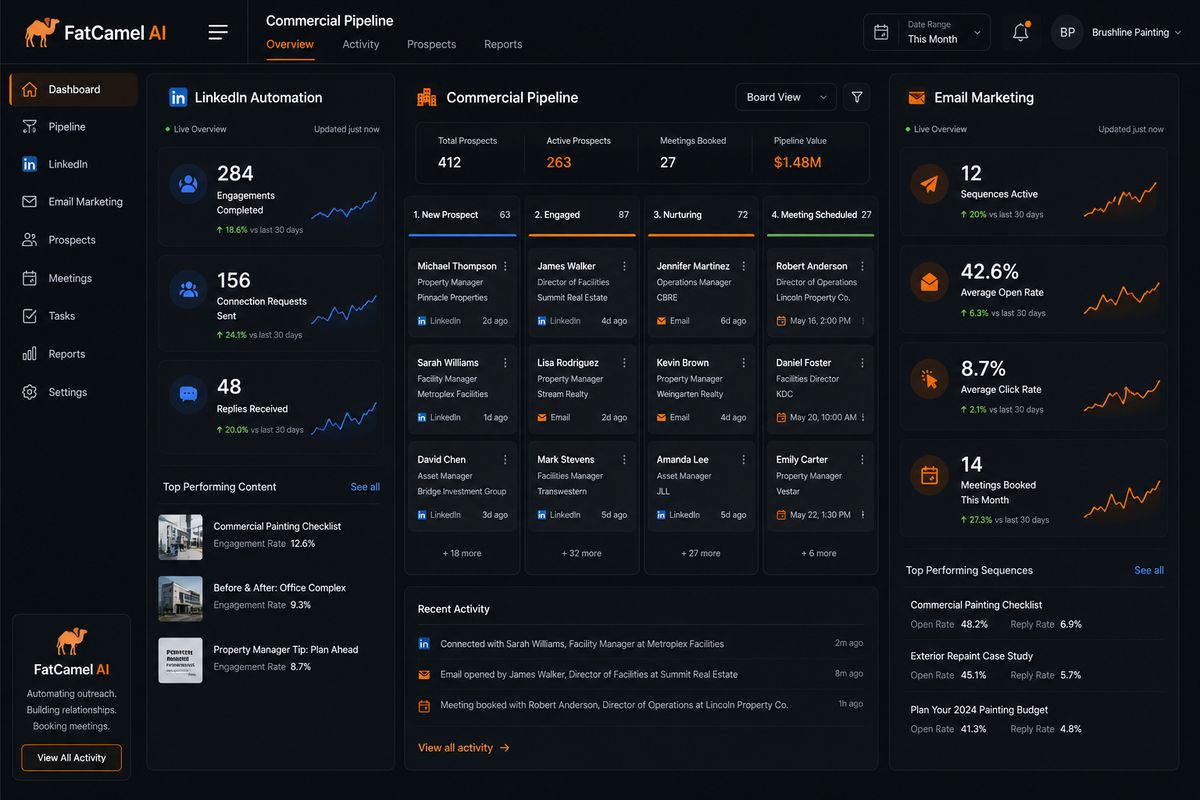
Running LinkedIn automation and email marketing in parallel is powerful. But without the right AI connecting them, you end up with two separate tools that do not talk to each other. Leads fall between the cracks. Follow-up happens twice on the same contact. Meetings get booked without the CRM knowing about it.
FatCamel AI is built to run this entire system as one connected workflow, specifically for trade contractors like painting businesses.
Here is what FatCamel AI handles across the full system:
Unified ICP targeting. FatCamel AI uses your ideal customer profile to drive both the LinkedIn and email sides of the system. The same targeting criteria that identify LinkedIn prospects also segment your email list, so every touchpoint is reaching the right person.
Cross-channel coordination. When a prospect engages on LinkedIn, FatCamel AI knows not to send them a cold email at the same time. When a prospect opens an email but does not reply, FatCamel AI can trigger a LinkedIn follow-up. The two channels work in coordination, not in isolation.
AI-written personalization at scale. Whether it is a LinkedIn message or an email, FatCamel AI pulls real data from each contact's profile and uses it to write messages that feel specific and relevant. You are not sending the same message to hundreds of people. Every message is built around that individual contact.
Automatic meeting booking. When a prospect shows interest in either channel, FatCamel AI sends a meeting link, confirms the booking, adds the contact to your CRM, and notifies your sales team with full context about the conversation and the prospect's background.
Content scheduling for LinkedIn. FatCamel AI plans and schedules your LinkedIn posts around your commercial service offerings, making sure your profile stays active and authoritative without anyone on your team having to manage it.
Pipeline visibility. A single dashboard shows you everything: how many prospects are in the engagement phase, how many connection requests are pending, how many email sequences are active, and how many meetings are booked for the week. You always know the health of your commercial pipeline at a glance.
FatCamel AI is not a general-purpose automation tool that you adapt for your painting business. It is built around how painting contractors sell and how commercial clients buy. That specificity is what makes the system produce results rather than just activity.
👉 See how FatCamel AI builds your commercial pipeline
Measuring What Is Working
A lead generation system without measurement is just an activity. You need to know which parts of the system are producing results so you can double down on what works and fix what does not.
The key metrics to track across the system:
LinkedIn metrics:
- Connection acceptance rate (target above 30%)
- Reply rate on outreach sequences (target above 15%)
- Profile views per week (should grow steadily over time)
- Post engagement rate (likes, comments, shares on your content)
Email metrics:
- Open rate on nurture sequences (target above 35%)
- Reply rate on reactivation emails (target above 5%)
- Estimate follow-up conversion rate
Pipeline metrics:
- Meetings booked per month from LinkedIn
- Meetings booked per month from email
- Lead to meeting conversion rate
- Meeting to estimate conversion rate
- Estimate the job-won conversion rate
Reviewing these numbers monthly gives you a clear picture of where the system is strong and where prospects are dropping off. Most painting contractors who run this system find that the biggest gains come from improving their outreach message sequence and their LinkedIn post consistency, two things that compound quickly once they are dialed in.
What You Need to Get Started
Getting this system live does not require a large team or a large budget. Here is the minimum you need:
- A complete, professional LinkedIn profile for your business owner or primary salesperson
- A clearly defined ICP with job titles, industries, locations, and company sizes
- A CRM connected to your calendar for automatic meeting booking and lead logging
- An email marketing platform integrated with your CRM
- FatCamel AI configured for your market, your service area, and your target verticals
Most painting businesses can have the full system live within one to two weeks. The LinkedIn engagement and posting side starts producing visibility almost immediately. Booked meetings typically follow within three to six weeks as connection requests are accepted and sequences complete their run.
The system gets stronger every month. Your LinkedIn network grows. Your content builds authority. Your email list fills with warm commercial contacts. Six months in, your pipeline looks nothing like it did when you started.
FAQ
1. What is a commercial lead generation system for a painting business?
A commercial lead generation system is a structured, automated process for finding and connecting with commercial clients like property managers and facility directors. It typically combines LinkedIn outreach, email marketing, and AI automation to identify the right decision makers, build relationships over time, and book sales meetings without manual effort from your team.
2. Why is LinkedIn the best channel for painting contractor outreach?
LinkedIn is where commercial decision makers spend their professional time. Property managers, facility directors, and commercial real estate professionals are active on LinkedIn daily. Unlike Google Ads or cold calling, LinkedIn allows you to build familiarity with a prospect over time before you ever ask for a meeting, which dramatically improves conversion rates.
3. How does automated LinkedIn posting help a painting business get commercial clients?
Consistent LinkedIn posting around commercial painting topics builds your authority and credibility with the exact audience you are targeting. When a property manager receives your connection request and visits your profile, they see a feed full of relevant project work and industry insights. That content does the selling before any conversation starts.
4. What is the role of email marketing in a painting business lead generation system?
Email marketing extends the relationship that LinkedIn begins. It keeps your painting business visible to prospects who are not ready to buy yet, follows up on sent estimates, and reactivates leads that have gone cold. Together with LinkedIn, email creates a multi-channel presence that keeps your business top of mind across a full commercial buying cycle.
5. How long does it take to build a commercial pipeline for a painting business?
Most painting businesses start seeing LinkedIn engagement and connection activity within the first week. Booked meetings typically start coming in between weeks three and six. A consistent commercial pipeline with predictable monthly meetings usually develops within three to four months of the system running continuously.
6. Can a small painting business run this kind of system?
Yes, and it is often more impactful for smaller businesses than for large ones. A small painting contractor with this system running has a more consistent commercial outreach operation than most regional competitors with full sales teams. The system levels the playing field significantly.
7. What makes FatCamel AI better than using generic automation tools for this?
Generic automation tools are built for broad business use and require significant customization to work for painting contractors. FatCamel AI is built specifically around how trade contractors sell and how commercial property clients buy. The targeting, messaging, and workflow are designed for this specific use case, which means faster setup and better results from day one.