
You are not losing jobs because your work is bad.
You are not losing jobs because your prices are too high.
You are losing jobs because someone else replied before you did.
A homeowner fills out a quote form, maybe after clicking your Google ad, seeing your truck, or finding you on Yelp. In that moment, their intent is high, and their patience is low. Within the next five to ten minutes, they will submit the same request to two or three other contractors.
The race has already started. And most painting businesses do not even know they are in it.
If your business responds two hours later and a competitor responds in two minutes, the conversation has already happened without you. It rarely comes down to who is cheaper or who does better work. It comes down to who showed up first.
Table of Contents
Why Speed Is Now the Number One Competitive Advantage for Painters
The Hidden Stage Where Most Painting Leads Are Lost
Why Manual Response Systems Always Break Down
What an Instant Reply System Actually Does for Your Painting Business
How a Complete AI Response System Works From Start to Finish
A Real World Example of the Impact on a Painting Business
Why This Matters Even More in 2026
Where FATCAMEL AI Fits Into Your Painting Business System
The Real Shift: From Manual Hustle to System-Driven Growth
References
Frequently Asked Questions
Why Speed Is Now the Number One Competitive Advantage for Painters
Customer behavior has fundamentally shifted. People no longer sit and wait for a callback. They are accustomed to same-day delivery, instant ride confirmations, and real-time chat support. That same expectation has now extended to hiring a painter.
When a homeowner is actively searching for a contractor, they enter what marketers call a decision window. This is a short, high-intent moment where they are ready to commit. According to research published by Harvard Business Review, businesses that contact a lead within the first hour are seven times more likely to qualify that lead than those who wait even 60 minutes, and the odds of reaching a lead decrease by over 10 times after the first hour passes. [1]
The business that enters that window first gets to set the tone, build the rapport, and ultimately control the outcome.
Fast response does not just feel good for the customer. It does three powerful things at the same time.
It captures attention while interest and intent are still at their peak. It builds instant trust because a quick reply signals a professional, reliable business. And it books appointments before competitors even enter the conversation.
Speed is not just helpful. In 2026, speed is decisive.
The Hidden Stage Where Most Painting Leads Are Lost
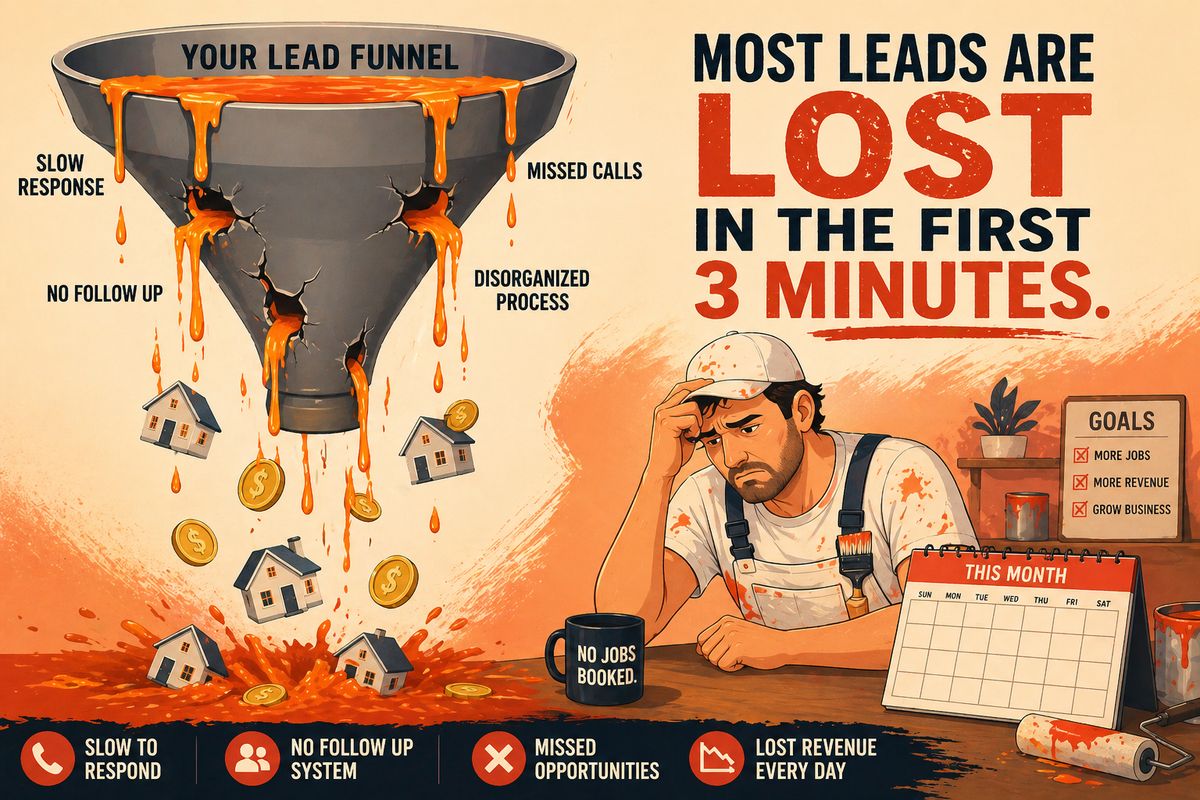
Most painting business owners believe they are losing leads somewhere deep in the funnel, perhaps during pricing negotiations or after the quote is sent. The reality is far more uncomfortable.
A significant percentage of painting leads are lost in the first three minutes.
Here is what that actually looks like in practice. A form is submitted at 7 pm, and no one sees it until the next morning. A call comes in while the owner is on a job site and gets missed with no callback. A Facebook message sits unread for four hours while the team is focused on active projects. A text inquiry is seen but not replied to because the owner plans to respond later.
From the customer's perspective, all of these situations feel identical. They feel like silence. And silence creates doubt.
Research by Lead Response Management found that 35 to 50% of sales go to the vendor that responds first, and that waiting longer than five minutes to follow up with an online lead decreases the likelihood of qualifying that lead by 400%.
Once that doubt sets in, the customer moves on to the next contractor on their list. The leads exist. The opportunity exists. But the system to capture them does not.
Read More: AI for Roofing Contractors in 2026: Is Roofing a Good Industry to Offer AI Systems?
Why Manual Response Systems Always Break Down
Most painting businesses rely entirely on manual systems to handle incoming leads. This means someone on the team has to check notifications, respond to messages, answer calls, follow up with old inquiries, and update the CRM, all by hand.
This approach works reasonably well when the lead volume is low. But as soon as volume increases, the entire system starts to crack.
People get busy on job sites. Calls get missed. Messages are delayed. Follow-ups are forgotten. Even with a hardworking and motivated team, the absence of a structured and automatic system creates dangerous inconsistency. And in lead conversion, inconsistency is what turns potential revenue into lost opportunities.
A study by Forbes found that 71% of internet leads are never followed up with at all, and of those that are, the average response time is 47 hours. In an environment where homeowners expect a reply within minutes, a 47-hour average response is the same as no response.
This is precisely where lead response automation becomes not just helpful but necessary for sustainable growth.
What an Instant Reply System Actually Does for Your Painting Business
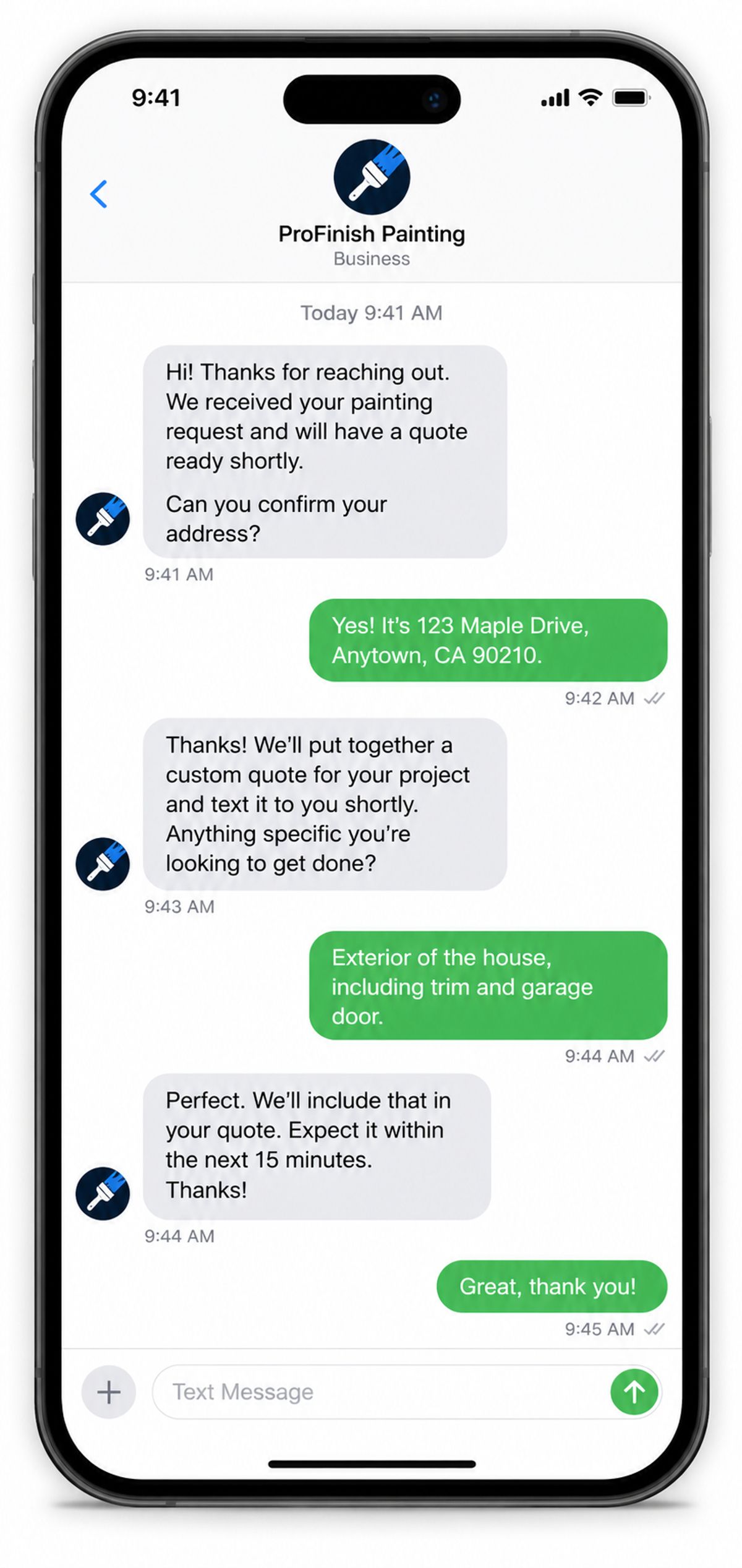
When we talk about an instant reply system for painting contractors, we are not talking about clunky auto-replies that feel robotic and impersonal.
We are talking about a structured, intelligent system that handles the first and most critical stage of customer communication immediately, professionally, and in a way that keeps the conversation moving forward.
The moment a lead comes in through any channel, the system responds instantly with a relevant and personalized message. It acknowledges the inquiry, keeps the conversation active, and maintains the customer's interest while it is still at its highest point.
At the same time, the system qualifies the lead by collecting essential information such as the type of painting service needed, the location, the timeline, and the urgency of the project. This qualification step ensures that your team spends its time only on serious, high-intent prospects rather than chasing cold or unserious inquiries.
According to research by Salesforce, high-performing sales teams are 2.8 times more likely to use AI-powered tools for lead prioritization and response automation than underperforming ones, and businesses using automated lead response see an average 30% improvement in lead conversion rates compared to those relying on manual follow-up.
The result is a much stronger starting point for every sales conversation and a dramatically improved chance of booking the job.
How a Complete AI Response System Works From Start to Finish
Now, let us look at how a fully connected and automated system handles every lead from the very first touchpoint all the way through to a booked appointment.
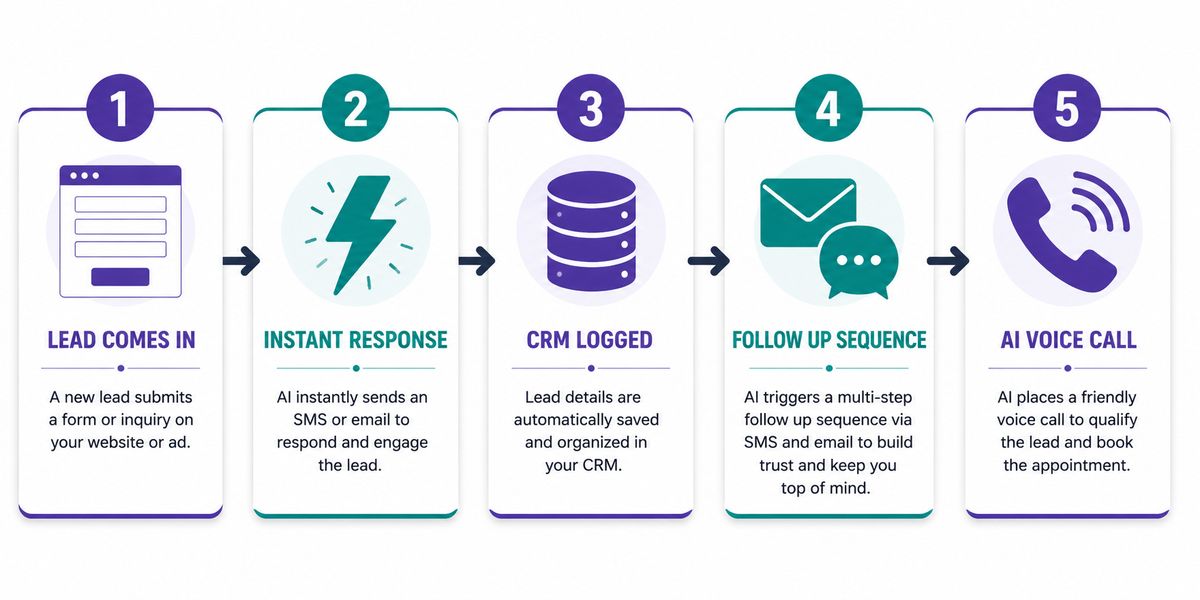
When a lead enters the system through a web form, a paid ad, a phone call, or a direct message, the process begins immediately without any manual input required from your team.
Stage One: Automatic lead qualification. The system sends smart prompts to collect the essential details needed to assess the quality and urgency of the inquiry. Project type, location, size, timeline, and budget are captured automatically through a natural conversational flow.
Stage Two: Instant response. The customer receives a professional, personalized message within seconds, making them feel heard, valued, and engaged right from the very start of the interaction.
Stage Three: Automatic CRM logging. All lead information is captured and organized inside your CRM without anyone having to enter it manually. Nothing is lost. Nothing is delayed. Your pipeline stays accurate and current in real time.
Stage Four: The follow-up sequence. A structured series of messages, emails, and touchpoints continues the conversation automatically over the following days and weeks, keeping your business top of mind without relying on memory or manual reminders. Research by MarketingSherpa confirms that nurtured leads produce a 20% increase in sales opportunities on average compared to leads that receive no follow-up nurturing. [5]
Stage Five: AI voice re-engagement. If the lead goes silent and stops responding to messages, an AI voice agent steps in to call the lead directly, re-engage the conversation naturally, and bring the opportunity back to life before it is lost permanently.
This entire process runs silently in the background, around the clock, without any dependency on your team's availability or attention.
Read More: 5 Must-Have AI Tools for Small Businesses This Year
A Real World Example of the Impact on a Painting Business
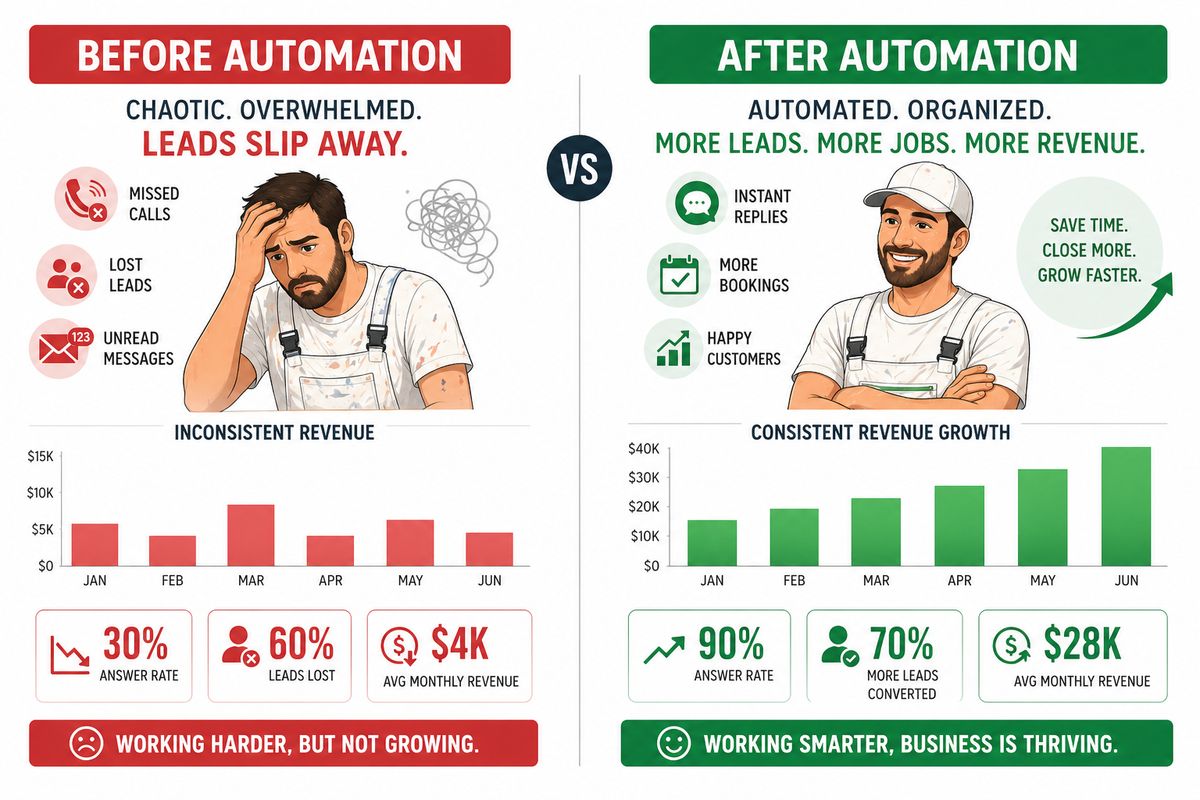
Let us walk through a realistic scenario to understand just how significant this shift can be in practice.
Imagine a painting business that receives between 80 and 100 leads every month. The team is hardworking, and the service is excellent, but responses are inconsistent. Some leads are answered quickly. Others are delayed by hours. Some are missed entirely. The result is an unpredictable pipeline and a conversion rate that fluctuates month to month without any clear reason.
Now introduce a fully automated response system.
Every single lead receives an instant reply within seconds. Follow-ups run automatically without anyone having to remember or manually schedule them. Leads that went silent are re-engaged through AI voice calls. The CRM stays updated without manual data entry.
A modest improvement in conversion rate from 20% to 28% translates into six to eight additional booked jobs per month. At an average job value of $2,500, that is $15,000 to $20,000 in additional monthly revenue from the same lead volume.
No extra advertising spend. No new marketing campaigns. Simply better handling of the opportunities that already exist inside the pipeline.
This is not a theoretical outcome. A study by McKinsey found that businesses implementing AI-powered customer engagement tools consistently report conversion rate improvements of 20 to 30% within the first 90 days of deployment.
Know More: 10 No-Code AI Tools to Automate Your Workflow
Why This Matters Even More in 2026
Customer expectations have shifted dramatically over the past few years and show no signs of slowing down.
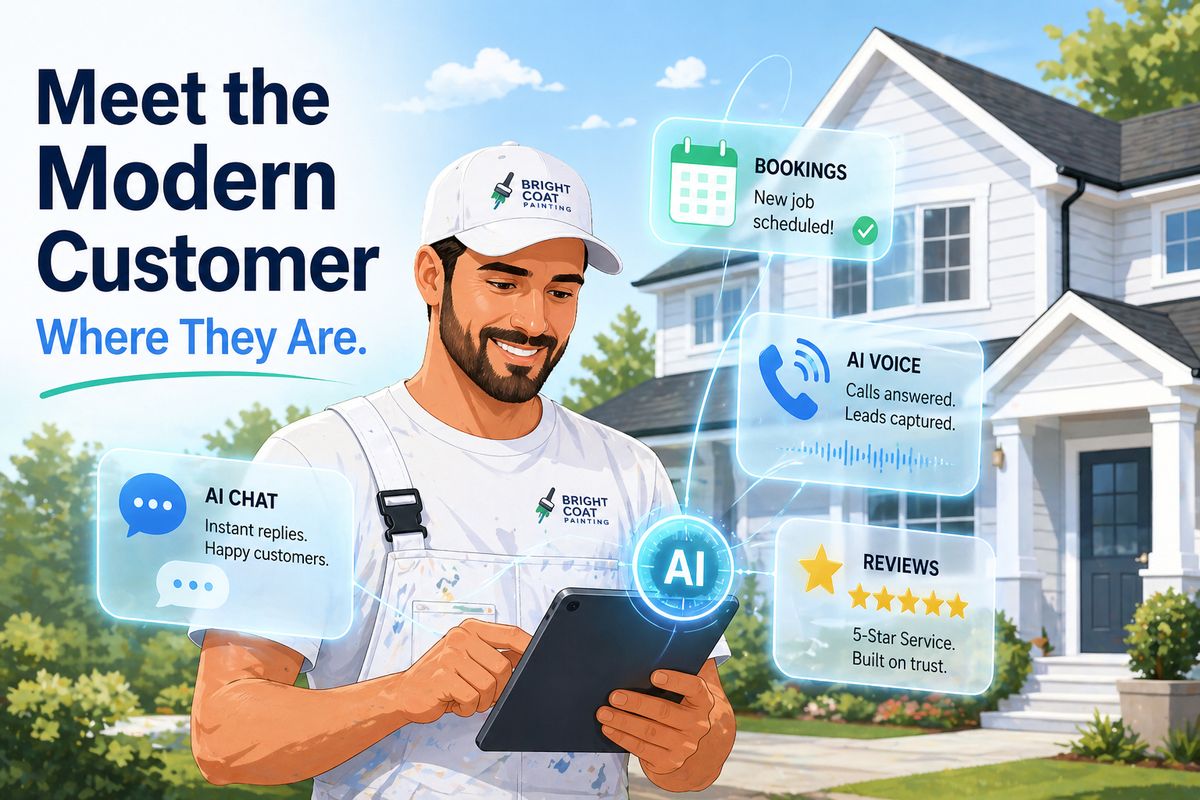
People now expect businesses to respond instantly, communicate clearly, and make the entire process frictionless from the very first message. According to a Salesforce State of the Connected Customer report, 83% of customers now expect to engage with a business immediately upon contact, and 78% say the experience a company provides is just as important as its actual product or service.
If your painting business cannot meet these expectations, customers will not complain about it. They will simply choose someone who can.
This is not about adopting technology for its own sake. It is about meeting people where they are and delivering the experience they now expect as a baseline standard.
In a competitive local market where multiple painting contractors are bidding for the same homeowner's attention, the speed of your first response often determines whether you are even part of the conversation. And if you are not part of the conversation, you are not winning the job.
Where FATCAMEL AI Fits Into Your Painting Business System
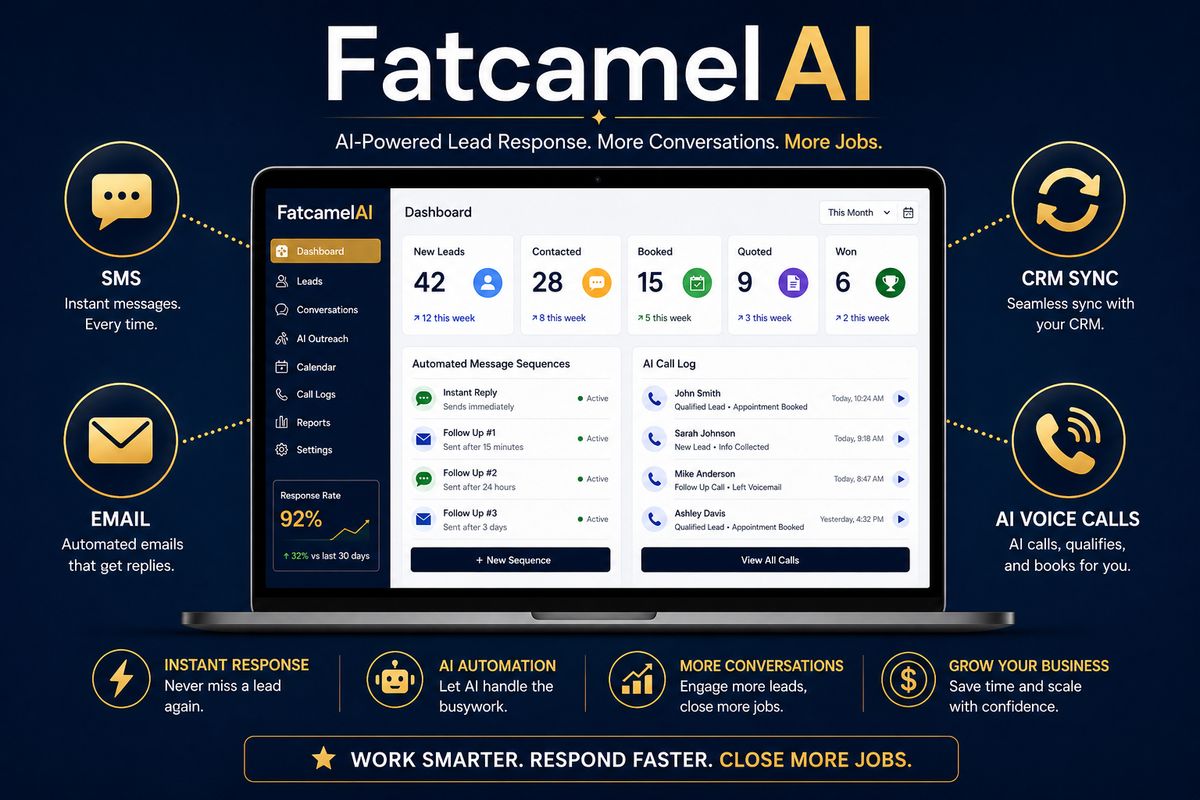
Most painting businesses already have the core pieces in place. They have a CRM, lead generation channels, and some form of communication system. What they are missing is the connective tissue that makes all of those pieces work together consistently and automatically.
This is exactly where FATCAMEL AI becomes a competitive advantage.
FATCAMEL AI does not replace your existing setup. It enhances and activates it by creating a structured system where every lead is instantly qualified, responded to, followed up, and tracked without requiring manual effort from your team.
With FATCAMEL AI, your painting business can automatically respond to new inquiries the moment they arrive, capture and organize lead data inside your CRM without manual entry, run consistent and personalized follow-up sequences across SMS and email, and trigger AI voice agents to re-engage leads that have gone cold before they are lost forever.
The Real Shift: From Manual Hustle to System-Driven Growth
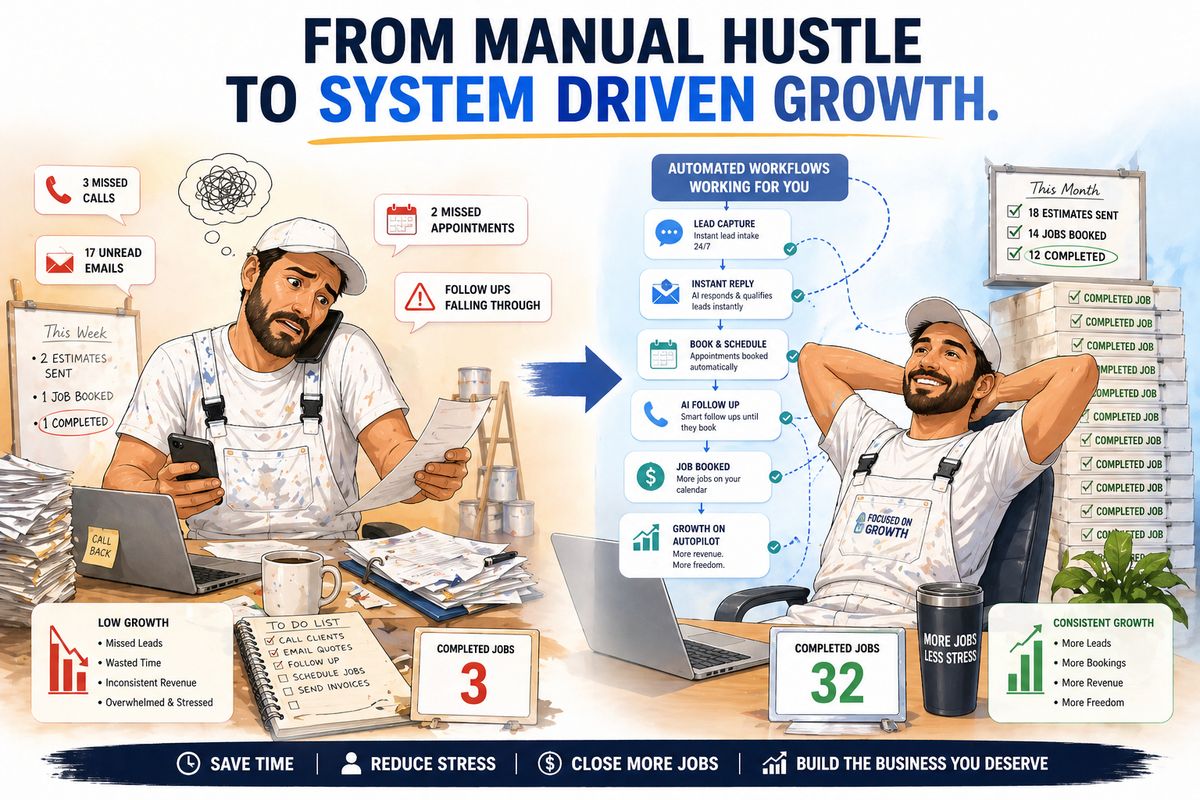
Most painting business owners try to improve their conversion rates by sharpening their sales skills or increasing their advertising budget. Both are valid approaches. But the single biggest lever that most businesses overlook is moving from a manual, person-dependent response process to a system-driven one.
When your response becomes instant, and your follow-up becomes automatic, everything else in your sales process becomes easier.
More conversations happen. More appointments get booked. More leads move forward into paying jobs. And most importantly, fewer opportunities are silently lost before you even get the chance to compete for them.
According to research by HubSpot, companies that automate their lead management process see a 10% or greater increase in revenue within six to nine months, and sales teams that use automation spend 14% more time actually selling compared to teams relying on manual processes.
The businesses that grow consistently in competitive local markets are not necessarily the ones with the best craftsmanship or the lowest prices. They are the ones with the most reliable systems. And reliability, in 2026, starts with how fast and how consistently you respond to every single lead that comes through.
Final Thoughts
Painting businesses are not losing jobs because demand is low.
They are losing jobs because they are not fast enough to capture the demand that already exists.
The first response shapes the entire customer relationship. It signals professionalism. It communicates reliability. And it positions your business as the obvious choice before competitors even have the chance to enter the picture.
AI automation does not replace your team. It ensures your team never misses the moment that matters most.
In a market where timing is everything, that is the difference between a contractor who grows consistently and one who wonders where all the leads went.
Frequently asked questions
1. How much does slow response time actually cost a painting business?
More than most contractors realize. If you generate 80 leads per month and lose 30% due to slow responses, that is 24 leads gone every month. At an average job value of $2,500, that is $60,000 in monthly lost revenue from leads you already paid for.
2. What is the ideal response time for a painting contractor to convert a lead?
Under five minutes. Harvard Business Review research shows that the odds of qualifying a lead drop more than ten times after the first hour. Homeowners contact multiple contractors at once, so whoever replies first controls the conversation.
3. How does an automated response system handle leads that come in after business hours?
It responds instantly, regardless of the time. A homeowner submitting a request at 10 pm on a Friday receives a professional reply within seconds. Your team does not need to be available for the system to work.
4. Will automated replies feel impersonal or robotic to homeowners?
Not when done correctly. A well-configured system sends personalized, relevant messages based on the specific inquiry, not a generic acknowledgment. Done right, it feels like attentive customer service, not automation.
5. How many follow-up attempts should a painting contractor make before giving up on a lead?
At least five to eight. Research shows 80% of sales require five or more touchpoints, yet most painting businesses stop at one or two. A structured sequence running across SMS, email, and AI calls over 21 to 30 days captures the conversions that manual follow-up misses.
6. Can a small painting business with a two or three-person team realistically implement AI lead response?
Yes, and small teams benefit the most. Automation allows a two or three-person operation to respond with the speed and consistency of a much larger business without adding headcount or working longer hours.
7. What is the difference between a basic chatbot and the AI system that FATCAMEL AI provides?
A chatbot answers questions when someone reaches out. OutreachAI by FATCAMEL AI proactively responds to every incoming lead, runs multi-touch follow-up sequences, updates your CRM automatically, and triggers AI voice calls for leads that go silent. One answers. The other converts.