

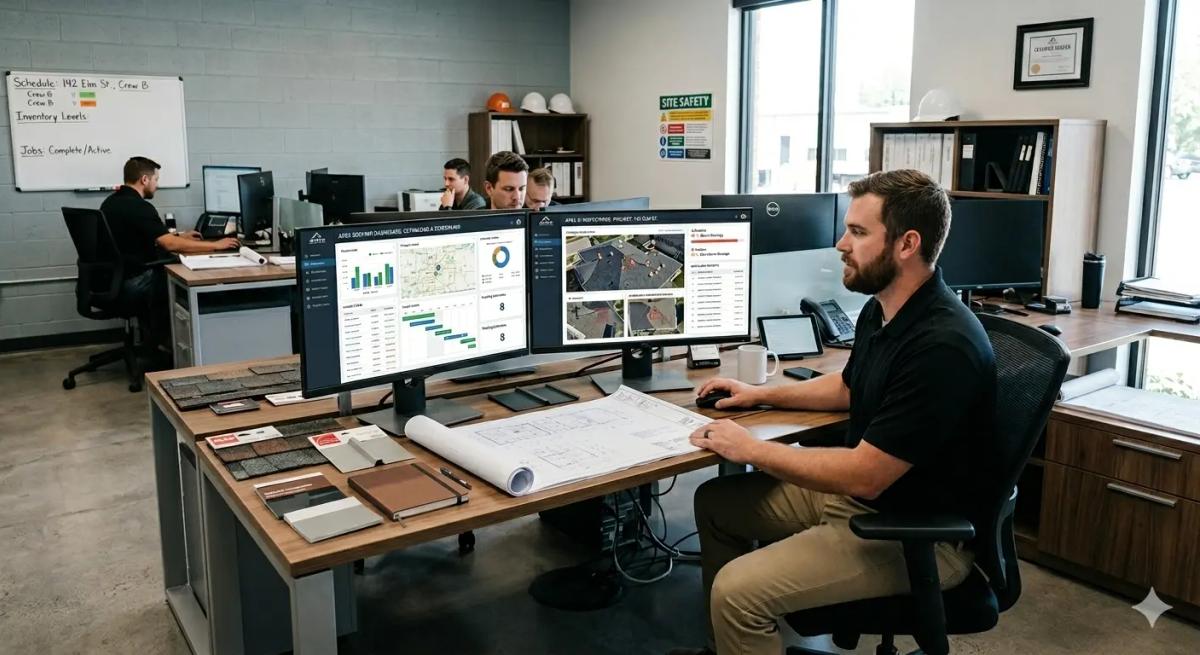
For years, roofing has been seen as a hands-on trade. Crews on ladders. Clipboards in trucks. Estimates written after long site visits. Success depended on experience, hustle, and word-of-mouth referrals.
But the industry is changing.
Customers expect instant responses. Insurance companies demand better documentation. Storm seasons bring sudden surges in demand. Labor shortages continue to strain crews. Margins are tighter, and competition is sharper.
This is exactly why AI for roofing contractors is gaining momentum.
The real question many business owners are now asking is simple: Is roofing a good industry to offer AI systems?
The short answer is yes. The better answer is that roofing may be one of the most practical industries for AI adoption because it has clear operational bottlenecks, repetitive admin tasks, weather-driven urgency, and high-value transactions.
AI roofing is not about replacing roofers. It is about strengthening operations, improving estimating accuracy, automating communication, and increasing productivity without increasing payroll.
Let’s break down how roofing AI is actually being used today and what it will look like by 2026.
Read more here about Free LinkedIn Automation
AI Applications in Roofing Operations
AI for roofing contractors is most powerful when applied to everyday operations.
Start with estimating. An AI estimator can analyze roof dimensions using satellite roof measurements or drone inspections, process roof photo analysis, and generate structured pricing systems automatically. This reduces manual measuring errors and increases estimating accuracy.
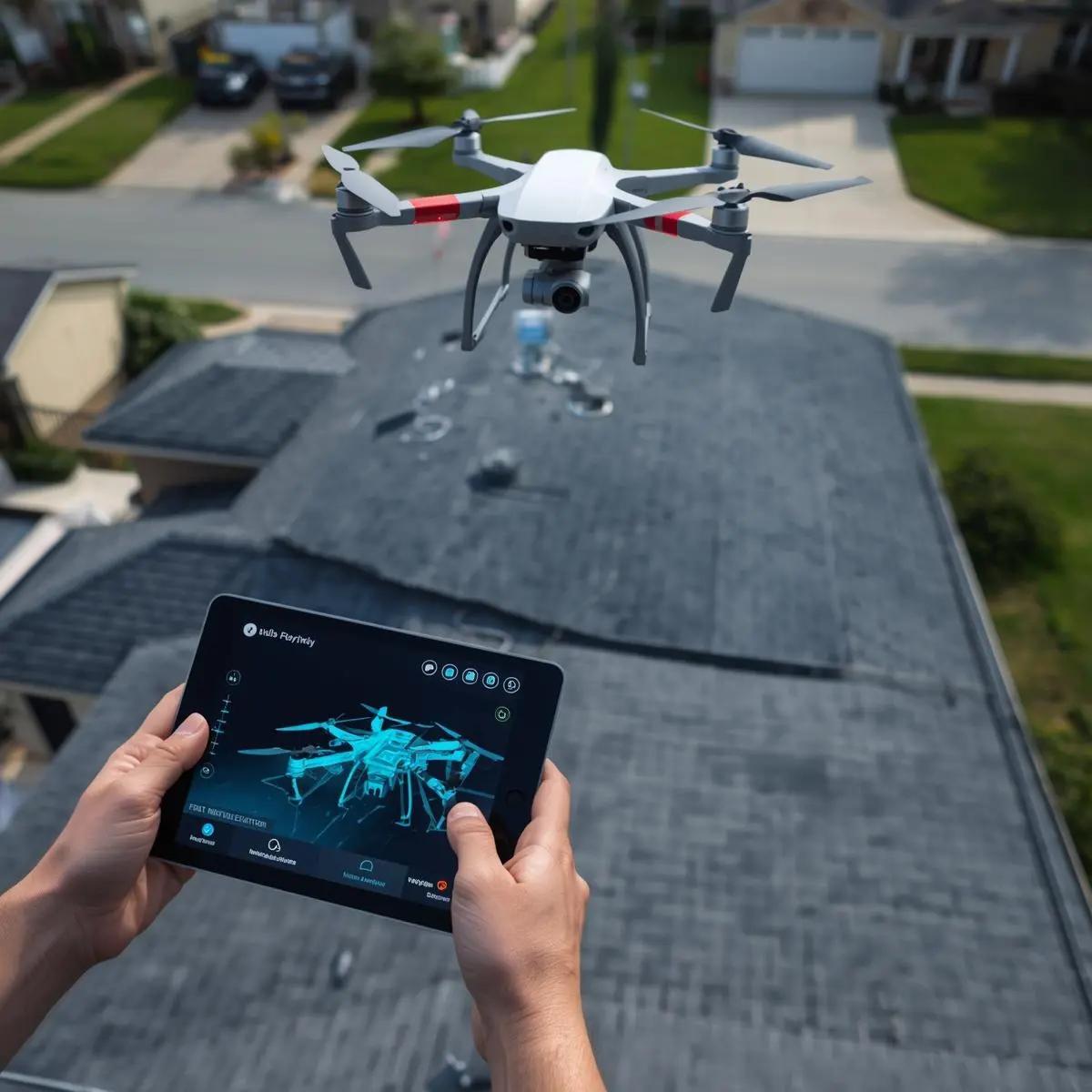
Damage assessment has also improved. Using high-resolution photos, AI models can identify storm damage, flake loss, and missing shingles. The technology identifies possible problem areas for evaluation rather than going over each image by hand.
Another crucial issue is inventory management. During busy times of the year, roofing companies frequently face material shortages. AI assists in monitoring usage trends and coordinating purchases with anticipated demand. To keep material ordering and job documentation in sync, some contractors include RoofHub and similar systems in a linked business management platform.
Service workers and inspection teams operate more efficiently when routes are optimized. To reduce downtime, AI takes into account job priority, traffic patterns, and weather observations.
Additionally, predictive maintenance is expanding. By examining past weather information and the performance of roofing materials, AI can estimate when certain roofs may require repair, allowing contractors to offer proactive service plans.
These improvements are not futuristic. They are happening now in roofing AI systems.
Read more here about Free Telegram Automation Using n8n
Efficiency and Productivity Gains
Efficiency is where AI roofing creates a measurable impact.
Estimating used to take hours. Now, tools like MapMeasure Pro satellite measurements and AI estimators can produce detailed proposals in minutes.
Effective scheduling of inspections guarantees that workers are not making unnecessary trips back and forth. GPS-enabled employee management increases accountability without micromanaging groups.
When AI examines routes and fuel use, fleet management becomes more intelligent. Sales and manufacturing bottlenecks are lessened by simplifying workflows.
Additionally, generative AI helps with production reporting, follow-up messaging, and proposal drafting. Contractors employ structured AI suggestions to provide professional communication instantaneously rather than drafting repetitive updates.
Because AI monitors labor, material, and overhead trends across projects, job costing becomes more accurate. This enhances profitability forecasts over time.
The result is simple: roofing companies complete more jobs with the same team size.
That is the power of AI for roofing.
AI Tools and Solutions for Roofing in 2026
AI will feel more like infrastructure for roofing contractors by 2026 than an add-on.

Storm-damage call automation systems that identify impending weather events and initiate automated outreach efforts are already in use. AI virtual call teams take calls after hours and record job information so they don't miss any opportunities.
In markets with intense competition, drone and AI roof inspections are becoming commonplace. Inspection data is instantly converted into insurance claim paperwork.
Instead of taking months, AI website builders enable contractors to launch optimized websites in a matter of days. Homeowners can rapidly obtain a preliminary price with InstaQuote client self-quoting devices.
QuoteIQ roofing CRM and similar platforms integrate roof estimating with job management, payment portals, and field reporting.
AI autopilot systems connect lead capture, estimating, scheduling, and follow-up automatically. Instead of juggling disconnected tools, contractors build an AI stack where connected software tools communicate seamlessly.
The best AI for roofing contractors 2026 will not be the flashiest tool. It will be the most integrated system.
Read more here about Free WhatsApp Automation Using n8n
Safety Enhancements Through AI
Roofing remains a physically demanding and sometimes dangerous trade.
Drone inspections reduce the need for unnecessary climbs. AI-supported reports improve accuracy in damage identification without exposing crews to risk.
Sensors and integrated field software help monitor job sites. Field reporting tools ensure that safety compliance documentation is recorded properly.
AI is even being used as a training tool. New team members can review annotated inspection images to learn what storm damage or material failure looks like before stepping onto a job site.
Safety is not just about equipment anymore. It is about information.
And roofing AI improves that information.
Is Roofing a Good Industry to Offer AI Systems?
From a technology standpoint, roofing is highly suitable for AI systems.
Why?
Because it combines high transaction value with repetitive workflows.
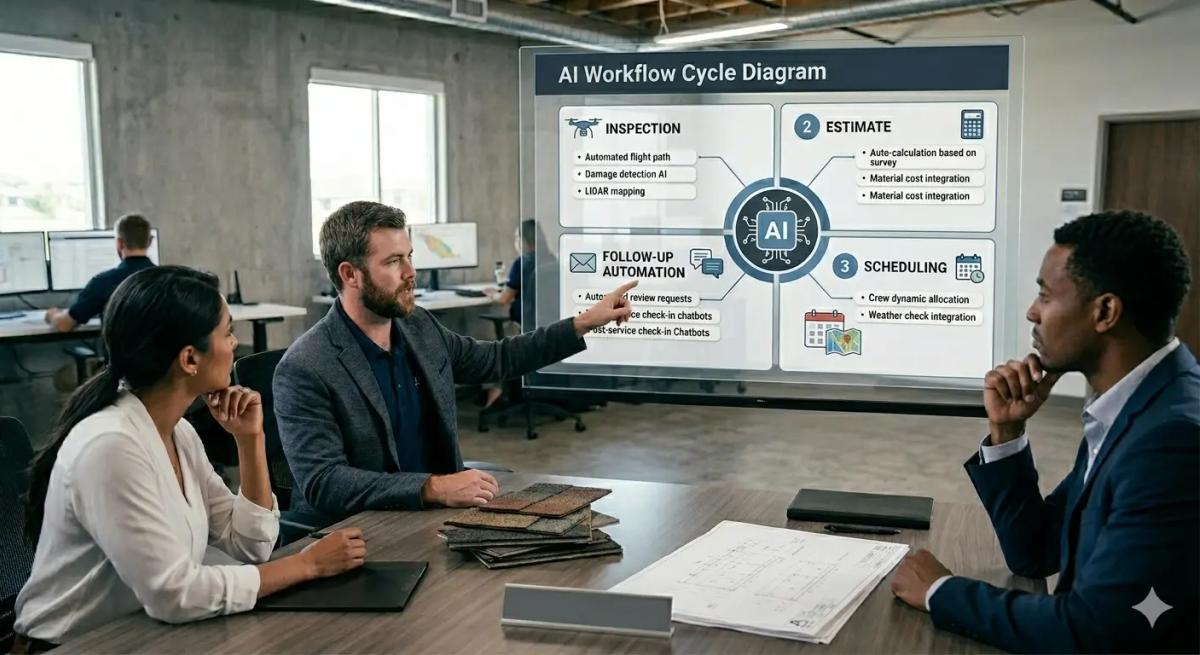
Each job involves inspection, documentation, estimating, scheduling, material ordering, communication, and follow-up. These processes repeat across every project.
That repetition makes them ideal for automation.
Roofing also operates in a weather-driven environment where speed matters. AI engines analyzing historical weather data can anticipate demand surges and support marketing planning.
Roofing material performance tracking allows pattern recognition across regions, guiding contractors toward impact-resistant roofing or class-A fire-rated roofing where necessary.
Few industries have such clear operational patterns and high margins per project.
That makes roofing AI a strong opportunity both for contractors and for those offering AI systems to the industry.
Read more here about Free LinkedIn Automation Tool – A Complete Guide
Marketing and Lead Generation with AI
Despite the strength of operational efficiency, leads are still necessary for growth.
Here, artificial intelligence is subtly altering the landscape for roofers.
Yard signs, recommendations, and simple Google Ads were the mainstays of traditional roofing marketing. In order to enhance targeting, AI-powered systems now examine lead indications, search trends, and consumer behavior.
When severe weather strikes particular zip codes, AI agents can automatically launch outbound storm campaigns. Roofing firms can use customized messages to reach out at the correct time rather than waiting for homeowners to search.
Chatbots with AI capabilities respond to website visitors instantly. They qualify applicants, gather contact information, and even arrange inspections. Conversion rates are directly impacted by faster reaction times.
Optimizing AI engines is also becoming more significant. Roofing companies need to concentrate on content coverage, brand citations, and local consistency scores as AI-powered search results and AI overviews change the way consumers find contractors.
These days, sophisticated contractors keep an eye on AI share of voice to make sure their business shows up in search previews and summaries produced by AI.
AI for roofing has more than just an operational future. It is also motivated by visibility.
Evaluating ROI and Implementation Challenges
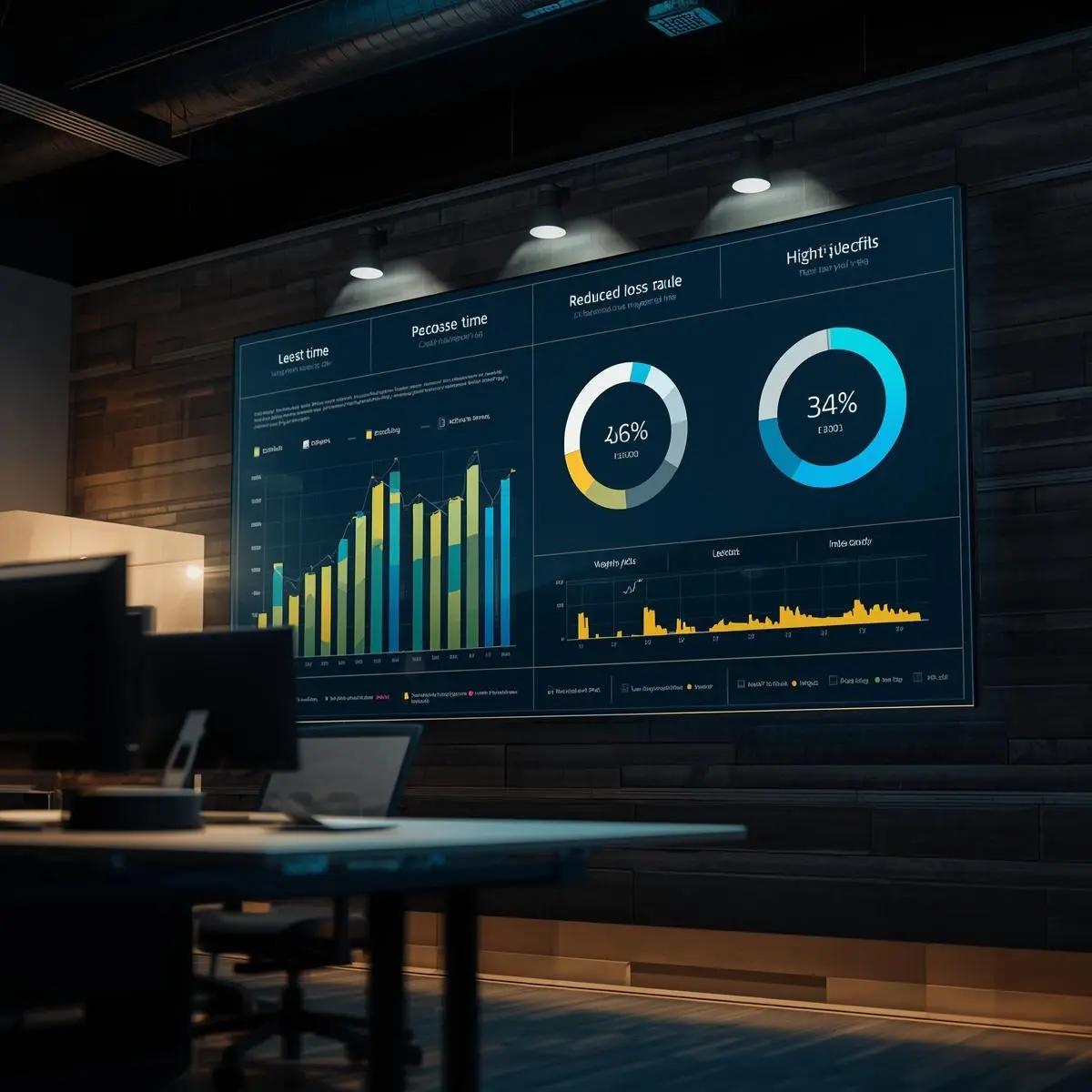
Technology investment always raises the same question: will it pay off?
The ROI of AI for roofing contractors can be measured in multiple ways.
First, estimating speed. If an AI estimator reduces proposal time from two hours to fifteen minutes, that increases daily job capacity.
Second, conversion optimization. Faster responses and better CTAs improve close rates.
Third, reduced admin workload. AI call minutes handled by a virtual assistant mean fewer missed opportunities.
Fourth, improved job costing accuracy. Better forecasting reduces margin leakage.
However, implementation requires careful planning.
Integration with ERP systems or payment portals must be smooth. Workflow adjustments may be needed to align teams with new processes.
Trust signals matter. Customers must understand that automation enhances service, not reduces personal connection.
The most successful AI roofing implementations use integrated evaluation methods. Contractors measure response time, job cycle duration, and profit per job before and after AI adoption.
That clarity builds confidence in the technology investment.
Read more here about Free Email Automation Using n8n
Smart Roofing Technologies for Homeowners
AI is not just changing contractor operations. It is also transforming what homeowners expect.
Smart roofing technologies are becoming more common.
Before water damage spreads, roof sensors keep an eye on leak-detection systems and send out notifications. In colder climates, accumulation is avoided using intelligent snow and ice management technologies.
Energy generation and roofing materials are combined in integrated PV solar shingles. In regions that are prone to storms, durability is increased by impact-resistant goods and synthetic shingles.
These days, homeowners inquire about energy efficiency, reflective coatings, and attic insulation modifications.
AI systems are able to forecast long-term savings and assess the viability of solar energy. As a result, roofing businesses become energy advisors in addition to installers.
Performance is further enhanced by integrated gutters and proactive gutter solutions.
Homeowner dashboards displaying roof health, maintenance notifications, and performance monitoring will also be a part of AI for roofing contractors by 2026.
AI for roofing is joining the ecosystem of smart homes.
Future Trends and Industry Evolution
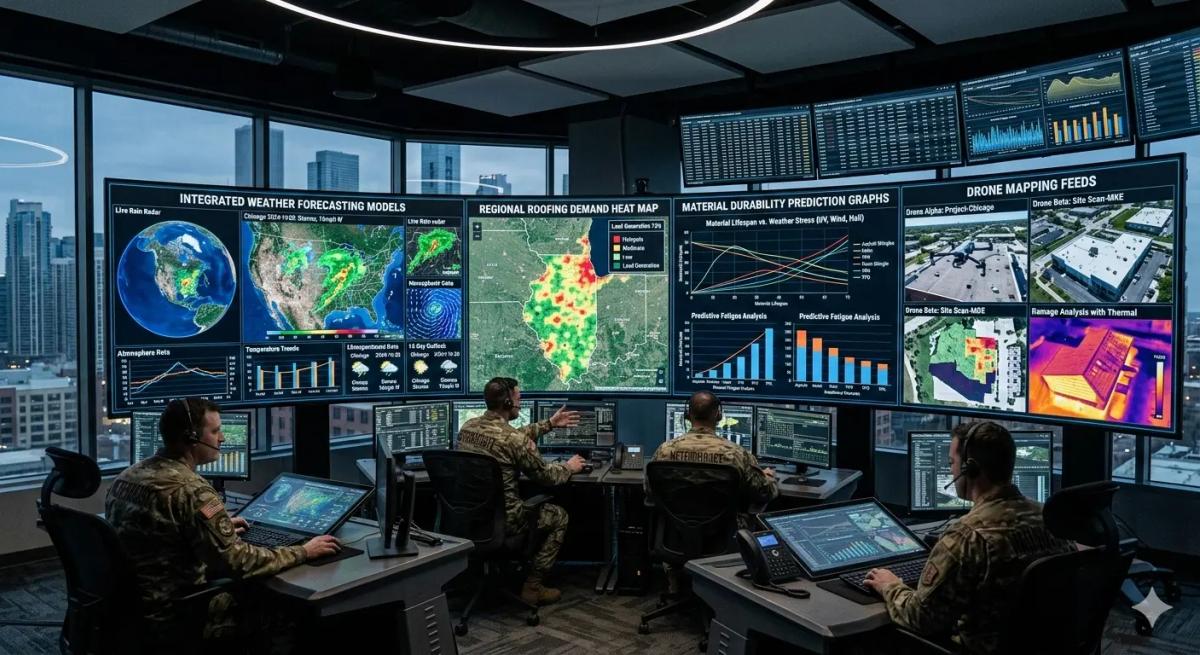
In the future, roofing AI will advance in integration and prediction.
To inform installation choices, advanced AI models will examine past weather data and the performance of roofing materials.
AI picture generators will enable homeowners to rapidly see roof upgrades through AI previews.
Contractors with high brand citations and digital transparency will be given preference by AI-powered search engines.
Regional pattern recognition models will be used to recommend impact-resistant roofing materials and Class-A fire-rated roofing.
Installation patterns will move away from strictly traditional approaches and toward judgments supported by data.
AI for roofers won't be a unique concept by 2026. It will serve as a benchmark for competition.
Delaying adoption could force contractors to compete only on price.
Those who intelligently include AI engines will compete on professionalism, precision, and speed.
Bringing It All Together
Is it a smart idea to provide AI solutions to the roofing industry?
Yes, definitely.
High-value projects, recurring processes, weather-driven urgency, and obvious operational bottlenecks are all combined in roofing. This makes it perfect for AI-driven advancements and automation.
The change is already happening, from AI-powered marketing funnels and smart roofing technologies to AI estimators and drone inspections.
The most significant change is in perspective.
AI roofing isn't meant to take the place of knowledgeable carpenters. The goal is to strengthen the systems that surround them.
It enables smaller groups to function similarly to larger businesses. It enhances client communication, expedites inspections, increases estimate accuracy, and automates administrative tasks.
These advancements compound over time.
Final Thoughts
The use of AI by roofing contractors is no longer a novel concept. It is increasingly serving as the operational layer for contemporary roofing companies.
Whether AI will influence roofing by 2026 is not the question.
It's already there.
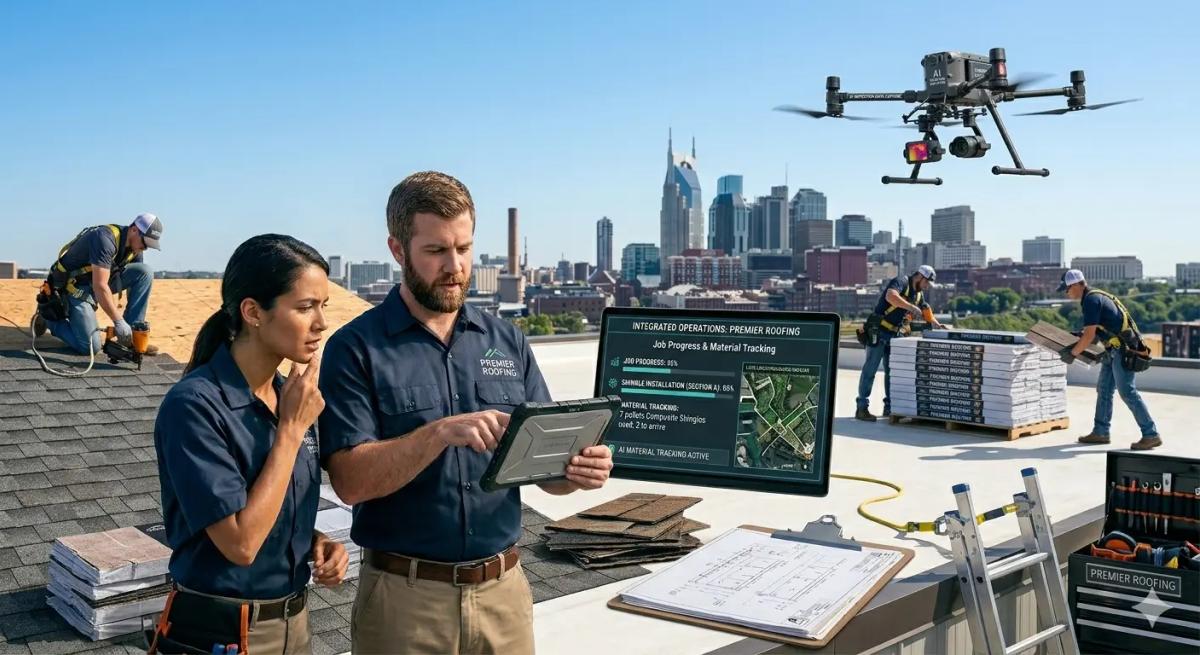
The true choice is whether you will consciously and purposefully implement roofing AI or whether you will wait for rivals to standardize it.
Craftsmanship will always be necessary for roofing.
However, businesses that integrate intelligent systems with craftsmanship will shape the industry's future.
And we already live in that future.