

Quick Answer
Pressure-washing cost depends on five main factors: the size of the area, surface material, current condition, cleaning method, and scope of work. Access, labour, equipment, travel, water availability, and additional treatments can also affect the final quote.
For example, an open concrete driveway with light dirt may require less preparation than a heavily stained driveway with restricted access. Likewise, cleaning delicate siding may require a different method from cleaning durable concrete.
The most useful estimate is one based on your property's actual condition and a clearly defined scope of work not a generic price alone.
Table of Contents
The Two Ways Pressure Washing Is Priced
Factor 4: Pressure Washing vs. Soft Washing
What a Professional Quote Should Include
Red Flags in a Pressure-Washing Quote
How FatCamel Helps Exterior Contractors Manage Quotes and Follow-Up
The Two Ways Pressure Washing Is Priced

Contractors generally use one of two pricing structures. Different models are not comparable until the scope is clear.
Per-square-foot pricing calculates the job from the area being cleaned. It is common for measurable surfaces such as driveways, concrete walkways, patios, and siding. The rate may still change based on material and condition.For example, a flat-rate quote for a driveway may include only standard cleaning, while another may also cover a walkway or a separate stain treatment. The total alone does not show whether the two estimates cover the same work.
Per-job pricing gives a flat rate for a defined scope. It is common for whole-house packages that may bundle siding, a driveway, walkways, or a deck. But “whole-house washing” can mean different things from one contractor to another.
Neither model is automatically better. Ask which model the contractor is using and whether the quote defines the included surfaces and method clearly enough for a fair comparison.
Factor 1: Size of the Area
More surface area generally means more labor, water, solution, and equipment time.
A home may include a driveway, walkway, siding, patio, fence, or deck. One contractor may price each surface separately; another may provide one combined price.
Ask what was measured. A driveway-only quote should not be compared with one that includes the walkway and siding.If a quote covers several surfaces, ask whether each area has been measured or assessed separately before the total is calculated.
Factor 2: Surface Material
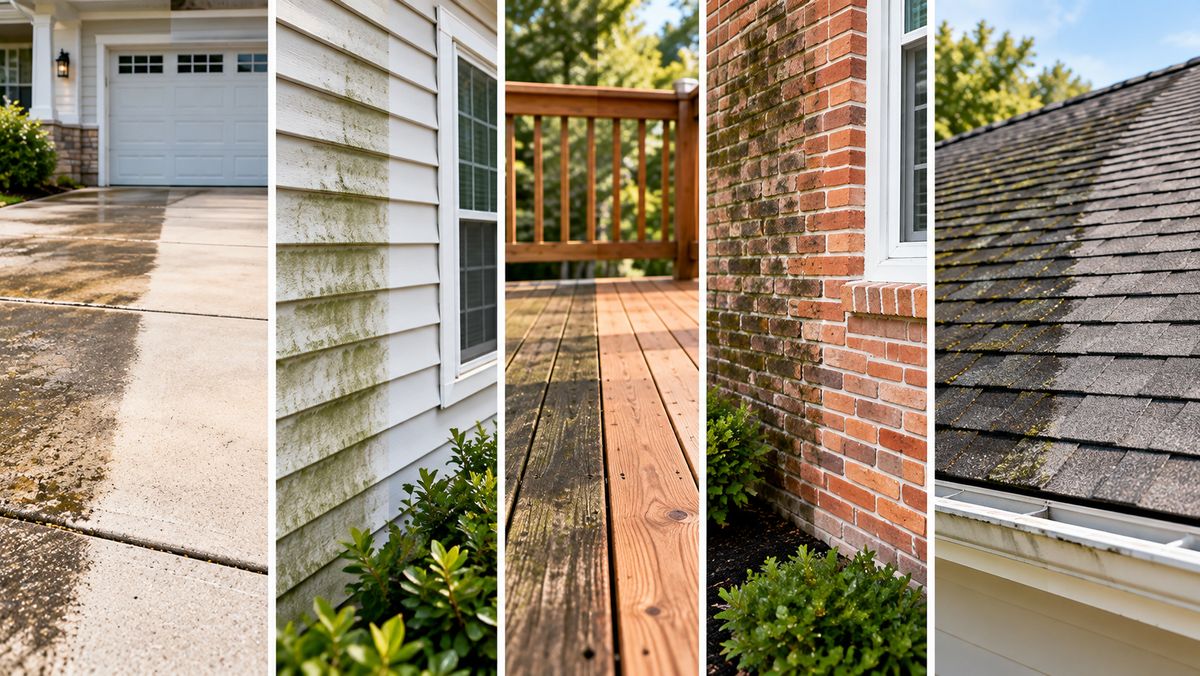
Material affects the method and time required.
Sound concrete can often be cleaned using pressure-washing equipment, but the appropriate pressure and technique depend on the concrete's condition, finish, and any existing damage.
Vinyl siding requires controlled pressure and appropriate cleaning solutions. Many contractors use a soft-washing approach that applies solution and rinses at lower pressure. It can take longer and use more product than cleaning concrete.
Wood surfaces such as decks, fences, and wood siding need a careful approach. Excessive pressure can raise the grain, splinter boards, or drive water into the material. Cleaning usually involves lower pressure, suitable detergent, and enough drying time before staining or sealing.
Brick and masonry are durable, but mortar joints can be porous. Brick and mortar condition affect the safest method, so a contractor should explain how weak areas will be handled.
Roofs should be treated as a specialized surface. High pressure can damage asphalt shingles or crack tile. Many roofs require a low-pressure soft-washing method with a suitable solution. Because roof materials, access, and cleaning requirements differ from ordinary flatwork, ask for a separate scope and quote for roof cleaning.
Factor 3: Current Condition
A recently cleaned surface may need less work than one untouched for years. Condition is a major reason similar-sized jobs produce different quotes.
Heavy organic growth such as moss, established algae, or mildew can require more solution, longer dwell time, and multiple passes. Light pollen and road dust usually take less time to remove.
Oil stains on concrete vary widely. Fresh oil may respond to a degreaser and one pass. Older oil that has penetrated the concrete may require repeated treatment, hot water, or specialized products. Contractors often price this work separately because the effort is difficult to predict from size alone.
Paint overspray, rust, and efflorescence the white mineral deposits sometimes seen on brick and concrete also require specific treatments. A clear quote should identify known stains and explain whether their treatment is included. If an unexpected condition changes the scope, the contractor should explain the proposed additional work and cost before proceeding.
A condition-related increase can be legitimate when the quote explains the additional work.
Read More: How Often Should You Pressure Wash a House? A Smarter Schedule by Surface and Conditions
Factor 4: Pressure Washing vs. Soft Washing
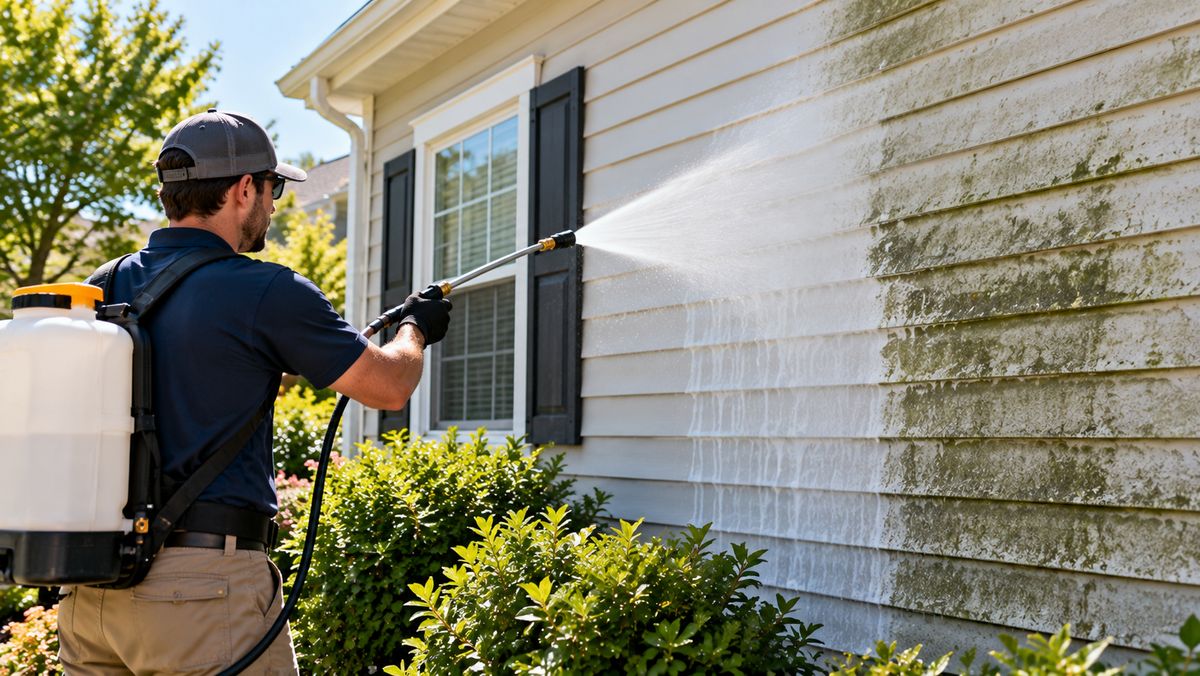
The method affects equipment, materials, time, and price.
Pressure washing uses higher-pressure water to remove contaminants from durable surfaces. It can be effective on sound concrete and similar materials, but the same approach may damage siding, painted surfaces, wood, stucco, or roofing.
Soft washing uses lower water pressure and cleaning solutions. The solution does much of the cleaning, followed by a low-pressure rinse. It is commonly used for siding, roofs, painted surfaces, stucco, and other materials that should not be blasted with high pressure.
Soft washing may take longer and use more product, but it may be necessary for the material. If two quotes differ significantly, ask which cleaning method is proposed for your siding, how the surrounding areas will be protected, and whether the price includes the necessary cleaning solution and rinse.
Factor 5: Scope and Add-Ons
Scope often makes quotes incomparable. “House washing” might mean front siding only, or the entire exterior plus driveway and walkway.
Common add-ons include:
- Deck and fence cleaning
- Deck staining or sealing after cleaning
- Interior gutter cleaning
- Exterior gutter brightening
Ask which add-ons are included in the original estimate and which require separate approval. This is especially important when a service name could cover more than one task.
- Concrete sealing
- Dumpster-pad or commercial trash-enclosure cleaning
- Extra stain treatment
- Furniture, debris, or vegetation removal
List every included and excluded surface. A higher quote may be better value if it covers areas the lower quotes leave out.
What a Professional Quote Should Include
A professional quote should explain what the contractor will deliver. Look for:
- The exact surfaces included and their approximate size or scope
- The method planned for each surface
- Cleaning solutions or treatments, especially for soft washing
- The total price and whether it is fixed or subject to condition-based changes
- Any included re-service or satisfaction policy
- Areas excluded from the work
- Proof of liability insurance when requested
- How changes to the agreed scope will be priced and approved
- The expected payment terms and approximate service timeframe
A quote that simply says “house wash” may leave important details unclear. Before accepting it, make sure you understand the work included, the expected results, any exclusions, and how additional work will be handled.
Red Flags in a Pressure-Washing Quote
No cleaning method explained for delicate surfaces: Ask how the contractor plans to clean the siding or roof and how the method suits the material.
An estimate based on limited information: For a large or condition-sensitive job, ask whether the contractor needs photographs or an inspection to confirm the scope and price.
A much lower quote with unclear inclusions: The scope may be smaller, the method may be different, or important treatments may be excluded. Ask rather than assuming the lower number is better.
No insurance information: A professional crew using commercial equipment should be able to confirm its liability coverage when asked.
Read More: Best AI Tools for HVAC Contractors in 2026 (Ranked by What Actually Books Jobs)
How FatCamel Helps Exterior Contractors Manage Quotes and Follow-Up

Sending a quote is only one part of the customer journey. Homeowners may need time to compare estimates, ask questions, or decide when to schedule the work.
For pressure-washing businesses, keeping track of those conversations alongside daily jobs can become difficult as the customer list grows.
FatCamel AI helps businesses explore AI-powered automation across customer communication, sales, and operational workflows. For an exterior-service contractor, a tailored workflow could help organise open estimates, coordinate approved follow-up reminders, and route customer replies to the appropriate team member.
The benefit is better visibility into pending work and less reliance on manual reminders. The exact workflow depends on the contractor's existing systems, business rules, and integration requirements.
Automation should support personal service, not replace it. Follow-ups should stop when a customer responds, declines, books, or asks not to be contacted.
Explore FatCamel AI's business automation solutions to learn how tailored workflows can support business processes.
FAQ
1. What is the average cost of pressure washing a house?
There is no single price that applies to every house. The final quote depends on the size and material of the surfaces, their condition, access, cleaning method, and local labour costs. For a useful estimate, provide clear photographs or arrange an inspection and ask for the scope and price in writing.
2. Why do pressure-washing quotes vary so much?
Contractors may be pricing different scopes, methods, conditions, and operating costs. Compare surfaces, treatments, methods, and exclusions before totals.
3. What is the difference between a per-square-foot quote and a per-job quote?
Per-square-foot pricing scales with the measured area. Per-job pricing gives a flat rate for a defined scope. Neither model is automatically better; the scope must be clear in either case.
4. Does driveway condition affect the price?
Ask whether the quoted price includes stain treatment and whether the contractor can reasonably predict the results. Some deep stains may remain even after appropriate cleaning.
5. Should I get a quote before or after showing the property?
For a more accurate pressure-washing quote, provide clear photos of the property or arrange an inspection before accepting the estimate. This helps the contractor assess the surface area, stains, accessibility, and cleaning requirements. For larger or more complex jobs, an on-site assessment can help clarify the scope and reduce unexpected costs.
6. What should I do if a quote seems unusually low?
Ask which surfaces and treatments are included, what method will be used, and whether the contractor carries liability insurance.
References
https://www.housecallpro.com/resources/how-to-price-pressure-washing-jobs/
https://fieldcamp.ai/blog/how-much-to-charge-for-pressure-washing/
https://pressurewashed.com.au/how-to-quote-a-pressure-cleaning-job/
https://puresealservices.co.uk/how-to-calculate-pressure-washing-prices/
https://www.fatcamel.ai/blog/how-often-should-you-pressure-wash-a-house