
Table of Contents
Why AI Is No Longer Optional for HVAC Businesses in 2026
The Four Gaps That Are Quietly Costing HVAC Companies the Most
AI for HVAC Lead Capture and After-Hours Response
AI for Customer Communication and Follow-Up
AI for CRM Automation and Pipeline Management
AI for Email Management and Commercial Outreach
Does AI Work With the Systems You Already Use?
How FatCamel AI Delivers the Complete HVAC Automation Stack
FAQ
References
Why AI Is No Longer Optional for HVAC Businesses in 2026
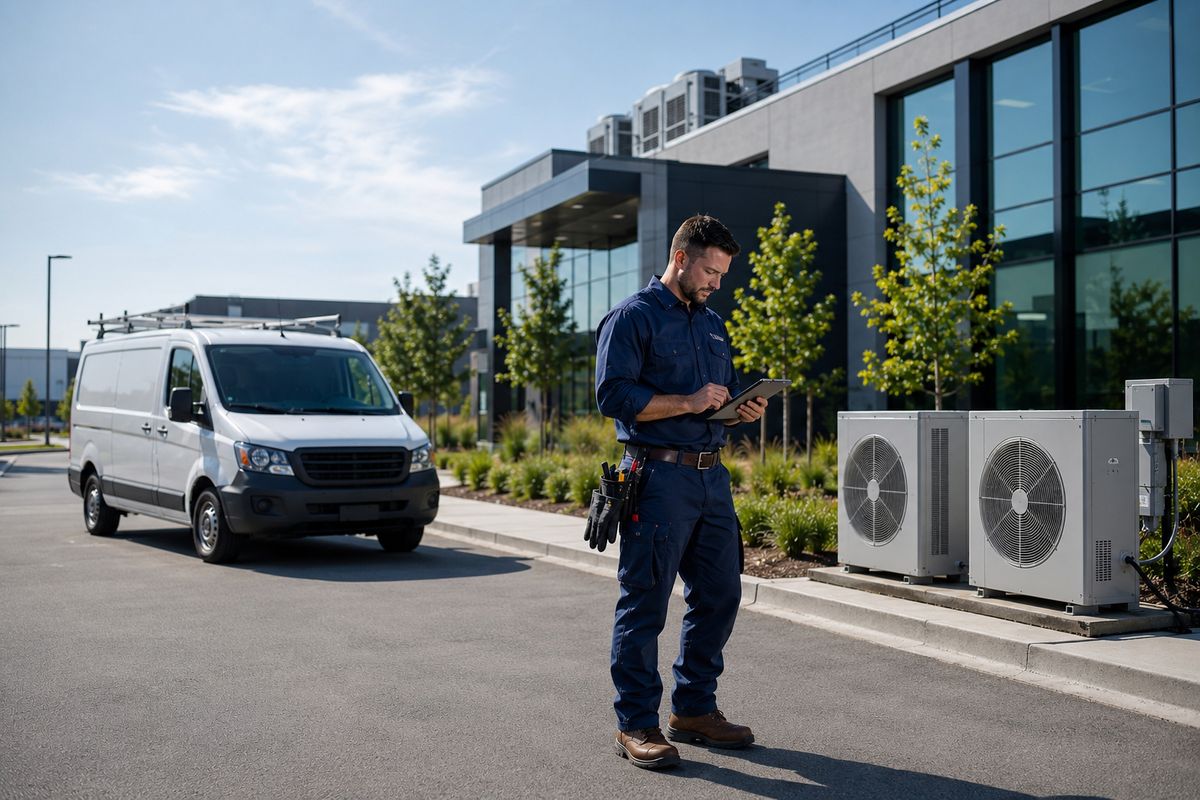
The HVAC industry is growing. The global market sits at approximately 299 billion dollars in 2026, with the U.S. market projected to climb from 29.9 billion to 54 billion dollars by 2033. Demand is real driven by equipment replacement cycles, heat pump adoption, energy efficiency upgrades, and a commercial sector that keeps expanding in major markets across the country.
But underneath that growth is a set of pressures that make scaling without the right systems increasingly difficult. The U.S. Bureau of Labor Statistics projects around 40,100 HVAC job openings annually through 2034, reflecting a technician shortage that isn't resolving on its own. At the same time, customer expectations around response speed and communication quality have shifted sharply driven in part by experiences in other industries where AI-powered responsiveness has become the norm. A homeowner who books a service appointment through an instant-response system, gets a confirmed time window, and receives an automated update when the technician is on the way isn't going to be satisfied with a voicemail box and a next-day callback.
A ServiceTitan survey of more than 1,000 HVAC contractors in 2026 found that about 70 percent see AI as relevant to their industry yet only about 12 percent have actually embedded it into their workflows. That gap between awareness and adoption is exactly where the competitive advantage lives right now. The contractors who act while that gap remains wide are building operational infrastructure that compounds in value as the rest of the industry eventually catches up. The ones who wait aren't simply delaying a technology update. They're giving ground to competitors who will be faster, better organized, and more professional in every customer interaction by the time the majority decides to move.
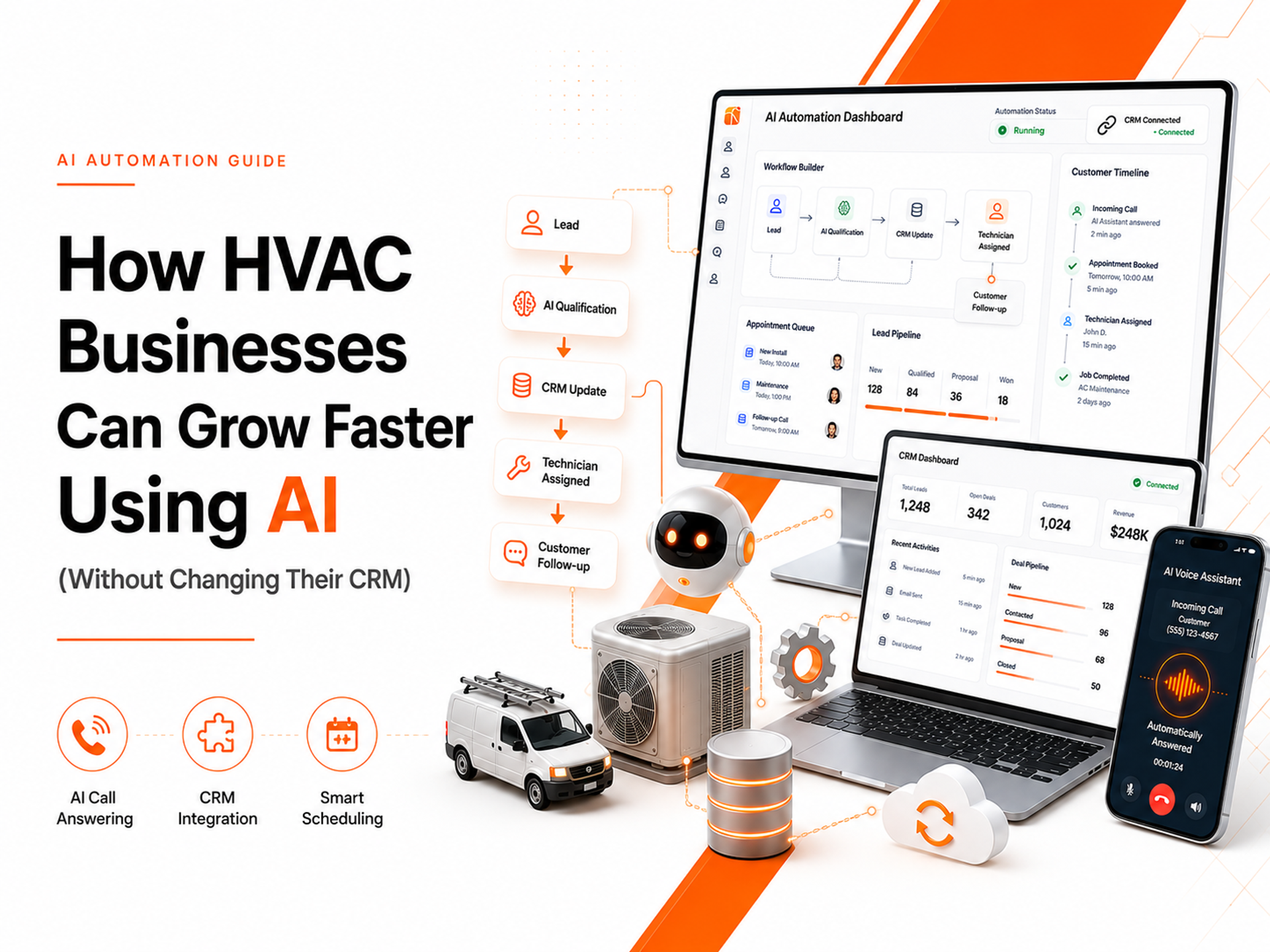
And here's what makes this particularly worth paying attention to: adopting AI for an HVAC business doesn't require replacing the CRM, rebuilding the tech stack, or hiring a dedicated operations team. The most valuable AI applications for HVAC companies in 2026 are designed to plug into systems and workflows that already exist automating the specific points where manual effort is slowest, most inconsistent, and most costly.
Read More: How Commercial HVAC Companies in Fort Worth Are Winning More Contracts With AI
The Four Gaps That Are Quietly Costing HVAC Companies the Most

Before getting into specific AI applications, it's worth being precise about which operational problems actually produce the most significant financial and competitive impact when left unaddressed. Not every inefficiency is equal. The HVAC businesses that see the fastest returns from AI are the ones that apply it to their highest-cost gaps first, not the easiest or most visible ones.
The first and most costly gap is lead response speed. Research from LeadConnect found that 78 percent of leads go to the first company to respond. In the HVAC industry, where homeowners and facility managers often contact multiple contractors simultaneously, the company that responds within minutes rather than hours wins the engagement before any meaningful comparison of price or experience has even started. Between 35 and 45 percent of HVAC calls come in outside standard business hours, according to data from Epiphany Dynamics. The contractors who can't respond to those calls immediately are losing nearly half of their inbound lead volume to competitors who can.
The second gap is follow-up consistency. HVAC sales cycles particularly for larger jobs, maintenance agreements, and commercial contracts require multiple touchpoints over days or weeks before a decision gets made. Manual follow-up processes break down under the pressure of a busy season, when every team member is focused on active jobs and the leads sitting in a CRM simply aren't being worked. The revenue lost to inconsistent follow-up is invisible on any report, which is precisely why it persists year after year.
The third gap is administrative overhead. Simpro's 2025 Trades Outlook Report found that 69 percent of trade business owners identify AI's biggest impact as workflow optimization specifically the reduction of technician downtime, better routing, and higher job completion rates. Every hour a technician spends on administrative tasks is an hour of billable capacity gone. In a business where technician availability is already the primary constraint on growth, that's not a marginal inefficiency.
The fourth gap is customer communication between jobs. HVAC businesses that communicate proactively with customers between service calls through maintenance reminders, seasonal check-ins, and post-job follow-up retain significantly more customers than businesses that only reach out when a job is active. Nearly 80 percent of trade business owners in Simpro's 2025 data identified invoicing and cash flow as critical operational priorities. Automated follow-up directly influences both reducing the time from job completion to payment and reducing the number of customers who quietly drift to a competitor between service cycles.
AI for HVAC Lead Capture and After-Hours Response
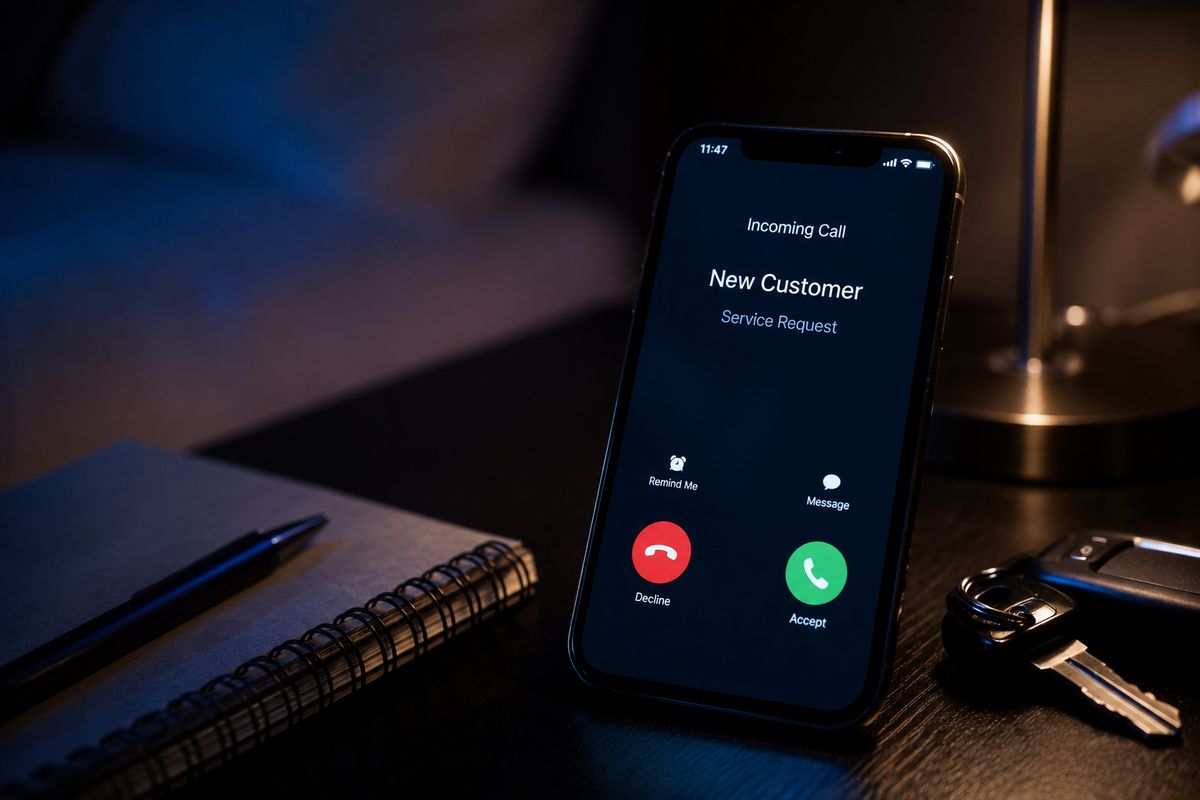
The most immediate and measurable application of AI for an HVAC business is automating lead capture and after-hours call response. This is where the financial impact of AI adoption is fastest and most direct because every call that goes unanswered after hours is a complete lead loss, and the data makes clear that a significant portion of inbound volume arrives precisely during those hours.
An AI voice assistant answers every inbound call immediately, regardless of what time it arrives, how many calls come in at once, or what the rest of the team is doing. The caller gets a real conversation not a recording. The AI identifies the nature of the call, whether it's an emergency repair, a maintenance inquiry, a quote request, or a billing question, and responds accordingly. For emergency calls, it captures the address, the system details, and the urgency of the situation and initiates the appropriate response. For non-urgent inquiries, it gathers the relevant information, confirms next steps, and makes sure the caller finishes the interaction knowing their request has been received and will be handled.
What separates an AI voice assistant from a traditional answering service is the booking capability. Rather than taking a message and creating a callback obligation that may or may not be fulfilled before the prospect books with a competitor, the AI schedules the appointment directly offers available time slots, sends a confirmation to the customer's phone, and logs the entire interaction to the CRM before any human has been involved. A homeowner who calls at ten in the evening because their system failed and gets an immediate, organized response with a confirmed appointment isn't going to call the next number on their list.
For leads that arrive through web forms rather than phone calls, the same principle applies. A homeowner who fills out a contact form at eleven at night and receives a personalized response within minutes referencing the specific service they asked about and offering a booking link is having an experience most HVAC companies currently can't provide. That gap between that experience and a standard next-business-day response is where new customer relationships get built or lost entirely.
AI for Customer Communication and Follow-Up
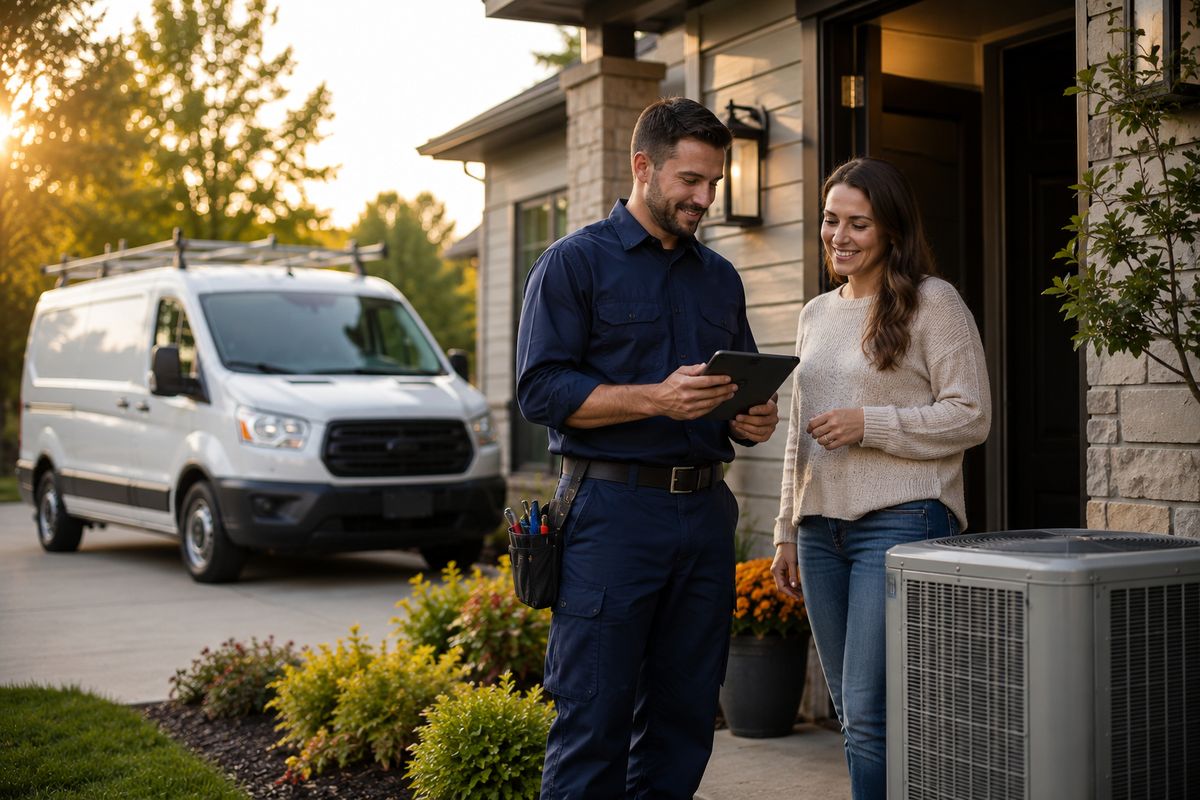
Customer communication is one of the areas where HVAC businesses most consistently fall short of their own standards not because they don't care, but because the manual effort required to communicate proactively across an active customer base simply isn't sustainable without dedicated staff. An AI-powered communication system changes this by handling the full range of outbound customer touchpoints automatically, based on triggers from job status, time elapsed since the last service, or customer-specific factors like equipment age and maintenance agreement status.
Post-job follow-up is the most immediate application. Sending a follow-up message within 24 hours of a completed job confirming satisfaction, requesting a review, and noting the recommended next service interval is something virtually every HVAC business intends to do and very few do consistently. When this process is automated, it runs without exception on every completed job. The result is a steady stream of review requests, a measurable improvement in online reputation, and a recurring touchpoint with every customer that keeps the business visible between service cycles.
Seasonal maintenance reminders are one of the highest-ROI uses of automated customer communication in the HVAC industry. A customer whose system was serviced in the spring who gets a personalized reminder in the fall referencing their specific equipment and the work done previously is far more likely to book a follow-up service than one who receives a generic seasonal promotion. AI-powered systems personalize these reminders at scale, drawing on job history to make every message feel specific rather than templated.
And then there's dormant lead reactivation a capability that most HVAC businesses with any real history have a significant opportunity to leverage but almost never do systematically. Every HVAC company has a CRM populated with contacts who enquired, received a quote, and went quiet. Not because they decided against the service, but because the follow-up stopped before the timing was right. AI-powered reactivation sequences reach back out to these contacts through SMS and email with messages that reference their original inquiry, providing a low-pressure path back into a conversation that may now be far better timed than it was months earlier. The acquisition cost for these leads has already been paid. Reactivating even a fraction of a dormant CRM generates revenue at a fraction of the cost of generating equivalent new leads through advertising.
Read More: How Renovation Companies Can Get More Commercial Clients Using AI
AI for CRM Automation and Pipeline Management
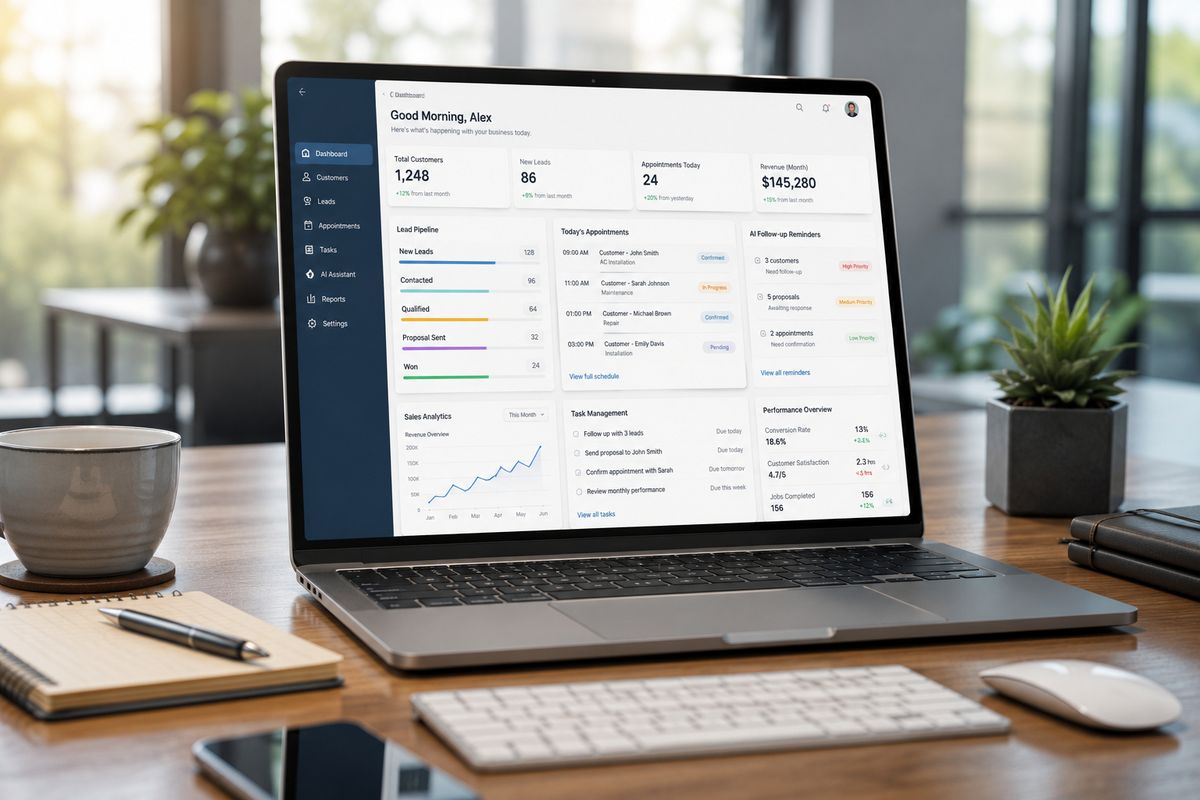
One of the most persistent sources of operational drag in an HVAC business is the gap between when something happens and when that event gets reflected in the CRM. A call comes in, a job gets completed, a quote goes out, a customer reschedules and each of these events may or may not get logged accurately and promptly in the system the rest of the business depends on for its operational picture. When the CRM is incomplete or out of date, every downstream process that relies on it follow-up sequences, scheduling, management decisions, reporting runs on bad information.
AI-powered CRM automation addresses this by eliminating the manual data entry steps that create the gap. Every inbound call is logged automatically with the caller's details, the nature of the inquiry, and the outcome of the interaction. Every job status change, every completed invoice, every scheduled appointment gets reflected in the CRM in real time without requiring a dispatcher or technician to update it manually. The CRM becomes a live operational record rather than a historical document that someone gets around to updating when they have a spare moment.
Pipeline management benefits from exactly the same automation. An HVAC business pursuing commercial maintenance contracts or larger residential projects has a sales pipeline that requires active management across multiple stages from initial inquiry through proposal, follow-up, decision, and contract signature. AI-powered pipeline management tracks every prospect's position in that process automatically, identifies contacts that have gone quiet and need follow-up, and surfaces the opportunities most likely to close with the right attention at the right time. The commercial maintenance contract that goes cold because nobody followed up during a busy installation season is a recoverable revenue loss that AI pipeline management is specifically built to prevent.
AI for Email Management and Commercial Outreach

Email remains one of the primary communication channels for HVAC businesses managing customer relationships, pursuing commercial contracts, and following up with leads across extended sales cycles. It's also one of the channels most prone to inconsistency in a business where the people responsible for email are simultaneously managing field operations, customer calls, and day-to-day scheduling pressures.
AI-powered email management organizes and prioritizes inbound messages automatically making sure urgent customer communications, time-sensitive service requests, and high-value commercial inquiries get prompt attention rather than sitting unread in a crowded inbox alongside newsletters and supplier notifications. Responses to common inquiries, appointment confirmations, quote follow-ups, and maintenance reminders can be drafted and sent automatically based on the context of the original message, reducing the time your team spends on routine email correspondence without sacrificing the quality of the communication.
For HVAC companies pursuing commercial clients, AI-powered outreach sequences make it possible to run a consistent, personalized email operation to facility managers, property management companies, and commercial real estate operators without dedicating a full-time business development resource to the effort. A targeted sequence of emails that introduces the company's commercial capabilities, shares a relevant case study, and makes a specific ask for a conversation can run automatically across a carefully built list of commercial prospects, generating conversations with decision makers who'd never be reached through inbound channels alone. This is how smaller HVAC businesses compete for commercial contracts that would otherwise go to larger operators with dedicated sales teams.
Read More: Free Email Automation Using n8n – Outreach & Follow-ups
Does AI Work With the Systems You Already Use?
The concern that AI adoption requires replacing or significantly modifying existing software is one of the primary reasons HVAC businesses delay implementing automation tools that would immediately improve their operations. It's also, in most cases, a misunderstanding of how modern AI systems for HVAC contractors are actually built and deployed.
The most effective AI tools for HVAC businesses in 2026 are designed to integrate with the systems already in use including the major CRM and field service management platforms rather than requiring those systems to be replaced. The AI layer sits above the existing operational infrastructure, connecting through standard integrations, and adds the automation and responsiveness that the core systems were never designed to provide on their own. An HVAC business running its job management on ServiceTitan, Jobber, or any of the major field service platforms doesn't need to abandon those systems to benefit from AI-powered lead response, customer communication, CRM automation, or email management.
The practical implication is that AI adoption for an HVAC business doesn't require a disruptive technology migration, a lengthy implementation process, or a period of operational disruption while the team learns something entirely new. Starting with the highest-cost problem and expanding from there allows a business to begin capturing value from AI within days of implementation without changing anything about the core operational systems the team already knows how to use.
How FatCamel AI Delivers the Complete HVAC Automation Stack
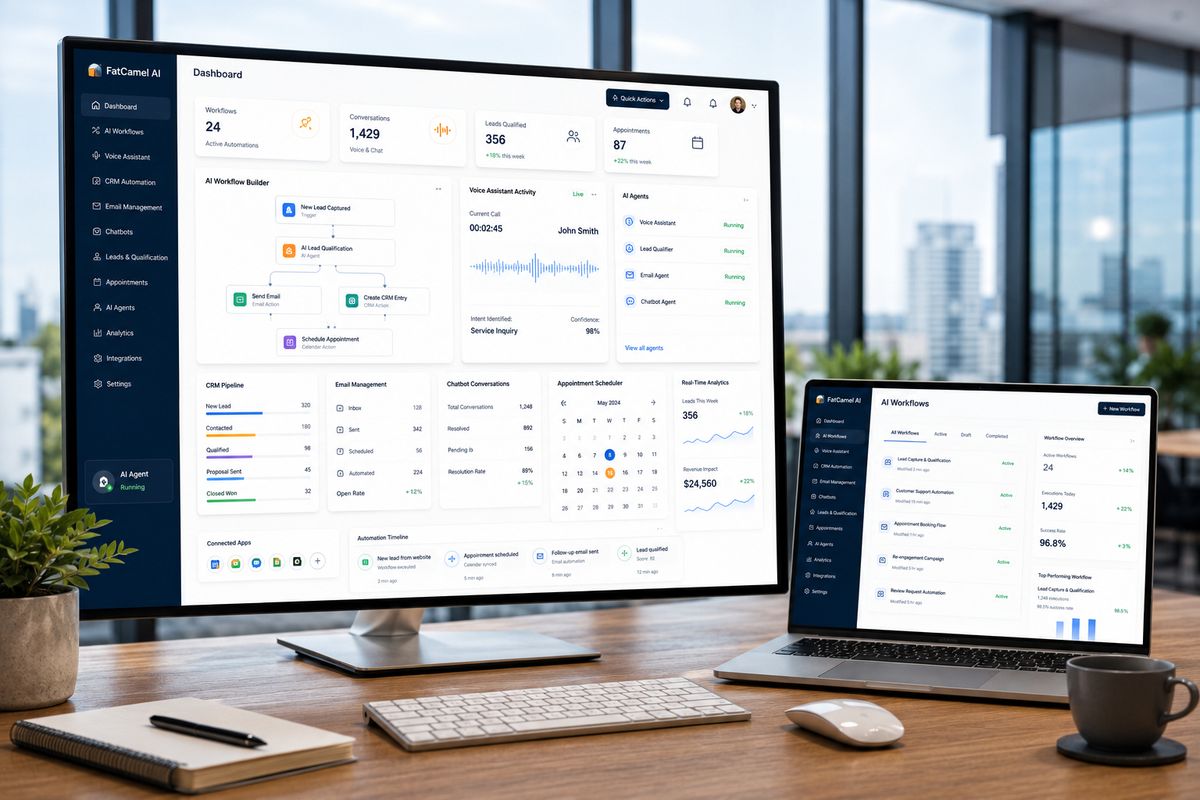
Every element described in this guide from after-hours call response to customer follow-up, from CRM automation to commercial email outreach needs to operate as a connected system rather than a collection of separate tools to deliver consistent results across the full pipeline. FatCamel AI is built to deliver that connected system for HVAC businesses and home service contractors, integrating with the tools already in use rather than replacing them.
The voice assistant component answers every inbound call immediately, qualifies the caller, books appointments directly where appropriate, and logs every interaction to the CRM automatically. For HVAC businesses whose biggest revenue loss is happening after hours when calls go unanswered, this single element of the system produces measurable results within the first week of deployment.
The customer communication layer manages post-job follow-up, review requests, maintenance reminders, and dormant lead reactivation automatically drawing on job history and customer details to personalize every message rather than sending generic broadcasts. The CRM automation capability ensures every call, job, and customer interaction is reflected in the system in real time, providing the complete operational picture that pipeline management and business reporting depend on. For HVAC companies pursuing commercial growth, the email management and outreach capability runs targeted sequences to commercial prospects automatically, building the kind of consistent, professional presence that commercial decision makers need to see before engaging a new contractor.
The contractors gaining ground in 2026 aren't necessarily the ones with the most technicians or the biggest advertising budgets. They're the ones who've built systems that respond faster, follow up more consistently, and operate more efficiently than their competitors at every stage of the customer relationship. That's what AI automation delivers — working with the systems already in place, not against them.
👉 Get a Free AI Revenue Audit for Your HVAC Business at https://www.fatcamel.ai/contact
FAQ
1. What is AI for HVAC businesses, and what does it actually do?AI for HVAC businesses refers to automation tools and intelligent systems that handle specific operational tasks without requiring manual human effort for each instance. In practice, this includes AI voice assistants that answer calls and book appointments, automated follow-up sequences that work leads through SMS and email, CRM automation that logs every interaction in real time, and email management systems that handle routine correspondence and commercial outreach. The key characteristic of effective AI for HVAC companies is that it integrates with existing systems rather than replacing them adding automation and intelligence to workflows that already exist.
2. Does adopting AI for an HVAC business require replacing the current CRM or field service software? No. The most effective AI tools for HVAC contractors in 2026 are designed to integrate with the CRM and field service management platforms already in use including major systems like ServiceTitan, Housecall Pro, and Jobber. The AI layer connects to existing infrastructure through standard integrations and fills the gaps that core systems weren't designed to address, specifically lead response speed, follow-up consistency, and commercial outreach. An HVAC business doesn't need to change its core systems to begin capturing value from AI automation.
3. Which area of an HVAC business benefits most from AI automation? For most HVAC businesses, the highest-impact application of AI is after-hours lead response and call capture. Industry data indicates that between 35 and 45 percent of HVAC calls arrive outside standard business hours, and research shows that 78 percent of callers who reach a voicemail contact a competitor within minutes. Automating the response to those calls produces the fastest and most measurable revenue impact. After that, follow-up automation and CRM pipeline management typically produce the next highest returns.
4. How quickly can an HVAC business expect to see results from AI automation? HVAC businesses that deploy AI voice assistants for after-hours call response typically see measurable changes in captured leads and booked appointments within the first week because the impact is immediate and direct. Improvements in follow-up conversion rates and CRM pipeline management typically become visible within the first 30 to 60 days. Commercial outreach campaigns, which involve longer sales cycles, tend to produce results over a 60 to 90 day window.
5. Is AI automation affordable for smaller HVAC contractors? For smaller HVAC contractors, AI automation is typically more cost-effective than the conventional alternatives. For a small to mid-sized contractor missing several after-hours calls per week, the revenue recovered from a single AI voice assistant typically exceeds the cost of the tool within the first month of deployment. The real question for most HVAC businesses isn't whether they can afford AI automation it's whether they can continue absorbing the cost of operating without it.
6. Can AI tools handle commercial client outreach for HVAC companies? Yes and commercial outreach is one of the strongest use cases for AI in the HVAC industry. Commercial sales require the kind of consistent, multi-touch follow-up across an extended sales cycle that's extremely difficult to execute manually alongside the demands of running an active service business. AI-powered email sequences reach facility managers, property management companies, and commercial real estate operators with targeted, personalized outreach that builds familiarity and generates conversations over weeks or months without requiring a dedicated business development resource.
7. How does FatCamel AI help HVAC businesses grow without changing their existing systems? FatCamel AI delivers a complete automation stack for HVAC businesses that integrates with existing CRM and field service tools rather than replacing them. The system covers after-hours voice response and appointment booking, automated customer follow-up and maintenance reminders, real-time CRM logging of every call and interaction, pipeline management for residential and commercial leads, and email outreach for commercial client development. Each component connects to the business's existing operational infrastructure so deployment doesn't require a technology migration or any disruption to active operations.
References
https://www.fatcamel.ai/
https://fieldedge.com/blog/2026-hvac-industry-trends/
https://www.servicetitan.com/blog/hvac-ai
https://www.achrnews.com/articles/165647-5-realistic-ways-ai-can-empower-your-hvac-business-in-2026
https://www.simprogroup.com/blog/ai-hvac
https://fieldcamp.ai/blog/hvac-industry-trends/