
Table of Contents
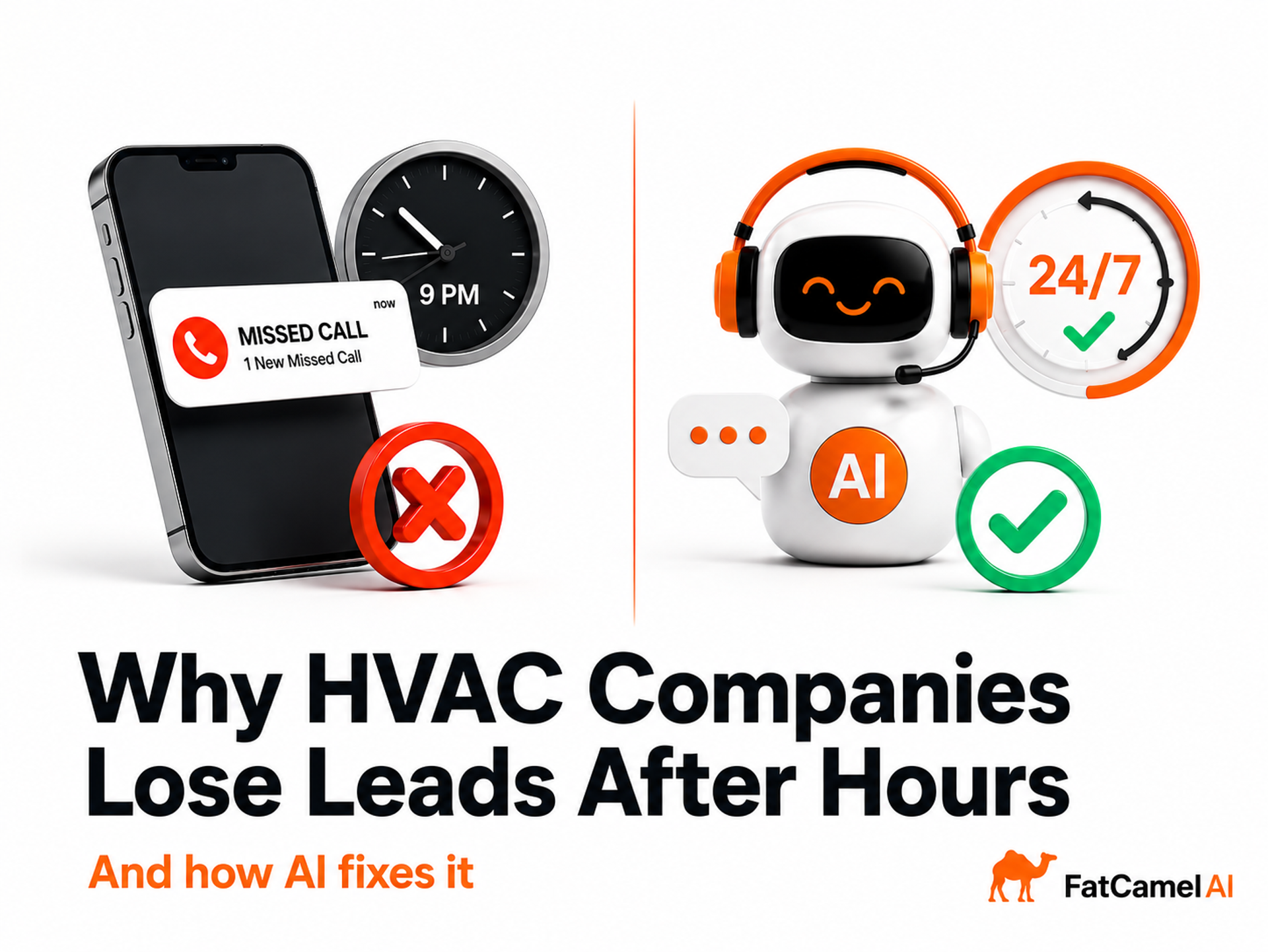
The After-Hours Problem Most HVAC Owners Get Wrong
Why After-Hours Calls Are the Ones You Can Least Afford to Miss
The Real Reason Manual Response Always Breaks Down
What You're Actually Losing When That Call Goes to Voicemail
Why the Standard Fixes Don't Work
How an AI HVAC Answering Service Changes Everything
What Else This Unlocks for Your Business
How FatCamel AI Runs the Complete After-Hours Lead System
FAQ
References
The After-Hours Problem Most HVAC Owners Get Wrong
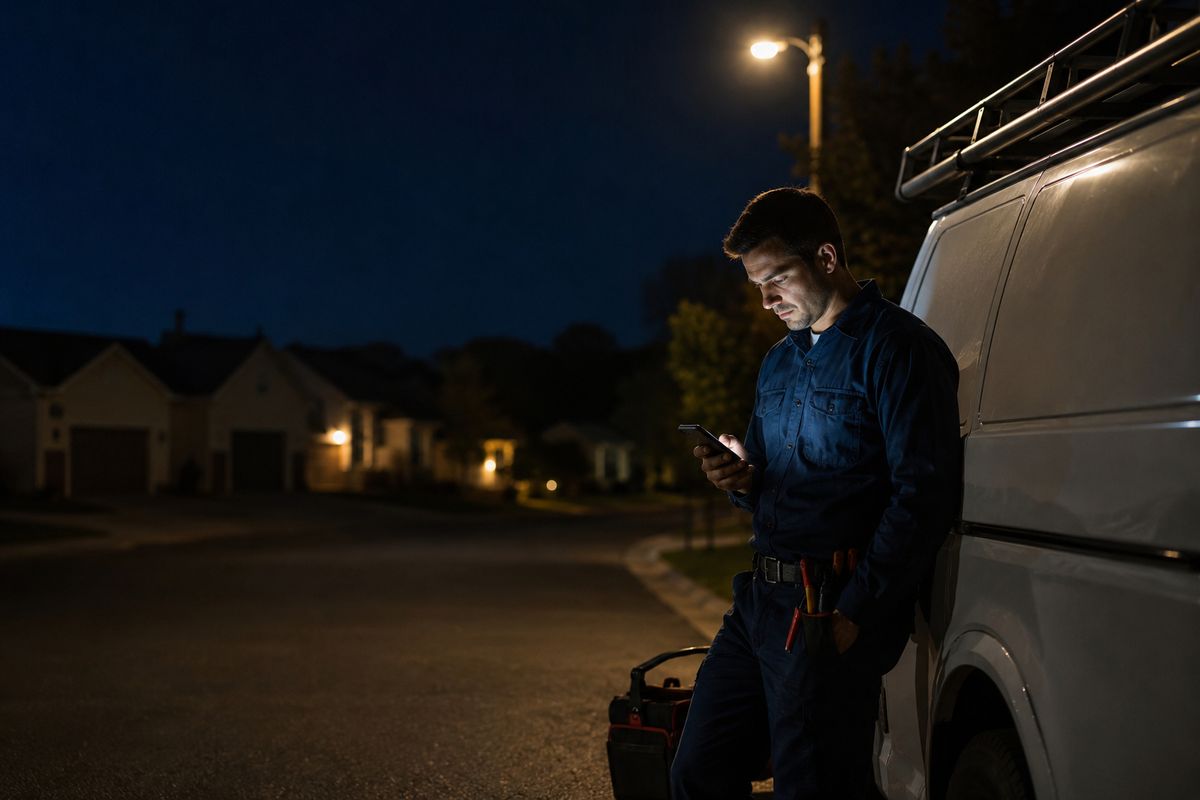
Most HVAC owners know they miss some calls after hours. That part isn't a surprise. What they consistently get wrong is how much those missed calls actually cost both in immediate revenue and in customer relationships that never get off the ground because nobody picked up.
The assumption most owners carry is that after-hours calls are a secondary issue. Something you handle with a voicemail box and a callback the next morning. But the data tells a different story entirely. Research across the HVAC industry shows that 42 percent of HVAC calls come in outside standard business hours. That's not a small slice. That's nearly half of every booking request, every emergency, every "my AC just died" call arriving at exactly the time your team isn't there to answer.
And here's the thing: those calls aren't from people who can wait. A homeowner calling about a failed air conditioning unit at nine in the evening isn't browsing options. They have a problem that's getting worse by the hour and they need it fixed. The decision about which contractor handles that problem is made within the same fifteen or twenty minutes they spend calling down a list. Whoever answers first doesn't just get a conversation. In most cases, they get the job before any other contractor even knows the call happened.
That reframe changes everything. This isn't a minor inconvenience to manage around the edges of a normal workday. It's one of the most significant and completely fixable sources of revenue loss in the HVAC business and it compounds every single day the gap stays open.
Why After-Hours Calls Are the Ones You Can Least Afford to Miss
There's a meaningful difference between the calls that come in during the day and the ones that come in after hours. During business hours, a decent portion of inbound volume is general inquiries quote requests, maintenance questions, calls from people who have some flexibility about timing. These callers are valuable. But they're also patient. A homeowner calling about a routine tune-up isn't going to book whoever picks up first just because they were first.
After-hours calls are a completely different situation. The homeowner whose system fails on a summer evening is dealing with a problem that's uncomfortable and escalating. They're not spending the next few days comparing contractors on Google. They're calling down a list right now, and the contractor who answers is the contractor who gets the work. Research consistently shows that 85 percent of callers who reach a voicemail won't call that same business back. They move on. Immediately.
That makes the after-hours missed call categorically different from a call that goes to voicemail at 2pm and gets returned before the end of the day. The 2pm voicemail has a reasonable shot at recovery. The after-hours one, in most cases, doesn't. By the time the callback happens the next morning, the job is already booked and the HVAC company that missed the call has no idea the opportunity ever existed.
The financial weight of this pattern adds up fast. The average missed call in the HVAC industry represents between 350 and 1,200 dollars in lost revenue depending on the job type, with emergency calls running considerably higher. For a business missing even five or six calls per week after hours and that's conservative for any company of real size during peak season that's a revenue leak that compounds week over week, season over season, and never shows up on any report because the lost jobs are completely invisible.
Read More: Top Automation Opportunities for HVAC, Plumbing, and Home Service Businesses in 2026
The Real Reason Manual Response Always Breaks Down
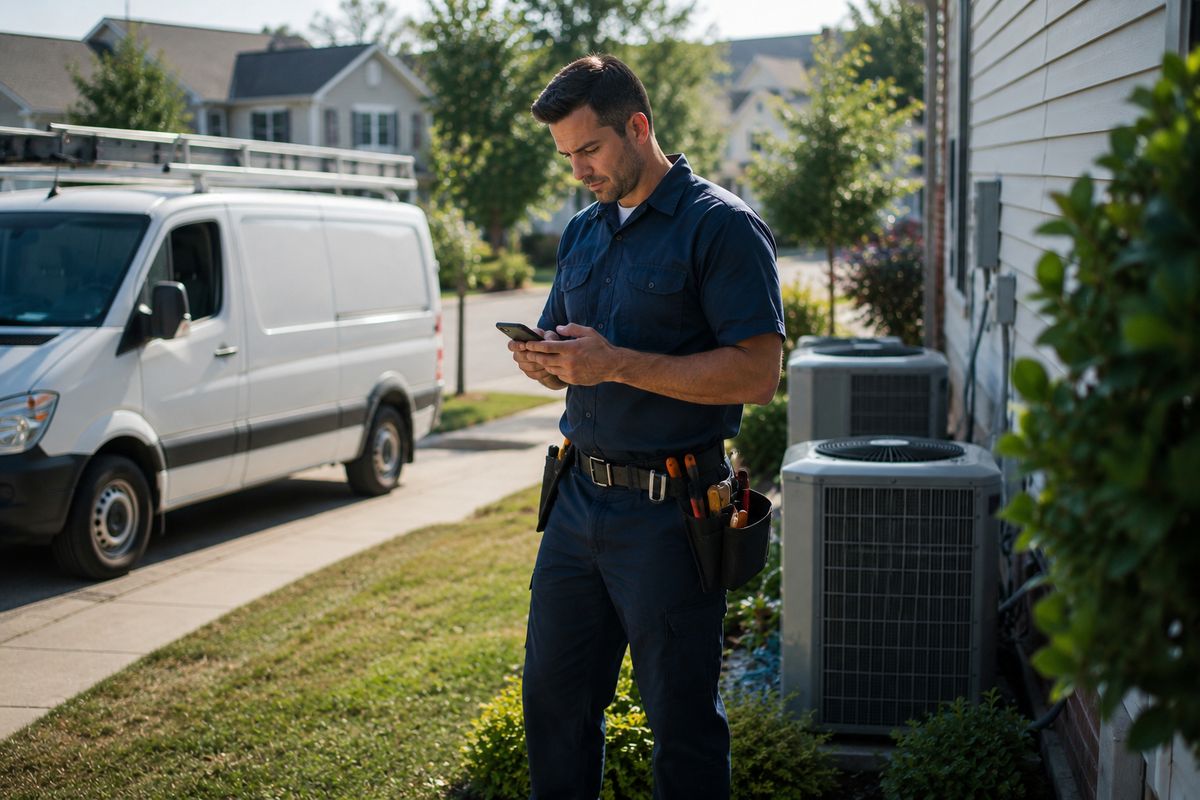
HVAC owners who recognize the after-hours problem usually try to solve it through effort. The owner keeps their phone on in the evenings. A technician takes calls on rotation. The office manager checks messages before leaving and again first thing in the morning. These approaches come from genuine care about the business. But they're structurally incapable of solving the problem and for a simple reason.
The after-hours response race is decided in minutes, not hours. Research from the MIT Lead Response Management Study, which looked at more than 15,000 leads across service industries, found that the odds of converting a lead into a meaningful conversation drop by more than 80 percent after the first five minutes following initial contact. For HVAC specifically, where a homeowner is often calling three or four companies at the same time, the window in which your response actually matters is extremely narrow. A callback two hours later even from a motivated owner who checked their messages the moment they could arrives after the job's already been booked by whoever answered first.
Manual response also fails to scale during exactly the periods when it matters most. Summer heat waves and winter cold snaps are when after-hours call volume spikes and also when the owner and technicians are already stretched thin from a full day of jobs. The moments of peak after-hours opportunity are precisely the moments when the people who might respond manually have the least capacity to do so.
That structural mismatch isn't something more effort resolves. A manual process runs on a human schedule. The after-hours lead problem requires a response that runs on a different timeline entirely one that doesn't depend on anyone being available, checking a phone, or finding a moment to call back.
Read More: AI Voice Assistant for Painters: Automate Calls and Book More Estimates
What You're Actually Losing When That Call Goes to Voicemail
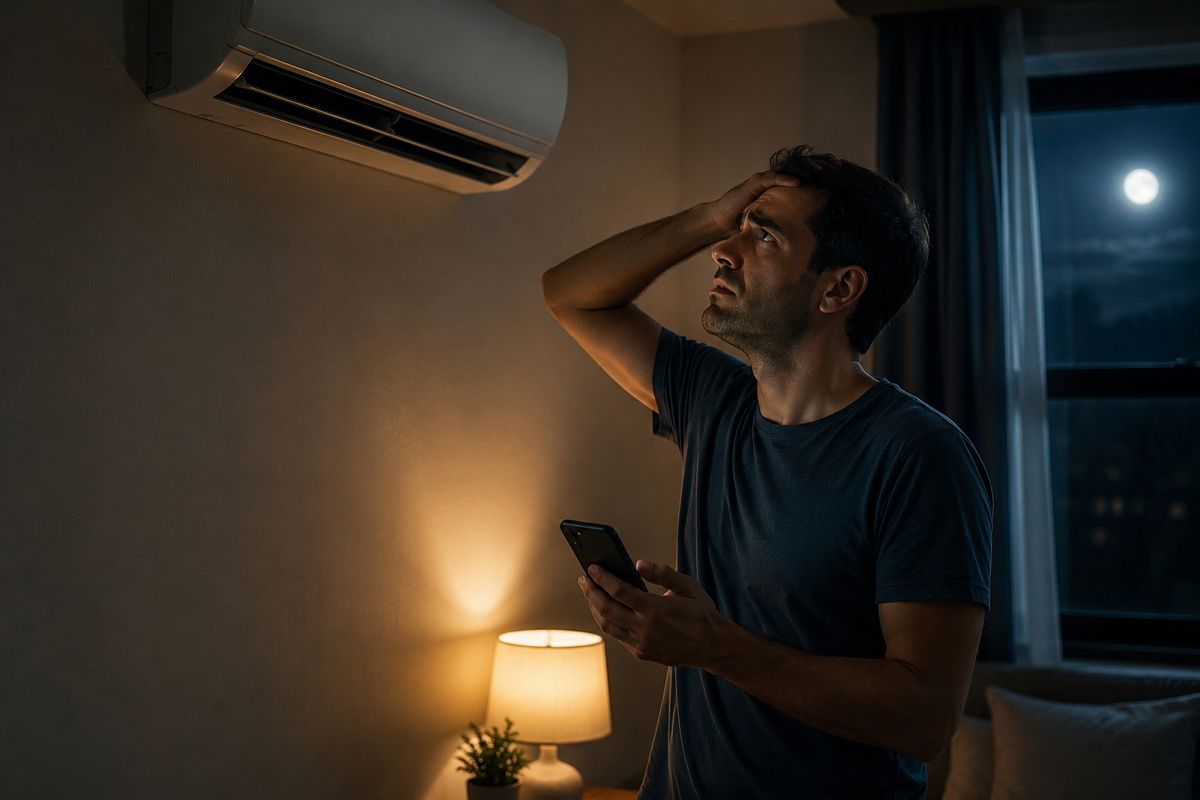
The immediate revenue loss from a missed after-hours call is real. But it's only the first layer of what's actually gone. To understand the full picture, you have to look at what that call was worth if it had turned into a customer relationship rather than a missed opportunity.
The immediate layer is obvious: the job itself. An emergency HVAC call in peak season is typically worth between 600 and 1,500 dollars depending on the diagnosis. Losing it to a competitor who answered means losing that revenue entirely with no corresponding reduction in overhead or marketing cost. The money you spent generating that lead through ads, referrals, or organic search is just gone.
But the second layer is where it gets expensive. A homeowner who books an emergency repair with an HVAC company and has a good experience becomes a candidate for annual maintenance agreements, seasonal tune-ups, filter replacements, and eventually a full system replacement when the equipment ages out. The lifetime value of a single residential HVAC customer typically ranges from 3,000 to 8,000 dollars across the full service relationship. The missed after-hours call doesn't just cost the repair job. It costs every service that never happened afterward.
And then there's the third layer: referrals. Satisfied HVAC customers refer family members, neighbors, and colleagues at a rate that makes word-of-mouth one of the highest-ROI lead sources in the industry. The customer who never became your customer generates none of that. The competitor who answered and did a good job gets it all instead.
For an HVAC business receiving a hundred inbound calls per month and missing 27 percent of them which is the industry average miss rate for small to mid-sized contractors the monthly revenue leak on immediate job value alone runs to several thousand dollars. When you factor in lifetime customer value and referrals, the true cost of the after-hours gap is considerably larger than any single missed call makes it appear.
Read More: How AI Can Eliminate Manual Work in Painting Businesses
Why the Standard Fixes Don't Work
There are two conventional approaches to the after-hours call problem that most HVAC companies try before arriving at something that actually works. Both share the same core limitation.
The first is a traditional answering service. A human operator picks up, takes the caller's name and number, and passes the message along for a callback when someone's available. This solves the voicemail problem in the sense that a person answers rather than a recording. But it doesn't solve the speed problem. The homeowner who reaches a message-taking service at nine in the evening still doesn't have their problem addressed. They don't have a booking, a confirmed technician, or any real assurance that their situation is being handled. Around 67 percent of callers in this situation will have already booked with another contractor by the time the callback happens the next morning. The answering service captured the call. It didn't capture the lead.
The second conventional fix is adding after-hours staffing through a dedicated hire or a rotation among existing team members. This is expensive relative to what it produces. You're paying for coverage during hours that may see low call volume most nights, and then the same coverage gets overwhelmed during peak periods when multiple calls come in at once. It doesn't scale. One after-hours staff member can't handle two conversations simultaneously, which means during the moments when call volume is highest and every caller counts, the coverage still breaks down.
What both approaches miss is the actual requirement. After-hours HVAC leads don't need a message taken or a call answered by whoever's available. They need an intelligent, immediate response that qualifies the situation, confirms the problem is being handled, and captures the booking before the caller has time to move to the next contractor on their list. That response needs to happen in seconds not minutes and it needs to be available for every simultaneous call during a heat wave when ten systems fail on the same night.
Read More: How AI Can Eliminate Manual Work in Painting Businesses
How an AI HVAC Answering Service Changes Everything
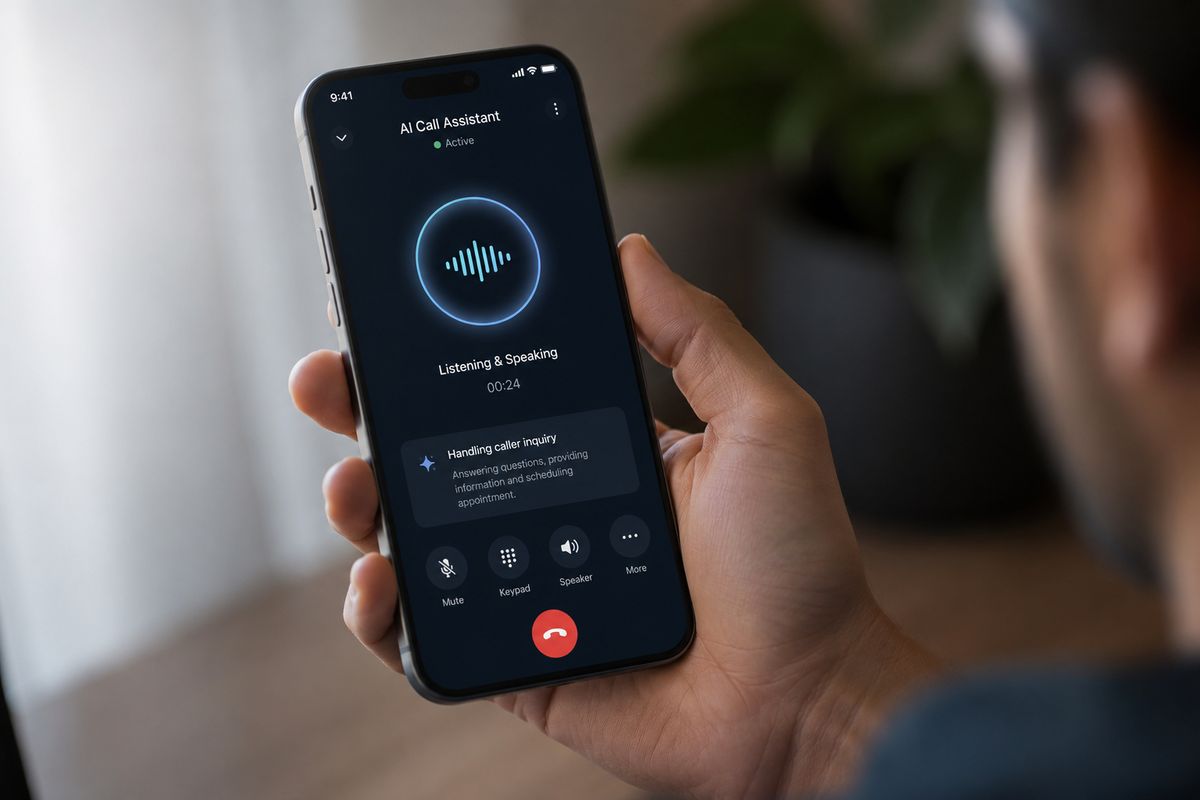
An AI-powered HVAC after hours answering service addresses the structural problem that conventional fixes can't touch. Instead of routing an after-hours call to voicemail or a message-taking operator, the system answers immediately regardless of the time engages the caller in a real conversation, gathers the information needed to understand the job, and moves directly toward booking the appointment or dispatching the right response.
The caller experience is qualitatively different from anything a voicemail or answering service produces. The homeowner whose system failed at ten in the evening isn't greeted with a recording asking them to leave a message. They're engaged by a response that acknowledges their situation, asks the right questions about the system, the symptoms, and the urgency and gives them a confirmed next step before the call ends. That experience, the sense that the business took their call seriously and is actually handling their problem, is one of the primary reasons this approach converts at a dramatically higher rate than the alternatives.
For the HVAC business, the operational change is just as significant. Every after-hours call produces a logged record caller name, address, system details, nature of the problem regardless of how many calls come in at once and regardless of what the rest of the team is doing. The dispatching team arrives in the morning with a complete picture of every overnight inquiry, already organized and ready to act on, without anyone having worked overnight to build it.
This is precisely what FatCamel AI's RealtorVoiceAI is built to deliver for home service contractors. It handles the entire front end of the after-hours lead process answering the call, qualifying the situation, capturing the booking so the technical team can focus entirely on delivering the work rather than managing phones at all hours.
👉 Get a Free AI Revenue Audit for Your HVAC Business at https://www.fatcamel.ai/contact
What Else This Unlocks for Your Business
Solving the after-hours call problem is the most immediate impact of an AI HVAC phone answering service. But it's not the only one. Once the system is in place, the same infrastructure handles several other lead management challenges that HVAC businesses typically address manually and inconsistently.
Web form submissions that come in overnight get an immediate response rather than sitting in an inbox until the next business day. For homeowners who prefer making initial contact through a website rather than a phone call, this closes a parallel gap that functions identically to the after-hours call problem: a lead arrives when nobody's available to respond, and by the time a response happens, the opportunity has already moved somewhere else.
Old leads sitting dormant in the CRM represent a significant pool of already-paid-for opportunities that most HVAC businesses never systematically go back to. The same AI system can identify contacts that have gone quiet and initiate personalized outreach through SMS and email to bring those conversations back to life recovering revenue from leads that were never formally lost, just never followed up on consistently enough to convert.
And lead qualification before human engagement means that by the time a technician or dispatcher picks up an inquiry, the relevant details are already captured and organized. Job type, system age, symptoms, service address, urgency level all logged before any human time gets spent on the lead. Every subsequent conversation becomes more efficient and better informed.
For most HVAC businesses, the compounding effect of these additional capabilities combined with the elimination of after-hours call loss produces a measurable increase in overall booking rate that exceeds what any single staffing addition could deliver, at a fraction of the cost.
How FatCamel AI Runs the Complete After-Hours Lead System
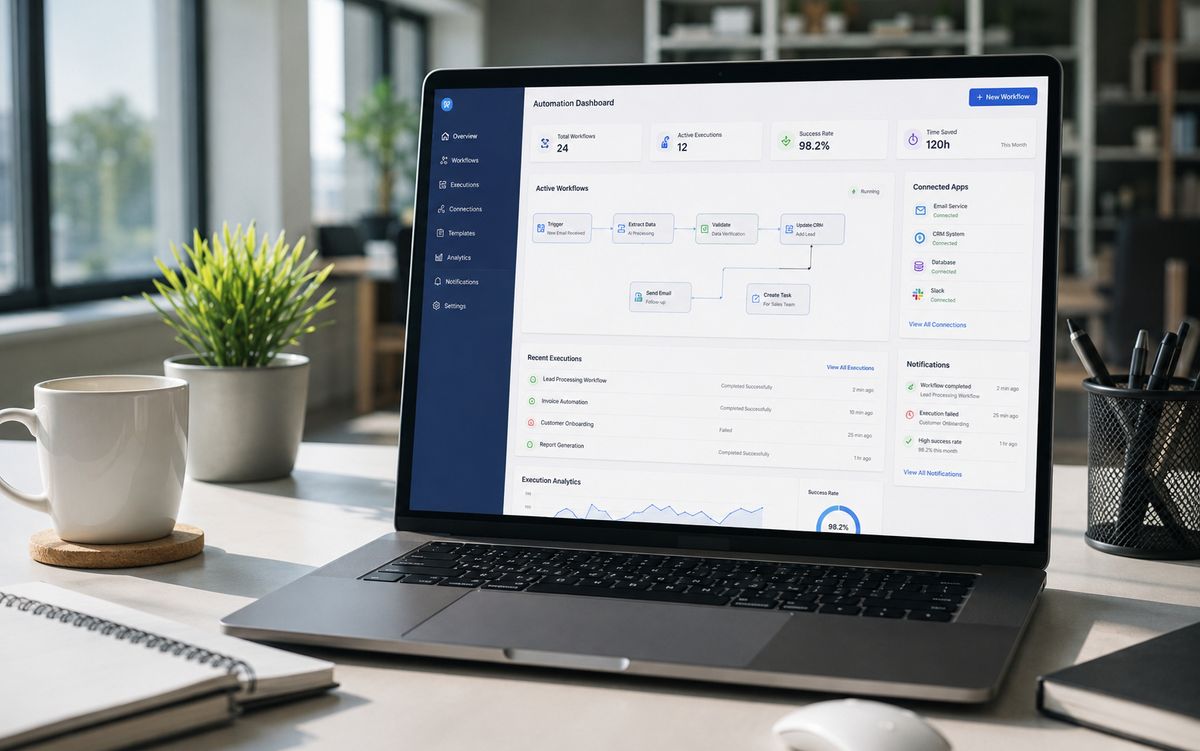
Every element described in this guide the immediate call response, the intelligent qualification, the booking confirmation, the CRM logging, and the follow-up on dormant leads needs to operate as a connected system rather than a collection of separate tools to produce consistent results across the full after-hours lead pipeline.
FatCamel AI's RealtorVoiceAI is built to run this complete system for HVAC contractors and home service businesses. The moment a call comes in after hours, the system responds immediately, engaging the caller around their specific situation rather than opening with a generic greeting. Qualifying questions get asked, job details get captured, and where appropriate, the appointment gets booked directly during the call.
Every interaction is logged automatically to the CRM creating a complete record of the caller's details, the nature of the inquiry, and the outcome of the conversation, whether that's a confirmed booking, a scheduled callback, or an inquiry that needs further follow-up. The dispatching team arrives each morning with a fully organized overnight summary, ready to act on without any manual reconstruction of what came in.
For leads that don't convert on the first call because the caller didn't answer a follow-up, the timing wasn't right, or the inquiry needed more information before a booking made sense FatCamel AI manages the follow-up sequence automatically, reaching back out across SMS and email with personalized messages that reference the specific situation the caller described. No lead disappears just because it didn't convert in the first conversation.
The result is an HVAC business that operates effectively at every hour, captures every lead regardless of when it arrives, and builds a pipeline that reflects the full opportunity available to the business not just the fraction that happens to call during staffed hours.
Read More: AI Voice Assistant for Painters: Automate Calls and Book More Estimates
FAQ
1. What is an HVAC answering service, and why do HVAC companies need one?
An HVAC answering service handles inbound calls on behalf of an HVAC business when the team isn't available typically after hours, on weekends, or during peak periods when call volume exceeds capacity. HVAC companies need one because roughly 42 percent of inbound calls arrive outside standard business hours, and callers who reach voicemail overwhelmingly move on to competitors rather than waiting for a callback the next day.
2. How does an AI HVAC answering service differ from a traditional answering service?
A traditional answering service takes a message and passes it along for a callback. An AI HVAC answering service engages the caller immediately in a real conversation, qualifies the situation, captures the relevant job details, and books the appointment directly during the call. This addresses the core problem that message-taking services can't solve: callers who don't get a confirmed next step move on before any callback happens.
3. How many calls does the average HVAC company miss after hours?
Industry data indicates that the average HVAC contractor misses between 25 and 27 percent of all inbound calls. For small to mid-sized businesses, that number climbs as high as 62 percent. After-hours call volume accounts for approximately 42 percent of total inbound volume, meaning a significant portion of the overall miss rate is concentrated in the hours when nobody's staffed to answer.
4. What does a missed after-hours HVAC call actually cost?
The immediate cost is the lost job typically 350 to 1,500 dollars depending on the service type. But the full cost includes the lifetime customer value of the relationship that never started, which ranges from 3,000 to 8,000 dollars per residential customer across the full service relationship, plus the referrals that customer would have generated. A single missed call is rarely just one missed job.
5. Can an AI answering service handle HVAC emergency calls?
Yes and it's actually where AI answering performs best. Emergency callers need an immediate response, not a voicemail. An AI HVAC after hours answering service picks up instantly, identifies the urgency through the qualifying conversation, flags the situation appropriately, and can initiate the dispatch process while the caller is still on the line.
6. Is an AI HVAC phone answering service cost-effective for smaller contractors?
For smaller HVAC contractors, it's typically more cost-effective than the alternatives. Hiring dedicated after-hours staff means significant payroll for coverage that sees low call volume most nights and still gets overwhelmed during peak periods. A traditional answering service cuts the staffing cost but doesn't solve the conversion problem. An AI system provides continuous, scalable coverage at a predictable cost that doesn't spike during peak demand.
7. How does FatCamel AI help HVAC companies with after-hours lead capture?
FatCamel AI's RealtorVoiceAI answers every after-hours call immediately, engages the caller with a qualifying conversation, captures the job details, and books the appointment directly where appropriate. Every interaction is logged automatically to the CRM, and leads that don't convert on the first contact are managed through an automated follow-up sequence across SMS and email. The system runs continuously without requiring any team member to be available ensuring after-hours call volume translates into booked jobs rather than missed opportunities.
References
https://agentzap.ai/blog/hvac-phone-statistics
https://www.artifactaisolutions.com/blog/hvac-revenue-lost-from-missed-calls
https://ethoslinksystems.com/post/hvac-business-revenue-lost-missed-calls
https://www.callbirdai.com/blog-contractors-lose-money-missed-calls
https://contractorincharge.com/blog/missed-call-statistics-for-home-service-companies
https://ainora.lt/blog/hvac-service-call-statistics-2026