

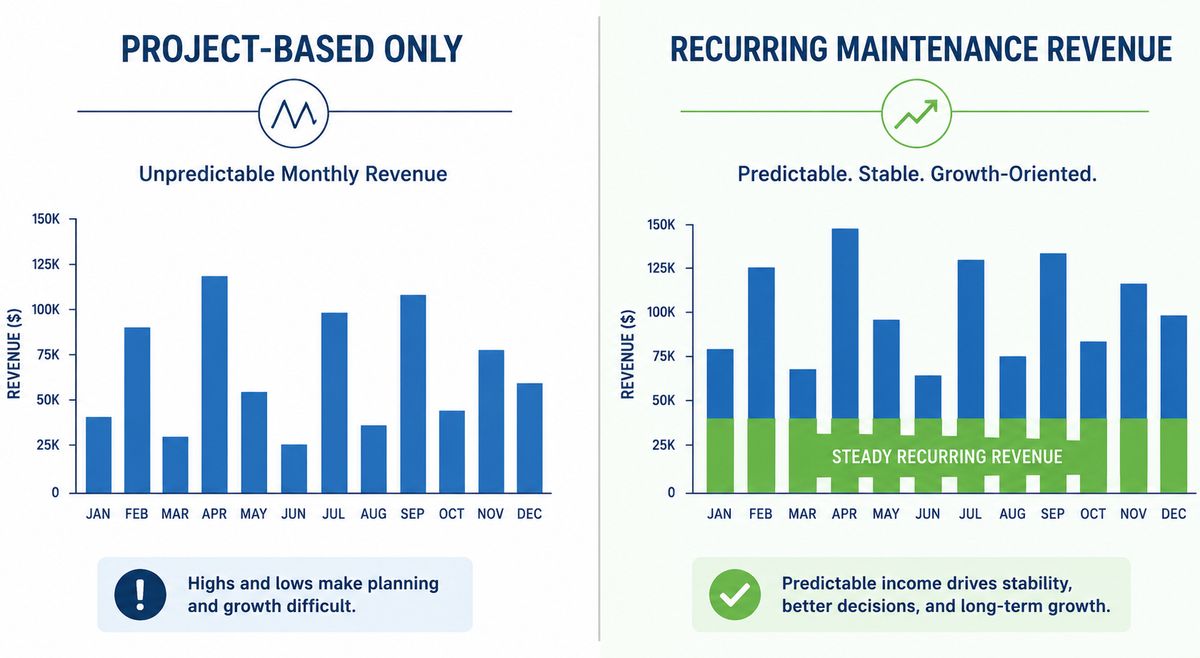
Most painting businesses are stuck in a cycle. Finish a job, find the next one, finish that, find another. Every month starts from zero. The team is busy, but the revenue is unpredictable, and one slow season can put real pressure on the whole operation.
The painting businesses that break out of that cycle all have one thing in common: they have built recurring revenue.
Not through luck or unusually loyal clients. Through a system. Maintenance packages that turn a one-time painting job into an annual contract. Automated billing that makes sure clients renew without anyone on your team having to chase them. Notification workflows that keep your operations team ready without a single manual handoff.
This guide breaks down exactly how to build that system from the moment a job is completed to the moment the annual payment comes in, year after year, without your team managing it manually. If you run a commercial painting business and you are tired of starting from scratch every month, this is the model that changes that.
Table of Contents
Why Recurring Revenue Changes Everything for a Painting Business
Building Your Maintenance Package Offering
The Post-Job Maintenance Offer Sequence
The Automated Billing and Invoice Workflow
Keeping the Maintenance Team Informed Automatically
The Annual Renewal System That Runs Itself
How FatCamel AI Powers the Full Recurring Revenue System
What This Does for Your Business Long Term
FAQ
References
Why Recurring Revenue Changes Everything for a Painting Business
A painting business without recurring revenue is entirely dependent on new clients. Every month, the pipeline has to be full enough to cover payroll, materials, and overhead. One bad month and the pressure is immediate.
Recurring revenue changes the foundation of the business. When a percentage of your monthly income is already locked in from existing maintenance contracts, the pressure on new business development drops significantly. You are not starting from zero. You are building on top of a base.
Here is what recurring revenue does for a painting business specifically:
- Predictable monthly cash flow that does not depend entirely on winning new jobs
- Higher lifetime client value from customers who would otherwise hire you once and move on
- Lower cost of revenue because retaining an existing client costs a fraction of acquiring a new one
- Stronger client relationships because you are in contact every year, rather than disappearing after the job
- A more valuable business because recurring contract revenue makes your company significantly more attractive if you ever want to sell or bring on investors
The vehicle for all of this is the maintenance package. And the engine that makes it work without adding headcount is automation.
Read More: How to Add AI to Your Painting CRM Without Replacing It in 2026
Building Your Maintenance Package Offering
Before the automation can run, you need a maintenance package worth offering. This does not need to be complicated. The best maintenance packages for painting businesses are simple, clearly priced, and easy for a property manager or facility director to say yes to.
A strong painting maintenance package typically covers:
- Annual touch-up visits for high-traffic areas like lobbies, corridors, stairwells, and exterior trim
- Surface inspection to identify peeling, cracking, or moisture damage before it becomes a major repaint
- Minor repair work on scuffs, chips, and surface damage between full repaints
- Priority scheduling so maintenance clients jump the queue when they need work done
- Annual repaint planning with a scheduled assessment and quote for the following year's full repaint cycle
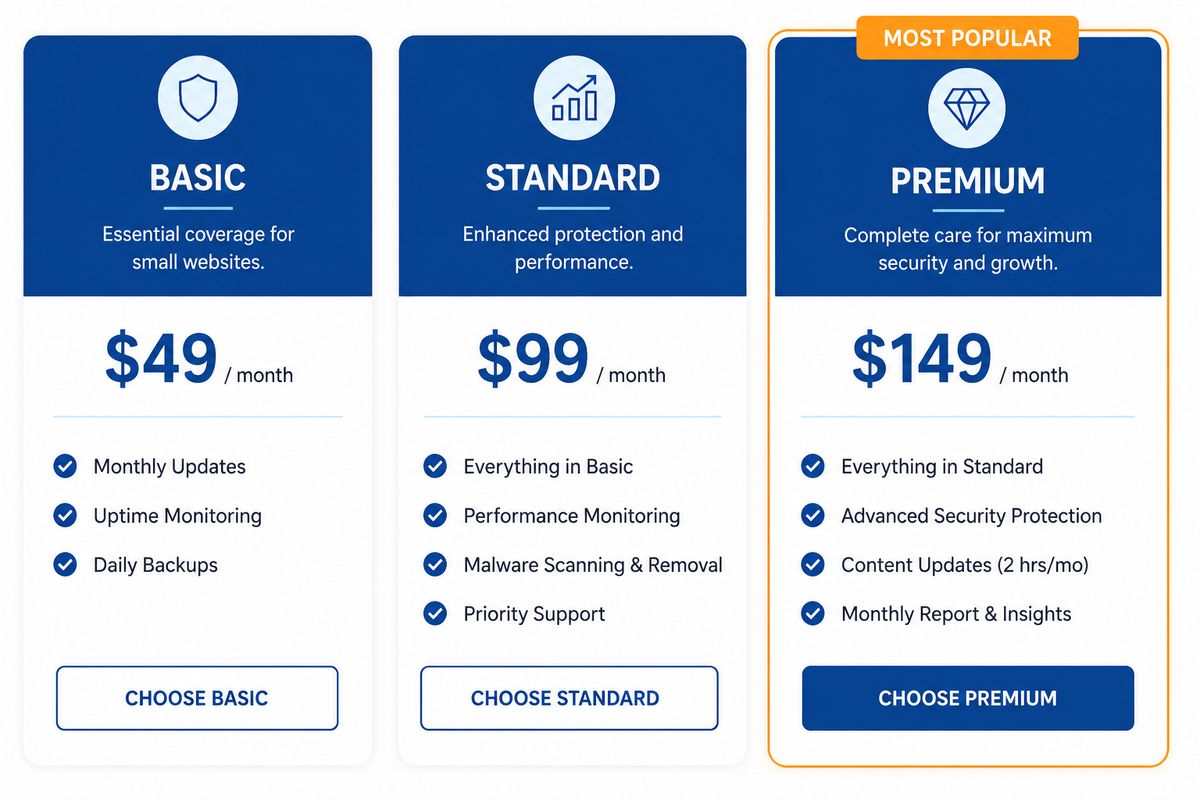
Package tiers work well for commercial clients because they allow for different budget levels:
Basic Package: Annual inspection and touch-up visit for one building or floor
Standard Package: Quarterly check-ins, minor repairs included, priority scheduling
Premium Package: Full annual maintenance program covering multiple properties, dedicated account manager, guaranteed response time
Pricing should reflect the size of the property, the scope of work included, and the value of the relationship. Commercial clients who are already happy with your work are far more price-tolerant on maintenance packages than they are on new job quotes, because the relationship is already established and the risk of trying someone new feels high to them.
To Know More: How to Increase Conversion Rate for Painting Leads Using AI
The Post-Job Maintenance Offer Sequence
The best time to sell a maintenance package is immediately after completing a job. The client is happy, the work is fresh, and the relationship is at its strongest point. Most painting businesses let this moment pass because there is no system to capture it.
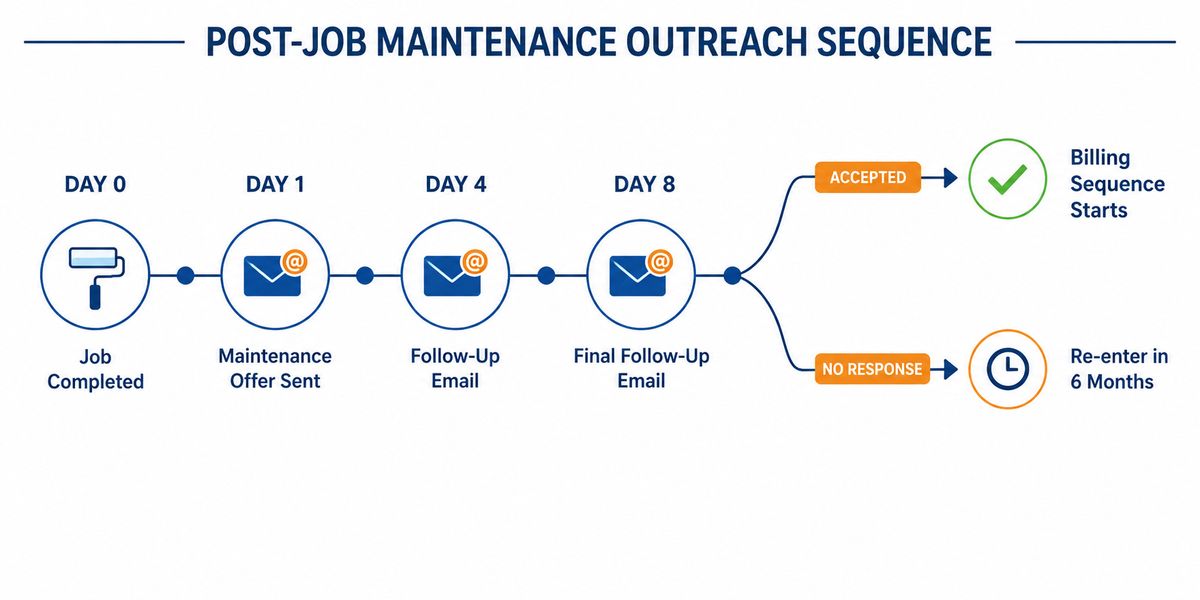
Here is how the automated post-job sequence works:
Day 1 after job completion: The sales team receives an automatic task notification prompting them to send the maintenance package offer to the client. A pre-written offer email goes out with the package options, pricing, and a simple one-click acceptance link. The email is personalized with the client's name, property details, and the specific job that was just completed.
Day 4, if no response: An automatic follow-up email goes out. Shorter than the first, friendly in tone, and focused on the value of staying ahead of maintenance rather than waiting for visible damage.
Day 8, if still no response: A final follow-up is sent. This one includes a simple breakdown of what reactive repainting costs versus proactive maintenance, framing the package as a cost-saving decision rather than an added expense.
If the client accepts at any point in the sequence: The workflow triggers immediately. The acceptance is logged, the client moves into the maintenance pipeline, and the billing and invoice sequence begins automatically. No manual handoff required.
If the client does not accept after all three touchpoints: They are tagged in the CRM and re-entered into a lighter nurture sequence that sends a maintenance offer again six months later, timed around the period when property managers typically plan their next budget cycle.
Read More: Why Most Painting CRMs Fail And How AI Fixes It
The Automated Billing and Invoice Workflow
Once a client accepts a maintenance package, the system takes over completely. No one on your team needs to manually create an invoice, chase a payment, or update a spreadsheet.
Here is exactly how the billing workflow runs:
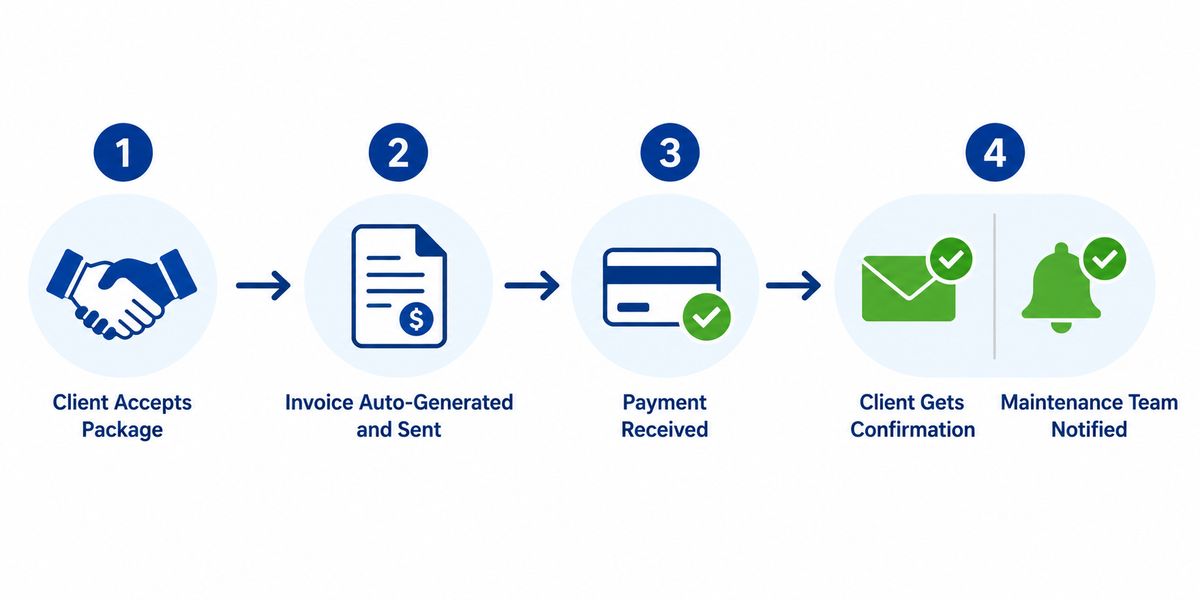
Step 1: Acceptance triggers the account team notification. The moment a client accepts the maintenance package, your accounts team receives an automatic email notification with the client's details, the package they selected, the agreed price, and the billing start date.
Step 2: The invoice is generated automatically. The system creates a branded invoice based on the accepted package terms and sends it directly to the client with a payment link. No manual invoice creation. No copy-pasting client details. The invoice goes out within minutes of acceptance.
Step 3: The payment reminder sequence runs automatically. If the invoice is not paid within three days, a polite payment reminder goes out automatically. A second reminder follows at day seven if needed. The reminders are professional and non-aggressive, designed to handle the reality that accounts payable at commercial properties often work on their own schedule.
Step 4: Payment confirmation triggers the operations team. The moment payment is confirmed, two things happen automatically. The client receives a payment confirmation email with their maintenance schedule details. Your maintenance operations team receives a notification that a new maintenance contract is active, along with the client's property details, contact information, and the scope of work included in their package.
Everything is logged in the CRM in real time. Your accounts team can see every active maintenance contract, every pending invoice, and every upcoming renewal from a single dashboard without touching a single spreadsheet.
Keeping the Maintenance Team Informed Automatically
One of the biggest operational problems in painting businesses is communication breakdown between sales, accounts, and the team doing the actual work. A maintenance contract gets sold, the invoice gets paid, and then the maintenance team either does not know about it or finds out too late to schedule properly.
The automated notification system eliminates that breakdown.
When a maintenance contract becomes active, the maintenance operations team receives a detailed notification that includes:
- Client name and property address
- Package tier and scope of work included
- Scheduled maintenance window based on the contract terms
- Contact details for the property manager or facility director on site
- Any specific notes from the original job that are relevant to the maintenance visit
The system then creates a scheduled task in the operations calendar for the maintenance visit. When the visit date approaches, the maintenance team lead receives an automatic reminder 72 hours in advance with all relevant job details attached.
After each maintenance visit is completed, the team lead marks the visit as done in the system. This triggers a client satisfaction follow-up email asking for feedback and confirming that the next scheduled visit or annual renewal is on track.
No phone calls between departments. No spreadsheets passed around. No maintenance visits that fall through because no one followed up. The system handles every handoff automatically.
The Annual Renewal System That Runs Itself
This is where the recurring revenue model becomes genuinely powerful. After the first year of a maintenance contract, the renewal process runs automatically without any involvement from your sales or accounts team.
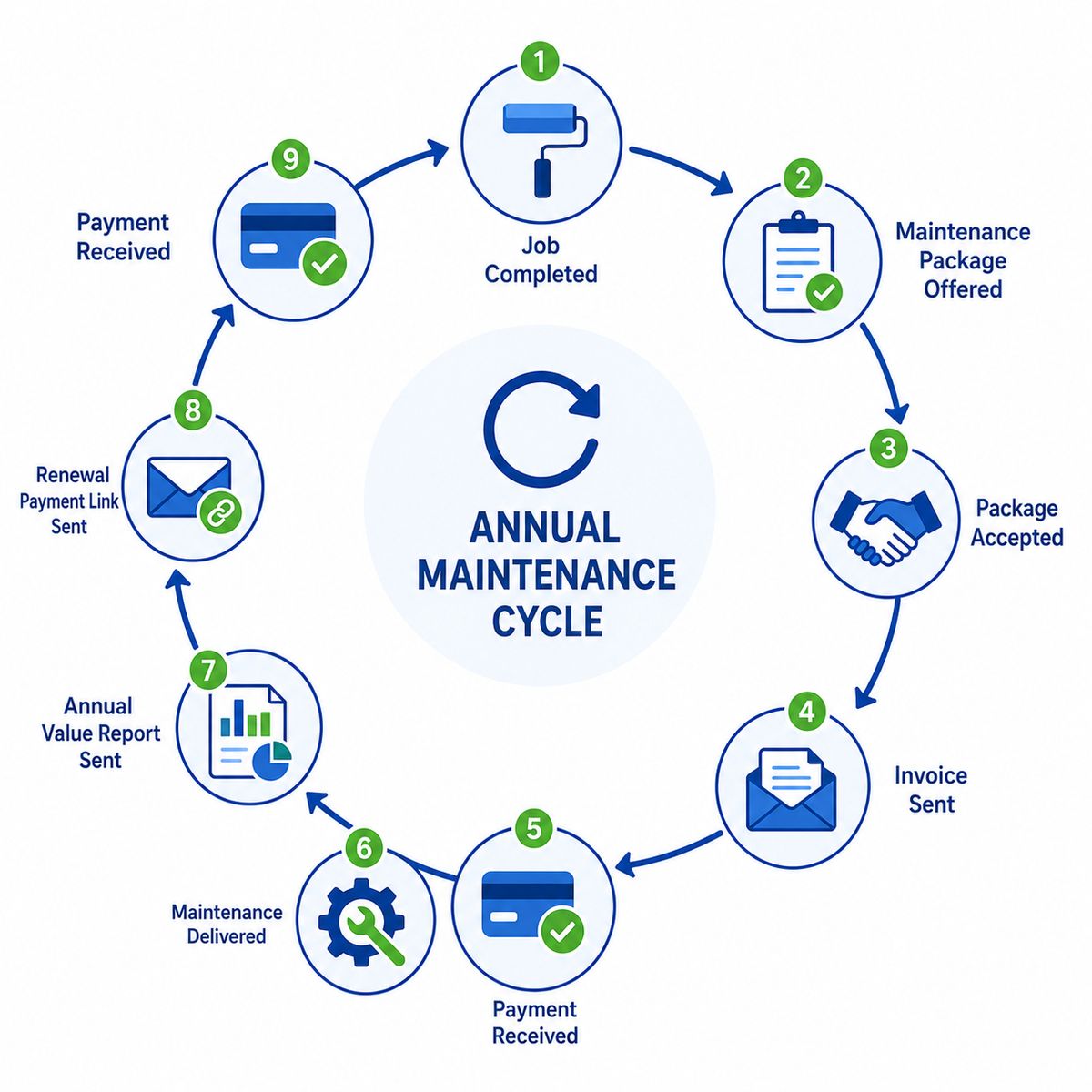
Here is how the annual renewal sequence works:
60 days before renewal: The client receives a personalized email summarizing the maintenance work completed over the past year, any observations about the condition of their property, and a preview of what the next year of maintenance will cover. This is not a sales email. It is a value report that reminds the client of what they have been getting.
30 days before renewal: A renewal confirmation email goes out with the updated payment link for the next year. If pricing has changed, the new rate is clearly explained with a brief justification tied to material costs or expanded service scope.
On the renewal date: If the client has paid, the system automatically restarts the full billing and operations workflow for the new contract year. The accounts team is notified, a new invoice cycle begins, and the maintenance team gets their updated schedule for the coming year.
If the client has not paid by the renewal date: An automatic follow-up sequence runs over the following two weeks. These emails are friendly, assume positive intent, and make it as easy as possible to complete the renewal with a single click on the payment link.
If the client does not renew: They are tagged in the CRM and moved into a win-back sequence. Three months later, they receive an outreach message from the sales team with a fresh maintenance offer, sometimes with a loyalty discount attached to make restarting easy.
The result is a renewal process that requires zero manual effort from your team in the majority of cases. The payment link goes out, the client clicks it, and the next year of recurring revenue is locked in automatically.
How FatCamel AI Powers the Full Recurring Revenue System
Every piece of this system, the post-job offer sequence, the invoice automation, the operations notifications, and the annual renewal workflow needs to work together seamlessly. If any part breaks down, revenue leaks out, and clients drift away.
FatCamel AI is built to run this entire recurring revenue system for painting businesses, connecting every stage into one continuous automated workflow.
Here is what FatCamel AI manages across the full system:
Automated post-job sequences. FatCamel AI triggers the maintenance offer sequence the moment a job is marked complete in your CRM. The timing, the follow-ups, and the re-entry sequence for non-converting clients all run automatically without anyone on your team setting a reminder.
Invoice generation and payment tracking. FatCamel AI connects with your billing system to generate invoices, send payment links, run reminder sequences, and confirm payments in real time. Every transaction is logged and visible in your pipeline dashboard.
Cross-team notifications. When a payment comes in, FatCamel AI notifies the right team automatically. Accounts get the financial confirmation. Operations gets the job details. The client gets the confirmation email. Every handoff happens in seconds without a single manual action.
Annual renewal automation. FatCamel AI manages the full renewal cycle, including the value report email, the renewal payment link, the follow-up sequence for non-renewers, and the win-back campaign for lapsed clients. Recurring revenue renews itself.
Pipeline visibility across all contracts. A single FatCamel AI dashboard shows every active maintenance contract, every pending invoice, every upcoming renewal, and every client currently in a follow-up sequence. You always know the health of your recurring revenue base at a glance.
FatCamel AI is not a general automation tool that you configure from scratch. It is built around how painting businesses operate and how commercial clients make purchasing decisions. The workflows are designed for your industry, which means faster setup and results that show up in your revenue, not just your activity metrics.
👉 See how FatCamel AI builds recurring revenue for painting businesses
What This Does for Your Business Long Term
The first maintenance contract you close through this system adds a relatively small amount of recurring revenue. But the system compounds.
After six months, you have a growing base of clients on annual contracts. After a year, renewals start coming in automatically from the first wave of clients. After two years, a meaningful percentage of your monthly revenue arrives without any new business development required to generate it.
The operational benefits compound, too. Your maintenance team develops deep familiarity with the properties they service regularly. Visits become faster and more efficient. Clients trust your team more because they see the same faces every year. Referrals start coming in from maintenance clients who recommend you to other property managers in their network.
A painting business with a strong recurring revenue base looks fundamentally different from one without it. The pipeline pressure is lower. The cash flow is more predictable. The client relationships are stronger. And the business itself is worth significantly more if you ever decide to sell or scale.
This is not a complicated model. It is a system. And once it is running, it works in the background every single day, whether your team is on a job site or not.
FAQ
1. What is recurring revenue in a painting business, and how does it work?
Recurring revenue in a painting business comes from maintenance packages that clients pay for on an annual or quarterly basis instead of hiring you only for one-time jobs. After completing a painting project, you offer the client a maintenance plan that covers annual touch-ups, inspections, and minor repairs. An automated billing system handles invoicing and renewals, so the revenue comes in every year without manual effort from your team.
2. How do painting businesses get repeat customers?
The most reliable way to get repeat customers as a painting contractor is to offer a maintenance package immediately after completing a job, when the client relationship is at its strongest. Combined with an automated follow-up sequence and annual renewal reminders, this turns a one-time client into a long-term account without relying on the client to remember to call you.
3. How do you retain customers in a painting business?
Customer retention in painting comes down to consistent, low-effort contact after the job is done. Automated post-job sequences, annual maintenance offers, value reports that summarize work completed, and renewal reminders keep your business visible to existing clients without requiring your sales team to manually follow up with every account.
4. What should a painting maintenance package include?
A painting maintenance package typically includes an annual or quarterly inspection visit, minor touch-up work on high-traffic areas, surface damage assessment, priority scheduling for the client's future painting needs, and an annual repaint planning consultation. The package can be tiered to accommodate different property sizes and budget levels.
5. How does automated invoicing work for painting maintenance contracts?
When a client accepts a maintenance package, the system automatically generates a branded invoice and sends it with a payment link. If payment is not received within a set timeframe, automated reminder emails go out. Once payment is confirmed, the system notifies the accounts team and the operations team simultaneously and logs everything in the CRM. No manual invoice creation is required at any point.
6. How far in advance should renewal reminders go out for painting maintenance contracts?
Best practice is to send the first renewal communication 60 days before the contract renewal date, with a summary of value delivered over the past year. The payment link for renewal goes out 30 days before the renewal date. If payment has not been received by the renewal date, an automated follow-up sequence runs for two weeks before the account is flagged for sales team outreach.
7. Can a small painting business set up recurring revenue with automation?
Yes, and the system is often most impactful for smaller painting businesses because it removes the need for a dedicated accounts or sales team to manage client relationships manually. A small painting contractor with this system running can maintain and grow a recurring revenue base that would normally require two or three additional team members to manage without automation.
References
https://www.hubspot.com/marketing-statistics
https://www.salesforce.com/research
https://www.forbes.com/business-council
https://hbr.org/2014/10/the-value-of-keeping-the-right-customers
https://www.mckinsey.com/capabilities/growth-marketing-and-sales/our-insights
https://www.paintcontractormag.com
https://www.campaignmonitor.com/resources/guides/email-marketing-benchmarks