
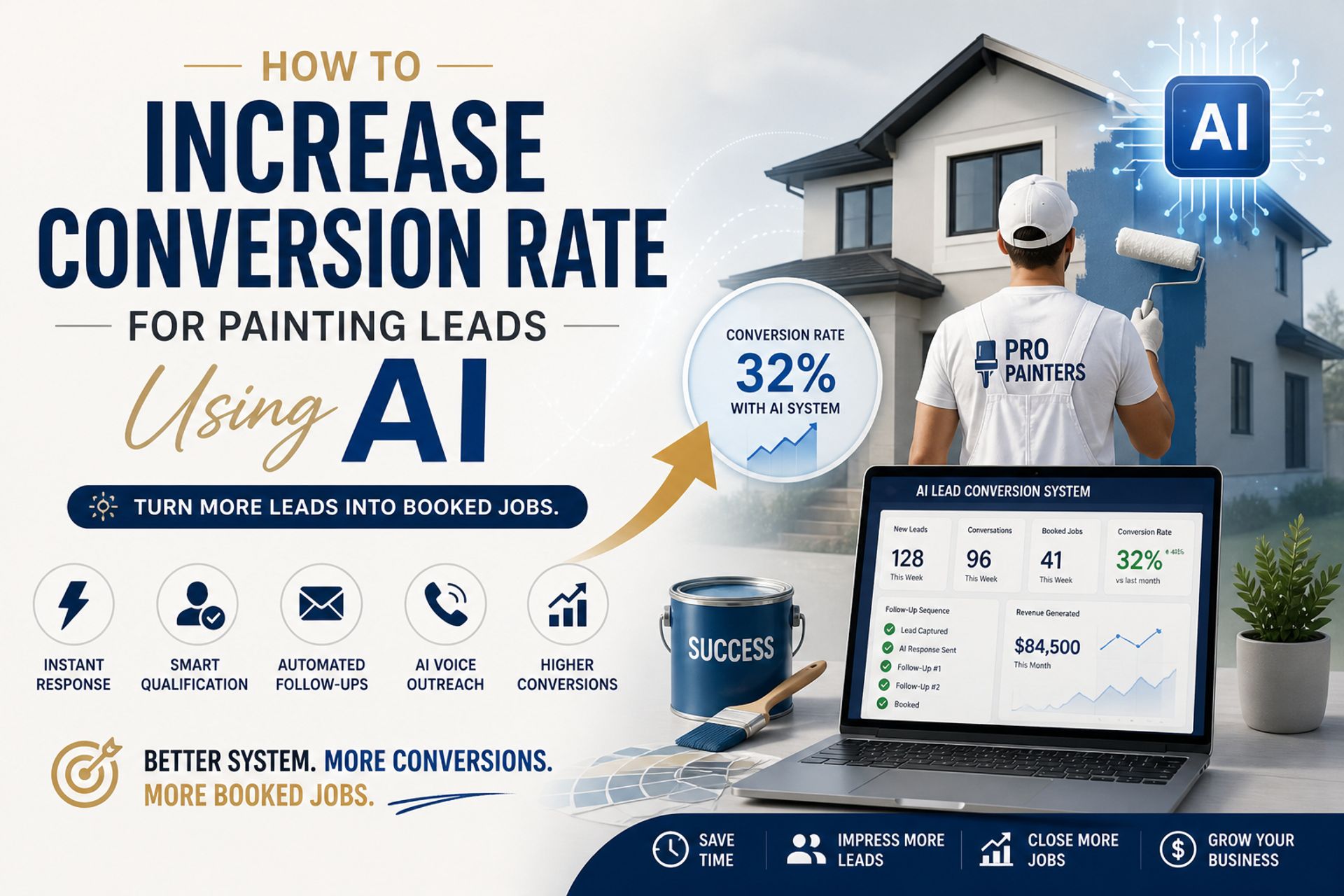
The problem is not your leads. It is your system.
Most painting businesses chase growth by generating more leads, spending more on Google Ads, or trying new marketing channels. But when you look closely at what is actually happening inside the business, the real bottleneck is rarely at the top of the funnel.
Leads are already coming in. Homeowners are calling, filling out forms, asking for quotes, and showing genuine interest in getting their homes painted. Yet a significant percentage of those leads never turn into actual jobs.
They disappear somewhere in between.
Not because they were bad leads. But because the system handling them was not strong enough to keep them alive long enough to convert.
According to research by Invesp, companies lose between 25% and 50% of their inbound leads due to inadequate follow-up, not poor lead quality, not pricing, and not competition. [1] For most painting businesses, that means tens of thousands of dollars in monthly revenue quietly walking out of the pipeline before anyone notices.
This blog covers exactly why painting lead conversion breaks down and how AI fixes it at every stage of the process.
Table of Contents
Why Painting Lead Conversion Is Lower Than It Should Be
The Three Stages Where Painting Leads Are Lost
Why Manual Follow-Up Systems Always Fail at Scale
How AI Increases Conversion Rate for Painting Leads Step by Step
A Real Numbers Example
Why Conversion Is a System Problem, Not a Sales Problem
Common Mistakes That Keep Conversion Rates Low
How FATCAMEL AI Approaches the Conversion Problem
References
FAQs
Why Painting Lead Conversion Is Lower Than It Should Be
If you observe how a typical painting lead is handled inside most businesses, the process looks reasonable in theory, but falls apart in practice.
A lead comes in. Someone responds when they are available. An estimate is sent. One or two follow-ups are attempted. And then the conversation fades because new projects, ongoing jobs, and daily operations take priority.
This pattern repeats month after month.
The problem is not a lack of effort. It is a lack of consistency.
Some leads get an immediate response while others wait for hours. Some leads are followed up properly, while others are forgotten entirely. This uneven experience directly impacts painting sales conversion because homeowners naturally gravitate toward businesses that are faster, more responsive, and easier to deal with.
A study by Lead Response Management found that 35 to 50% of sales go to the vendor that responds first, and that waiting longer than five minutes to follow up with a new lead decreases the likelihood of conversion by 400%. Most painting businesses are waiting far longer than five minutes, and many are not following up at all beyond the initial estimate.
Without a structured system driving the process, conversion becomes unpredictable, and that unpredictability translates into unpredictable revenue.
The Three Stages Where Painting Leads Are Lost
Most painting contractors believe they are losing leads somewhere late in the sales process, during pricing negotiations, or after an estimate is sent. The reality is that most leads are lost much earlier, and at three very specific points.
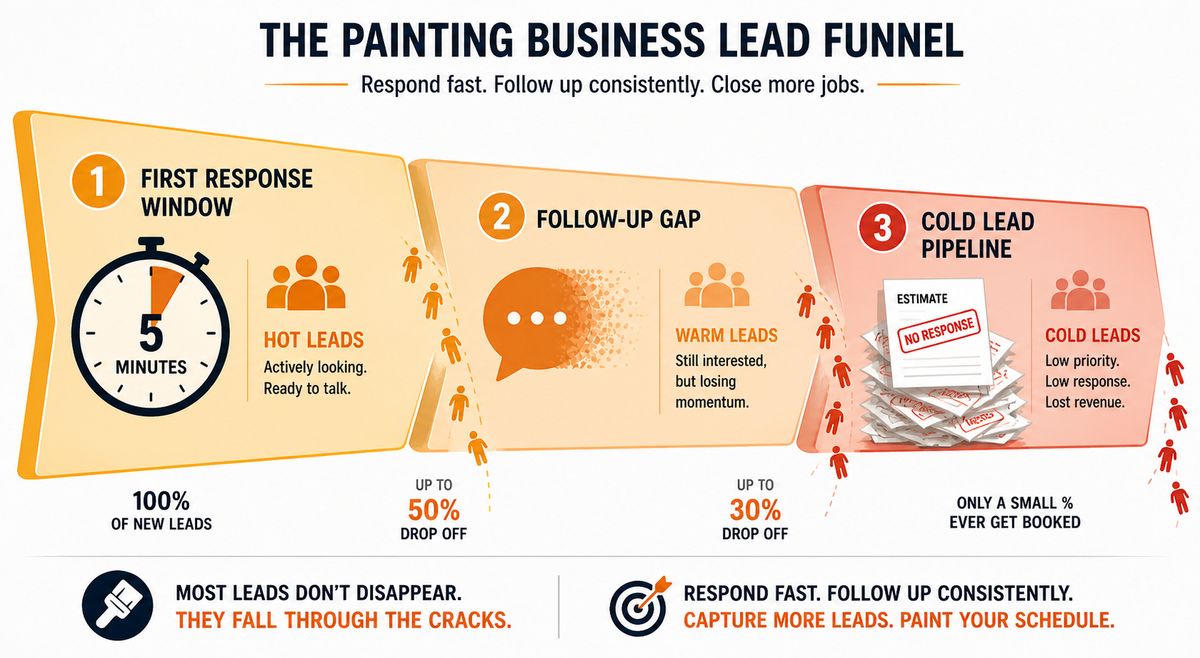
Stage One: The First Response Window
When a homeowner submits a quote request, they are simultaneously contacting two or three other contractors. The first business to respond with a professional, relevant message wins the first impression and, in many cases, the job.
Harvard Business Review research confirms that businesses contacting a lead within the first hour are seven times more likely to qualify that lead than those who wait longer. [3] For painting businesses where the average response time is measured in hours rather than minutes, this single gap is responsible for a disproportionate share of lost revenue.
Stage Two: The Follow-Up Gap
The majority of homeowners do not make a buying decision on the first contact. Research from the National Sales Executive Association shows that 80% of sales require five or more follow-up touchpoints, yet 44% of salespeople give up after just one attempt. [4]
In a painting business, this means that the lead who received one estimate and one follow-up call was not necessarily uninterested. They simply needed more touchpoints to reach a decision, and the business stopped before providing them.
Stage Three: The Cold Lead Pipeline
Every painting business has a CRM or a spreadsheet filled with leads that went cold weeks or months ago and were never revisited. Many of those leads still need the work done. According to MarketingSherpa, nurtured leads produce a 20% increase in sales opportunities compared to leads that receive no re-engagement. That dormant pipeline is not a dead end. It is an untapped revenue source waiting to be activated.
Read More: AI Automation Services Pricing: What You Actually Need to Know in 2025
Why Manual Follow-Up Systems Always Fail at Scale
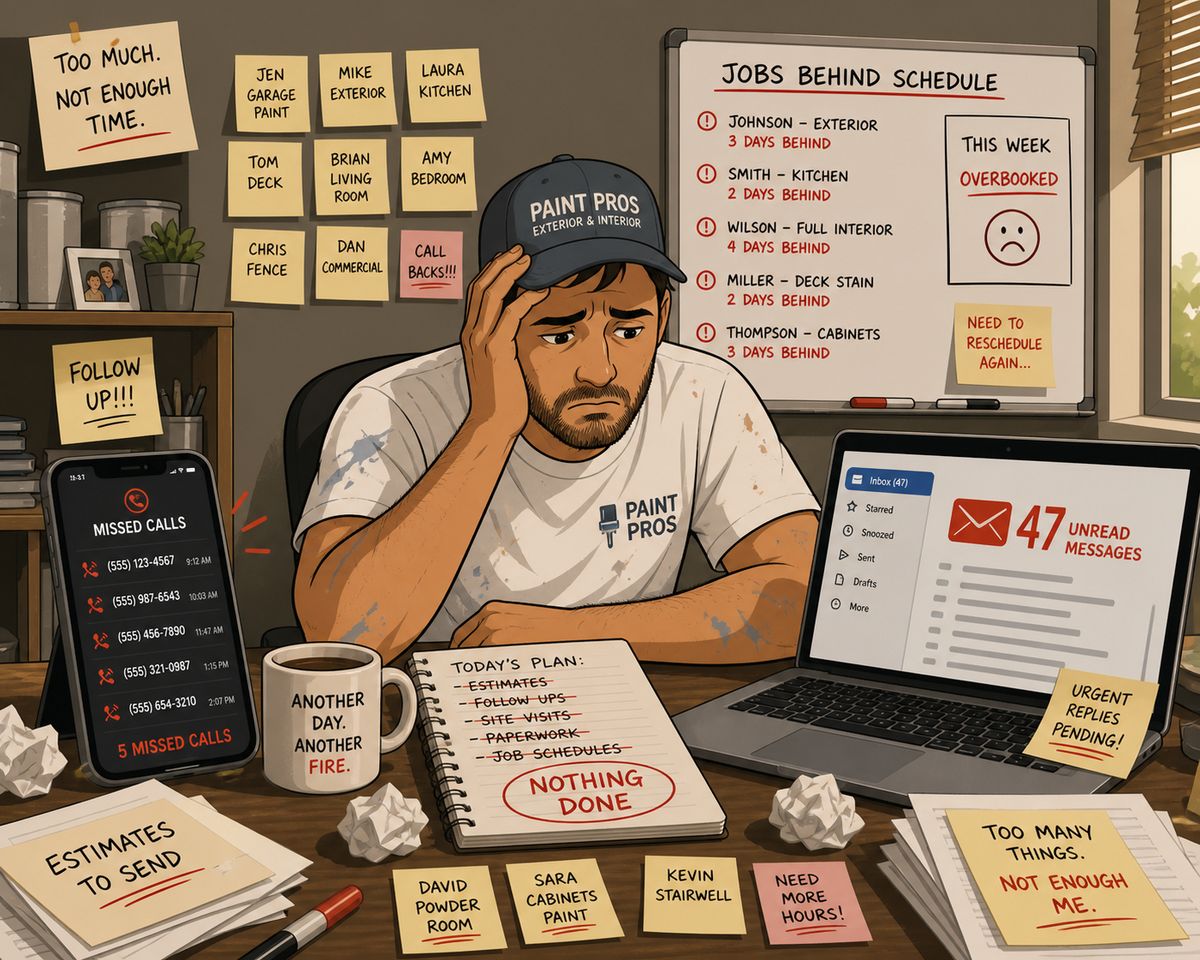
Most painting businesses rely entirely on manual processes to handle incoming leads. Someone checks notifications, responds to messages, remembers to follow up, updates the CRM, and manages ongoing communication, all while running active jobs and managing a team.
This approach works when the lead volume is low. As the business grows, it becomes impossible to maintain.
Leads receive delayed responses. Follow-ups are skipped. Estimates are sent and never revisited. The CRM falls out of date. Even the most disciplined and motivated teams struggle with this because manual systems are limited by three things that are always in short supply: availability, memory, and time.
A Forbes report found that 71% of internet leads are never followed up on, and of those that are, the average response time is 47 hours. [6] In a market where homeowners expect a reply within minutes, 47 hours is functionally the same as silence.
The solution is not to hire more people to do more manual work. The solution is to replace the manual process with a system that runs automatically, consistently, and without any dependency on your team's availability.
Read More: 8 Best Free AI Tools for Startups and Entrepreneurs
How AI Increases Conversion Rate for Painting Leads Step by Step
AI does not replace your sales process or your team's expertise. It strengthens the system supporting your conversion process by removing delays, ensuring consistency, and handling the repetitive communication tasks that currently fall through the cracks.
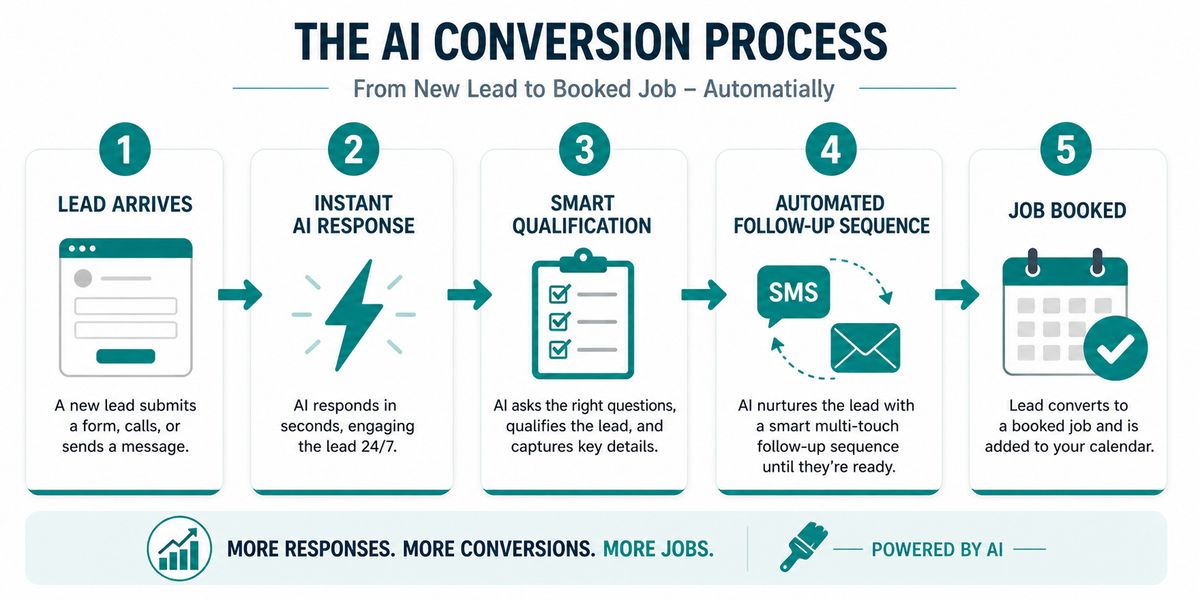
Here is exactly how AI improves painting lead conversion at each stage.
Instant Lead Response
The moment a lead comes in through any channel, whether a web form, a Google Ad, a Facebook message, or a phone call, the AI system responds immediately with a professional, personalized message. This keeps the conversation alive while the homeowner's intent is at its highest point and prevents competitors from filling the gap before your team has a chance to engage.
Salesforce research shows that high-performing sales teams are 2.8 times more likely to use AI-powered tools for lead response automation than underperforming teams, and businesses using automated lead response see an average 30% improvement in lead conversion rates. [7]
Smart Lead Qualification
Instead of spending equal time on every inquiry regardless of quality or urgency, AI gathers key information upfront through a natural conversational flow. Project type, location, timeline, budget, and scope are collected automatically. This allows your team to focus their energy on high-intent, high-value prospects while the system handles the initial qualification layer.
Structured Multi-Touch Follow-Up
Follow-up is where most painting jobs are either won or lost. AI ensures that every lead receives a structured sequence of touchpoints across SMS and email automatically and without anyone having to remember or manually schedule each one.
The sequence runs over a defined window of 21 to 30 days, covering the full decision-making timeline of the average homeowner and dramatically reducing the number of leads that go quiet simply because the business stopped reaching out too early.
Multi-Channel Engagement
Different homeowners respond to different channels. Some prefer text messages. Others engage more readily with email. Some need a phone call to move forward. AI-powered systems engage across multiple channels simultaneously, maximizing the likelihood of a response regardless of individual communication preferences.
Re-Engagement of Dormant Leads
For leads that went cold weeks or months ago, AI can initiate a re-engagement sequence at the right moment, referencing a seasonal angle, an availability update, or a relevant follow-up to the original conversation. Many of these leads still need the work done and will convert with the right message at the right time, without any additional marketing spend required.
To Know More: Budgeting for AI: How Much Does it Cost to Run n8n AI Agents?
A Real Numbers Example
Abstract claims about improved conversion rates are easy to dismiss. Concrete numbers make the impact impossible to ignore.
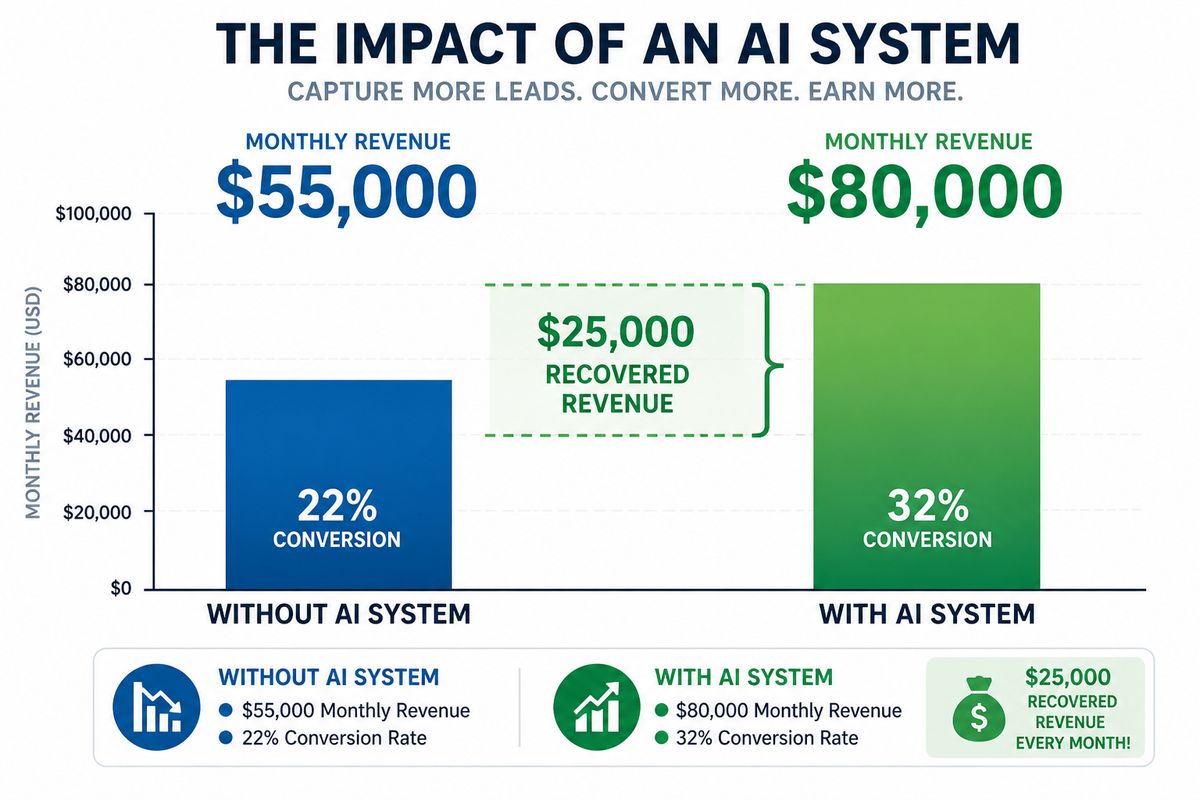
Consider a painting business generating 100 inbound leads per month with an average job value of $2,500. Without a structured AI-powered follow-up system, their conversion rate sits at 22%, closing 22 jobs and generating $55,000 in monthly revenue.
After implementing AI-led response and automated follow-up sequences, their conversion rate improved to 32%. That is 32 jobs closed from the same 100 leads, generating $80,000 per month.
The difference is $25,000 in additional monthly revenue from the same lead volume and the same marketing spend. Over 12 months, that is $300,000 in recovered revenue that was previously leaving the pipeline unconverted.
This improvement is grounded in documented industry outcomes. A study by McKinsey found that businesses implementing AI-powered customer engagement tools consistently report conversion rate improvements of 20 to 30% within the first 90 days of full deployment. [8]
The marketing budget did not change. The team size did not change. The lead volume did not change. What changed is that the system now captures the conversations that were previously being abandoned after one or two attempts.
Why Conversion Is a System Problem, Not a Sales Problem
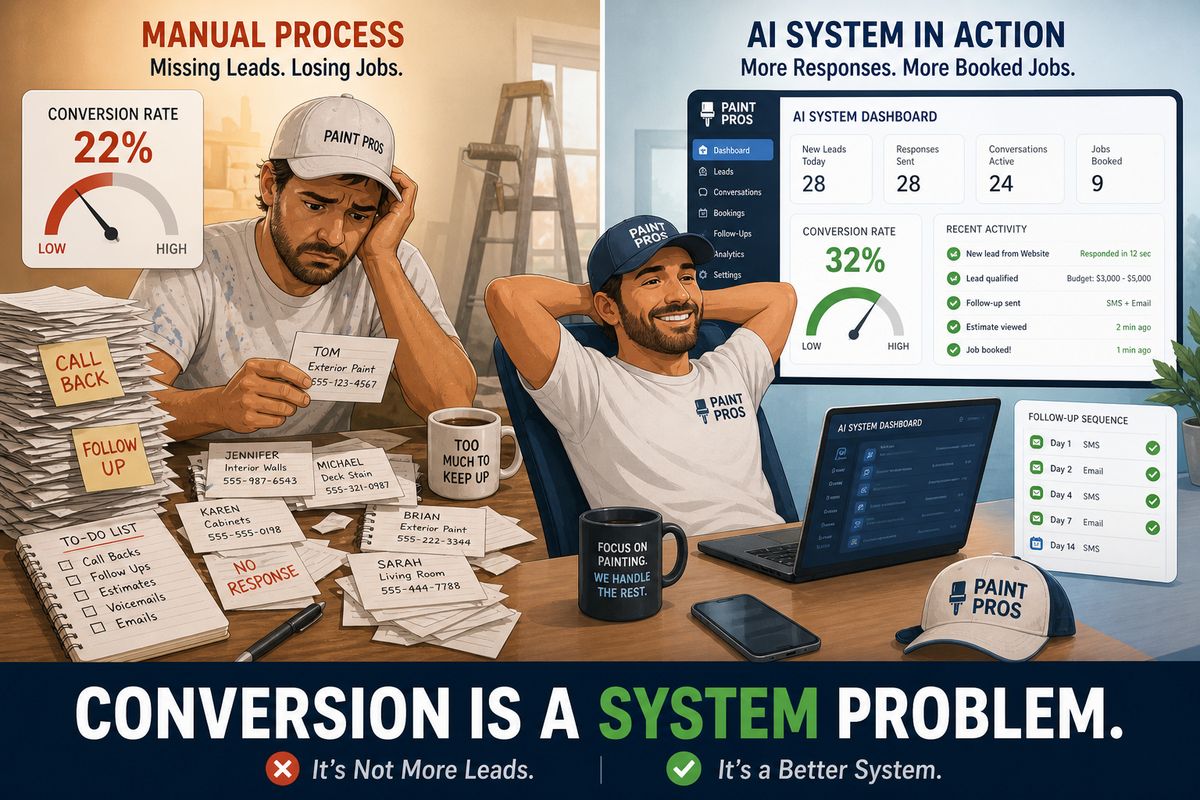
Most painting business owners treat low conversion as a sales problem. They assume that better communication skills, more competitive pricing, or a stronger presentation will solve it. These things matter, but they address the wrong layer of the issue.
Conversion is overwhelmingly determined by the system behind the sales process.
If your system cannot respond within minutes, follow up across five or more touchpoints, and re-engage leads that go quiet, then even an exceptional salesperson will struggle to produce consistent results. They are fighting against a structural disadvantage that no amount of sales skill can fully overcome.
When the system is fixed, the sales process becomes easier. Conversations happen more often. Appointments are booked more reliably. Leads move forward rather than fading. And the sales team spends their time on engaged, qualified prospects rather than chasing cold leads who should have been nurtured weeks earlier.
According to HubSpot research, companies that automate their lead management process see a 10% or greater increase in revenue within six to nine months, and sales teams using automation spend 14% more time actively selling compared to teams relying on manual processes.
The shift from manual to system-driven conversion is not a marginal improvement. It is a structural one that changes how reliably the business captures the demand that already exists.
Common Mistakes That Keep Conversion Rates Low
Even painting businesses that recognize the importance of follow-up often make mistakes that reduce their effectiveness. These are the most common ones and the ones that cost the most revenue.
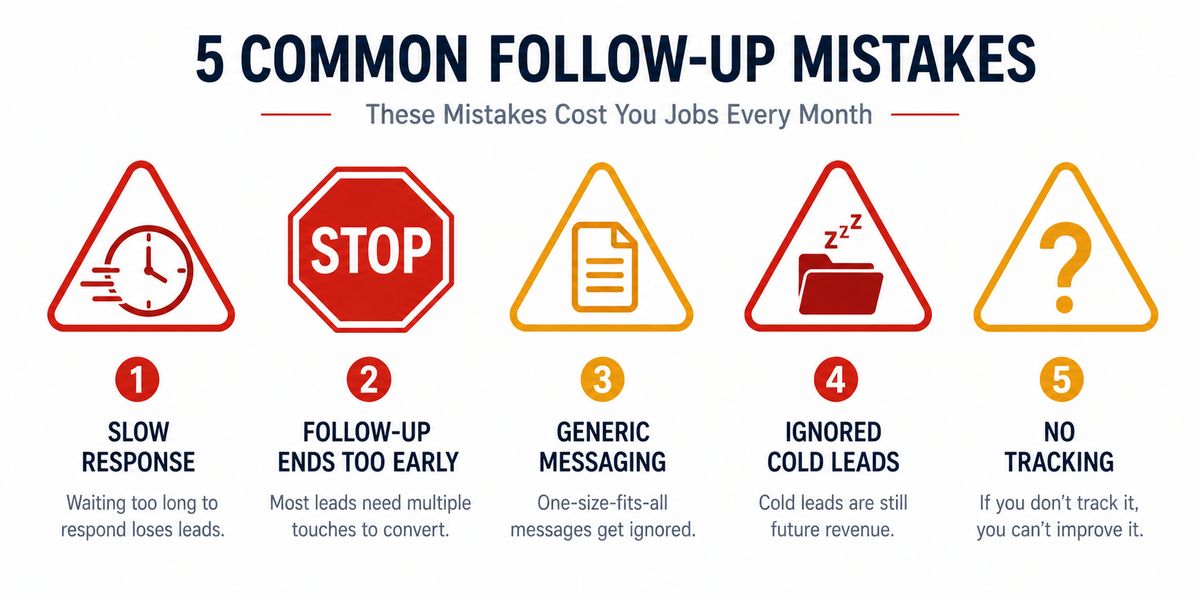
Responding too slowly to new inquiries. Every hour of delay reduces the probability of conversion significantly. If your average response time is more than 30 minutes, a meaningful percentage of your leads have already moved on before you even enter the conversation.
Stopping follow-up after one or two attempts. The vast majority of painting jobs are not closed on the first or second contact. A follow-up sequence that ends at message two is leaving the majority of closeable deals unfinished and handing them to competitors who simply stayed in touch longer.
Using identical messaging across every touchpoint. If every follow-up message makes the same ask in the same way, leads recognize the pattern and disengage. Each touchpoint should serve a distinct purpose, providing information, addressing an objection, building credibility, or creating urgency around timing.
Ignoring the dormant pipeline. Leads from 30, 60, or 90 days ago that went quiet are not permanently lost. Many of them still need the work done and are waiting for the right prompt to re-engage. Not revisiting them means leaving money in the pipeline permanently.
Tracking leads generated but not leads lost. Most painting businesses monitor how many leads come in, but never measure how many leave the pipeline unconverted and why. Without that data, the same gaps repeat indefinitely, and the revenue loss continues invisibly.
How FATCAMEL AI Approaches the Conversion Problem
For painting businesses looking for a practical starting point, FATCAMEL AI builds structured AI-powered systems designed specifically around how service businesses operate. Rather than offering a generic software tool, the focus is on creating a connected workflow that fits around the business's existing setup, ensuring that every lead is responded to instantly, followed up consistently, and re-engaged when the timing is right. For painting contractors who want to understand where their current system is losing leads and what a more reliable process would look like, a workflow audit with FATCAMEL AI is a practical first step before committing to any specific solution.
Final Thoughts
Painting businesses are not limited by demand. They are limited by how effectively they convert that demand into actual booked work.
The leads are already there. The opportunity already exists. What is missing is a system that captures, nurtures, and converts those leads consistently, one that does not depend on memory, availability, or manual effort to function.
AI does not replace your sales process. It gives your sales process a foundation strong enough to actually work.
And when your system becomes reliable, your results follow.
FAQs
1. How can contractors improve lead conversion?
Contractors can improve lead conversion by responding faster, following up consistently, and using structured systems supported by AI.
2. What is AI sales automation?
AI sales automation uses artificial intelligence to handle lead responses, follow-ups, and communication, making the process more consistent and efficient.
3. Why is my painting conversion rate low?
Low conversion rates are usually caused by delayed responses, inconsistent follow-ups, and a lack of a proper system.
4. Can AI improve painting sales conversion?
Yes, AI improves conversion by ensuring instant response, consistent follow-up, and better lead management.
5. Do I need to change my CRM to use AI?
No, AI can work alongside your existing CRM and improve its effectiveness.
6. How quickly can I see results?
Most businesses start seeing improvements within a few weeks after implementing AI systems.
7. Is AI useful for small painting businesses?
Yes, AI is especially helpful for small teams because it reduces manual workload and improves efficiency.