
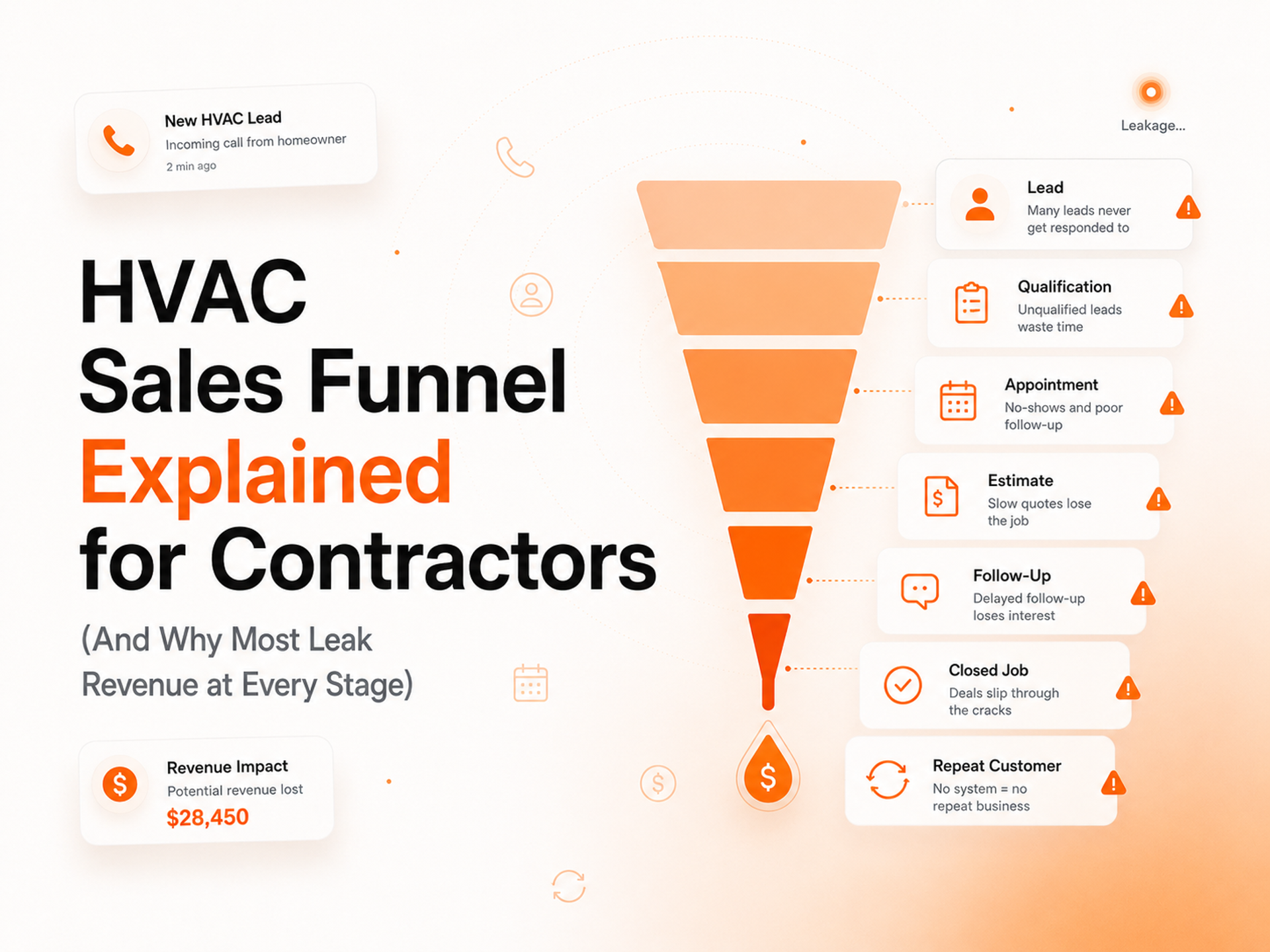
An HVAC sales funnel is the path a homeowner or facility manager follows from first contact to completed job and future service. Most contractors already have the basic stages in place. The problem is consistency. Calls go unanswered, estimates sit without follow-up, customer records become outdated, and past clients disappear between service visits. A clear funnel shows where those leaks happen and gives the team a process for closing them.
The HVAC Sales Funnel: What It Actually Is
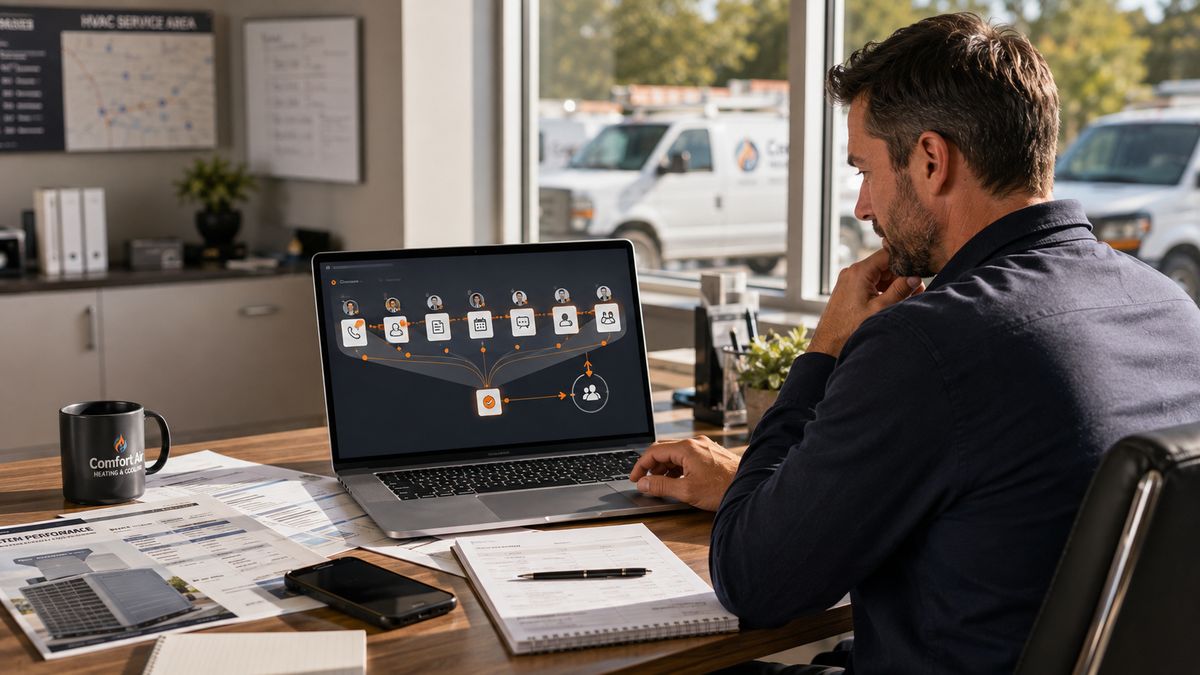
Most HVAC owners can explain their sales process: a customer calls, someone books the visit, a technician diagnoses the problem, an estimate goes out, and the customer decides. The difficult part is keeping those handoffs moving during a busy week. A missed call, incomplete intake form, or forgotten estimate follow-up can cost more than another advertising campaign can replace. A sales funnel makes those leaks visible and gives the business a practical way to fix them.
HVAC sales are shaped by timing. An emergency repair, planned replacement, maintenance visit, and commercial contract may enter through the same phone number, but each needs a different response, qualification, and schedule. A useful funnel gives every request a clear route.
The 7 Stages of an HVAC Sales Funnel
Each stage answers two practical questions: where does revenue leak, and what should happen instead?
1. Awareness - Get Found
Revenue leak: Poor local visibility, weak service pages, or unclear contact options.
What should happen: The right homeowner or facility manager finds the relevant service page and can call, message, or book without friction.
A strong awareness stage answers basic questions: what services the company handles, which areas it serves, whether emergency help is available, and how to request the next step. Clear service pages filter poor-fit inquiries and give good prospects confidence to make contact.
2. First Contact - Respond Fast
Revenue leak: Missed calls, slow callbacks, unanswered forms, and messages that wait until the next business day.
What should happen: The inquiry receives a quick acknowledgment, basic information is captured, and the customer knows what will happen next. When the team is unavailable, a clear automated response is better than silence.
The response does not need to pretend that a machine is a technician. It should confirm receipt, identify urgency, and set a realistic expectation for the next human interaction.
3. Qualification - Capture the Right Information
Revenue leak: Incomplete details, poor routing, and technician time spent chasing information.
What should happen: Capture the service type, property, urgency, equipment details, location, and timing so emergency work, maintenance, replacements, and commercial opportunities follow the right path.
Good qualification protects both sides. The office can send the right person, and the customer does not have to repeat the same story. Keep the intake useful without making it so long that a homeowner abandons it.
4. Site Visit and Estimate - Build Trust
Revenue leak: A poor handoff, delayed estimate, or unclear proposal.
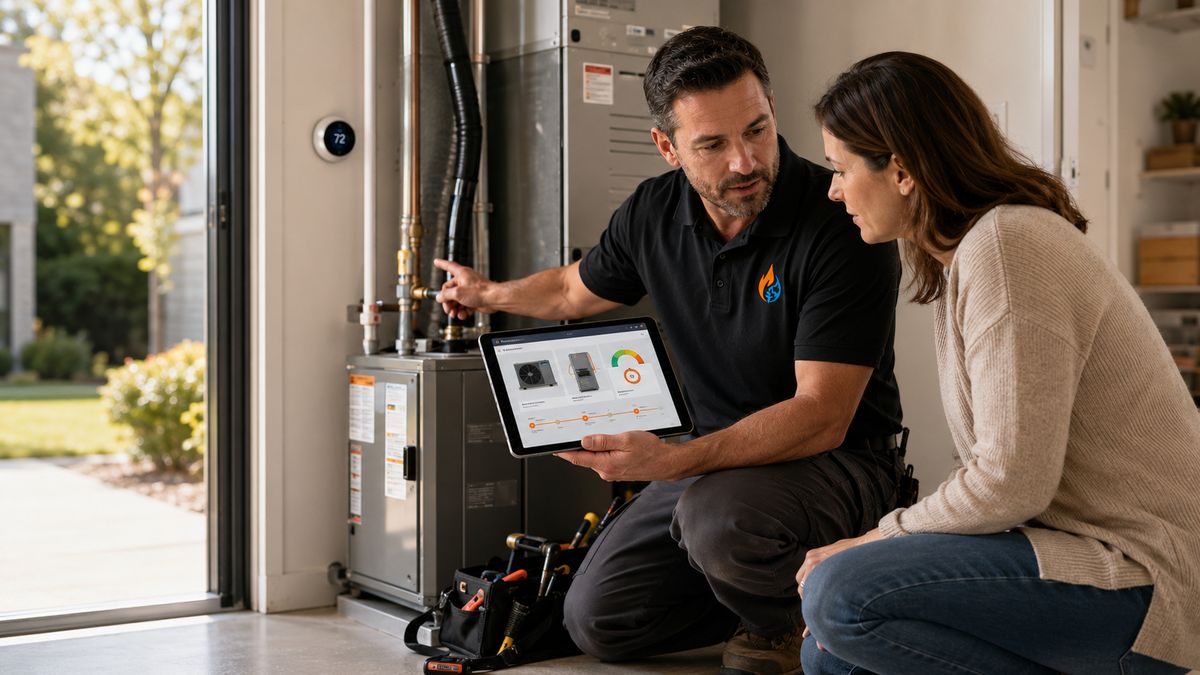
What should happen: The technician arrives with the customer and equipment context. The customer receives a clear estimate, understandable options, and a defined next step.
A clean handoff is visible here. The technician should know what the custome ported and what the visit should resolve. The estimate should explain the work clearly, with enough detail to support a decision.
5. Estimate Follow-Up - Keep the Opportunity Moving
Revenue leak: Estimates are sent and forgotten.
What should happen: Follow up consistently until the customer books, declines, or asks to reconnect. Each message should answer a question, clarify the scope, or make the next step easy.
Follow-up should reflect the estimate. A repair customer may need clarification, a replacement customer may need time to compare options, and a commercial buyer may need information for another decision-maker. Avoid sending everyone the same generic message.
Read More: AI Automation for HVAC Companies: Benefits, Process, Pricing & ROI
6. Job Completion - Create the Next Opportunity
Revenue leak: No review request, post-job check-in, or future-service conversation.
What should happen: Confirm completion, answer questions, request a review at the right time, and record the service details for the next interaction.
The closeout protects the next visit. Record the equipment serviced, work performed, recommendations, and agreed follow-up so the team has context when the customer calls again.
7. Retention and Reactivation - Get More From Existing Customers
Revenue leak: Past customers disappear from the CRM between service cycles.
What should happen: Use service reminders, maintenance renewals, seasonal communication, referrals, and relevant reactivation. Contact the right customer when the message makes sense.
Retention is not constant promotion. It is a useful reminder connected to the customer’s equipment, service history, agreement, or likely next need. An old-estimate message should acknowledge the earlier conversation and make it easy to restart.
How Automation Keeps Leads Moving
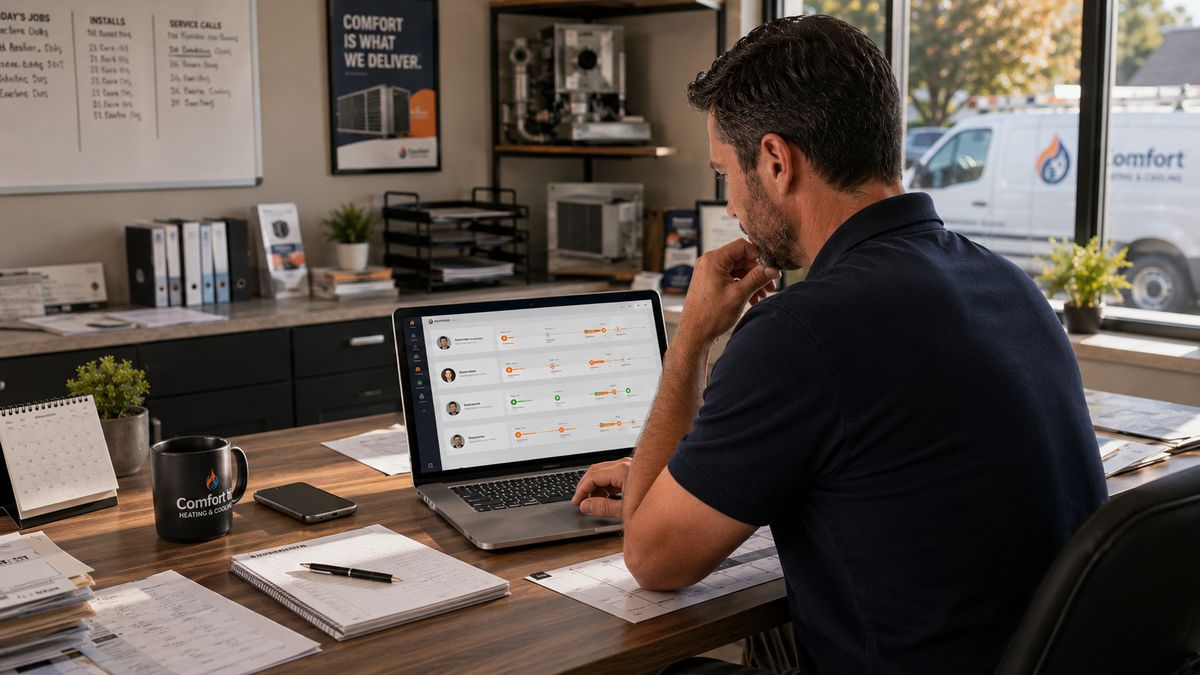
Manual tasks often work when the office has time and break down during a rush. Automation starts the next step reliably without replacing the technician or office manager.
A new inquiry can receive an acknowledgment, a qualified lead can be routed, an appointment can update the CRM, an estimate can trigger follow-up, and a completed job can start the review and post-service workflow. A dormant contact can be reactivated when there is a sensible reason to reach out.
Good workflows include stop points. A customer reply should pause the sequence or trigger a human handoff. Unsafe or urgent situations should be escalated, and a declined estimate should stop further reminders. Automation works best when it knows when to continue and when to step aside.
Read More: Build an HVAC Lead Generation System That Works 24/7
How FatCamel AI Runs the Complete HVAC Sales Funnel
FatCamel AI helps HVAC and home-service businesses connect lead response, qualification, booking, CRM updates, estimate follow-up, post-job communication, and reactivation to the tools they already use.

The benefit is continuity. Leads do not depend on someone remembering to create the record, update the calendar, or check an old estimate. The business defines the workflow, chooses where human review is needed, and measures response time, appointments, follow-up, or repeat service.
For example, a new HVAC inquiry could be acknowledged, asked a few service questions, placed in the right pipeline stage, and offered an appointment window. Once booked, the record can carry the issue and equipment details into the technician’s view. After the visit, the estimate can trigger follow-up, while a completed job can trigger a review request and future-service reminder. Small steps prevent the customer from disappearing between departments.
A good implementation starts with one expensive leak. That may be after-hours call handling, unworked estimates, or a CRM the team does not trust. The right starting point is the bottleneck that can be observed and measured. The first workflow should be narrow enough to test, useful enough to matter, and connected to a result the owner can see in day-to-day operations.
👉 Get a Free AI Revenue Audit for Your HVAC Business at https://www.fatcamel.ai/contact
FAQ
1. What is an HVAC sales funnel?
It is the customer journey from awareness and first contact through qualification, estimate, job completion, and future service. It shows contractors where leads or customers are being lost. The funnel is useful for both residential and commercial work, although the timing and decision-makers may differ.
2. Where do HVAC companies usually lose revenue?
Common leaks include unanswered calls, incomplete qualification, delayed estimates, inconsistent follow-up, and past customers who never hear from the business again. Fix these process gaps before increasing ad spend. A contractor should also look for handoff problems: information captured by the office but never reaching the technician, or a completed job that is never recorded for future service.
3. How should HVAC contractors follow up on estimates?
Use a short, consistent sequence. Ask whether the customer has questions, clarify what the estimate includes, and make it easy to book, decline, or request more time. Stop the sequence when the customer responds, books, declines, or asks for a human conversation.
4. What can AI automate in an HVAC sales funnel?
It can help with lead acknowledgment, intake, routing, booking, CRM updates, estimate follow-up, review requests, post-job messages, and older-lead reactivation. Keep human review available when judgment is needed. The system should support the team, not make promises the business cannot keep.
5. How does FatCamel AI automate the HVAC sales funnel?
FatCamel connects lead response, qualification, booking, CRM activity, follow-up, post-job communication, and reactivation around the contractor’s existing systems and process. It is a practical fit when the business has already invested in a CRM, calendar, phone system, or field-service platform but still relies on people to move information from one place to another.
Conclusion
HVAC companies do not always need more leads first. They often need a better way to handle the leads, estimates, customers, and service history already in the business.
Follow one real customer journey from first inquiry to completed job. Mark where someone waits, re-enters information, forgets a follow-up, or loses context. Then fix the most expensive leak with a focused process and a clear measurement. Once the process works for one service type, it can be adapted for emergency calls, replacements, maintenance agreements, and commercial accounts.
A reliable funnel gives the team fewer details to chase and customers a more dependable experience. Automation earns its place by solving a real problem, fitting the existing workflow, and making sure the next step does not depend on memory alone.
References
https://firstsales.io/sales-guide/hvac-sales-funnel/
https://www.homerankads.com/blog/from-clicks-to-clients-building-an-effective-hvac-sales-funnel
https://toriemathis.com/sales-funnel-for-hvac-fill-your-calendar-year-round/
https://www.invoca.com/blog/inbound-call-statistics
https://www.callrail.com/blog/missed-calls-stats
https://onepath.ai/blog/hvac-conversion-rates-ultimate-guide
https://www.simprogroup.com/blog/ai-hvac
https://www.artifactaisolutions.com/blog/hvac-revenue-lost-from-missed-calls
https://www.fatcamel.ai/services/crm-automation