
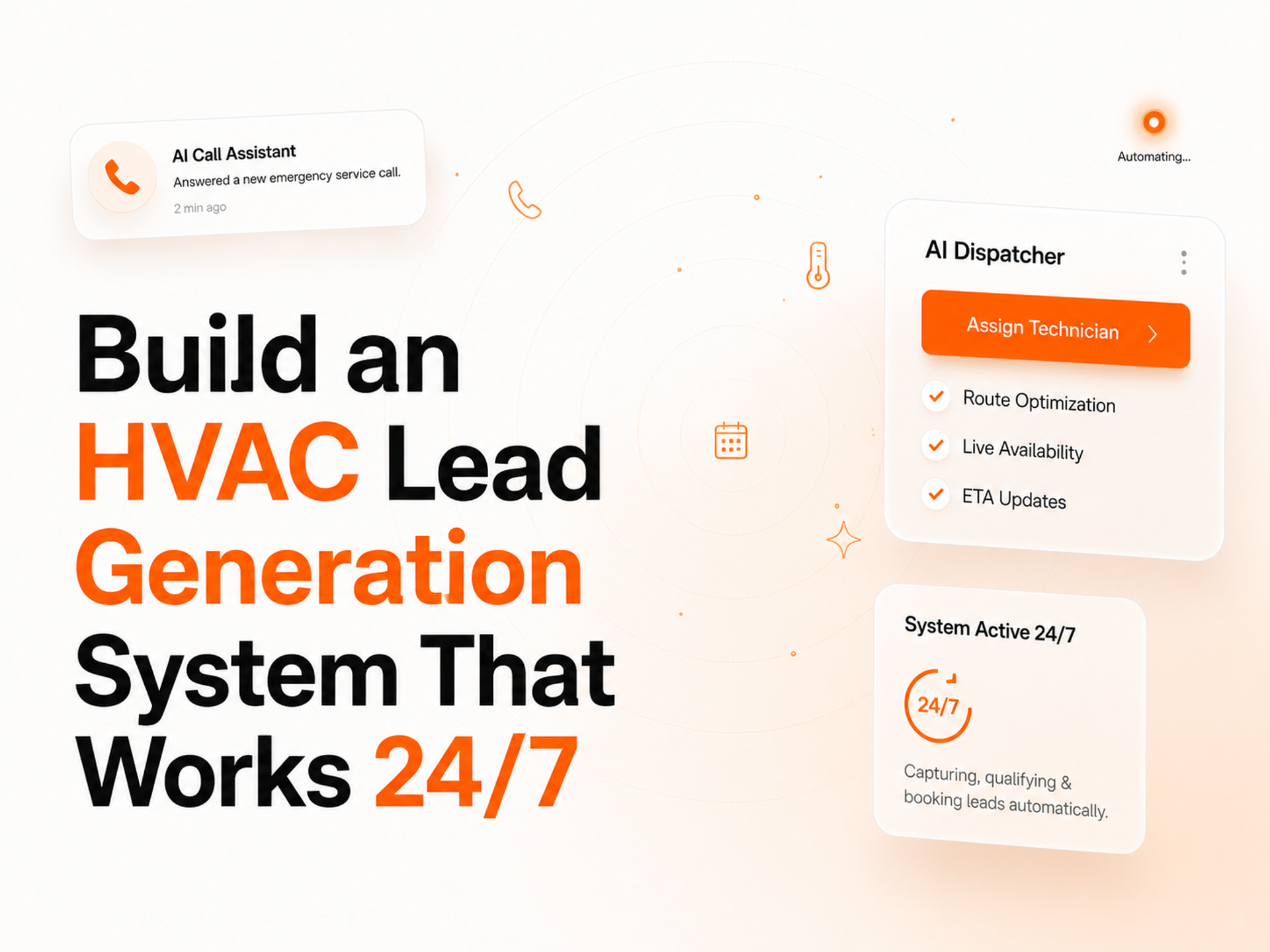
Most HVAC businesses don't have a real lead generation system. What they have is a mix of things that sometimes bring in leads Google ads, a website, maybe some word of mouth and then a manual process for handling those leads that works okay when the team has time and completely falls apart when they don't.
The result? A business that's either chasing work or buried in it, with no reliable way to turn marketing spend into a steady flow of booked jobs. Building an actual system changes that. This guide breaks down every piece of a 24/7 HVAC lead generation system what each part does, why it matters, and how they connect.
Table of Contents
- Why Most HVAC Lead Generation Doesn't Work as a System
- Component 1: Multi-Channel Lead Capture
- Component 2: Instant Automated Response
- Component 3: AI-Powered Lead Qualification
- Component 4: Automated Booking and Scheduling
- Component 5: Multi-Touch Follow-Up Sequences
- Component 6: Dormant Lead Reactivation
- Component 7: Pipeline Tracking and Measurement
- What the Full System Actually Produces
- How FatCamel AI Builds and Runs the Complete System
- FAQ
- References
Why Most HVAC Lead Generation Doesn't Work as a System

Here's the thing the leads are arriving. That's usually not the problem. The problem is what happens after they get there.
Only 11% of HVAC businesses respond to a new lead within an hour, per SearchLight's 2026 benchmark across 800+ contractors. ServiceTitan data puts the missed call rate as high as 74% when technicians are out on jobs. And CallRail research shows 85% of callers who don't reach someone on the first try never call that business back. They move on.
That's not a marketing problem. The ads are working. The issue is the system receiving those leads is broken or doesn't exist at all.
Research from MIT and InsideSales.com, based on over 15,000 leads, found that responding within five minutes versus 24 hours increases the odds of actually reaching a prospect by 100 times. But most HVAC owners have no way to respond in five minutes when a lead comes in at 7 PM while they're finishing a job across town. The gap between lead arrival and lead response is where most of the marketing budget goes to waste. Not in the targeting. In the follow-through.
Read More: How to Add AI to Your HVAC CRM Without Replacing It
Component 1: Multi-Channel Lead Capture
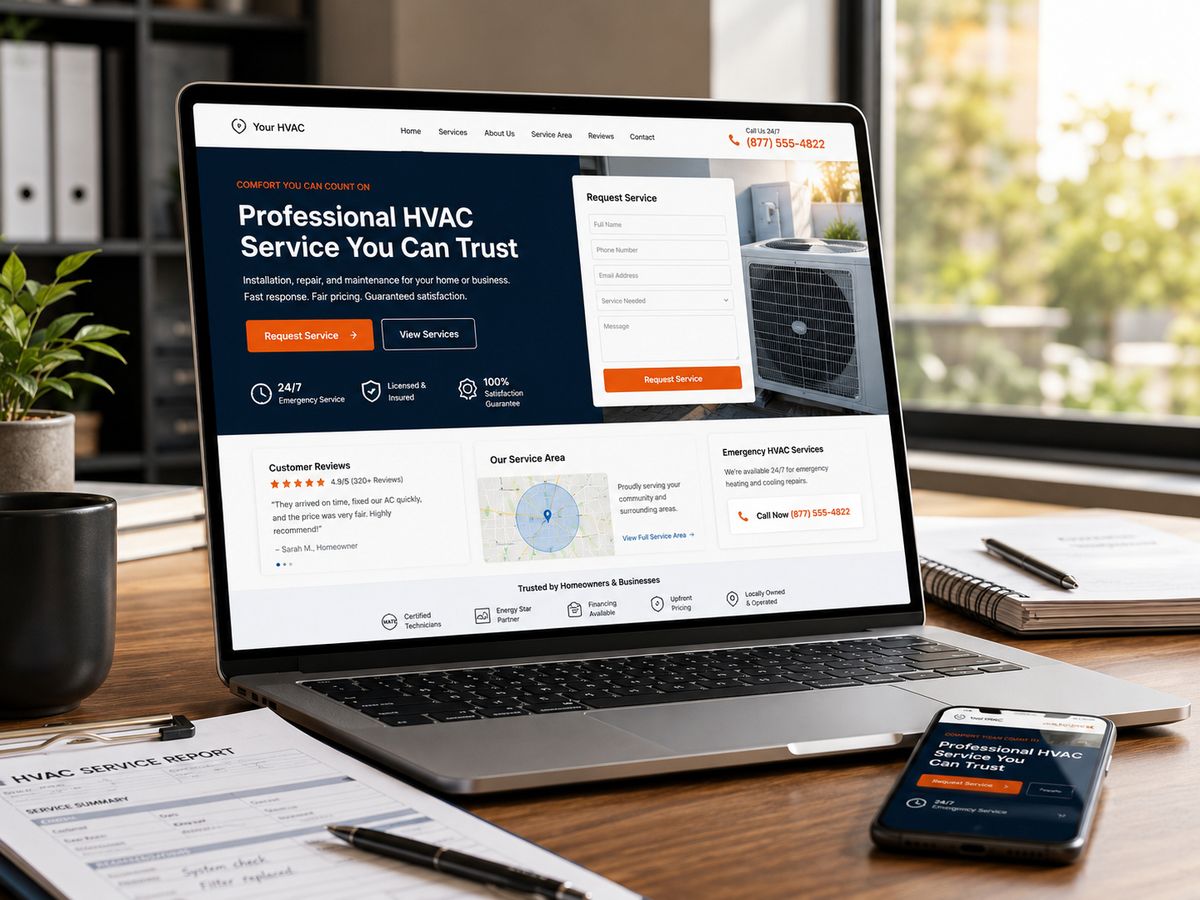
Homeowners and facility managers find HVAC companies through Google search, Google Maps, Local Services Ads, Facebook, contact forms, and direct calls. If your system only captures leads from one or two of those channels, everything else is being missed and those leads cost real money to generate.
Multi-channel capture means every entry point routes into the same pipeline and triggers the same response. A homeowner calling after a Google ad should get the same instant response as someone filling out a form at midnight. The channel they use to reach you doesn't matter. What matters is that the system treats every lead the same way immediate entry into the pipeline, CRM logging, and response without anyone on your team having to start it manually.
Website capture is where most HVAC businesses leave the most on the table. A contact form that sends an email notification to an inbox checked twice a day isn't a capture system. It's a delay. Every form submission should trigger an automated response within 60 seconds referencing the specific service requested and giving the homeowner a clear next step without waiting for a callback.
Same goes for missed calls. Every call that goes to voicemail should trigger an immediate SMS letting the caller know their inquiry was received and giving them a way to book directly. Because the moment between a lead arriving and a lead receiving a response is the exact moment when your competitor is also being called.
Component 2: Instant Automated Response
Speed to response is the single highest-leverage variable in HVAC lead conversion. LeadConnect's 2026 benchmarks across home service contractors show 78% of projects go to the first company that responds. Only 11% of HVAC businesses respond within an hour. That gap is the competitive opportunity and it's wide enough that any business building an instant response system is already ahead of most competitors before anything else is considered.
Instant response means every lead from every channel gets a real, meaningful response within 60 seconds of making contact. Not a "we'll call you back" message. Something that references the specific service they asked about, asks one or two qualifying questions, and gives them a direct path to booking. The homeowner whose AC died at 9 PM and is calling three companies at once needs to feel within the first minute that one company has their situation handled. Whoever creates that feeling first owns the lead.
FatCamel AI's RealtorVoiceAI handles this for phone calls. It answers on the first ring, has a real conversation not a phone tree and moves toward booking while the homeowner is still on the line. For web form submissions, an automated email and SMS goes out within 60 seconds. For missed calls, an SMS goes out before the caller has finished deciding who else to try.
Between 35 and 45% of HVAC inquiries arrive outside business hours, per Epiphany Dynamics. A business that responds instantly during the day but sends calls to voicemail at night is capturing less than half the leads its marketing is generating.
Read More: How HVAC Businesses Can Grow Faster Using AI (Without Changing Their CRM)
Component 3: AI-Powered Lead Qualification
Not every HVAC lead is worth the same amount of someone's time. A homeowner with a 25-year-old system that stopped working in a heat wave is a different situation than someone asking about a seasonal filter check. A facility manager requesting a quote for a three-building commercial contract is a different situation from a residential tune-up inquiry.
AI qualification figures out which category a lead falls into before any human time gets spent on it. It gathers the relevant information nature of the issue, equipment type and age, property type, urgency, timeline through the initial automated interaction and routes accordingly. Emergencies get flagged for immediate dispatch. High-value commercial inquiries go to the commercial sales workflow. Routine maintenance goes to standard booking.
The efficiency impact of this stacks up fast. When your team's time goes to the highest-value opportunities first and lower-touch leads move through automated channels, the same number of people produce more revenue. Without AI, someone has to manually work through every lead before routing it. With AI, that happens instantly at any hour, across however many leads are coming in at once.
Component 4: Automated Booking and Scheduling
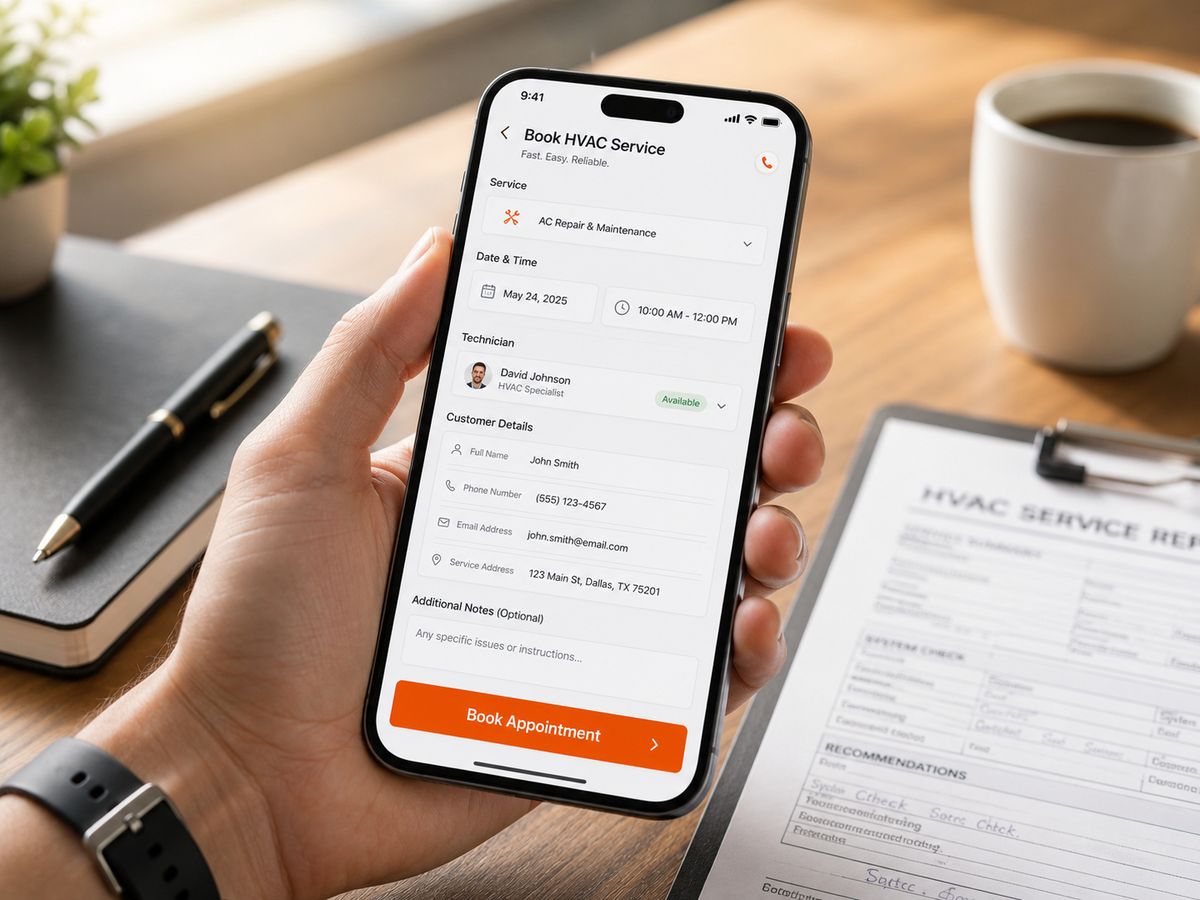
Most HVAC businesses turn qualified leads into callback obligations. Someone responds, a conversation happens, and the outcome is "we'll call you to schedule." The lead is warm right now. It gets cooler with every hour before the callback actually happens. If that callback falls to the next business day, a real portion of those leads have already scheduled with someone else.
Automated booking removes that gap. FatCamel AI's RealtorVoiceAI answers an after-hours call, offers available time slots directly, confirms the appointment during the call, sends a confirmation SMS immediately, and logs the booking to the CRM all before the conversation ends. A web form response can include a direct booking link the homeowner uses to self-schedule without any phone call needed.
The principle is simple: remove every step between "lead wants to book" and "booking confirmed." Every extra step is a step where some percentage of leads go elsewhere. Automated booking eliminates as many of those steps as possible.
Bonney Plumbing deployed AI-powered call handling and scheduling and saw a 60% reduction in missed calls, with the AI handling the large majority of routine scheduling, pricing questions, and booking without any human picking up. That's a documented outcome from a real home services company.
Component 5: Multi-Touch Follow-Up Sequences
Leads that don't book on the first interaction aren't automatically lost. Most HVAC clients especially for bigger jobs, commercial contracts, or system replacements need multiple contacts before deciding. Industry benchmarks put that number at five to eight touchpoints before a buying decision. The average HVAC business delivers one or two because manual follow-up falls apart the moment the team gets busy.
A multi-touch follow-up component delivers every touchpoint automatically on a fixed schedule, across every lead at once. Day one, day three, day seven, day fourteen SMS and email running together, each message different from the last, each one adding something rather than just repeating the same ask. The sequence stops the moment the lead books, responds, or opts out. Leads that complete the full sequence without responding enter a longer-term nurture track rather than getting marked as dead, because someone not ready in March can be very ready in June.
FatCamel AI's Lead Activation Engine handles this entire layer building the sequences, triggering them from CRM data, and escalating warm responses to the sales team with full conversation history attached. The financial difference between one-touch and eight-touch follow-up is meaningful. At an average HVAC job value of 650 dollars and a commercial maintenance contract worth 15,000 dollars annually, recovering even a portion of leads that currently fall through after one manual follow-up produces real revenue.
Component 6: Dormant Lead Reactivation
Every HVAC business with any real history has a CRM full of contacts who enquired, got a quote, and went quiet. They didn't say no. They just went quiet timing wasn't right, budget wasn't approved, the decision got delayed. These contacts represent acquisition costs that are already paid. They're not dead leads. They're leads whose timing hasn't arrived yet.
FatCamel AI's Lead Activation Engine identifies these contacts based on inactivity thresholds and sends personalized SMS and email sequences referencing the original inquiry, the equipment on file, the specific service history. The messages feel specific because they're built from real CRM data not a generic blast to an old list. Leads who respond move into the active booking flow. Non-responders after the full sequence go into a quarterly nurture track rather than being discarded.
The ROI on dormant lead reactivation is typically the highest of any component in the system. The acquisition cost is already paid. The data already exists. The only investment is the automation to systematically reach back out and the message quality to make it worth responding to.
Component 7: Pipeline Tracking and Measurement
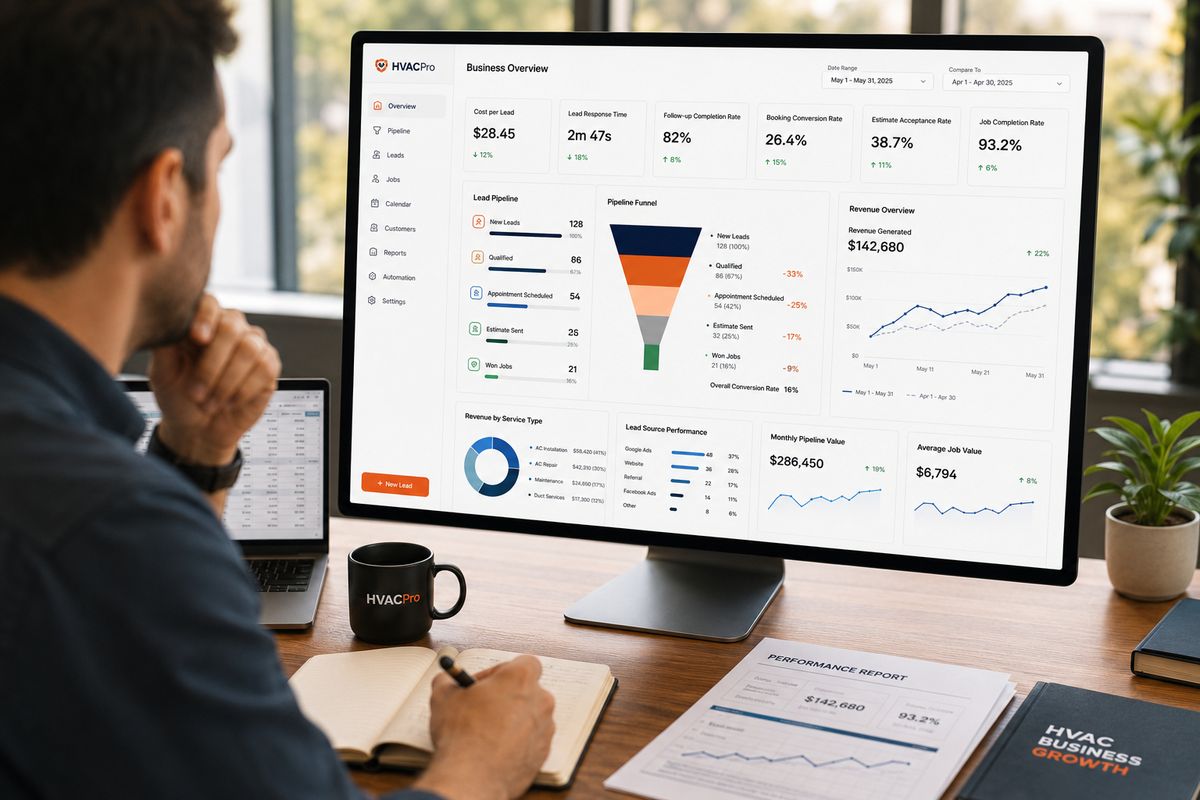
A lead generation system that can't measure its own performance can't improve. The tracking layer tells the business where leads come from, where they convert, where they drop, and what the revenue output looks like at any point.
The numbers that matter: cost per lead by channel, lead response time, follow-up completion rate, booking conversion rate, estimate acceptance rate, job completion rate. Together these reveal whether the system is working as designed and where the gaps are still costing revenue.
Most HVAC businesses track cost per lead reasonably well because it's tied to ad spend they're already watching. What most don't track is what happens after the lead arrives. A business spending 150 dollars per lead and converting at 15% is in a fundamentally different financial position than one spending the same amount and converting at 30%. And that conversion rate difference almost always comes down to the quality and consistency of the response and follow-up system not the marketing itself.
Read More: How Commercial HVAC Companies in Fort Worth Are Winning More Contracts With AI
What the Full System Actually Produces
When all seven components run together as a connected system, the output is a lead pipeline that produces consistent, measurable revenue regardless of how busy the team is or what time leads arrive.
After-hours call capture shows results within the first week. Follow-up automation shows measurable improvement in conversion rates within 30 to 60 days. Dormant lead reactivation generates revenue from contacts that were invisible before. And the measurement layer keeps revealing where the system can get better month after month.
For a mid-sized HVAC business with real lead volume, this is the difference between a marketing budget that produces unpredictable results and a system that produces consistent revenue whether the owner is on a job site, in a meeting, or asleep.
How FatCamel AI Builds and Runs the Complete System
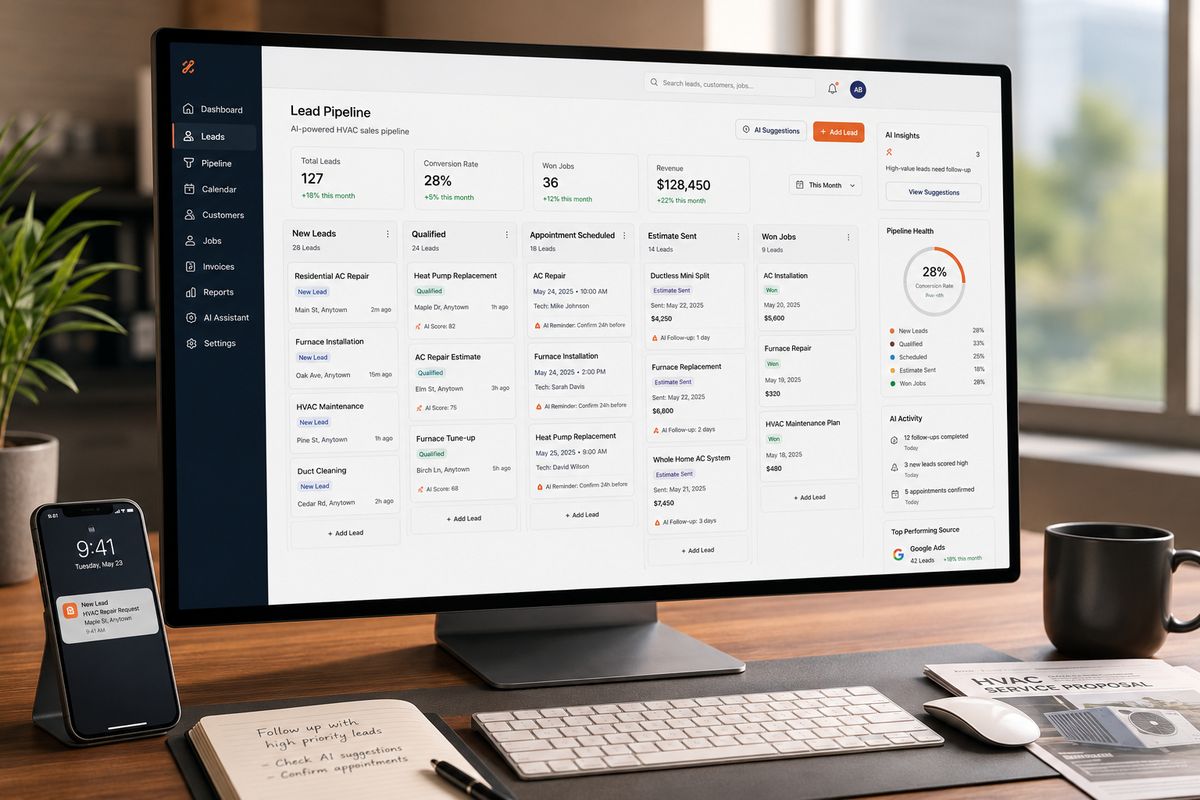
Building a seven-component lead generation system where every part connects and runs reliably requires more than putting individual tools next to each other. It needs a unified architecture where every component shares data, triggers based on what the others produce, and surfaces outcomes in one place.
FatCamel AI builds and operates this complete system for HVAC contractors. RealtorVoiceAI handles after-hours and overflow call capture with booking flows built around the business's actual scheduling process. The Lead Activation Engine manages follow-up sequences, dormant lead reactivation, and commercial outreach written around the specific services the business offers and the objections HVAC clients actually raise. CRM Automation makes sure every component's output gets logged back to the existing field service platform in real time so nothing ends up in a disconnected silo.
Every component connects to every other one. A lead captured by the voice assistant at 11 PM enters the follow-up sequence automatically if the booking doesn't close during the call. A dormant contact who responds to an SMS reactivation moves into the active booking flow without manual intervention. Every outcome gets logged to the CRM and visible in the pipeline dashboard.
The result is an HVAC business whose lead generation works at 2 AM on a Saturday with the same consistency as 10 AM on a Tuesday capturing every lead, responding to every inquiry, following up on every opportunity, without anyone on the team having to start any of it.
👉 Get a Free AI Revenue Audit for Your HVAC Business at https://www.fatcamel.ai/contact
FAQ
1. What is an HVAC lead generation system and why does it matter? An HVAC lead generation system is a connected set of tools and processes that captures, qualifies, responds to, and follows up on every lead automatically regardless of team capacity or time of day. It matters because most HVAC businesses lose the majority of their marketing-generated leads to slow response times and inconsistent follow-up. ServiceTitan data shows contractors miss up to 74% of calls when crews are in the field. A system closes those gaps so every dollar of marketing spend has a real chance of turning into a booked job.
2. How does 24/7 HVAC lead generation work without overnight staff? Through AI automation. FatCamel AI's RealtorVoiceAI answers every after-hours call, handles qualification and booking without any human involvement, and logs the outcome to the CRM before anyone on the team sees it the next morning. Automated SMS and email sequences respond to web form submissions and missed calls within 60 seconds regardless of the time.
3. What's the most important part of an HVAC lead generation system? Instant response. LeadConnect research shows 78% of projects go to the first contractor who responds, and responding within five minutes versus 24 hours increases the odds of reaching a lead by 100 times. Every other component depends on making contact before the prospect moves on.
4. How much does building an automated HVAC lead generation system cost? A single AI voice assistant for after-hours call capture typically costs 3,000 to 8,000 dollars to build and configure, with monthly operating costs of 200 to 500 dollars. A complete seven-component system ranges from 15,000 to 40,000 dollars for full implementation. Most businesses see positive ROI on the voice assistant alone within the first month, based on jobs captured that would otherwise have been lost to voicemail.
5. How long does it take to build a 24/7 HVAC lead generation system? A single component like an AI voice assistant typically deploys in one to two weeks. A complete seven-component system takes 60 to 90 days. The business operates normally throughout. Most businesses see results from the first deployed component within the first week before the full system is complete.
6. How does dormant lead reactivation work? FatCamel AI's Lead Activation Engine identifies CRM contacts that haven't been active within a defined time threshold and sends personalized SMS and email sequences referencing the original inquiry, equipment on file, or service history. Leads who respond move into the active booking flow. Non-responders enter a quarterly nurture track rather than being dropped.
7. How does FatCamel AI build and run an HVAC lead generation system? FatCamel AI builds and operates the complete system as a unified architecture RealtorVoiceAI for voice capture and booking, Lead Activation Engine for follow-up and reactivation, CRM Automation for real-time data logging, and pipeline tracking across all components. Everything is configured around how the specific HVAC business operates. Every component shares data, triggers appropriately, and logs outcomes back to the existing CRM automatically.
References
https://www.servicetitan.com/features/pro/contact-center
https://www.servicetitan.com/blog/success-story-bonney-plumbing-contact-center-pro
https://www.callrail.com/blog/missed-calls-stats
https://www.housecallpro.com/resources/ai-in-the-trades/
https://www.artifactaisolutions.com/blog/hvac-revenue-lost-from-missed-calls
https://www.leadtruffle.co/blog/complete-guide-hvac-lead-generation-2026/
https://myquoteiq.com/best-lead-generation-software-hvac-businesses-2026/
https://tensaimuse.com/blog/top-tools-and-systems-hvac-companies-use-to-capture-leads/
https://www.fatcamel.ai/services/voice-assistant
https://www.fatcamel.ai/services/crm-automation
Related Reading
AI Voice Agent for HVAC Companies: Features, Pricing & Benefits
Why HVAC Companies Lose Leads After Hours (and How to Fix It With an AI Answering Service)
How to Add AI to Your HVAC CRM Without Replacing It
AI Automation for HVAC Companies: Benefits, Process, Pricing & ROI