
Table of Contents
What HVAC Owners Actually Want to Know About AI
What AI Automation for HVAC Companies Actually Means
The Five Core Benefits of AI Automation for HVAC Contractors
The Implementation Process: How It Actually Gets Built Into a Business
AI Automation Pricing: What HVAC Companies Actually Pay
ROI: What HVAC Businesses Get Back And When
The Mistakes HVAC Companies Make When Adopting AI
How FatCamel AI Implements the Complete Automation Stack for HVAC Contractors
What HVAC Owners Actually Want to Know About AI
Most HVAC business owners have heard enough about AI to know it's relevant to what they do. What they haven't heard is a clear, honest answer to the questions that actually determine whether they act on it: what does AI automation specifically do for an HVAC company, what does it cost, and what can a business realistically expect to get back from the investment?
That gap between general awareness and practical understanding is why adoption in the HVAC industry remains low despite the interest being high. A ServiceTitan survey of more than 1,000 contractors found that about 70 percent see AI as relevant to their industry yet only about 12 percent have embedded it into their actual workflows. The businesses in that 12 percent are already capturing competitive advantages that the remaining 88 percent will eventually have no choice but to pursue. This guide closes the information gap so HVAC owners can make a clear-eyed decision about where AI automation fits in their business and what to realistically expect when they implement it.
Read More: How to Build a Commercial Lead Generation System for Contractors
What AI Automation for HVAC Companies Actually Means
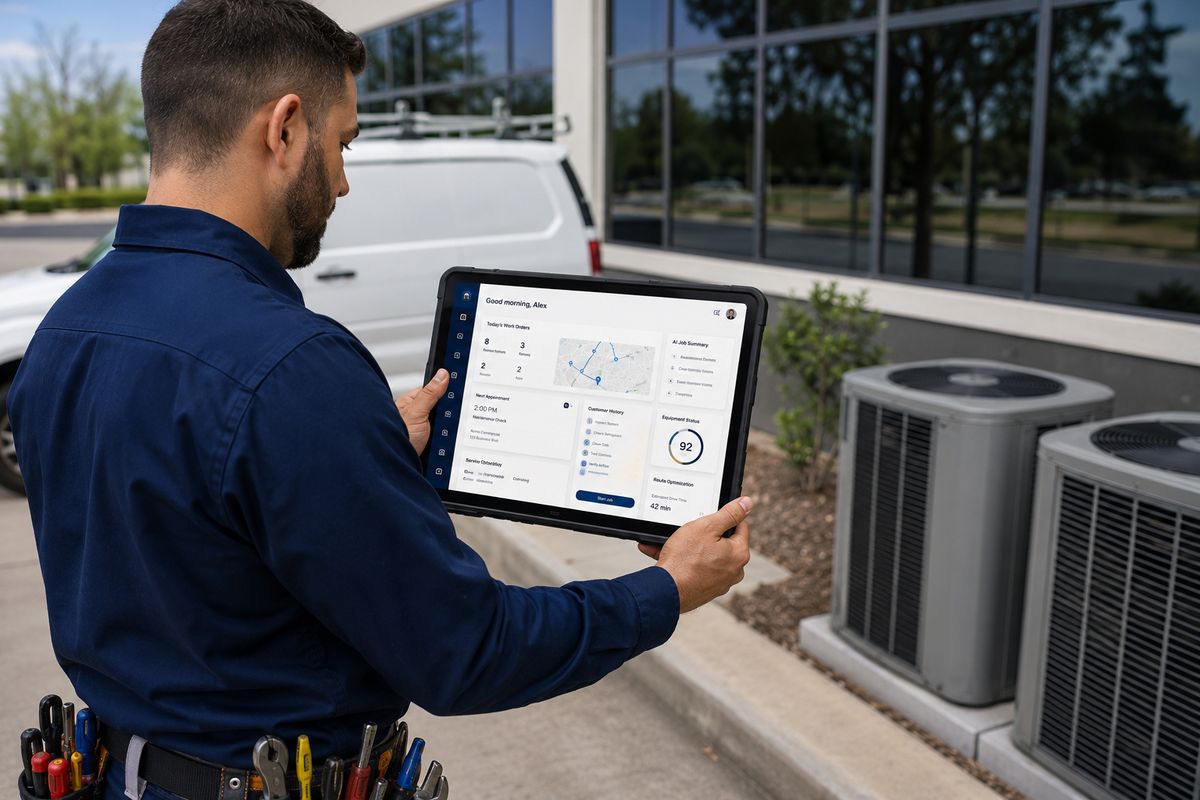
AI automation for HVAC companies isn't a single product. It's a category of tools and systems that handle specific operational tasks automatically without requiring a person to initiate, manage, or complete each instance manually. Understanding this distinction matters because the most common misconception about AI automation is that it replaces existing software. In almost every practical case, it doesn't. It connects to the systems already in use and fills the gaps those systems were never designed to address.
The operational gaps that matter most in an HVAC business are predictable and consistent across companies of different sizes and markets. Leads that arrive after hours and go unanswered. Follow-up sequences that start strong in quiet periods and break down the moment peak season hits. Estimates that go out and are never systematically chased. CRM records that lag days behind actual activity because manual data entry is always the last priority when the team is flat out. Past customers who receive no communication between service cycles and eventually call a competitor when the next need comes up.
AI automation addresses each of these gaps with tools designed to run continuously regardless of team capacity or the time of day. A voice assistant that answers every call and books appointments in real time. Automated follow-up sequences across SMS and email that run on a fixed schedule without anyone managing them. CRM logging that happens automatically at the moment of every interaction. Customer communication that triggers based on job completion dates, service intervals, and equipment age rather than relying on a dispatcher to remember. Each of these is a discrete tool that integrates with existing operations rather than replacing them.
The Five Core Benefits of AI Automation for HVAC Contractors
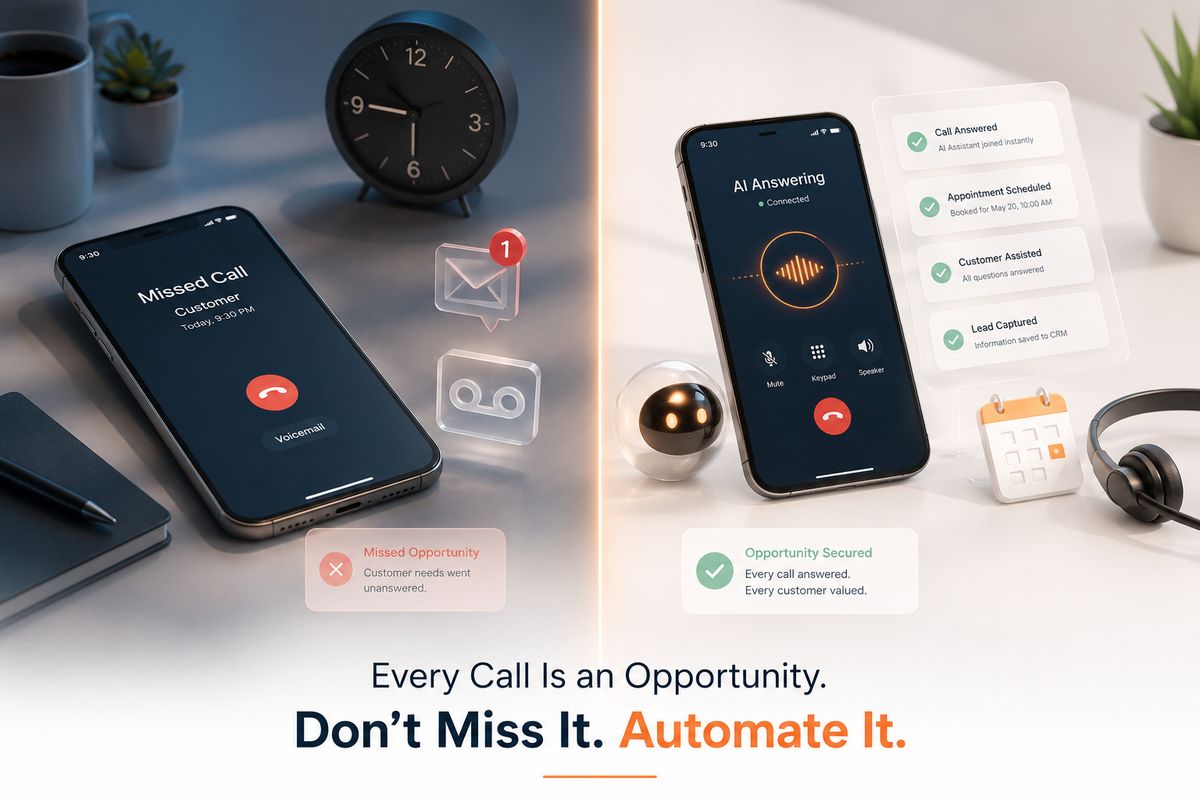
The benefits of AI automation in an HVAC business aren't abstract. They're specific, measurable, and directly tied to the operational gaps that cost HVAC companies the most revenue on a daily basis.
The first benefit is captured after-hours revenue. Between 35 and 45 percent of HVAC calls arrive outside standard business hours, according to data from Epiphany Dynamics. An AI voice assistant that answers every one of those calls immediately qualifying the situation and booking the appointment without any human involvement converts calls that would otherwise become unanswered voicemails into booked jobs. HVAC companies with 24/7 AI call handling capture 96 percent of emergency calls, compared to 58 percent for businesses using traditional answering services, according to data from AgentZap. That's not a marginal improvement.
The second benefit is faster lead conversion. Research consistently shows that response rates improve two to three times when speed to lead drops from hours to under a minute. The structural reason is straightforward: homeowners and facility managers who contact multiple HVAC companies simultaneously book with the first company that provides a useful, organized response. AI automation makes your business that company on every lead regardless of when the inquiry arrives.
The third benefit is consistent follow-up at scale. The average HVAC client needs five to eight touchpoints before making a buying decision. Manual follow-up processes produce one or two touchpoints per lead when the team is busy which is most of the time during peak season. Automated follow-up sequences deliver every touchpoint on schedule across every lead simultaneously, without requiring any team member to initiate or track them individually. The leads that go cold in a manual process stay engaged in an automated one.
The fourth benefit is administrative time recovery. Simpro's 2025 Trades Outlook Report found that 69 percent of trade business owners identify AI's biggest impact as workflow optimization specifically the reduction of technician downtime, better routing, and higher job completion rates. AI-powered CRM logging, automated invoicing triggers, and dispatch coordination eliminate hours of manual administrative work per day across the office team, freeing that capacity for the customer-facing and revenue-generating work it should be spent on.
The fifth benefit is customer retention through proactive communication. Seasonal maintenance reminders, post-job satisfaction messages, and annual equipment check-in communications sent automatically to every past customer keep an HVAC company visible between service cycles at zero additional staff time. Customers who receive timely, relevant communication between jobs are significantly more likely to book their next service with the same company than customers who hear nothing until they have a problem serious enough to start searching for a contractor again.
The Implementation Process: How It Actually Gets Built Into a Business
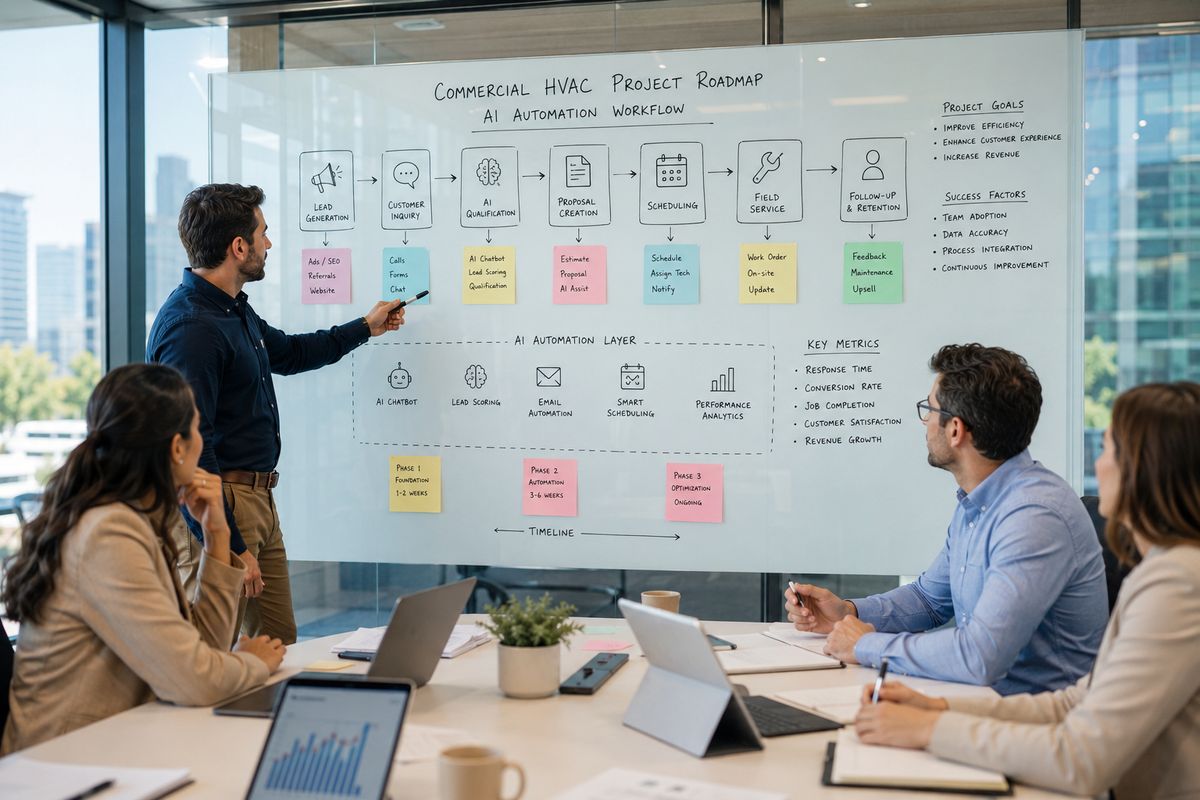
The implementation process for AI automation in an HVAC business follows a consistent pattern regardless of the specific tools being deployed. Understanding this process in advance removes the uncertainty that causes many contractors to delay decisions they've already made in principle.
The starting point is always identifying the highest-cost operational gap. For most HVAC businesses, that's after-hours call capture and lead response speed because the financial impact of missing those calls is immediate, calculable, and ongoing. Starting with the highest-cost gap rather than the most visible or easiest one ensures the first implementation produces a return that covers its own cost quickly, which creates the momentum and internal confidence to roll out subsequent implementations.
The integration phase connects the AI tools to existing systems. Most major HVAC field service platforms including ServiceTitan, Housecall Pro, and Jobber support the API connections that allow AI tools to read from and write to job records, customer histories, and scheduling data. This phase typically takes one to two weeks for a single tool like an AI voice assistant, and 60 to 90 days for a more comprehensive automation stack covering lead capture, follow-up, CRM automation, and customer communication. The business continues operating normally throughout. There's no cutover moment where the old system gets replaced by a new one.
The configuration phase involves setting up the specific workflows, message sequences, and routing logic that reflect how the HVAC business actually operates. An AI follow-up sequence for a residential HVAC company in a market with strong seasonal demand looks different from one for a commercial HVAC contractor with a multi-week sales cycle. Getting this configuration right requires understanding the business's specific customer journey rather than applying a generic template pulled from another industry.
The measurement phase begins immediately after deployment and continues on an ongoing basis. The most important initial metrics are call answer rate, lead response time, follow-up sequence completion rate, and booking conversion rate from automated interactions. These numbers establish the baseline against which the ROI of the implementation gets calculated and they identify where further configuration adjustments will produce additional improvement over time.
AI Automation Pricing: What HVAC Companies Actually Pay
The pricing question is the one that most often stays unanswered in general discussions of AI automation which is why HVAC owners delay decisions they'd otherwise make based on the operational logic alone. The honest answer is that pricing varies significantly based on scope, but the ranges are specific enough to use for real budgeting purposes.
A single AI automation such as an AI voice assistant for after-hours call handling typically costs between 3,000 and 8,000 dollars to build and configure, with monthly operating costs in the range of 200 to 500 dollars. This covers the integration with existing systems, the configuration of the call flow and booking logic, and the ongoing operation of the tool. For an HVAC business receiving meaningful after-hours call volume, this investment typically pays for itself within the first month of operation based on jobs captured that would otherwise have been lost.
A more comprehensive automation stack covering lead capture, multi-step follow-up sequences, CRM automation, customer communication, and email outreach for commercial clients ranges from 15,000 to 40,000 dollars for a full build, with monthly operational costs that scale based on interaction volume. Most HVAC companies implementing a full-stack solution see a return on the total investment within three to six months, according to industry data from Infinity Sky AI's 2026 contractor automation report.
For HVAC companies that prefer a subscription-based model rather than a custom build, AI-powered scheduling and dispatch tools are available in the 200 to 600 dollar per month range. AI estimating tools that generate quotes in 15 to 20 minutes rather than one to two hours with good-better-best pricing options that increase average ticket size by 15 to 20 percent, typically cost between 100 and 300 dollars per month. These subscription tools don't require significant upfront build investment, which makes them the natural starting point for HVAC businesses that want to begin capturing AI benefits before committing to a full custom implementation.
Read More: What We Learned From Talking to Home Service Businesses at InstallerSHOW 2026
ROI: What HVAC Businesses Get Back And When

The ROI calculation for AI automation in an HVAC business is more straightforward than most owners expect because the primary revenue impact is directly traceable to specific operational changes that produce measurable outcomes.
The most direct ROI calculation starts with after-hours call capture. If an HVAC business receives 30 inbound calls per week and 40 percent arrive after hours, that's 12 after-hours calls per week. If the current voicemail conversion rate is effectively zero because 85 percent of callers move on without leaving a message those 12 calls represent 12 lost leads every week. At an average HVAC job value of 650 dollars and a 45 percent close rate, capturing those calls with an AI voice assistant produces approximately 3,500 dollars in weekly revenue recovery. Over 52 weeks, that's more than 180,000 dollars in recovered annual revenue from a single implementation that costs a fraction of that to deploy.
The second ROI stream comes from follow-up automation. Industry data from CallBird AI found that the average small contracting business loses between 45,000 and 120,000 dollars per year to unaddressed leads meaning inquiries that received one or two manual follow-ups before being abandoned. An automated follow-up sequence that delivers five to eight touchpoints to every lead over two weeks converts a meaningful percentage of those previously abandoned leads into booked jobs. For an HVAC business generating 40 leads per month at a 20 percent close rate, improving that rate to 30 percent through automated follow-up produces eight additional jobs per month at 650 dollars average value roughly 62,000 dollars in additional annual revenue.
The third ROI stream is the one most consistently underestimated: administrative time recovery. An AI system that eliminates two hours of daily manual data entry, follow-up tracking, and CRM updating across an office team of two people recovers approximately 500 hours of staff capacity per year. At an average fully-loaded office staff cost of 35 dollars per hour, that represents 17,500 dollars in recovered labor capacity annually. Simpro's data also indicates that AI-powered tools reducing documentation time cut billing disputes by up to 40 percent and accelerate payment cycles by 15 to 20 days producing additional cash flow improvement that compounds the direct revenue benefit.
Taken together, a comprehensive AI automation implementation for a mid-sized HVAC business with meaningful after-hours volume and an active lead pipeline produces first-year ROI that typically ranges from four to five times the cost of the implementation with the return improving in subsequent years as the system refines itself and the cumulative impact of customer retention automation compounds.
Read More: 9 Best AI Tools for Home Renovation Contractors in 2026
The Mistakes HVAC Companies Make When Adopting AI
The HVAC businesses that see the weakest returns from AI automation are almost always the ones that made predictable mistakes in how they approached the implementation. Understanding these in advance is the most reliable way to avoid them.
The first mistake is starting with the wrong problem. HVAC owners who begin their AI adoption with content generation tools, social media automation, or customer review management are capturing value in areas that don't directly address the highest-cost operational gaps. Starting with after-hours call capture or follow-up automation produces a return fast enough to validate the investment and fund the next implementation. Starting with secondary applications doesn't and the slow payback creates doubt that delays everything that follows.
The second mistake is treating AI as a replacement for operational discipline rather than an amplifier of it. An AI follow-up sequence built on a poorly defined sales process produces automated mediocrity at scale. The configuration work that goes into defining the right message cadence, the right qualifying questions for the voice assistant, and the right routing logic for different lead types is what determines whether the system delivers strong results or underwhelming ones. This work requires thought and it's worth investing in properly rather than rushing past it.
The third mistake is failing to measure. HVAC businesses that deploy AI tools without establishing clear before-and-after metrics can't calculate their ROI accurately and can't identify where further configuration would produce additional returns. The measurement framework should be established before deployment and reviewed monthly afterward.
How FatCamel AI Implements the Complete Automation Stack for HVAC Contractors
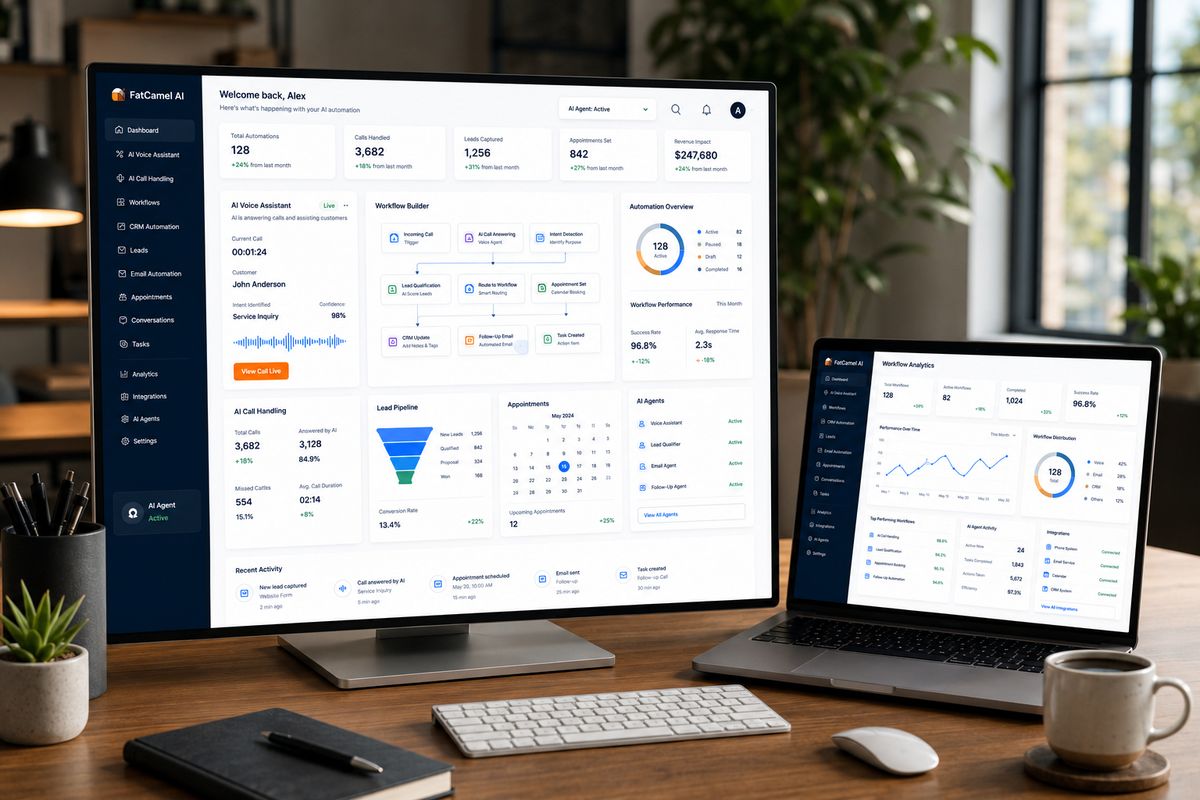
Every element described in this guide the voice assistant for after-hours call capture, the multi-step follow-up sequences, the CRM automation, the customer communication workflows, and the commercial email outreach needs to operate as a connected system rather than a collection of separate tools to deliver the ROI that the individual components promise. FatCamel AI is built to deliver that connected system for HVAC contractors, implementing each component against the specific operational profile of the business rather than deploying generic templates that require the business to adapt itself to the tool.
The implementation process begins with an audit of the current lead flow identifying exactly where leads are entering the system, where they're being lost, and what the financial impact of each leak point is. This audit produces a prioritized implementation roadmap that starts with the highest-cost gap and sequences subsequent implementations in order of expected return. For most HVAC businesses, this means starting with the voice assistant and after-hours call capture, then moving to follow-up automation, then to CRM automation and customer retention workflows.
Each component is configured to reflect how the business actually operates with message sequences that reference the HVAC company's specific services, booking logic that reflects the actual dispatch process, and CRM integrations that connect to the platforms the team already uses. The result is an automation stack that runs continuously in the background, capturing revenue from leads that would otherwise be lost, retaining customers that would otherwise drift, and recovering the administrative capacity that currently goes to manual tasks all without requiring the team to learn a new system or change the way the core business operates.
FAQ
1. What does AI automation actually do for an HVAC company? AI automation for HVAC companies handles specific operational tasks that currently require manual human effort for every instance including answering calls and booking appointments after hours, sending follow-up messages across SMS and email on a fixed schedule, logging every customer interaction to the CRM in real time, generating and sending invoice reminders, and maintaining proactive communication with past customers between service cycles. The defining characteristic is that these tasks run continuously without requiring a team member to initiate or manage each one individually.
2. How much does AI automation cost for an HVAC business? A single AI tool such as an after-hours voice assistant typically costs between 3,000 and 8,000 dollars to build and configure, with monthly operating costs of 200 to 500 dollars. A comprehensive automation stack covering lead capture, follow-up, CRM automation, and customer communication ranges from 15,000 to 40,000 dollars for a full custom build. Subscription-based tools for scheduling, dispatch, and estimating are available in the 100 to 600 dollar per month range without significant upfront build costs. Most HVAC businesses see positive ROI from after-hours call automation within the first month of deployment.
3. What ROI can an HVAC company realistically expect from AI automation? The ROI from AI automation comes from three primary sources: revenue recovered from after-hours calls that would otherwise be lost, additional jobs converted through automated follow-up that manual processes would have abandoned, and administrative time recovered through automated CRM logging and communication. For a mid-sized HVAC contractor with meaningful after-hours call volume and an active lead pipeline, first-year ROI on a comprehensive implementation typically ranges from four to five times the cost of deployment improving in subsequent years as the system compounds.
4. How long does it take to implement AI automation in an HVAC business? A single tool such as an AI voice assistant for call handling typically takes one to two weeks to integrate and configure. A comprehensive automation stack covering multiple workflows takes 60 to 90 days for full implementation. The business continues operating normally throughout. Most HVAC businesses see measurable results from after-hours call capture within the first week of the voice assistant going live.
5. Does AI automation for HVAC require replacing existing field service software? No. AI automation tools for HVAC contractors are designed to integrate with the field service management platforms already in use including ServiceTitan, Housecall Pro, Jobber, and others. The AI connects to these systems through standard integrations and fills the gaps they don't address rather than replacing them. An HVAC business doesn't need to change its core operational software to capture the benefits of AI automation.
6. Which AI automation should an HVAC company implement first? For most HVAC businesses, the highest-ROI starting point is after-hours call capture through an AI voice assistant. The revenue impact is immediate, direct, and calculable before the tool is even deployed. If a business knows roughly how many after-hours calls it receives and what the average job value is, the expected monthly revenue recovery from eliminating voicemail as the after-hours response can be calculated in advance. Starting here produces a fast, measurable return that validates the broader investment in AI automation.
7. How does FatCamel AI approach AI automation implementation for HVAC contractors? FatCamel AI begins every HVAC automation implementation with an audit of the current lead flow and operational gaps identifying where the highest-cost inefficiencies are and building a prioritized implementation roadmap around them. Each tool is configured to reflect the specific operational profile of the HVAC business, with message sequences, booking logic, and CRM integrations built to match the way the business actually operates. The result is an automation stack that integrates with existing systems, starts delivering measurable ROI within the first weeks of deployment, and continues improving as the system refines itself over time.