
Quick Answer
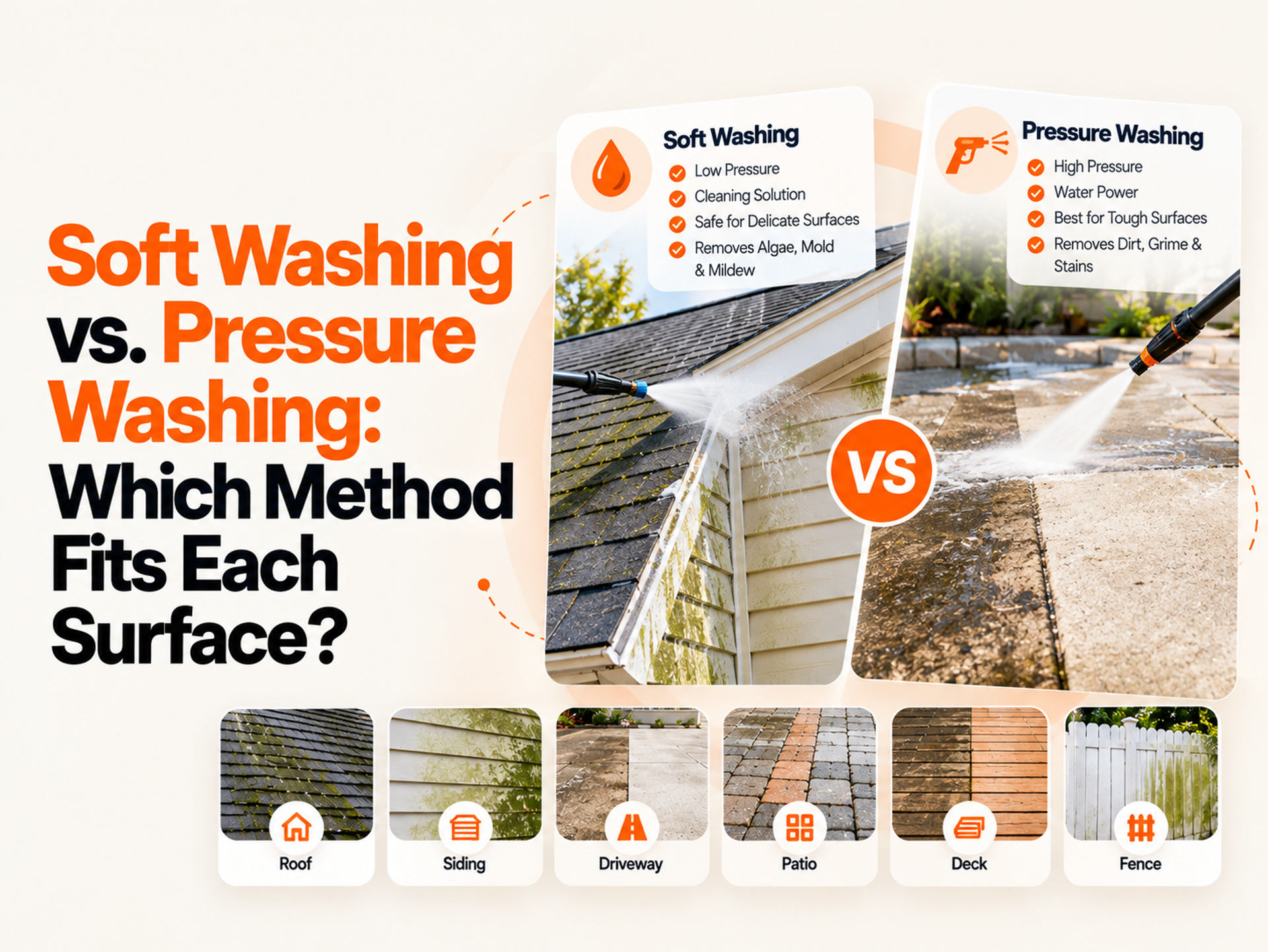
Pressure washing uses water force to remove dirt and buildup, making it a common option for sound concrete and other durable surfaces. Soft washing combines a compatible cleaning solution with low-pressure application and rinsing, which may suit surfaces that cannot tolerate strong water pressure.
Neither method is right for every job. Check the surface material, existing damage, type of stain, and manufacturer's instructions before choosing an approach. A property with siding, roofing, decking, and concrete may need different methods for different areas.
Table of Contents
What Pressure Washing Actually Is
Why the Method Matters More Than the Price
What Soft-Washing Chemicals Do
Questions to Ask Before Hiring a Contractor
How the Method Affects the Quote
How FatCamel Helps Exterior Contractors Manage Their Business
What Pressure Washing Actually Is
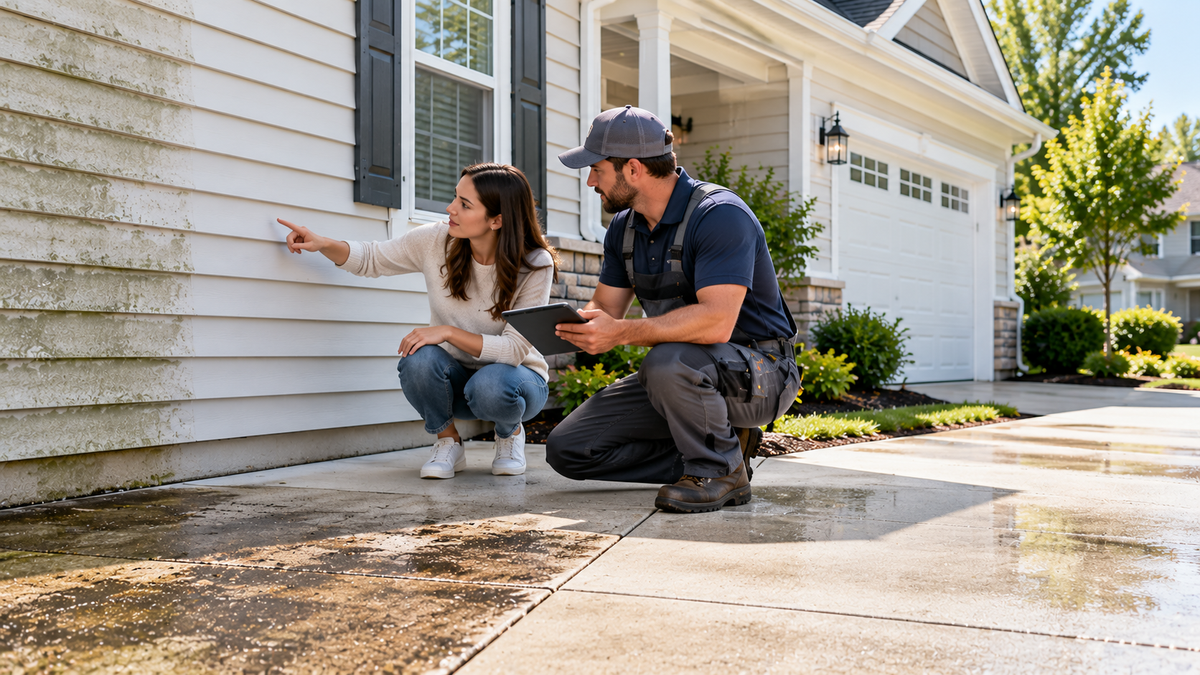
Pressure washing uses a pump to pressurize water and deliver it through a nozzle. The cleaning action comes mainly from the mechanical force of the water hitting the surface.
Pressure, water flow, nozzle, distance, and surface condition all affect the result. No single PSI figure makes pressure washing safe for every material; check the manufacturer's guidance for the specific surface.
On suitable flat concrete, a surface-cleaner attachment can help produce a more even result than a direct spray from a wand. Cracks, coatings, repairs, and worn areas still need to be assessed before cleaning.
What Soft Washing Actually Is
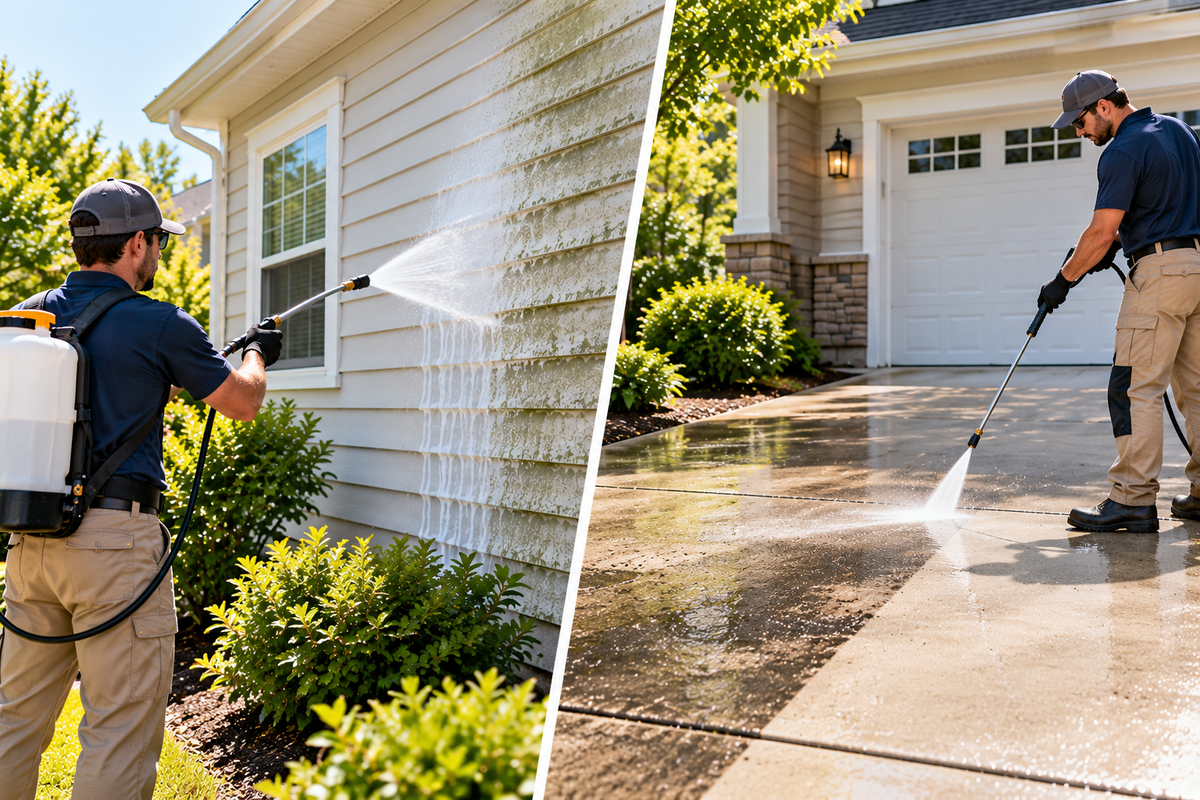
Soft washing is a solution-led, low-pressure process. The cleaning solution does more of the work than the force of the water. The solution is applied, allowed to dwell according to the product and condition, and then rinsed at an appropriate pressure.
Some soft-wash products contain sodium hypochlorite or surfactants. The appropriate product, concentration, and application depend on the surface, the contamination, and the product label.
Before work begins, ask how the contractor will protect plants, windows, pets, and nearby materials. Lower pressure does not eliminate the need for careful chemical handling and rinsing.
Why the Method Matters More Than the Price
Using excessive pressure on a surface that needs a gentler process can create damage rather than a better clean.
On vinyl or panel siding, water directed upward or into seams can be forced behind the panels. On wood, excessive pressure can raise the grain, create furring, or splinter boards. On painted surfaces, it can remove failing or sound paint. On roofing, the wrong method can damage the material or disturb protective surface layers.
The price can reflect the equipment, cleaning products, preparation, labour, and protection needed for the job. A cheaper quote may cover a different scope of work, so compare the surfaces, treatment, and expected results before comparing totals.
Surface-by-Surface Guide
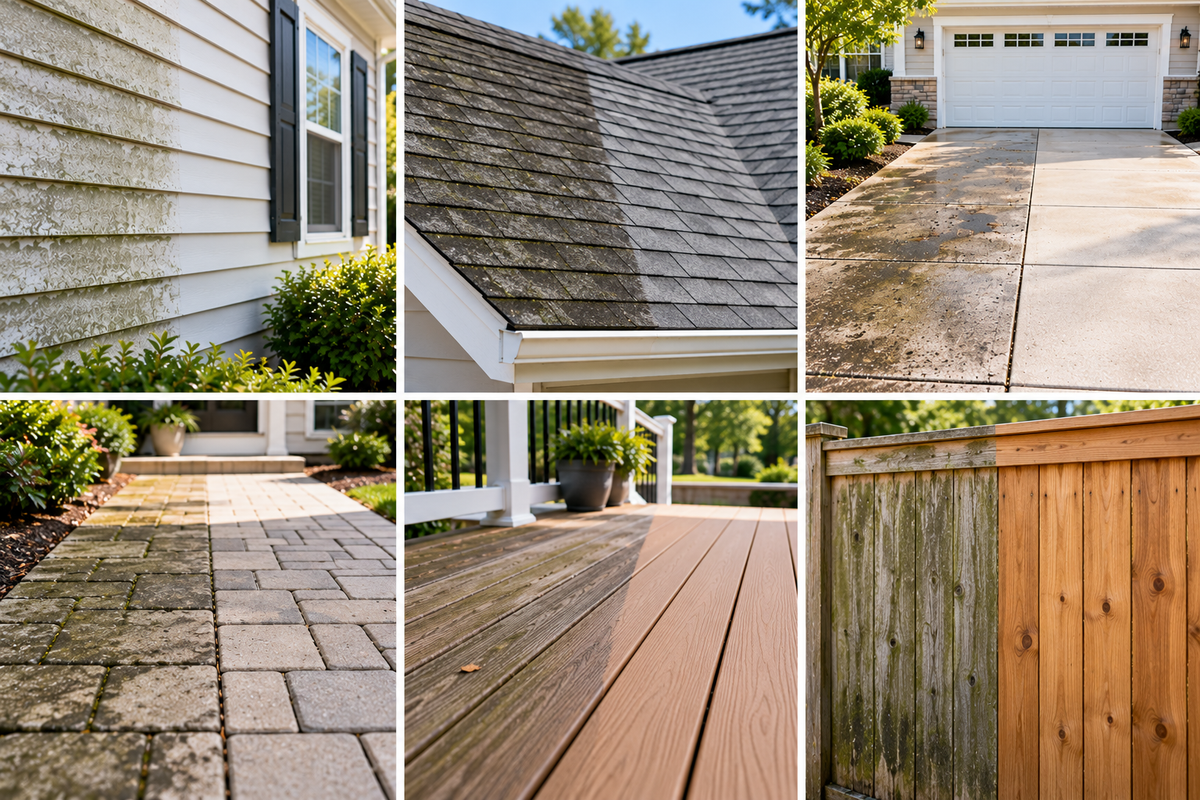
Vinyl siding
Start by identifying the siding product and checking its care guide. Some products call for a garden hose and a soft brush rather than high-pressure cleaning. For example, James Hardie advises against high-pressure power washing its siding and recommends a low-pressure hose and a soft, nonmetal brush. Ask how the contractor will protect seams and trim, particularly on older or damaged siding.
Wood siding and decks
Excessive pressure can roughen wood, raise its grain, or damage the surface. The right approach depends on the wood, its coating, and its condition. If you plan to stain or seal the wood after cleaning, allow it to dry fully and follow the coating manufacturer's instructions.
Asphalt, tile, and slate roofing
Asphalt shingles: Do not pressure wash asphalt shingles to remove algae. The Asphalt Roofing Manufacturers Association warns that power washing can damage the roofing. It recommends consulting the shingle manufacturer about suitable cleaning methods and cautions that roof cleaning can be hazardous.
Tile and slate: Cleaning requirements vary with the roofing material, installation, condition, and manufacturer. Ask a qualified roofing professional to assess the roof and explain the proposed method before work begins.
Stucco and painted surfaces
Stucco and painted surfaces can have cracks, loose areas, or coatings that are already failing. High pressure may worsen existing damage, while an incompatible cleaning product can also affect the finish. Have the surface assessed before choosing a method.
Concrete driveways and walkways
Sound, uncoated concrete is often suitable for pressure washing. Cracks, decorative finishes, sealers, repairs, and embedded stains can change the approach. Oil may need a suitable degreaser or another targeted treatment, and some stains may remain after cleaning.
Pavers and masonry
Paver joints can lose sand when cleaned with excessive pressure. Unilock advises using a fan nozzle, keeping it at an appropriate distance, and avoiding high-power settings when cleaning its pavers. Follow the care instructions for the specific paver and jointing system.
Brick and masonry vary by age, mortar, coating, and condition. Weathered, historic, or sealed surfaces deserve an inspection.
Composite decking and fences
Composite decking instructions vary by product. Trex permits controlled pressure washing for certain product lines under stated conditions, but does not recommend pressure washing its early-generation decking. Check the exact product's care guide before choosing a method. Vinyl and wood fences also need different considerations. Check the manufacturer's instructions and assess the coating, age, and condition before cleaning.
Read More: Pressure Washing Cost: What Changes a Quote?
What Soft-Washing Chemicals Do
Some soft-wash treatments use sodium hypochlorite to help address organic growth such as algae. Surfactants may help a solution spread or cling to a surface. The product and application method must suit the material and follow the product label.
Cleaning products can damage nearby plants or surfaces if they are used incorrectly. Ask how the contractor will protect the surrounding area, rinse the surface, and manage runoff. CDC guidance warns against mixing bleach with other cleaners and advises following product safety instructions.
No cleaning treatment guarantees that algae or other growth will never return. Results depend on the surface, surrounding conditions, and the treatment used.
Questions to Ask Before Hiring a Contractor
Before accepting a quote, make sure you understand what the contractor plans to clean and how the work will be done.
What material are you cleaning? Confirm the siding, roof, deck, pavers, coating, or sealer.
What is causing the stain? Dirt, algae, oil, and mineral deposits may need different treatments.
Which method will you use, and why? Ask how the approach will differ between surfaces.
What cleaning product will you use? Ask whether it is suitable for the material and how nearby plants will be protected.
How will you manage runoff? Find out where the rinse water will go and whether local requirements apply.
What does the quote include? Confirm the surfaces, stain treatment, rinsing, and any additional work.
How the Method Affects the Quote
The cost depends on more than the cleaning method. Surface area, access, preparation, cleaning products, labour, the condition of the material, and stain treatment can all affect the quote.
A straightforward concrete driveway and a roof with difficult access are different jobs. Even two estimates for “house washing” may cover different surfaces or cleaning processes.
Before comparing totals, check that each quote includes the same areas, treatments, and expected work.
Read More: How Often Should You Pressure Wash a House? A Smarter Schedule by Surface and Conditions
How FatCamel Helps Exterior Cleaning Contractors Manage Follow-up

Exterior-cleaning contractors need to manage more than the work itself. Quotes need follow-up, customer enquiries need responses, and past customers may need to be contacted when another service is relevant.
FatCamel builds AI-powered sales and business workflows that can support lead follow-up, CRM updates, and customer re-engagement. The specific workflow depends on the business's systems, requirements, and approved communication rules.
Any automated follow-up should use accurate customer and quote information. It should also respect customer replies, booking decisions, and opt-out requests.
“Working with FatCamel AI has had a significant impact on our business. They've automated processes we never thought could be automated, helped us reconnect with past customers and lost opportunities.”
— Kirt Storch,
CertaPro Painters of North Raleigh
Learn more about FatCamel’s CRM Automation service.
FAQ
1. What is the difference between soft washing and pressure washing?
Pressure washing uses the force of water to remove dirt and buildup. Soft washing uses a compatible cleaning solution applied at low pressure, followed by rinsing. The right approach depends on the surface and what needs cleaning.
2. Is soft washing better than pressure washing?
Neither method is best for every job. Soft washing may suit some delicate surfaces, while pressure washing can work on suitable durable materials. Check the care instructions before choosing.
3. Can pressure washing damage vinyl siding?
Yes. Poorly directed or excessive pressure can damage siding or force water behind panels. Check the product's care guide and ask the contractor how the siding will be protected.
4. Should an asphalt-shingle roof be pressure washed?
No. The Asphalt Roofing Manufacturers Association advises against power washing asphalt shingles to remove algae. Follow the shingle manufacturer's cleaning guidance and use a trained professional.
5. Can you soft wash concrete?
A solution-led treatment may help with some types of dirt or organic growth, but it will not remove every stain. The concrete's condition and the type of contamination determine the appropriate treatment.
6. Does “power washing” mean hot water?
The term is used differently by different providers. Some use it to describe heated-water cleaning; others use it interchangeably with pressure washing. Ask what equipment and method the contractor intends to use.
7. Can one property need both methods?
Yes. A property may have siding, roofing, decking, pavers, and concrete that each require different cleaning considerations. Ask the contractor to explain the method for each area.
References
https://fullpowerwash.com/the-definitive-guide-to-soft-washing-vs-pressure-washing/
https://www.lucidbots.com/blog/why-soft-washing
https://superherowash.net/post/soft-washing-vs-pressure-washing
https://www.washworkssupply.com/pressure-washing-vs-soft-washing
https://www.fatcamel.ai/blog/pressure-washing-cost-what-changes-a-quote
https://www.fatcamel.ai/blog/how-often-should-you-pressure-wash-a-house
https://www.fatcamel.ai/services/crm-automation