
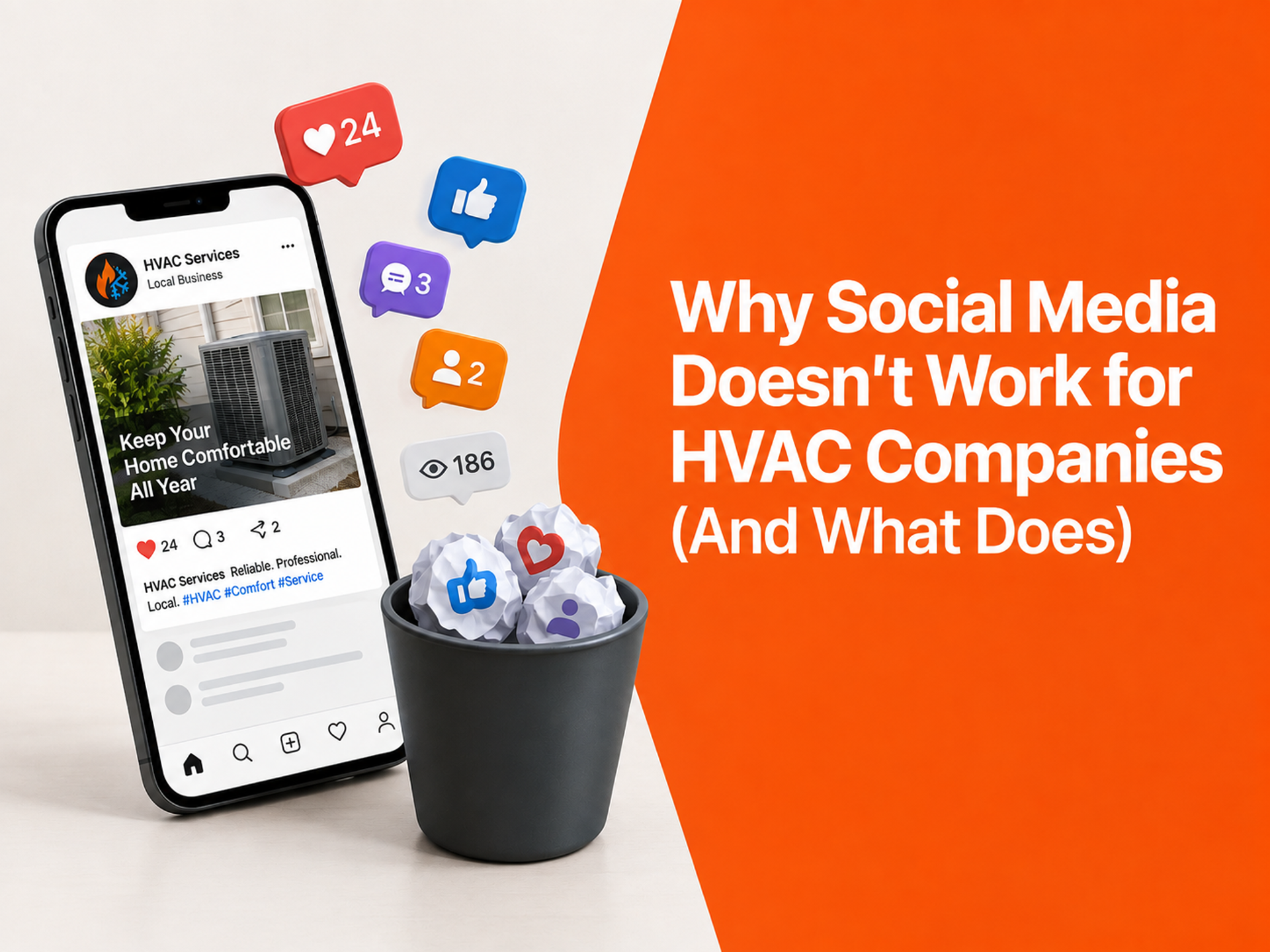
Social media fails for most HVAC companies because it's treated like a billboard posting tips, stock photos, and seasonal promotions without a clear offer, local targeting, or any connection to a bookable next step. The fix isn't better content. It's building social media as one layer in a system that converts attention into calls. For HVAC specifically, that means proof content, local targeting, fast response to DMs, and connecting social traffic to an AI-powered capture system that books leads before they cool down.
Ask almost any HVAC business owner about social media and you'll hear a version of the same story. They posted for a few months. Got some likes. Maybe a few comments from other contractors. Spent time or money on it. Saw nothing in the booking calendar that could be traced back to Instagram or Facebook. Gave up.
The frustrating part is that the failure usually gets blamed on the industry "HVAC just isn't social media content." That's not true. What's true is that most HVAC social media strategies are built for engagement metrics rather than booked jobs, and those are very different goals with very different approaches.
This guide explains exactly why HVAC social media fails, what the data says about what actually works, and how to build a social presence that contributes to real revenue rather than just reach numbers.
Table of Contents
Why HVAC Social Media Fails (The Real Reasons)
What "Working" Actually Means for an HVAC Social Strategy
The Only Platforms That Actually Matter for HVAC
What to Post: The Content That Drives HVAC Calls
The Missing Piece: What Happens When Someone Reaches Out
How AI Automation Turns Social Traffic Into Booked Jobs
How FatCamel AI Connects Your Social Presence to Your Revenue Pipeline
FAQ
References
Why HVAC Social Media Fails (The Real Reasons)
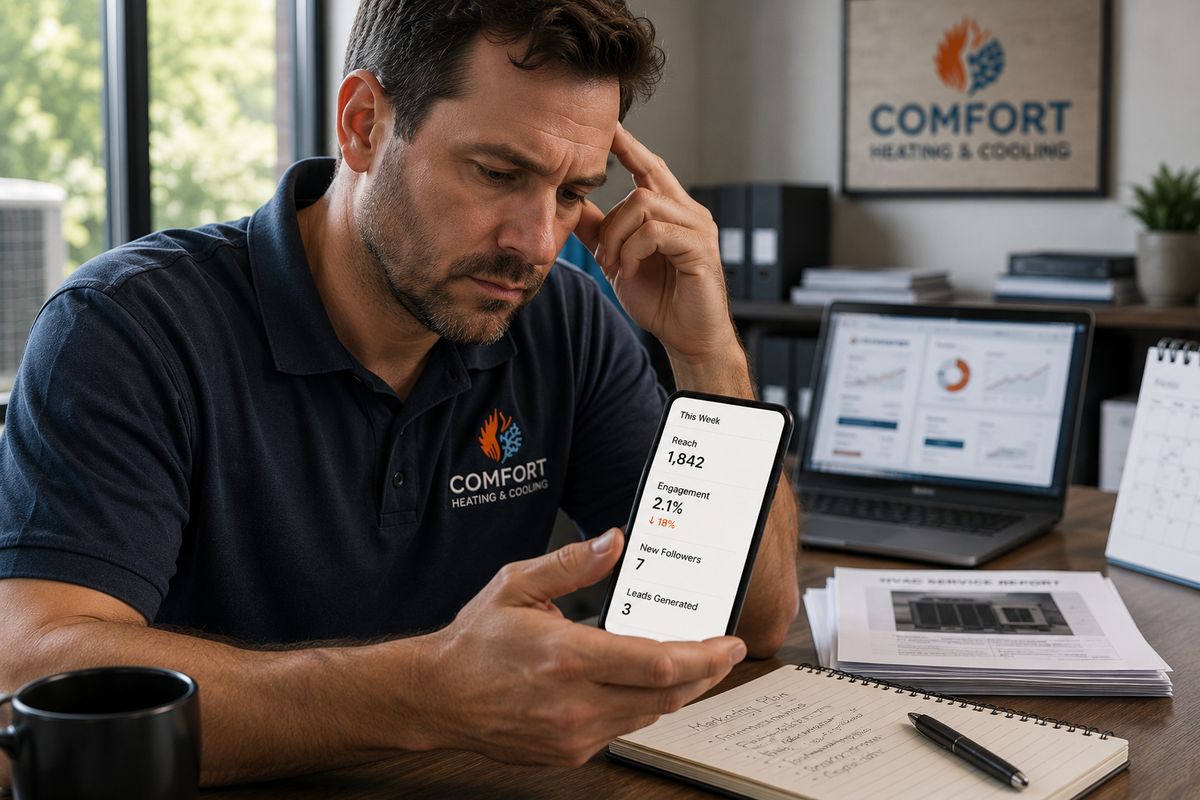
The failure modes are consistent across HVAC businesses that tried social media and got nothing from it. Identifying which one describes your situation is the first step to fixing it.
No clear offer. Most HVAC social posts tell people about the service without telling them what to do next. "AC tune-ups are important before summer" is information. "Book your AC tune-up this week slots are filling up, call now" is an offer. Information gets scrolled past. Offers get acted on.
Wrong audience. Without geographic targeting, HVAC social posts reach whoever the algorithm decides to show them to which often means contractors in other cities, industry followers, and people well outside the service area. A homeowner in Denver whose AC just failed doesn't care about an HVAC tip posted by a company in Nashville. Local targeting, even on a small budget, makes the difference between reaching an audience that could theoretically book and one that actually might.
No proof. Stock photos of HVAC equipment and generic seasonal tips don't prove anything about the business. Homeowners evaluating contractors and 80% of consumers search for local businesses online before contacting them, per SOCi's Consumer Behavior Index want to see real jobs, real technicians, and real outcomes. A before/after of a refrigerant recharge, a 30-second video of a clean install, a technician introduction these build the trust that generic content doesn't.
Slow follow-up. Google data shows that 76% of people who search for something nearby on a smartphone visit a related business within a day, and 28% of those searches result in a purchase. When social media DMs and comments sit unanswered for hours or days, the lead that was warm at the moment of contact has cooled down or found another contractor who responded faster.
No measurement. Without call tracking numbers, UTM links on profile buttons, and a simple intake question on every call ("How did you hear about us?"), it's impossible to connect social activity to booked jobs. When measurement is absent, social always feels like it failed even when it's actually contributing to the pipeline.
What "Working" Actually Means for an HVAC Social Strategy
Before building or rebuilding a social media strategy, it's worth being precise about what success looks like because "working" is often defined by the wrong metrics.
Likes, follows, and impressions are the numbers social platforms show prominently because they're what platforms optimize for. They're not what an HVAC business optimizes for. An HVAC company with 200 followers and 15 new booked jobs per month from social is doing better than one with 5,000 followers and 3 booked jobs.
The metrics that actually matter: calls and form submissions from social traffic, DMs that turn into estimates, maintenance sign-ups from social offers, and review volume that can be traced to the customer journey that started on social. These numbers connect social activity to revenue. Reach and engagement numbers connect to platform activity which benefits the platform, not the business.
Setting this expectation in advance prevents the "we tried social and it didn't work" conclusion from a strategy that was actually performing just being measured wrong.
Read More: 15 HVAC Tasks You Can Automate Using AI (And What Each One Is Worth)
The Only Platforms That Actually Matter for HVAC
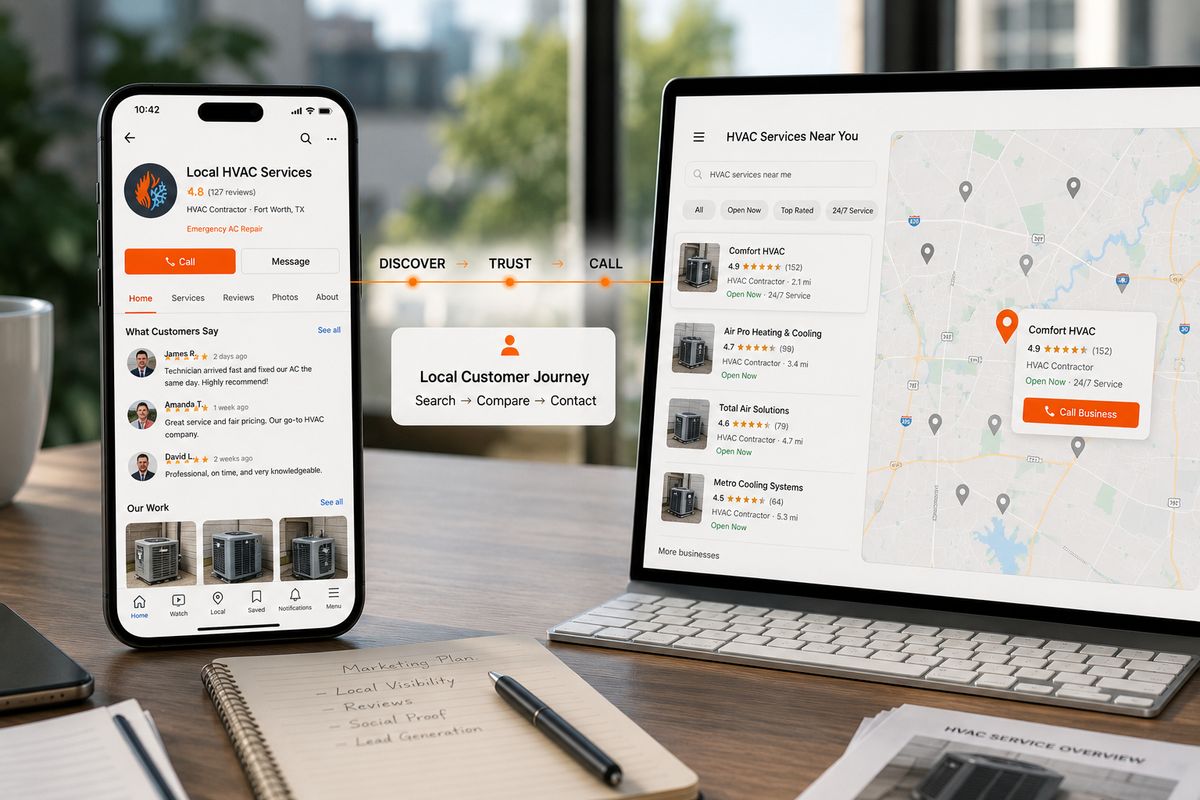
HVAC companies don't need to be everywhere. Spreading thin across every platform produces mediocre presence everywhere and strong presence nowhere. For most HVAC businesses, two platforms and one local network cover the full opportunity.
Facebook is the highest-priority platform for HVAC companies targeting homeowners. It has the largest audience of homeowner-age adults of any social platform, robust local geographic targeting for both organic posts and paid boosts, and a format that supports the before/after posts, longer educational content, and seasonal offers that actually drive HVAC enquiries. Facebook Groups for local neighborhoods are particularly valuable HVAC recommendations get asked and answered there regularly, and an engaged local business presence means referrals come without any paid spend.
Instagram serves a different role. It's a visual proof platform. Short Reels showing a technician completing a clean install, a before/after of a system replacement, a 30-second walk-through of what a diagnostic visit looks like this content builds the trust that makes a homeowner comfortable calling when they have a problem. It's not where emergency bookings happen. It's where the brand credibility gets established that makes the booking more likely.
Nextdoor is underused by most HVAC companies and overperforms for the businesses that show up there consistently. It's hyper-local by design every post is seen only by residents in specific neighborhoods which means an HVAC business active on Nextdoor is visible at exactly the level of geographic precision that matters for a service business with defined service areas.
TikTok is worth a mention. It's growing as a local discovery platform for younger homeowners, and short educational videos "why your AC is freezing," "what that noise means," "repair vs replace at what age" perform well without requiring high production value. It's not a priority for most established HVAC companies right now, but it's worth a basic presence.
What to Post: The Content That Drives HVAC Calls
The content that actually drives HVAC enquiries from social media falls into three categories. Most HVAC social strategies spend all their time on the third category and none on the first two.
Proof content is the most valuable and most underproduced type of HVAC social content. Real job photos. Before/after of system replacements. Technician introductions. "What to expect" videos showing a diagnostic visit from arrival to completion. This content proves the business is real, professional, and capable and it's the content that converts a stranger who found the page into someone willing to call.
Every completed job is a proof content opportunity. A 30-second video filmed by the technician before cleanup, a before/after with a one-line explanation, a photo of the completed installation with the customer's permission all of this takes minutes to capture and provides weeks of content without any creative investment.
Educational content addresses the specific questions homeowners have before they decide to call. "How do I know if I need a repair or a replacement?" "What does an HVAC tune-up actually include?" "Why is my energy bill higher this summer?" Answering these questions builds authority and keeps the business visible to homeowners who are in the research phase but not yet ready to call. When they are ready, the business that educated them during the research phase is the one they call first.
Offer content is what drives immediate action. A seasonal promotion with a specific deadline. A maintenance agreement with a clear annual price and a booking link. A "no heat priority response" message during a cold snap. This content has a short shelf life and requires a clear next step call this number, click this link, DM us to book rather than a vague "contact us for more information."
The Missing Piece: What Happens When Someone Reaches Out
Here's the part most HVAC social media guides skip entirely and it's where most of the conversion opportunity actually is.
When a homeowner sees an HVAC post, gets interested, and sends a DM or clicks the profile link to call what happens next determines whether that social interaction produces revenue or not. And for most HVAC businesses, what happens next is either a delayed response or a voicemail.
Google data shows that 76% of people who search for something nearby on a smartphone visit a related business within a day. The same urgency applies to social-driven enquiries. A homeowner who DMs an HVAC company about a failing system at 8 PM and gets a response at 10 AM the next day has had 14 hours to contact every other HVAC company in their area and probably already booked someone else.
The social media strategy and the lead capture system have to work together. If the content drives enquiries but the enquiries go unanswered for hours, the social strategy isn't producing revenue it's producing leads for competitors who answered faster.
This is the specific gap that AI automation closes. A DM received at 8 PM triggers an immediate automated response. A call captured by the AI voice agent at 9 PM gets qualified and booked before the caller has time to try the next contractor. A web form submitted after seeing a social post gets an automated reply within 60 seconds with a direct booking link.
The social content builds the trust. The AI system captures the lead at the moment it's warm.
Read More: AI Automation for HVAC Companies: Benefits, Process, Pricing & ROI
How AI Automation Turns Social Traffic Into Booked Jobs
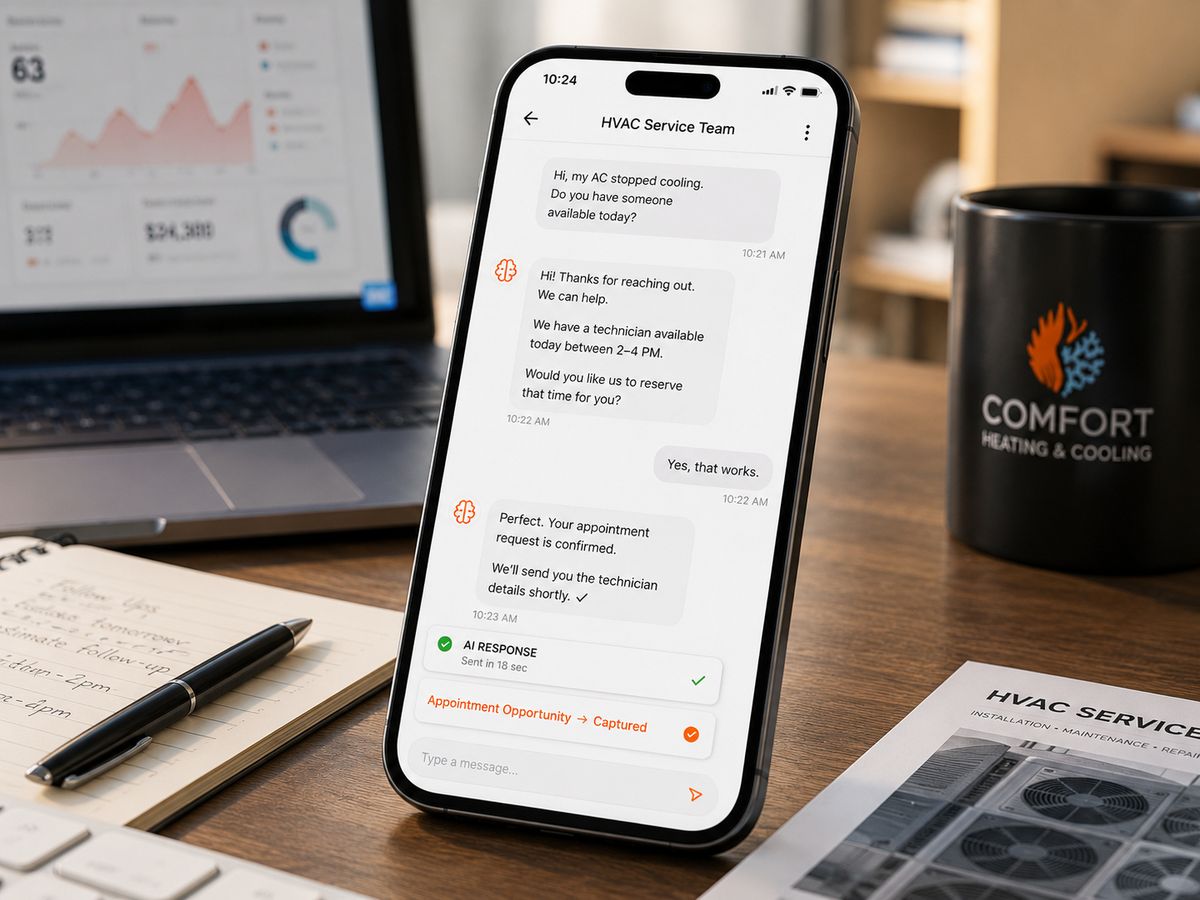
The connection between social media activity and booked HVAC jobs runs through the response system. Social creates the moment of interest. The response system either captures it or loses it.
FatCamel AI connects to the entire lead capture layer phone calls, web form submissions, DMs, and after-hours enquiries so that every point of contact from any source, including social traffic, gets an immediate response. When a homeowner clicks through from an Instagram post to the website and fills out a contact form at 9 PM, the AI system responds within 60 seconds with a personalized message and a booking link. When they call from the Facebook profile link and nobody answers, RealtorVoiceAI picks up immediately, qualifies the situation, and books the appointment.
This is what turns a social media strategy from a reach exercise into a revenue exercise. The content creates interest. The AI system converts the interest into booked jobs at speed, at any hour, without depending on a team member being available to respond.
For HVAC businesses that have tried social media and seen nothing, this is usually the missing piece. The content was doing its job. The response system wasn't there to capture what the content generated.
How FatCamel AI Connects Your Social Presence to Your Revenue Pipeline
Most HVAC social media strategies treat content and lead capture as separate problems. Content is the marketing team's problem. Lead capture is the operations team's problem. The gap between them is where the revenue goes missing.
FatCamel AI's complete HVAC automation stack closes that gap. ContentFlow handles the content side automating blog posts, social content, and email marketing that keep the business visible across channels consistently. RealtorVoiceAI handles every inbound call generated by social traffic, answers after hours, qualifies the situation, and books directly. The Lead Activation Engine manages follow-up for leads that don't convert on first contact including social-generated leads that submitted a form but didn't answer the first callback. CRM Automation logs every interaction back to the CRM automatically so the pipeline reflects what's actually happening.
Social media drives awareness and trust. FatCamel AI captures and converts the leads that awareness generates. Together, they turn a social presence that previously produced reach metrics into one that produces booked jobs.
👉 Get a Free AI Revenue Audit for Your HVAC Business at https://www.fatcamel.ai/contact
FAQ
1. Why doesn't social media work for most HVAC companies?
Social media fails for HVAC companies when it's treated as a content exercise rather than a lead system. The most common failure points are: no clear offer with a specific next step, content that reaches the wrong audience without local geographic targeting, no proof content showing real jobs and real technicians, slow or absent follow-up on DMs and comments, and no measurement connecting social activity to booked jobs. The fix is building social as one layer in a system where content drives enquiries and automation captures them immediately.
2. What social media platforms work best for HVAC companies?
Facebook is the highest-priority platform for most HVAC businesses it has the largest homeowner-age audience, strong local targeting capabilities, and a format suited to before/after posts and seasonal offers. Instagram serves as a visual proof platform that builds trust. Nextdoor is highly underused and overperforms for HVAC companies that show up there consistently, because it's hyper-local by design. TikTok is worth a basic presence for educational content, particularly for businesses serving younger homeowner markets.
3. What kind of social media content actually drives HVAC bookings?
The content that drives HVAC bookings falls into three categories: proof content showing real jobs and real technicians, educational content answering specific homeowner questions, and offer content with a clear deadline and a specific next step. Most HVAC social strategies focus on generic tips and seasonal reminders which drive awareness but rarely drive direct bookings. Proof content is the most underproduced and highest-converting type, because it addresses the primary homeowner hesitation: trusting an unknown contractor enough to let them into the house.
4. How do you track whether HVAC social media is producing bookings?
Track social-to-booking conversion with three tools: a dedicated call-tracking number used only in social profiles and boosted posts, UTM parameters on all links in social bios and post CTAs, and a simple intake question on every call ("How did you find us?"). Without this tracking, social activity always feels unproductive because the connection between a post and a booked job is invisible. With it, the actual contribution of social becomes measurable and improvable.
5. How quickly should HVAC companies respond to social media enquiries?
As fast as possible ideally within minutes. Google data shows that 76% of people who search for something nearby on a smartphone visit a related business within a day, and the same urgency applies to social-generated enquiries. A DM sent at 8 PM about a failing system that gets a response at 10 AM has had 14 hours to contact every other HVAC company in the area. AI automation that responds to DMs and calls immediately before the enquiry goes cold is the only way to reliably capture leads at the moment of interest regardless of when they arrive.
6. Should HVAC companies invest in paid social media advertising?
Small, consistent paid boosts to geographic service areas are more effective for HVAC than large broad campaigns. Boosting proof content and offer posts to specific ZIP codes for 5 to 15 dollars per day ensures that the content reaches homeowners in the actual service area rather than a broadly defined interest audience. The goal of paid social for HVAC isn't reach it's making sure the best proof and offer content is seen by the people who might actually book.
7. How does FatCamel AI help HVAC companies convert social media traffic into booked jobs?
FatCamel AI closes the gap between social content and revenue by automating lead capture at every point of contact generated by social traffic. RealtorVoiceAI answers every call from social-driven traffic immediately, including after hours. The Lead Activation Engine follows up on form submissions and missed contacts automatically. ContentFlow helps maintain consistent social and content output without requiring significant manual production time. Every lead captured from social traffic is logged to the CRM automatically and followed up on systematically until it converts or clearly declines.
References
https://www.truefuturemedia.com/articles/why-social-media-didnt-work-hvac-company
https://fieldedge.com/blog/hvac-social-media/
https://www.geekpoweredstudios.com/post/hvac-social-media-marketing-best-practices
https://hvacsoftwarehub.com/hvac/guides/hvac-social-media-guide/
https://hvacdm.com/why-industrial-hvac-companies-are-ditching-instagram-for-linkedin/
https://www.soci.ai/blog/soci-consumer-behavior-index-recap/
https://www.thinkwithgoogle.com/marketing-strategies/search/mobile-near-me-searches/
https://www.simprogroup.com/blog/ai-hvac
https://www.fatcamel.ai/services/crm-automation
https://www.fatcamel.ai/