
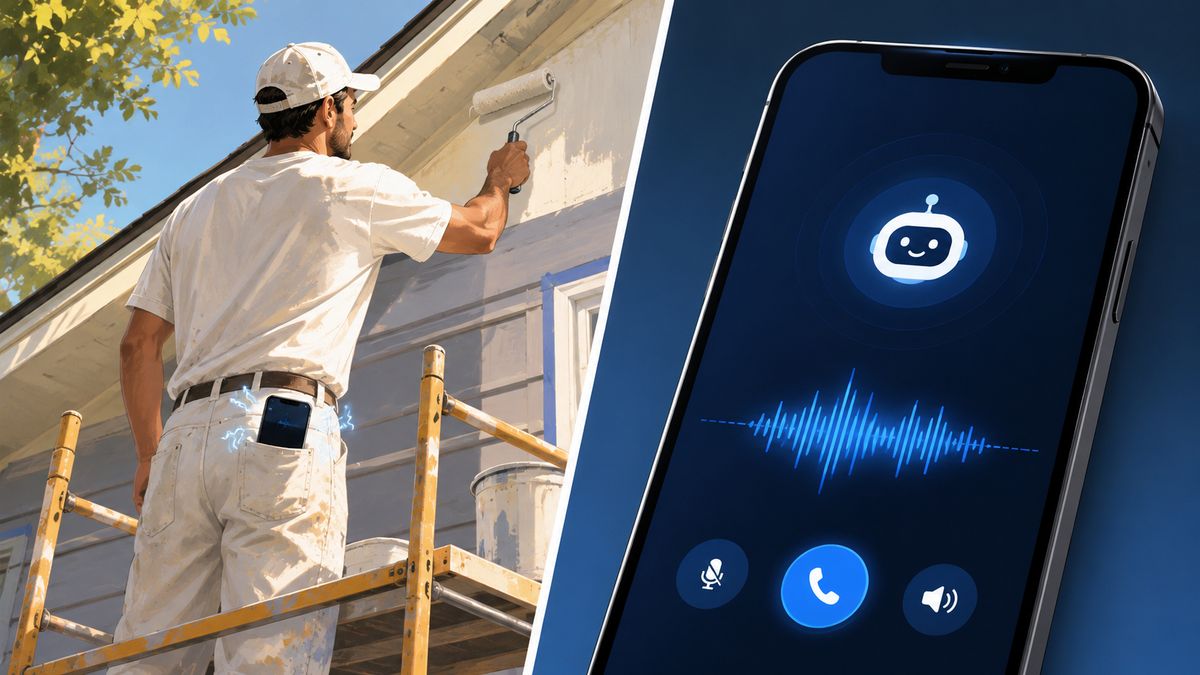
You're mid-job, roller in hand, three feet up a scaffold. Your phone buzzes. A homeowner is calling about an exterior repaint. You let it go to voicemail. They don't leave one. By the time you're back on the ground and cleaned up, two hours have passed. You call back. No answer. The lead is gone.
This is not a rare situation. For most painting contractors, it's a Tuesday. And a Thursday. And every busy Friday in spring, when the phone rings constantly, the crew needs direction at the same time.
An AI voice assistant for painters changes this dynamic completely. It picks up every call, handles the conversation intelligently, qualifies the lead, and either books the estimate or hands you a warm summary before you've set down your brush. No missed calls. No lost leads. No after-hours anxiety about who tried to reach you at 8 PM.
This post covers how AI voice technology works for painting businesses, what it actually does during a call, and why contractors who adopt it early are pulling ahead of those who don't.
Table of Contents
What Is an AI Voice Assistant for Painters?
How AI Voice Calls Work in a Painting Business
Booking Estimates Automatically
Handling After-Hours Calls Without Hiring Anyone
How Smart Voice AI Qualifies Leads Before You Pick Up
AI Voice Solutions Across the Full Customer Journey
What AI-Powered Voice Tools Mean for Painting Teams
Common Questions Painting Contractors Ask About AI Voice
Choosing the Right AI Voice Solution for Your Painting Business
Getting Started Without a Technical Team
What Is an AI Voice Assistant for Painters?
An AI voice assistant for painters is a software system that answers your business phone calls, conducts a natural spoken conversation with the caller, and takes meaningful action based on what it learns during that call.
It is not a phone tree. It is not a voicemail box. It does not route callers through a menu of numbered options that frustrates them into hanging up. It listens, responds, asks relevant questions, and handles the conversation the way a trained receptionist would, except it never takes a day off, never misses a call during peak season, and works consistently across every interaction.
For a painting company, this means every inbound call is answered with a professional, on-brand greeting. The caller is asked about the type of job, the property, the timeline, and their availability. Based on the answers, the system either books an estimate directly into your calendar or flags the lead for follow-up with a full summary already written.
This is AI voice assistance for painters in its most practical form: not a gadget, but a system that plugs a very real and very costly hole in most painting businesses.
How AI Voice Calls Work in a Painting Business
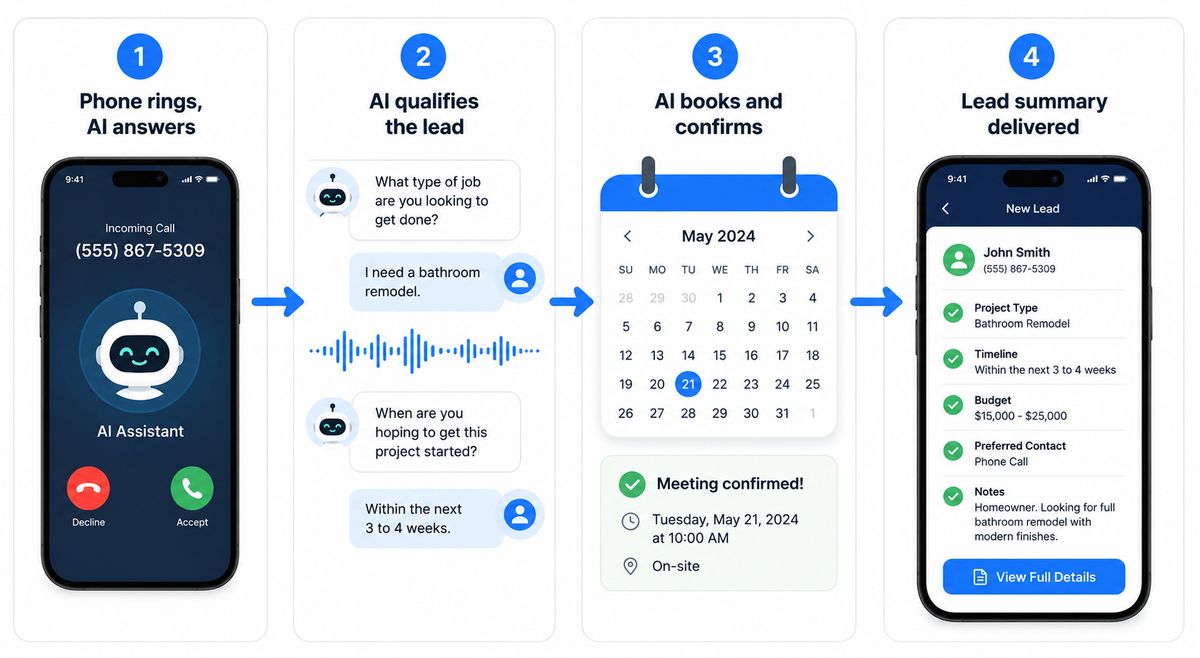
The mechanics of AI-powered voice tools for painters are simpler than most contractors expect. When a customer calls your business number, the AI answers within one or two rings. It greets the caller using your company name in a natural, conversational tone.
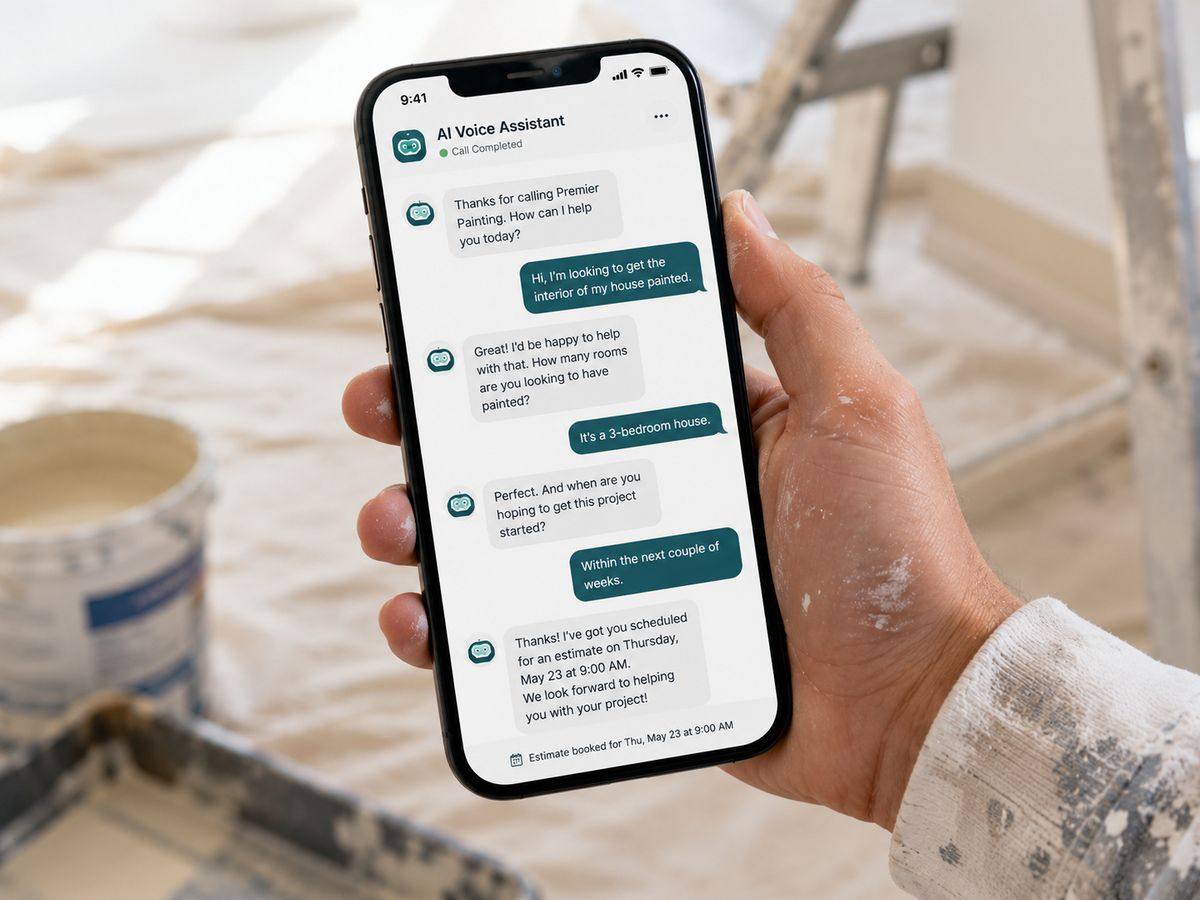
From there, the conversation is driven by the caller's needs. If they want a quote on an interior job, the AI asks how many rooms, what condition the walls are in, whether ceilings and trim are included, and when they're hoping to have the work done. If they're asking about availability, it checks your calendar in real time and offers time slots.
The system is designed to handle the most common call types a painting company receives:
Estimate requests. The AI collects all the relevant job details and either books a site visit or passes the information to you for follow-up.
Existing customer inquiries. Calls about job timelines, crew arrival times, or paint color confirmations can be handled or escalated appropriately.
General questions. Service area, pricing ranges, turnaround times, and other frequently asked questions can be answered directly from information you configure in the system.
After-hours calls. Rather than routing to voicemail, the AI handles the call fully and makes sure the lead is captured and queued for morning follow-up.
Everything the AI learns during the call is logged and structured so that when you engage with the lead, you walk in with context rather than starting from scratch.
Read More: How to Use AI Content and Outreach to Get Painting Clients in 2026
Booking Estimates Automatically
The most direct revenue impact of an AI voice assistant for painters is its ability to book estimates without you being involved in the call at all.
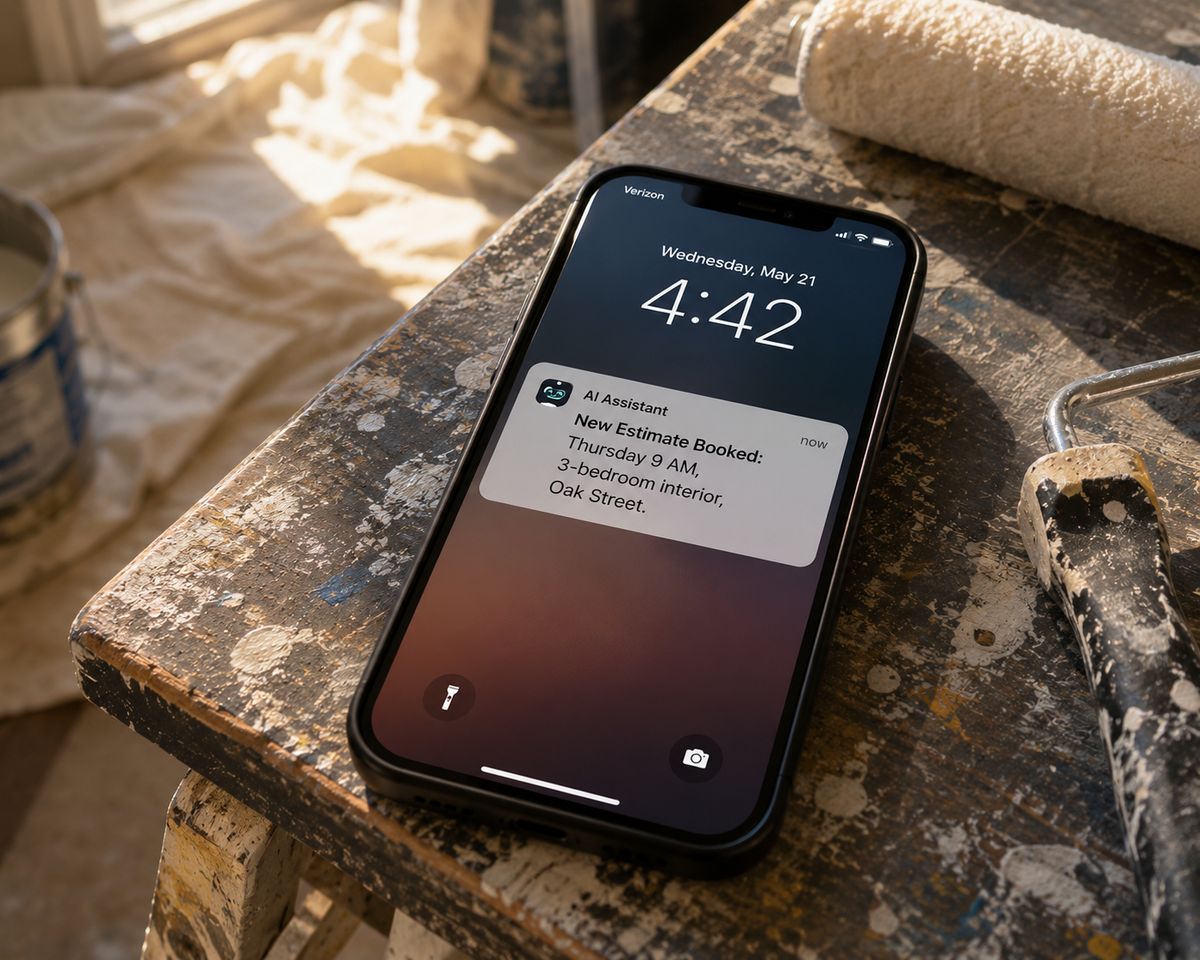
Here is what that looks like in practice. A homeowner calls at 6:30 PM to ask about interior painting for three bedrooms and a hallway. You're wrapping up a job across town. The AI answers, asks the right questions, confirms the scope, checks your calendar for open estimate slots, and offers the homeowner two or three options. The homeowner picks one. A confirmation is sent to both of them and to you. By the time you get home, you will have a new estimate appointment on Thursday morning with full job details already attached.
You didn't make a call. You didn't send a text. You didn't do anything except keep painting.
This is the core promise of smart voice AI for painting teams: eliminating the gap between an interested customer and a booked appointment. That gap is where most painting leads die, not because the customer lost interest, but because the timing was off, the follow-up was slow, or the conversation never happened.
When the AI closes that gap automatically, your conversion rate from inbound inquiry to booked estimate improves without any additional sales effort on your part.
Handling After-Hours Calls Without Hiring Anyone
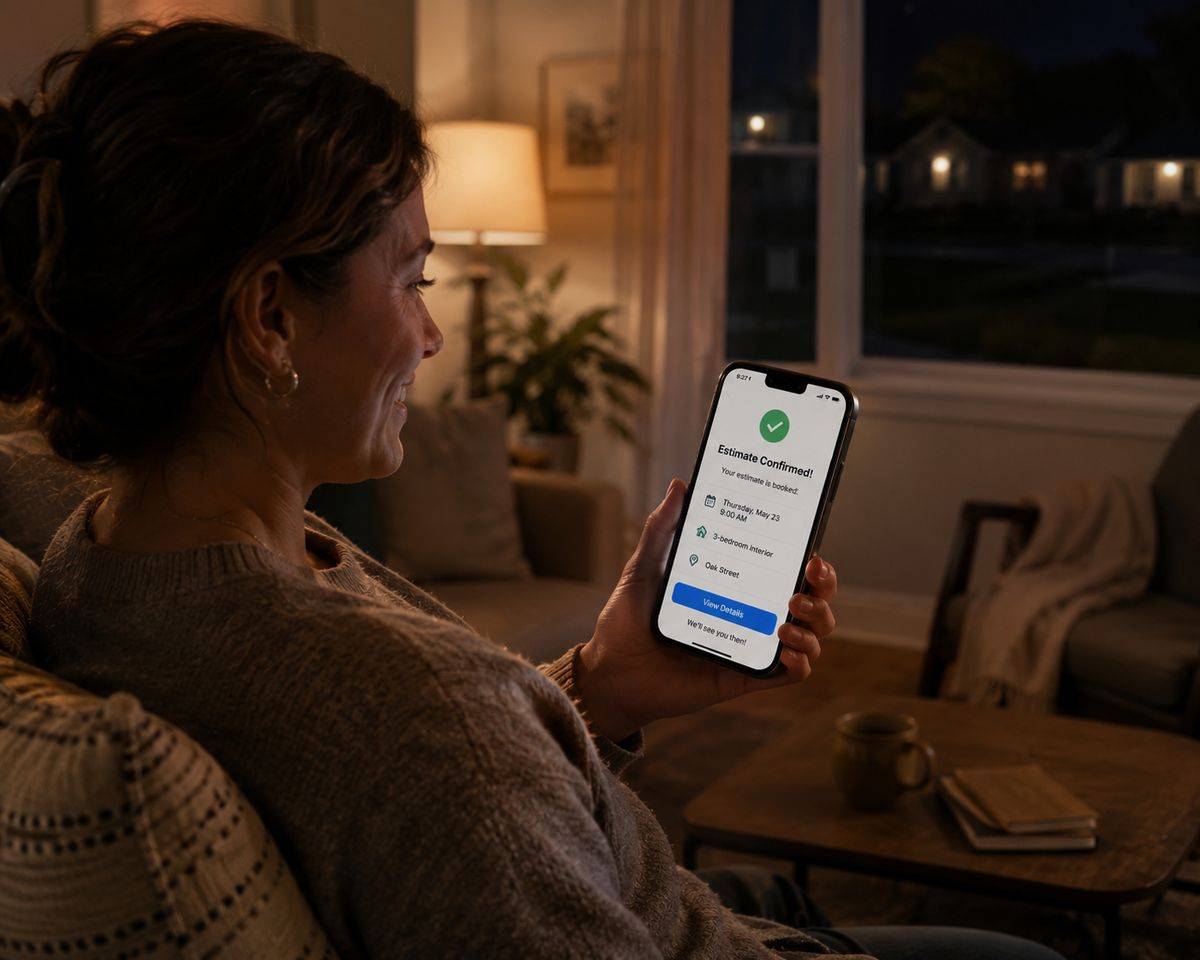
For most painting businesses, the phone stops being answered at around 5 or 6 PM. The owner is done for the day. There's no office staff. Calls that come in after hours go to voicemail, and voicemails from motivated buyers often go unanswered until the following afternoon.
AI voice assistance for painters solves this without adding a single person to your payroll. The AI handles after-hours calls the same way it handles calls at noon: professionally, fully, and with all the relevant information captured.
A homeowner who decides they want their deck painted at 9 PM on a Sunday doesn't have to wait until Monday. They call your number, get a helpful response, answer a few questions, and either book a slot or receive a confirmation that someone will be in touch first thing Monday morning with a full summary already prepared.
This has a compounding effect over time. Painting contractors who are reachable around the clock, even via AI, build a reputation for responsiveness that becomes a genuine competitive advantage in local markets where most operators are unreachable after working hours.
Read More: How to Build a Commercial Lead Generation System for Your Painting Business
How Smart Voice AI Qualifies Leads Before You Pick Up
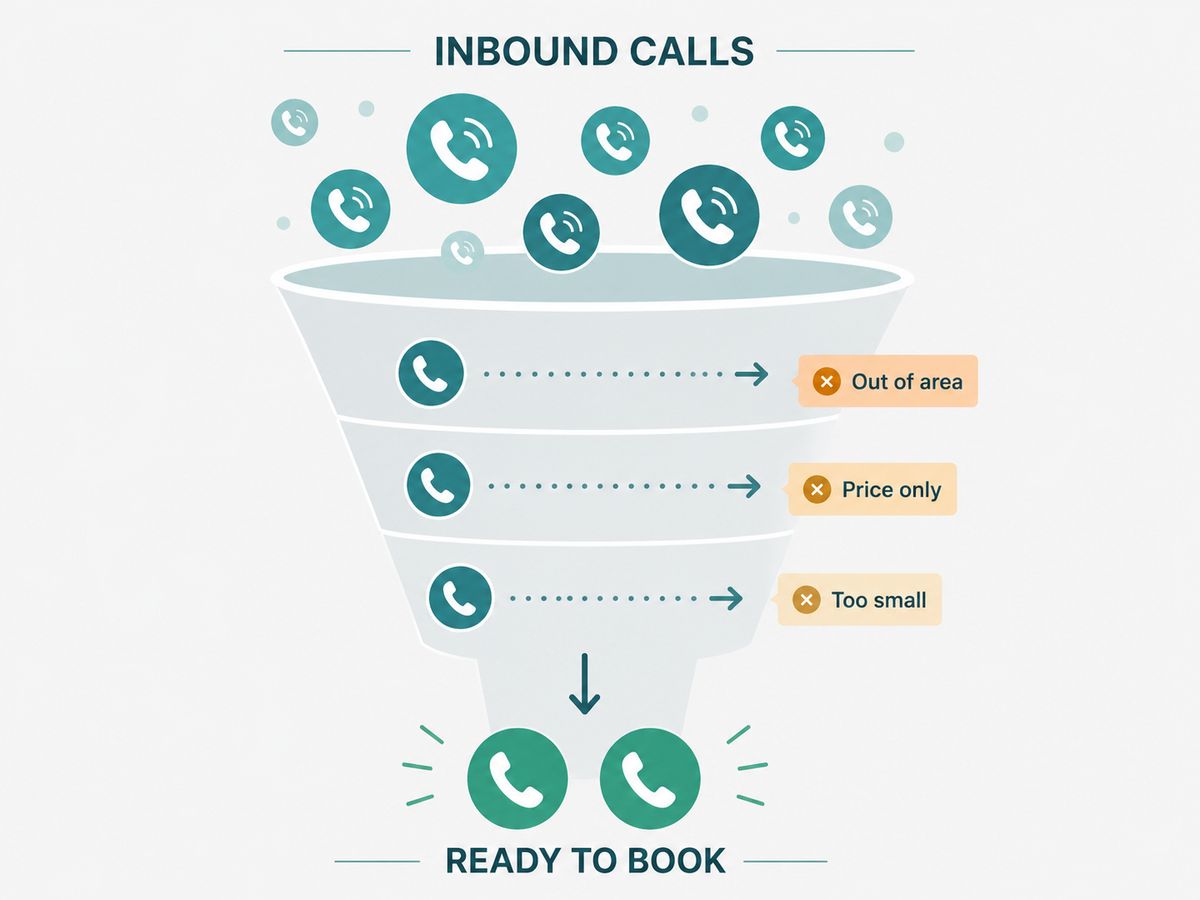
Not every caller is a serious prospect. Some are fishing for the lowest price in town. Some are outside your service area. Some have a scope so small it wouldn't justify a site visit. Spending time on these calls is a real cost that most painting business owners absorb without realizing it.
Smart voice AI for painting teams builds qualification into the call itself. Before the lead ever reaches you, the AI has already asked the questions that matter: What kind of property? What's the scope of work? What's the timeline? What's the location? Do they have a budget in mind?
Leads that fit your business get routed forward with high priority. Leads that don't fit get handled politely and appropriately, without burning your time or theirs. Some systems can even provide a ballpark price range to filter out callers who are not serious before a site visit ever gets booked.
The result is a cleaner pipeline. When you do sit down to review your leads for the week, every one of them has already passed a basic filter and comes with a full summary. You're not starting from zero on any of them. You're reviewing, prioritizing, and following up with context already in hand.
Read More: AI for Painting Businesses: The 2026 Guide to More Leads, Less Chaos
AI Voice Solutions Across the Full Customer Journey
Most contractors think of AI voice solutions for painters as a tool for handling new inbound calls. That's the obvious use case, but it's only part of the picture.
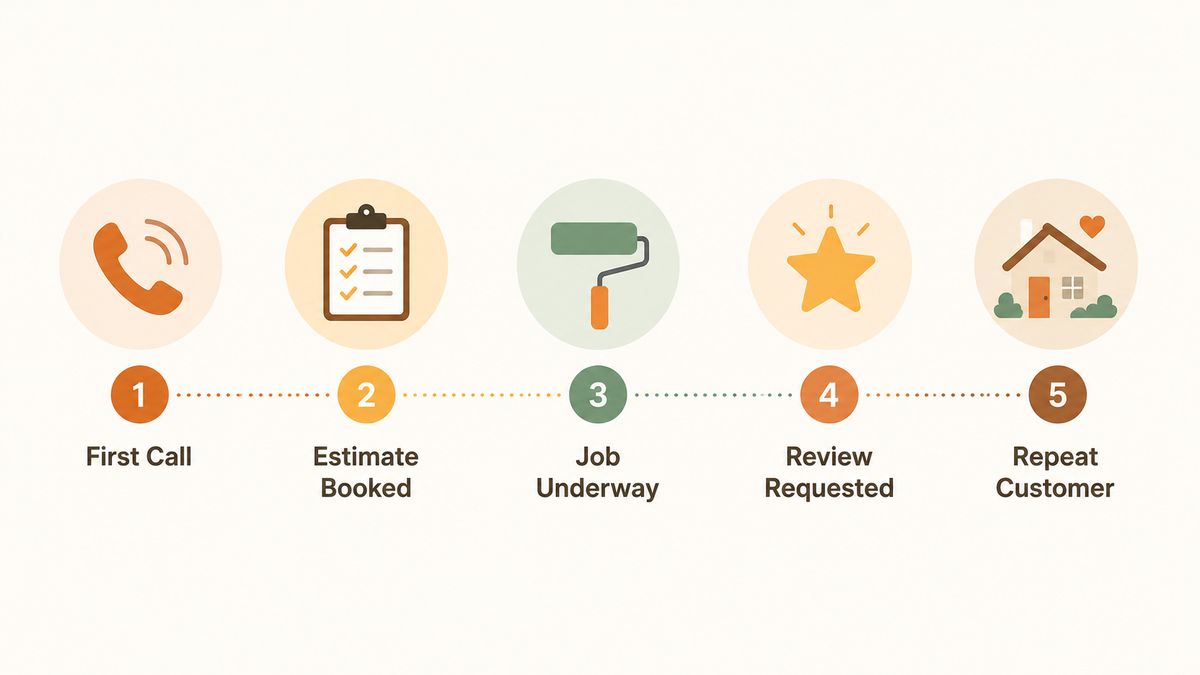
AI voice can play a role across the full arc of a customer relationship:
Before the estimate. Confirming the appointment, sending reminders, and answering basic preparation questions so the homeowner is ready when you arrive.
After the estimate. Following up on a quote that hasn't been signed. A brief, friendly AI voice call or message a few days after sending a proposal can recover jobs that would otherwise go cold without anyone noticing.
During the job. Handling check-in calls from customers who want a progress update, so your crew isn't interrupted, and you don't have to break away from another site.
After completion. Requesting a Google review, sending a satisfaction check-in, or planting the seed for future work, like an annual exterior refresh or an interior repaint in a different room.
This is an AI voice assistance for painters as a long-term business system, not just a call answering service. When the voice layer is connected to your CRM, your calendar, and your follow-up workflows, it becomes a relationship management engine that runs in the background of everything you do.
What AI-Powered Voice Tools Mean for Painting Teams
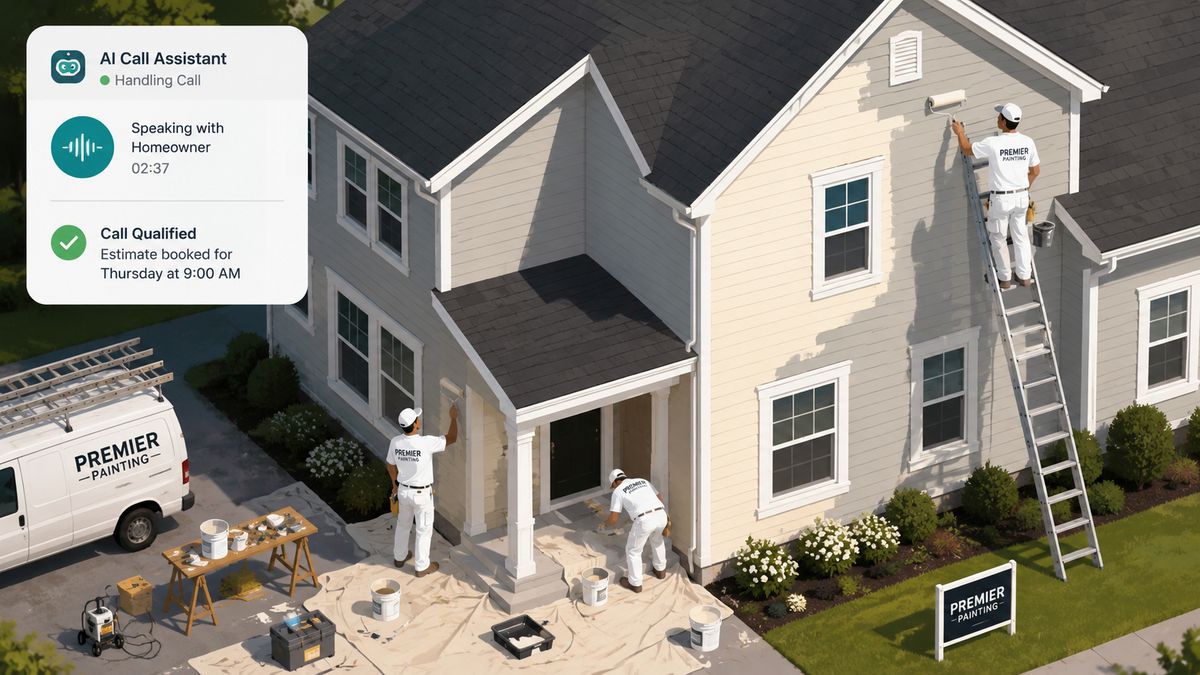
For painting business owners who run crews rather than solo operations, the benefits of AI-powered voice tools for painters extend beyond just the owner's time.
When you're managing three or four crews simultaneously, the communication load compounds fast. Customers are calling for updates. Subcontractors confirming schedules. Suppliers are checking on orders. New leads are coming in at the worst possible moments. The owner ends up as the bottleneck for all of it, fielding calls that pull their attention away from the decisions that actually move the business forward.
AI voice tools absorb a significant share of that inbound call volume. Routine customer inquiries get handled. New leads get captured and qualified. Appointment confirmations go out automatically. What reaches you are the calls that genuinely require your judgment, presented with enough context that you can handle them quickly and confidently.
For crew leads and project managers, the same principle applies. When customer communication is handled systematically rather than through a chain of phone calls, fewer things fall through the cracks during handoffs, and the people on the ground can focus on painting rather than managing expectations over the phone.
Read More: How to Increase Conversion Rate for Painting Leads Using AI
Common Questions Painting Contractors Ask About AI Voice
Does it actually sound like a real person?
Modern AI voice systems have narrowed the gap significantly. Callers hear a clear, naturally paced voice that listens and responds in context. It's not the robotic automated voice of a decade ago. Most callers engage with it normally, and many don't think to question it at all. The experience is defined far more by the quality of the configuration than by the technology itself.
What if a caller asks something the AI doesn't know?
Good systems are designed to recognize the edges of their own knowledge. When a caller asks something outside the configured scope, the AI acknowledges it gracefully and lets the caller know someone will follow up directly. It captures the question along with the caller's details so the follow-up is informed and specific.
Can I customize how it represents my business?
Yes. Your company name, service area, tone, and the specific questions asked during a call are all configurable. A well-set-up AI voice assistant for painters should feel like an extension of your business, not a generic answering service.
Will customers be put off if they figure out it's AI?
Customers care about being helped quickly and professionally. A responsive, organized interaction, even from an automated system, creates a better impression than a missed call or a call that goes to a full voicemail box. The contractors who report the best customer reactions are those who configured the system carefully and prioritized a natural, helpful experience over one that tries to obscure what it is.
Choosing the Right AI Voice Solution for Your Painting Business
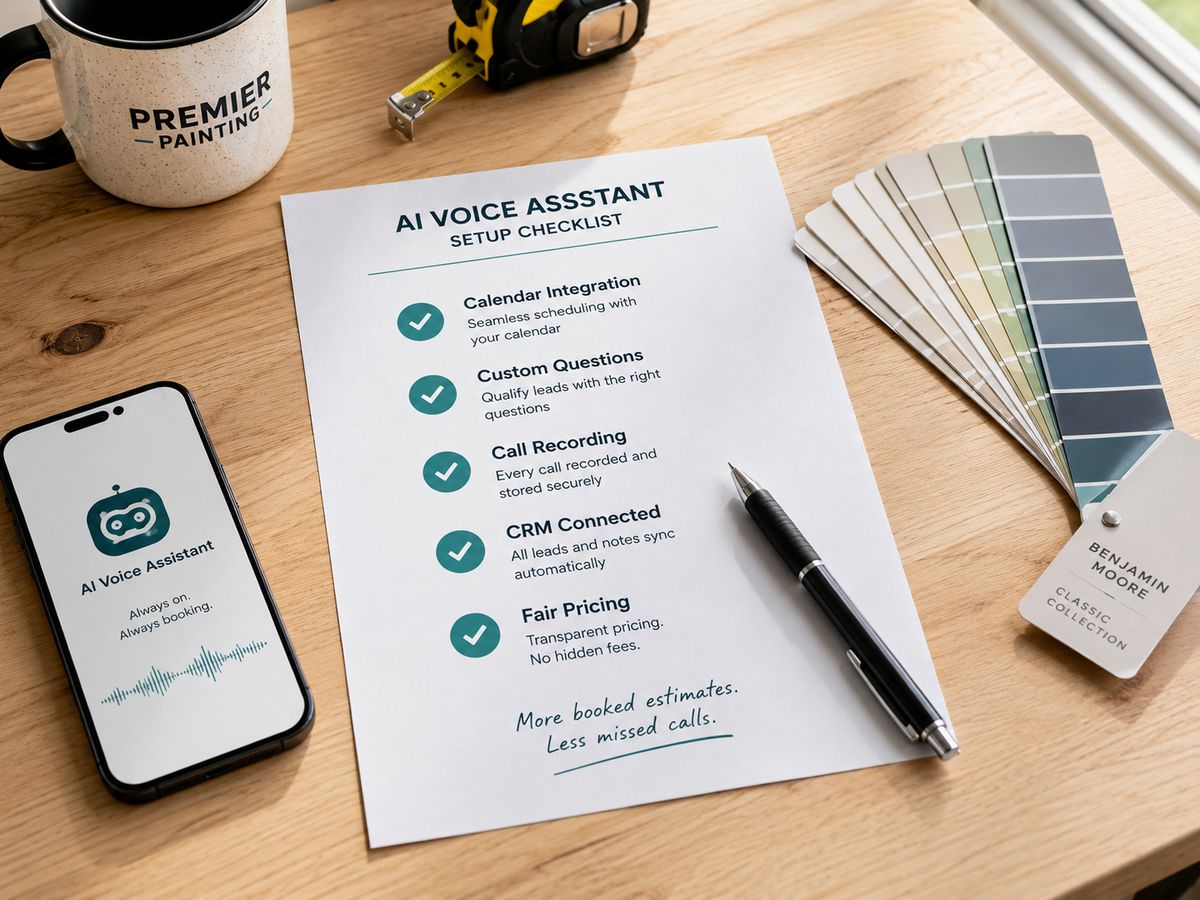
Not all AI voice solutions for painters are built with the same priorities. Before committing to a platform, painting contractors should evaluate a few key dimensions:
Configurability for your trade. A system designed for any business in general will ask generic questions. A system you can configure for painting specifically will ask about square footage, surface type, prep work, and project timeline from the first call.
Calendar and CRM integration. Voice assistants that live in isolation from your scheduling and customer management tools create more work rather than less. Integration is what turns a voice tool into a business system.
Call recording and transcription. Being able to review what was said in a call is valuable for quality control, for following up accurately, and for refining how the AI handles future conversations.
Escalation and handoff quality. The most important moment in any AI-handled call is the handoff to a human. How cleanly and completely the system transfers context determines whether the follow-up feels seamless or disjointed.
Honest pricing. Some platforms charge per minute, others per conversation, and others as a flat monthly rate. Understand what your actual call volume implies for cost before signing up.
fatcamel.ai approaches this from the angle of the small and mid-sized painting business, specifically, connecting voice handling to broader automation workflows so that a captured lead doesn't just sit in a log but moves through your pipeline automatically.
Getting Started Without a Technical Team
The barrier to getting AI-powered voice tools for painters set up is lower than most contractors expect. You do not need a developer. You do not need an IT department. You need a clear picture of how your calls currently work and what you want to happen differently.
Start by mapping out your three most common inbound call types. For most painting businesses, these are estimate requests, questions about existing jobs, and general inquiries about pricing or availability. That covers the majority of your call volume. A well-configured AI voice system built around those three scenarios handles most of what comes in.
From there, connect it to your calendar so booking can happen automatically, and connect it to whatever system you use to track your leads so nothing gets lost between the call and the follow-up.
fatcamel.ai is built for exactly this kind of setup, designed for business owners who are running a trade operation rather than a software company. If you want to see what an end-to-end voice and automation workflow looks like for a painting business, it's a practical place to start.
The calls are already coming in. The question is whether your business is ready to answer all of them.
Frequently Asked Questions
What is an AI voice assistant for painters?
It is a software system that answers your business phone calls automatically, conducts a natural conversation with the caller, collects job details and contact information, and either books an estimate directly into your calendar or passes a structured summary to you for follow-up.
How is AI voice assistance for painters different from voicemail?
Voicemail is passive. It records a message and waits. An AI voice assistant is active. It engages the caller in a real conversation, asks relevant questions, provides helpful responses, and takes action based on what it learns. Most callers who would not leave a voicemail will complete a conversation with an AI assistant.
Can AI-powered voice tools for painters handle calls in multiple languages?
Many modern platforms support multiple languages, including Spanish, which is relevant for painting companies serving diverse communities or employing multilingual crews. This depends on the platform and its configuration options.
Do I need to change my existing phone number?
No. Most AI voice systems work by routing your existing business number through their platform, so your number stays the sam,e and the experience for callers is seamless.
How does smart voice AI for painting teams handle calls during active jobs?
The AI operates independently of what you and your crew are doing. While you're on a job site, it answers calls, qualifies leads, and books estimates. You review the results when it's convenient for you, without any interruption to the work in progress.
Is fatcamel.ai a good option for AI voice solutions for painters?
fatcamel.ai is built for small and mid-sized service businesses, including painting contractors, and focuses on connecting voice handling to broader business automation so that every captured lead moves through your pipeline automatically. It is worth exploring if you want an integrated solution rather than a standalone answering tool.