

The majority of painting contractors think that raising their marketing budget, generating more leads, or running more advertisements would lead to growth. However, what if the next few contracts your company needs are already quietly resting inside your CRM and aren't out there waiting to be generated?
You'll see that your CRM is more than just a catalog of previous exchanges if you stop and give it some serious thought. It is an assortment of unrealized possibilities. These include previous estimates you issued months ago, homeowners who stated they would make a decision later, customers who stopped responding after expressing interest, and even missed calls that never resulted in meaningful dialogue.
These aren't all necessarily missed chances.
They are simply paused decisions.
And that is exactly where a surprising amount of hidden revenue in CRM systems exists.
In this guide, we will walk through how painting businesses can recover old leads from their CRM, how to revive cold leads as a contractor in a practical way, and how AI is making this process easier, more consistent, and scalable in 2026.
Why Old Leads Are Not Dead, Just Ignored
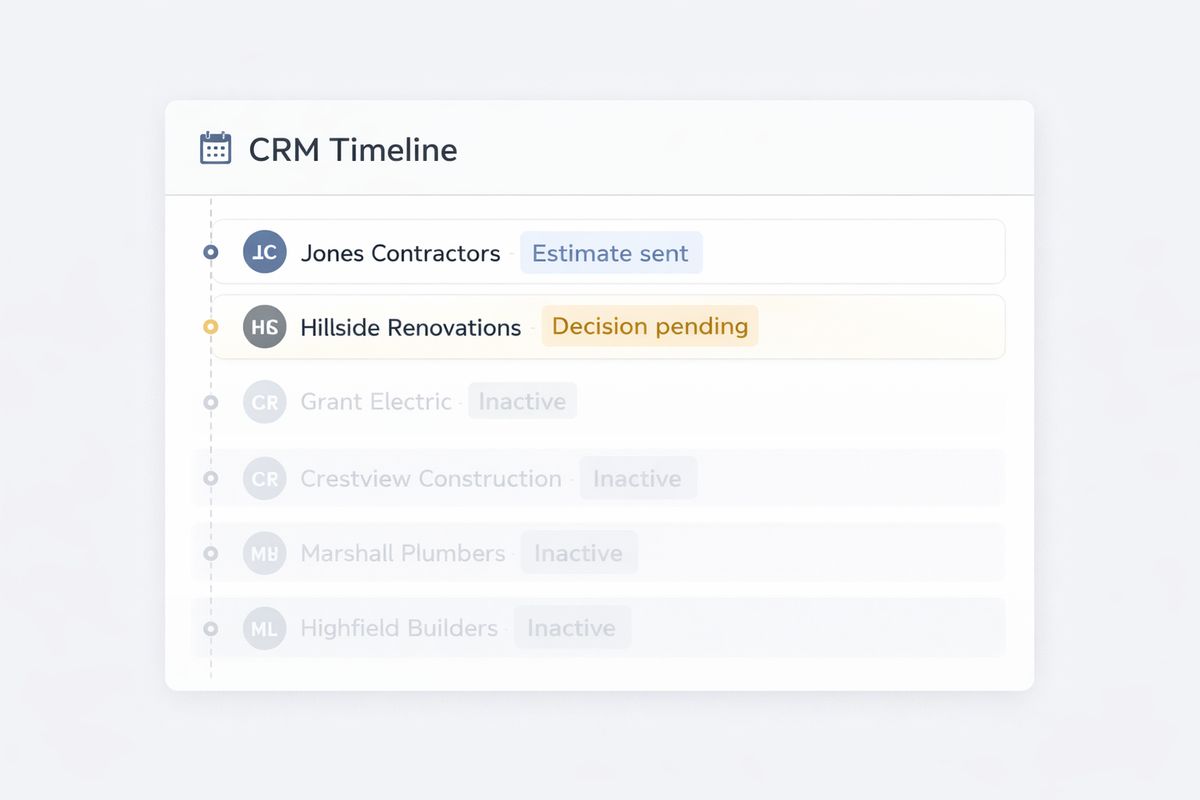
In the painting industry, one of the most common fallacies is that if a lead doesn't convert the first time, it won't convert at all. However, most clients don't entirely reject the service. They just put off deciding since something else was more important at the time.
Perhaps they were comparing different contractors, perhaps they weren't financially prepared, or perhaps repainting their house wasn't essential enough at the moment. Decisions are delayed, priorities change, and life happens.
However, the necessity does not go away.
It simply fades into the backdrop.
This is the reason why a lot of painting companies have a lot of recoverable income in their CRM: they have already spent money, time, and effort on acquiring those leads, but they have never developed a method to follow up with them.
Rather, those leads gradually disappear as the company continues to pursue new ones, which is frequently more costly and ineffective.
Read More: 5 Must-Have AI Tools for Small Businesses This Year
The Real Reason Old Leads Never Convert
Most contractors believe that pricing, competition, or lack of interest are the reasons why old prospects didn't convert, but if you look closely at how those conversations ended, you'll see that none of those issues are usually the problem.
The true explanation is considerably more straightforward.
A systematic follow-up was lacking.
This is how a normal trip looks. When a lead comes in, you promptly reply, submit an estimate, follow up once or twice, and then the follow-up just ends when new leads begin to arrive, and everyday operations take over.
Nothing occurs after that.
There are no seasonal follow-ups, no scheduled check-ins after a few weeks, no reminders, and no mechanism to bring that lead up again.
Over time, the lead turns cold, not because they have completely lost interest, but rather because they have stopped paying attention to your company.
One of the most prevalent CRM issues for contractors is that while the system performs a decent job of storing data, it provides very little to assist you in taking action.
Read More: AI Chatbot for Roofing Companies: Capture More Roofing Leads Automatically
Why Manual Follow-Up Always Breaks
When a painting company first starts, it is feasible to handle follow-ups by hand because there are few and manageable leads. However, as the company expands and the volume rises, this strategy begins to fall apart.

You start depending on recollection, haphazard notes, or sporadic CRM checks, which results in irregular follow-up and lost chances. Daily operations, ongoing tasks, and fresh leads will always take precedence over earlier interactions, even if you have a disciplined staff.
As a result, a significant amount of potential revenue discreetly disappears while your company continues to operate.
That is why most contractors struggle to revive cold leads consistently, not because they lack effort or intent, but because they do not have a system that supports them.
What Changed in 2026
Reactivating old leads used to involve a lot of manual labor, which made it challenging to execute regularly. However, with the advent of AI-driven workflows, this entire process has become much more feasible.
AI can now perform the time-consuming and repetitive tasks in your CRM without requiring you to manually go through each contact one at a time while maintaining relevant and natural conversation.
This implies that your company may automatically contact past prospects at the appropriate moment, tailor messages based on prior exchanges, follow up regularly without depending on recollection, and handle response tracking.
It is now possible to accomplish tasks that previously required hours of manual labor in the background.
This is what makes recovering old leads from CRM systems not just possible, but sustainable.
Read More: Budgeting for AI: How Much Does it Cost to Run n8n AI Agents?
How AI Lead Revival Works in Practice
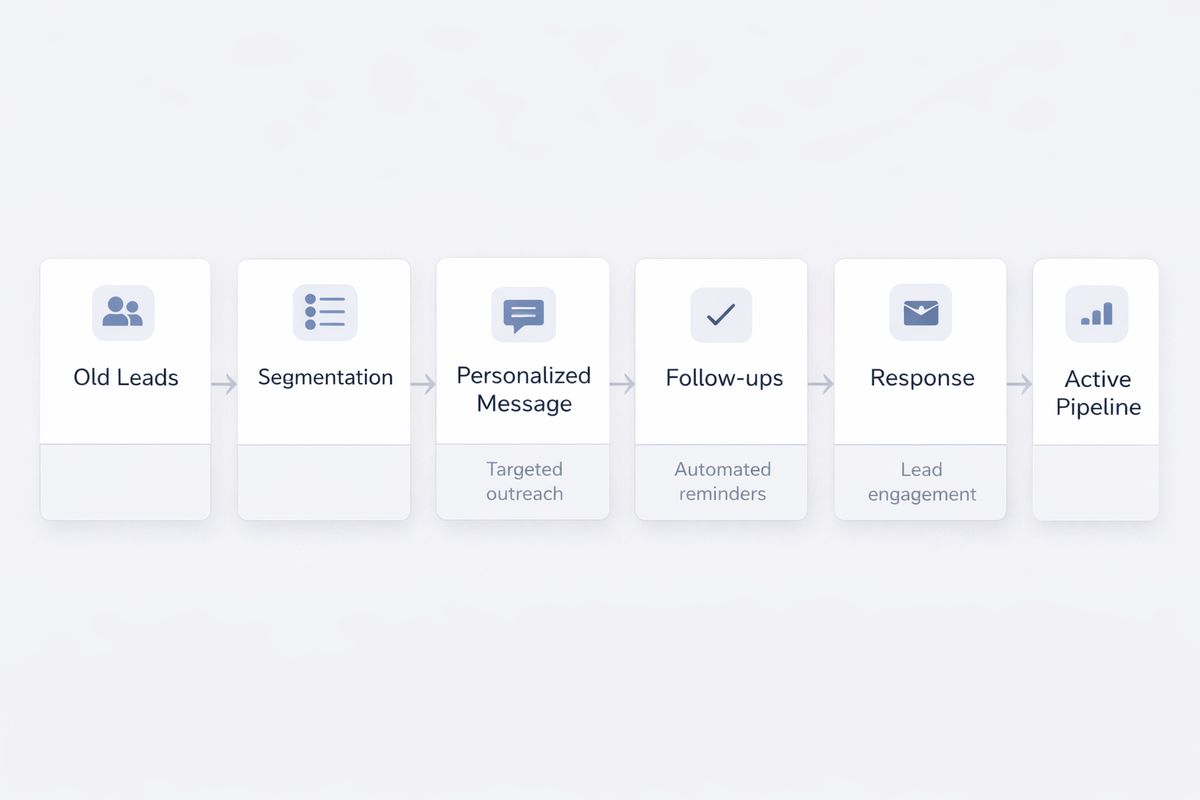
Let's examine the operation of a basic AI-powered lead recovery system to gain a clear understanding of this.
In your CRM, the system first finds outdated and dormant leads. These could include unapproved estimates, unconverted inquiries, or conversations that ended in the middle.
The algorithm then classifies these leads according to variables such as the length of time since the last encounter, the kind of service requested, and the degree of engagement.
After that, the system starts re-engaging with messages that are pertinent to the customer's circumstances and feel natural.
The communication feels more like a continuation of the previous conversation than a generic communication. For instance, the message might include the previous estimate and ask if they would like to review it rather than asking if they are still interested.
Following that, follow-ups are managed automatically over time to make sure the client doesn't forget about your company and doesn't feel pressured.
In order to free up your team to concentrate on closing the offer, the system updates your CRM when a lead responds and reintroduces that lead into your current pipeline.
Fatcamel as a Flexible CRM for Painting Businesses
For painting contractors that feel constrained by conventional systems, Fatcamel serves as an adaptable CRM.
It adjusts to your company's real operations, from lead management to tracking estimates and follow-ups, rather than imposing a rigid framework on your workflow.
Additionally, it easily integrates with automation and AI solutions like OutreachAI, which simplifies the process of recovering previous leads and maintaining constant communication without adding complexity.
A Simple Example of Hidden Revenue
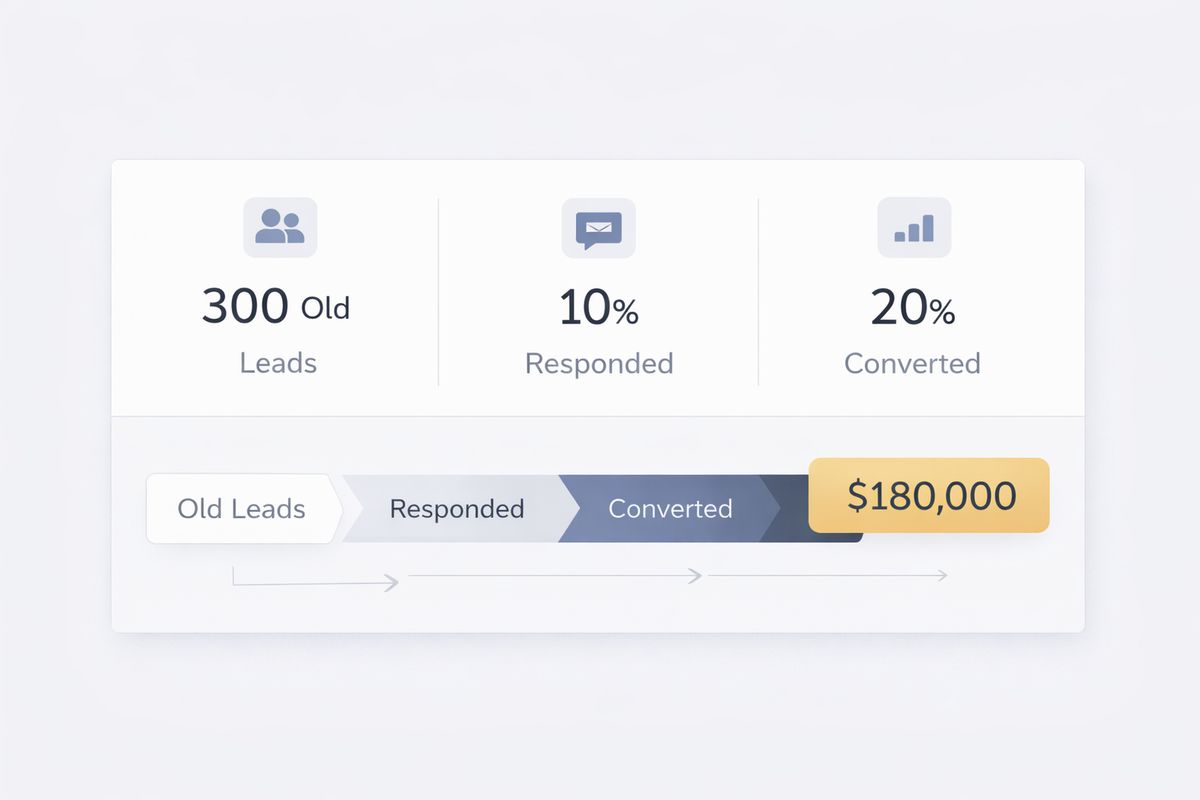
Assume your CRM has accumulated 300 previous leads over time.
Re-engagement can have a big impact even if only a tiny portion of people reply. Six new projects will occur if 10% of those leads reply and 20% of those leads are genuine jobs.
You make a significant amount of money from leads you already have if the average project value is about 50,000 rupees or $1,000.
There is no new campaign, no increased advertising budget, and no more work to raise awareness.
Because the opportunity already exists and just needs to be engaged, it is known as hidden revenue in CRM.
Why Old Leads Convert Faster
When you generate a new lead, you are starting from zero.
The customer does not know you well; they may be comparing multiple contractors, and you still need to build trust from scratch.
With old leads, a large part of that process is already complete.
They have already interacted with your business, seen your estimate, and considered your service, which makes them much warmer compared to completely new prospects.
This familiarity reduces friction and increases the likelihood of conversion, especially if the timing is right.
Common Mistakes in Lead Reactivation
Many contractors try to revive old leads but do not see results because of how they approach them.
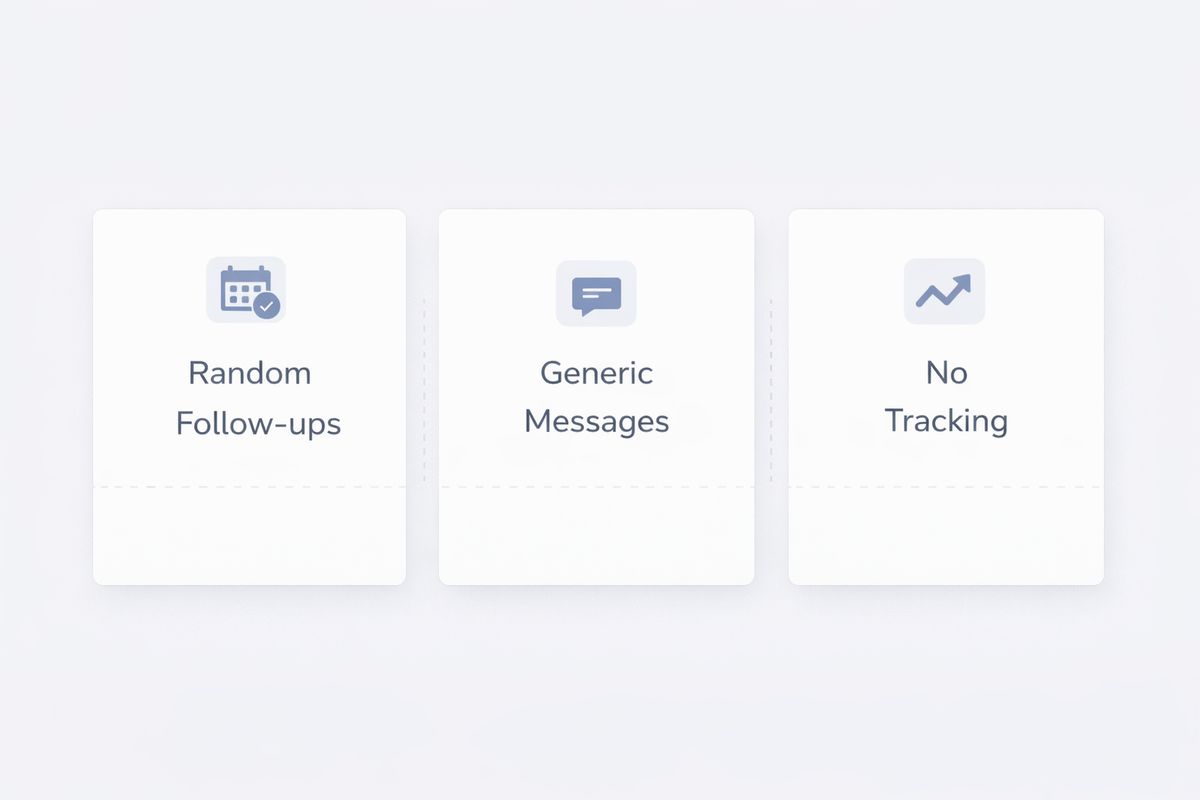
Some reach out once and stop when there is no response. Others send generic messages that do not feel personal or relevant. Some contact leads randomly without any structure, while others fail to track responses properly.
Another common mistake is giving up too early without allowing enough time for multiple touchpoints.
These mistakes are not about effort, but about the absence of a system.
Where AI Fits Without Replacing Your Team
AI is not meant to replace your team or take over customer relationships.
Instead, it supports your team by handling the repetitive and predictable parts of the process, such as sending messages, scheduling follow-ups, organizing responses, and updating your CRM.
Your team still plays the most important role in understanding customer needs, building trust, closing deals, and managing projects.
AI simply ensures that no opportunity is lost before your team gets the chance to engage.
How Fatcamel Helps You Unlock This Revenue
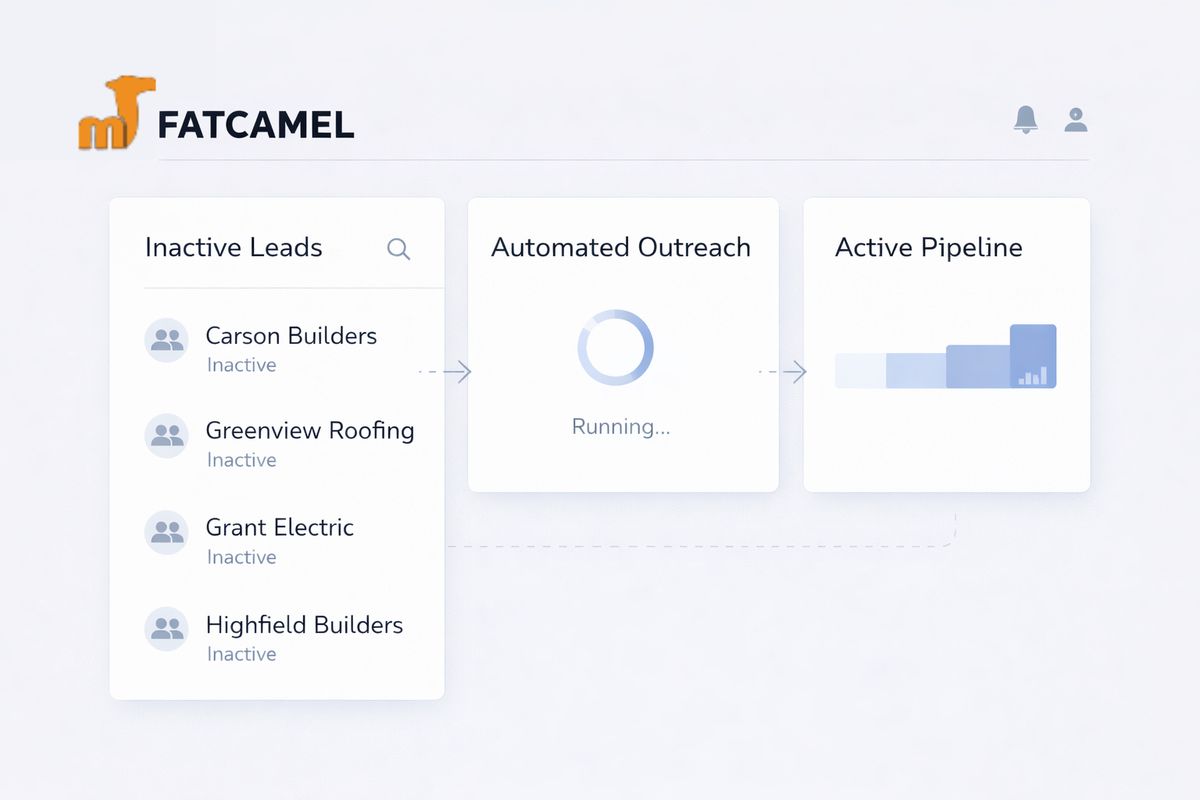
Most painting businesses already have the data they need, but they lack a system to use it effectively.
This is where Fatcamel comes in.
Instead of adding another tool, Fatcamel helps you build a structured system that identifies inactive leads, sets up automated outreach, personalizes communication, tracks responses, and brings leads back into your active pipeline.
This is what OutreachAI is designed to do.
It transforms your CRM from a passive storage system into an active revenue system.
And the most important part is that you do not need to replace your existing CRM.
You simply make it smarter.
When Should You Start
If your business has a growing number of old leads, unconverted estimates, or inconsistent follow-up processes, then the opportunity is already in front of you.
You do not need to wait for more leads.
You need to start using the ones you already have.
Final Thoughts
Most painting businesses are not short on opportunities.
They are short on systems.
Old leads, cold conversations, and forgotten estimates are not failures. They are incomplete processes waiting to be continued.
AI changes this by bringing consistency, reducing manual effort, and ensuring that no opportunity disappears simply because someone forgot to follow up.
Over time, this transforms your CRM from a place where information is stored into a system where revenue is actively generated.
And once that happens, growth becomes less about chasing new leads and more about making better use of the leads you already have.
FAQs
1. How do I recover old leads from my CRM?
You can recover old leads by identifying inactive contacts and re-engaging them through structured follow-up. AI helps automate this process and makes it consistent.
2. Do old leads really convert in painting businesses?
Yes, many leads do not convert initially due to timing, not a lack of interest. When approached again at the right time, they often convert.
3. What is the best way to revive cold leads for contractors?
The best approach is to use personalized and timely communication instead of generic messages, combined with consistent follow-up.
4. Can AI handle lead follow-ups automatically?
Yes, AI can manage outreach, follow-up timing, and response tracking while your team focuses on closing.
5. Is it better to focus on new leads or old leads?
Both are important, but old leads are often easier and cheaper to convert because they already know your business.
6. Do I need to change my CRM to use AI?
No, AI can be added on top of your existing CRM to improve how it works without replacing it.
7. How long should I follow up with old leads?
Follow-up should happen over time with proper spacing, since multiple touchpoints usually increase conversion chances.