
Before hiring a pressure washing company, ask for proof of relevant insurance, a written scope of work, and an explanation of the cleaning method planned for each surface. Also ask how the crew will protect your property, document existing damage, and handle wastewater when the site or local rules require it.
Compare quotes based on the surfaces, methods, treatments, exclusions, and protections included not price alone. A higher quote may cover more work, but it is worth checking the details before deciding.
Table of Contents
Why Quote Comparison Is Harder Than It Looks
Check 1: Insurance and Worker Coverage
Check 2: Cleaning Method for Each Surface
Check 3: Written Scope
Check 4: Experience With Your Surfaces
Check 5: Property Protection
Check 6: Damage and Dispute Policy
Check 7: Reviews, References, and Portfolio
Check 8: Wastewater and Environmental Planning
How to Compare Two Quotes Side by Side
Red Flags That Warrant Caution
How FatCamel Helps Exterior Contractors Manage Quote Follow-Up
Frequently Asked Questions
Why Quote Comparison Is Harder Than It Looks
“House washing” can mean soft washing all four sides of a home, or a quick pass over one visible elevation. “Driveway cleaning” might include surface-cleaner equipment and stain pretreatment, or only a basic rinse. A quote that includes a deck cannot be compared directly with one that does not.
Before looking at price, compare three things: scope, method, and protection. Those details tell you what you are actually buying.
Check 1: Insurance and Worker Coverage
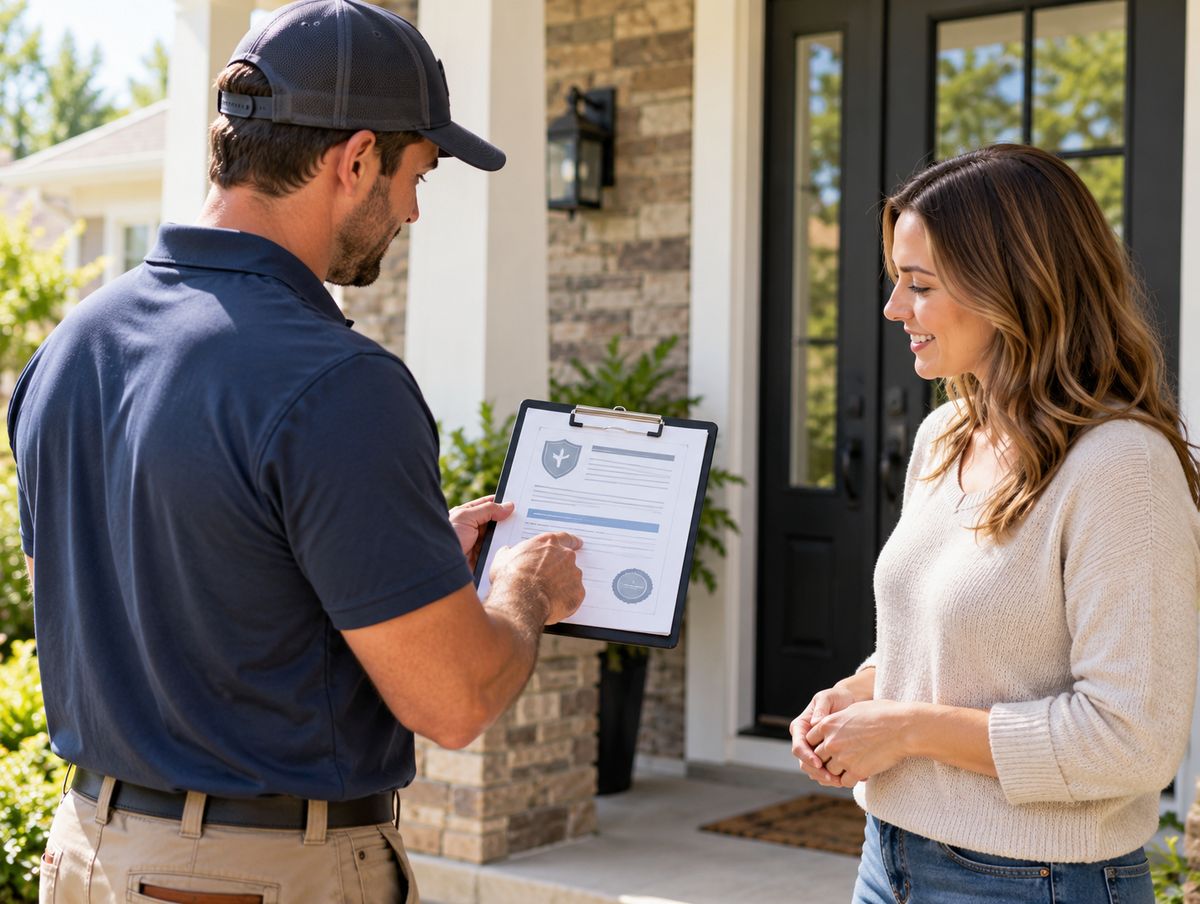
Where local rules require a licence or registration for the work, verify that the contractor meets those requirements. You can check with the relevant state or local authority. Requirements vary, so do not assume that the same licensing rules apply to every pressure-washing service.Ask the company for proof of current general liability insurance and confirm that the policy covers the type of work being performed. Review the business name, policy dates, and applicable coverage details. Where necessary, contact the insurer or agent to confirm the information.
If employees or subcontractors will be working on your property, ask how workers' compensation or other applicable worker coverage is handled. Requirements depend on the location and business arrangement, so ask for relevant documentation and verify local requirements when needed.
Insurance does not replace careful work, but it gives both parties a clearer path if equipment, property, or a person is damaged or injured. Keep the certificate and written estimate with your project records.
Check 2: Cleaning Method for Each Surface
Ask: “What method will you use on each surface, and why?”
Siding, roofing, painted surfaces, and other delicate finishes may require low-pressure, solution-assisted cleaning. Concrete and some masonry surfaces may be suitable for pressure washing. The right approach depends on the material, its condition, the type of contamination, and the manufacturer's guidance.
For siding, ask what pressure and cleaning solution the contractor plans to use. A confident answer should explain the low-pressure process and how the crew will protect seams, trim, plants, and windows. For asphalt-shingle roofs, high-pressure washing is a serious concern because it can damage the shingles.
A contractor who explains the method, product, and reason for each surface demonstrates more knowledge than one who simply says, “We pressure wash everything.”
Read Soft Washing vs. Pressure Washing: Which Method Fits Each Surface? for more detail.
Check 3: Written Scope
A price without a scope is only a number. The written estimate should identify:
- Exact surfaces and elevations included.
- Method planned for each surface.
- Stain pretreatment or specialty treatment.
- Exclusions such as roofs, driveways, decks, windows, or interior gutters.
- Whether the price is fixed or may change after site inspection.
- Payment terms, scheduling, and cancellation conditions.
“Exterior house washing” is vague. “All four siding elevations, soffits, fascia, exterior gutters, and front walkway; driveway excluded” is much easier to compare.
If one quote includes the driveway and another does not, ask for the excluded service to be priced separately before comparing totals. This helps you compare equivalent scopes of work instead of choosing based on the headline price alone.
For more guidance, read Pressure Washing Cost: What Changes a Quote?.
Check 4: Experience With Your Surfaces
Exterior-cleaning experience is not interchangeable. A contractor may be excellent at concrete and have limited experience with cedar siding, older stucco, clay tile, or delicate coatings.
Ask, “Have you worked on this material before, and what do you do differently?” A useful answer should mention surface-specific adjustments, such as lower pressure for wood, care around cracked stucco, or avoiding foot traffic on fragile roofing.
Before-and-after photos from comparable work can be more useful than a generic portfolio. For a complex or expensive project, requesting a reference from a similar customer is reasonable.
Check 5: Property Protection
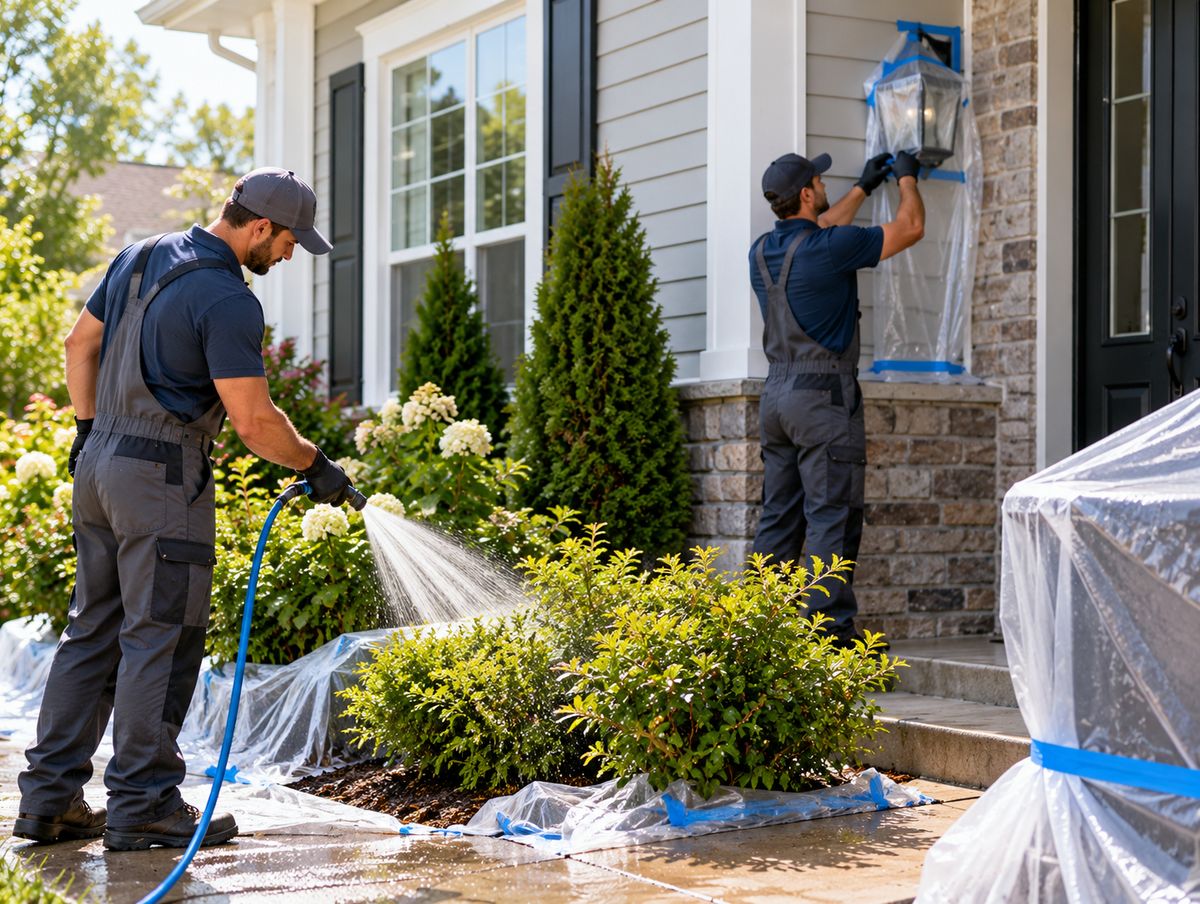
Cleaning solutions and pressurized water can affect plants, furniture, windows, outdoor fixtures, and HVAC equipment if they are not handled appropriately. Ask the contractor which areas need protection and how the crew plans to manage overspray and rinse water.
Ask how the crew will:
- Pre-wet and rinse plants in the runoff path.
- Move or cover outdoor furniture and decorations.
- Confirm that windows and doors are closed.
- Protect sensitive fixtures and equipment from direct spray.
- Control overspray and manage rinse water.
A specific explanation is reassuring. “We’re careful” is not as useful as a clear description of the protection process.
Check 6: Damage and Dispute Policy
Ask how the contractor documents pre-existing conditions and handles accidental damage. Pre-job photographs can protect both the homeowner and the company by recording cracked trim, failed seals, damaged paint, or fragile landscaping before work begins.
A professional answer should explain who to contact, how an incident is documented, and how insurance claims are handled if the company causes damage. Be cautious if a contractor becomes defensive when asked a reasonable question about responsibility.
Check 7: Reviews, References, and Portfolio
Look for patterns rather than one perfect or one negative review. Consider:
- Recency: Recent reviews are more relevant to current crews and management.
- Volume: A larger sample gives more context than a handful of ratings.
- Specificity: Reviews mentioning your type of surface or service are more useful.
- Responses: Professional replies to criticism can indicate accountability.
- Portfolio: Comparable before-and-after work is stronger evidence than generic stock images.
For large commercial or complex residential work, ask whether the company can provide a relevant reference with the customer’s permission.
Check 8: Wastewater and Environmental Planning
This check matters most for commercial properties, parking lots, restaurants, industrial sites, jobs near storm drains, and work involving significant chemicals or contaminants.
Wash water can carry cleaning products, oil, dirt, paint residue, and other contaminants into drainage systems. Local requirements determine how wastewater must be contained, collected, redirected, or disposed of. Contractors should check the rules that apply to the specific property and job rather than assume the same procedure is permitted everywhere.
For commercial properties, jobs near storm drains, or work involving significant contaminants, ask the contractor to explain the wastewater-management plan before work begins.
How to Compare Two Quotes Side by Side
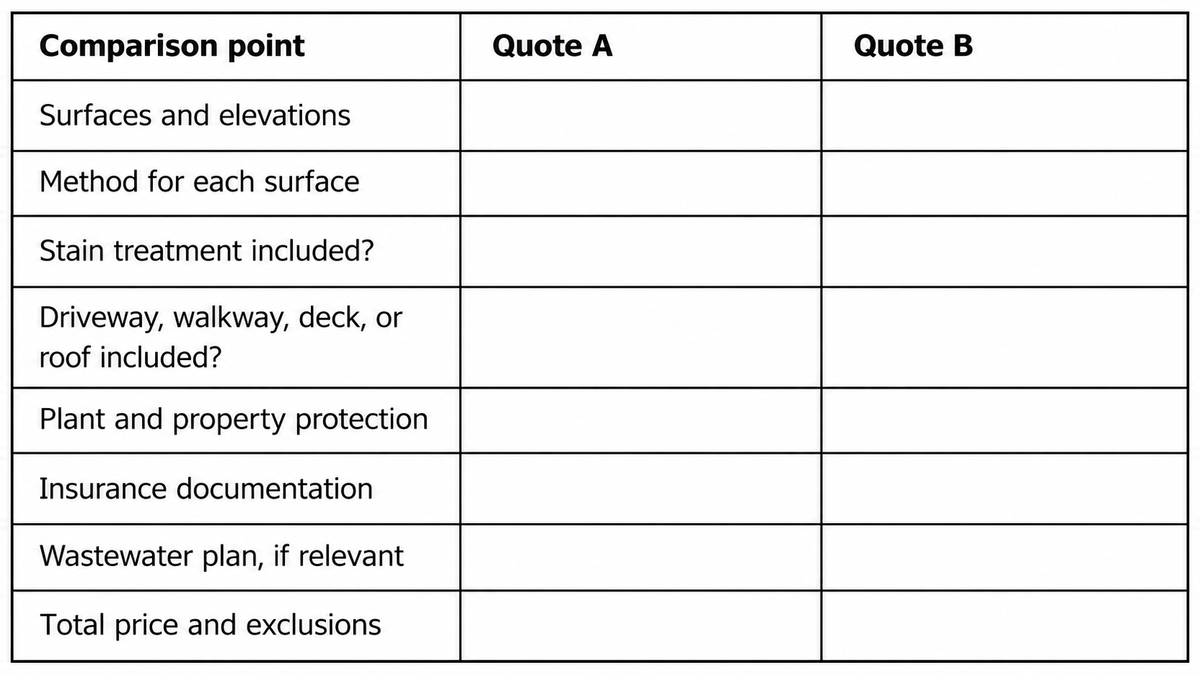
A quote with more detail is not automatically better, but it gives you a basis for an informed decision. If one contractor only gives a verbal price, ask for written confirmation before comparing it with a detailed estimate.
Red Flags That Warrant Caution
- The company will not provide proof of insurance.
- The contractor recommends high pressure for siding or asphalt roofing without explaining the risks.
- The contractor provides a quote without enough information to assess the property's size, condition, access, or requested scope.
- The written scope does not identify surfaces or exclusions.
- The contractor promises complete removal of every stain without inspecting it.
- The contractor refuses to provide a written estimate, receipt, or clear payment terms.
- The company uses aggressive same-day pressure on a routine residential job.
One red flag may call for clarification. Several together justify looking for another provider.
How FatCamel Helps Exterior Contractors Manage Quote Follow-Up

For exterior-cleaning contractors, sending a quote is only one part of the sales process. Homeowners may compare estimates, ask questions, or postpone a decision, and older customers may need another service when the season changes.
FatCamel AI helps home-service businesses explore customer communication and workflow automation. Depending on the business's systems and requirements, workflows can help organize follow-ups for open estimates and reconnect with previous customers when another service may be relevant.
The aim is to make customer communication more consistent while reducing repetitive administrative work. Follow-ups should be relevant, reflect the actual services offered, and stop when a customer replies, declines, books, or opts out.
Messages should reflect the actual scope, stop when a customer replies, books, declines, or opts out, and support not replace the contractor’s judgment. Consistent follow-up is useful when it answers questions and makes the next step clear rather than simply sending repeated reminders.
“Working with FatCamel AI has had a significant impact on our business. They've automated processes we never thought could be automated, helped us reconnect with past customers and lost opportunities.”
— Kirt Storch,
Owner,
CertaPro Painters of North Raleigh
Learn more about FatCamel’s CRM Automation service.
FAQ
1. What is the most important thing to check before hiring a pressure washing company?
Check the contractor's relevant insurance, the cleaning method planned for each surface, and the written scope of work. These details help you understand how the job will be performed, what's included, and what protections are in place.
2. How do I compare pressure-washing quotes?
Compare the surfaces covered, cleaning methods, stain treatments, exclusions, property-protection procedures, and total price. Ask contractors to clarify any differences before making a decision.
3. What should a professional pressure-washing quote include?
A quote should identify the surfaces to be cleaned, the planned method, any additional treatments, exclusions, pricing terms, and conditions that could change the estimate. Written details make it easier to compare services fairly.
4. Should I hire a pressure-washing company without insurance?
Ask for current insurance documentation and confirm the relevant coverage. If employees or subcontractors will work on your property, ask how their coverage is handled. Requirements vary by location and business arrangement, so verify applicable local requirements.
5. What does soft washing mean?
Soft washing uses low-pressure water application and rinsing with a suitable cleaning solution rather than relying mainly on water force. It may be appropriate for siding and other delicate surfaces, depending on the material, its condition, and manufacturer guidance.
6. How can I evaluate a pressure-washing company's reviews?
Look for recent reviews, a meaningful number of customer experiences, specific comments about similar work, and professional responses to complaints. Before-and-after photos of comparable projects can also help you assess the company's experience.
7. Should I ask about wastewater management before hiring?
Yes, especially for commercial properties, jobs near storm drains, or work involving oil, chemicals, or other contaminants. Ask how the contractor will manage wash water and check which local disposal or discharge rules apply to your property.
8. Do pressure-washing contractors need a licence?
Licensing and registration requirements vary by location and type of work. Check with the relevant state or local authority to determine whether the contractor needs a licence or registration for the service being performed.
References
https://indyexteriorclean.com/ask-before-hiring-a-pressure-washing-company/
https://hurricleanlouisville.com/7-things-to-ask-professional-pressure-washers-before-you-hire/
https://tfmservices.net/how-to-choose-the-best-pressure-washing-service-provider/
https://trustedlocalnetwork.com/guides/choosing-a-pressure-washing-pro/
https://www.fatcamel.ai/blog/soft-washing-vs-pressure-washing
https://www.fatcamel.ai/blog/pressure-washing-cost-what-changes-a-quote
https://www.fatcamel.ai/blog/whats-included-in-a-professional-house-wash
https://www.fatcamel.ai/blog/how-often-should-you-pressure-wash-a-house
https://www.fatcamel.ai/services/crm-automation