
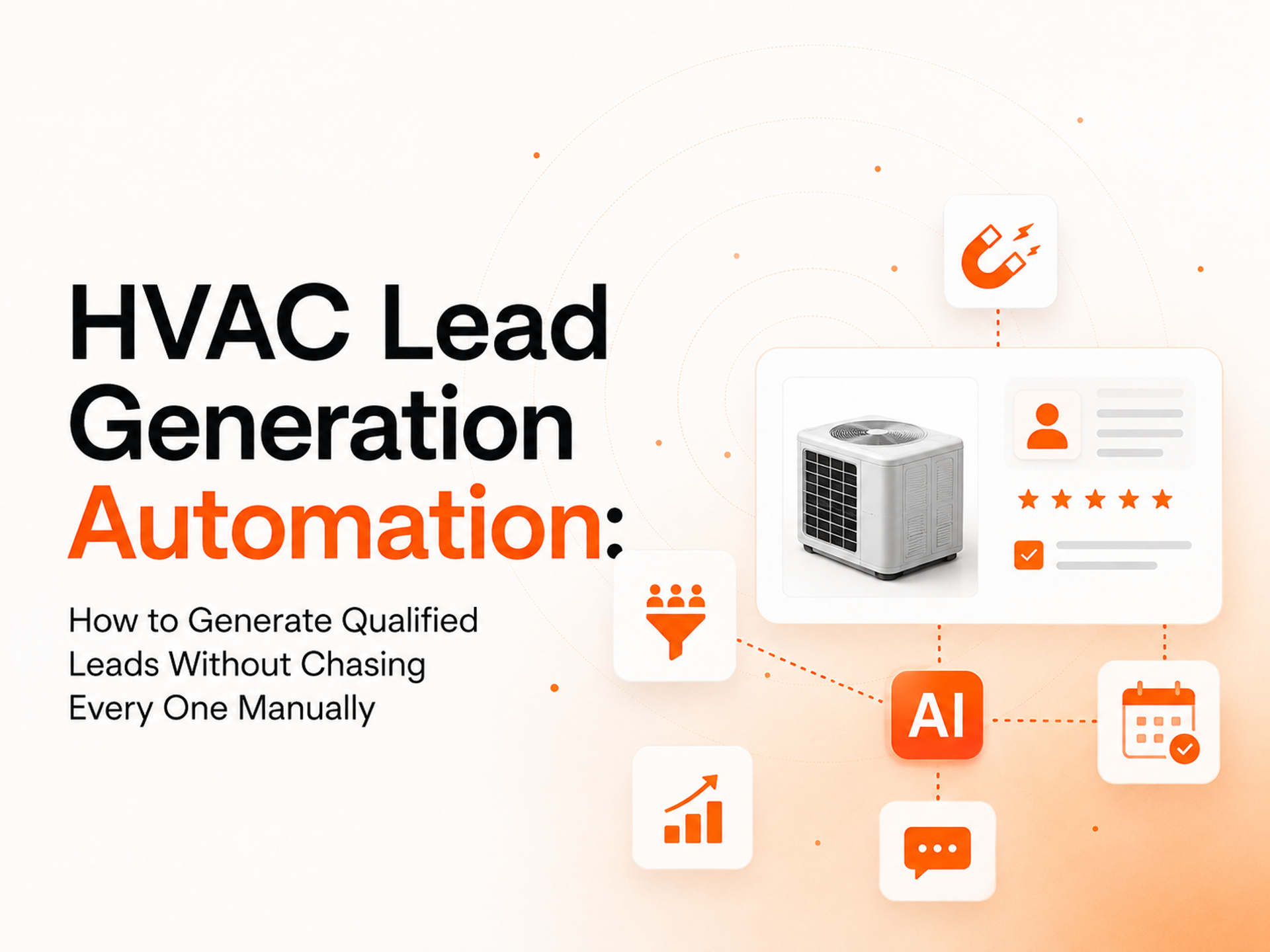
Generating HVAC leads isn't the problem for most contractors. The problem is what happens after they arrive and how many slip through while the team is busy running jobs.
A homeowner submits a form at 8 PM. Nobody responds until the next morning. They've already booked with whoever answered first. An estimate goes out on Tuesday. Nobody follows up by Friday. The homeowner signs with the company that checked in. A past customer's maintenance agreement lapsed six months ago. Nobody reached out. They found a new contractor on Google.
These aren't bad leads. They're leads that a manual process couldn't catch at the right moment. HVAC lead generation automation fixes this not by generating more leads, but by making sure the leads already coming in actually turn into booked jobs.
Table of Contents
What HVAC Lead Generation Automation Actually Means
The Five Channels That Generate the Most Qualified HVAC Leads
How Automation Captures Leads Before They Go Cold
The Complete HVAC Lead Generation Automation Stack
Residential vs Commercial: How the Approach Differs
What Qualified HVAC Lead Generation Actually Costs
How FatCamel AI Runs HVAC Lead Generation Automation
FAQ
References
What HVAC Lead Generation Automation Actually Means
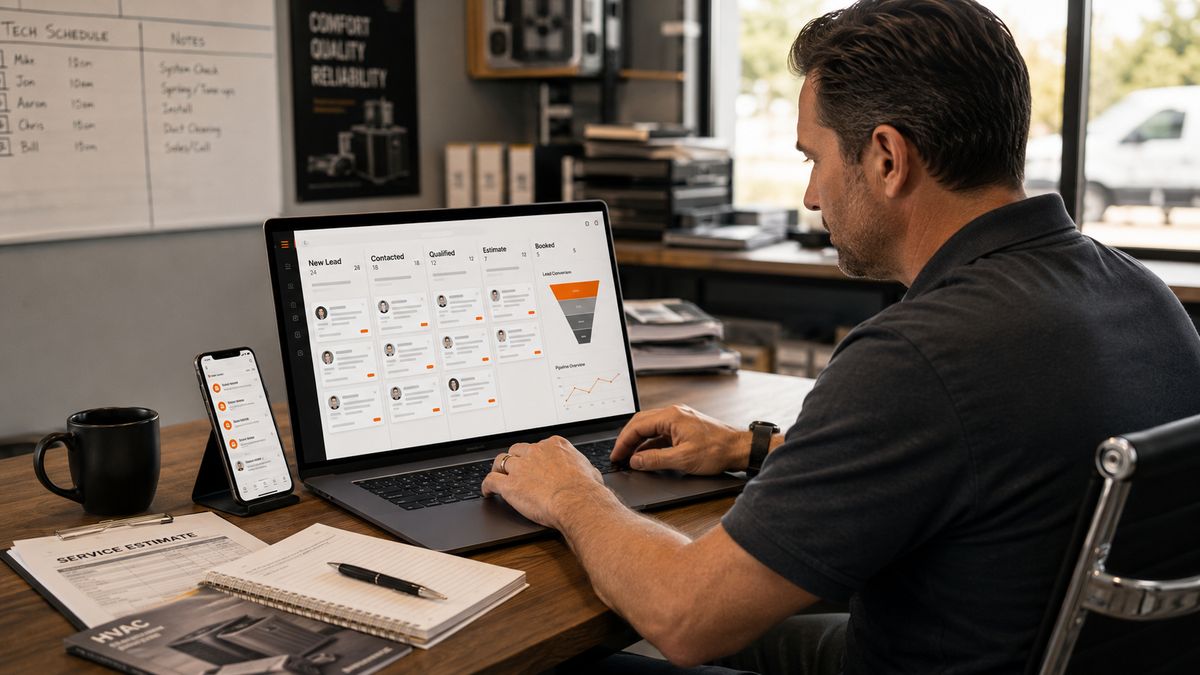
Lead generation automation in HVAC isn't a single tool. It's the combination of systems that handle lead capture, response, qualification, follow-up, and reactivation automatically, based on triggers from the CRM and the customer's own behavior without requiring a dispatcher or salesperson to initiate each step manually.
The distinction matters because most HVAC businesses already have some version of lead generation: Google ads, a website, maybe a few referral relationships. What they don't have is automation that makes those channels work consistently. When the team is managing 25 active jobs during peak season, manual follow-up on new leads simply doesn't happen. Estimates go unchased. Callbacks get delayed. Past customers drift.
Automation doesn't replace the human relationships that close HVAC jobs. It handles the parts of lead generation that are repetitive, time-sensitive, and too easy to drop so the team can focus on the conversations that actually require their attention.
The Five Channels That Generate the Most Qualified HVAC Leads
Not all lead sources are equal for HVAC. The channels that consistently deliver the most qualified, highest-converting leads specifically for contractors running residential and light commercial operations follow a clear pattern.
Google Local Services Ads sit at the top of search results for queries like "AC repair near me" and operate on a pay-per-lead model. The homeowner contacts the business through the listing, which means every lead is self-qualified they searched for the exact service and chose to reach out. LSA leads tend to have shorter decision cycles than form submissions because the homeowner is already in action mode. Response speed has an outsized impact here. Google's algorithm accounts for how quickly businesses respond when ranking LSA listings, so fast automated response doesn't just improve conversion it improves ad visibility.
Local SEO and the Google Maps pack generate organic traffic from homeowners actively searching for HVAC services in a specific area. These leads cost nothing once the rankings are established, which makes them the most cost-effective lead source over time. The three businesses in the local pack capture the majority of clicks for local HVAC searches. Getting there requires a well-maintained Google Business Profile, consistent business information across directories, and a steady flow of recent reviews all maintainable through automation.
Inbound website leads arrive through contact forms, chat widgets, and click-to-call buttons from organic and paid traffic. These leads vary in urgency and intent someone requesting an emergency repair quote is different from someone researching maintenance plans but all of them require an immediate response to convert at meaningful rates. A form submission that sits in an inbox overnight is a lead that's already been lost to whoever responded faster.
Referrals and repeat customers are the highest-trust lead source in HVAC and the one most businesses do the least to systematize. Past customers who had a good experience refer neighbors, family members, and colleagues. Trade partners real estate agents, plumbers, electricians, property managers encounter HVAC needs regularly and need someone to send them to. Referrals close faster and at higher rates than any other channel, but they require consistent follow-through to generate consistently. Automated post-job communication, review requests, and periodic re-engagement keep the business visible to past customers without requiring anyone to manually reach out.
Dormant CRM contacts are the most overlooked lead source in most HVAC businesses. Every company with any real operating history has a database of past customers, lapsed maintenance agreement holders, and unconverted enquiries that represent acquisition cost already paid. Reaching back out to these contacts with personalized, timely messages referencing the original service or equipment history generates bookings at effectively zero additional marketing cost.
Read More: Build an HVAC Lead Generation System That Works 24/7
How Automation Captures Leads Before They Go Cold
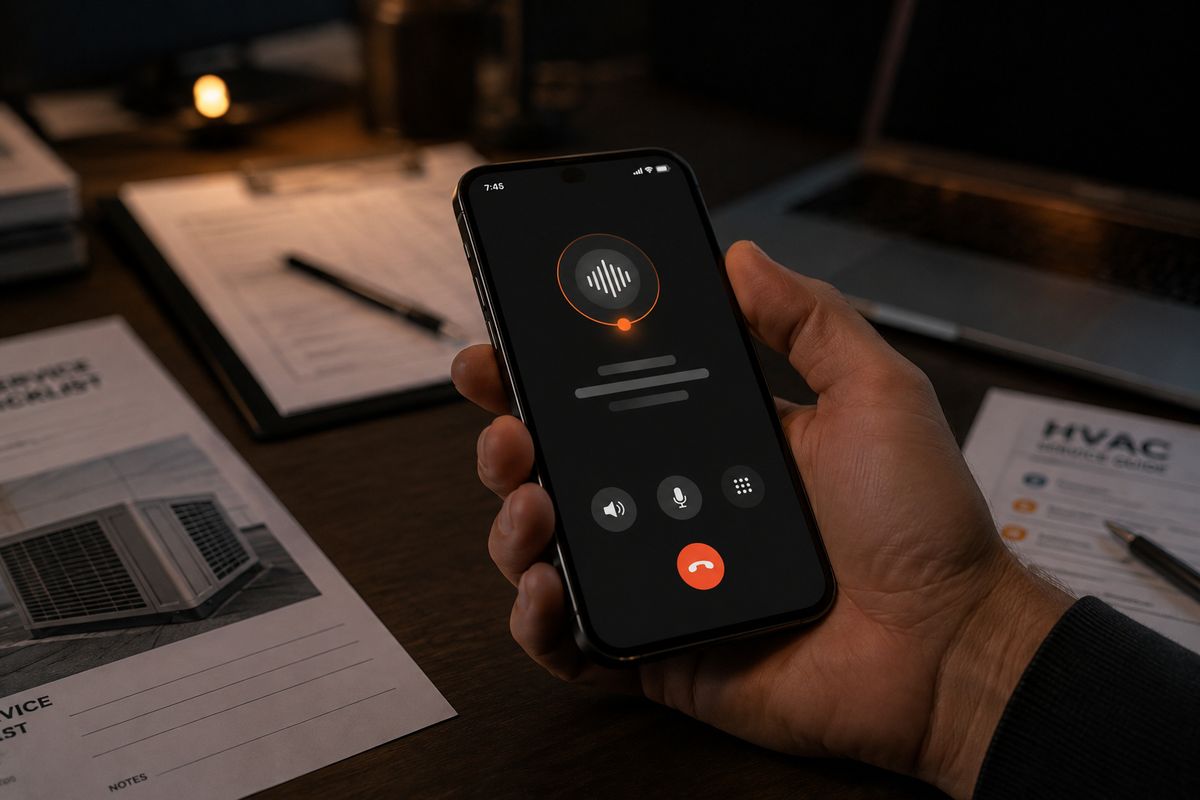
The moment a lead makes contact is the moment it's most likely to convert and also the moment most HVAC businesses are least equipped to respond, because that moment often happens at 9 PM on a Tuesday when the dispatcher is off and the owner is watching television.
Instant lead capture automation closes this gap across every channel simultaneously.
For phone calls, an AI voice agent answers immediately at any hour, for any call volume qualifies the caller's situation, and books the appointment in real time before the homeowner has a reason to call the next contractor. The job type, urgency, service address, and system details are captured during the call and logged to the CRM automatically.
For web form submissions, an automated SMS and email response goes out within 60 seconds of submission acknowledging the inquiry, referencing the specific service requested, and providing a direct booking link. The homeowner who submitted the form while watching TV gets an immediate response rather than a next-day callback from someone who saw the notification after their morning coffee.
For missed calls, an automated text-back goes out immediately before the caller has finished deciding who to try next. Something as simple as "Hi, this is [Company]. Sorry we missed your call here's a link to book directly or reply to this message and we'll get right back to you" keeps the lead in play rather than letting it disappear to voicemail.
The difference this makes is significant. Leads contacted within five minutes of making initial contact convert at dramatically higher rates than leads contacted hours later, per research consistently cited across service industry studies. For HVAC specifically where homeowners often contact three or four companies simultaneously speed is frequently the entire decision. The first company to provide a useful, organized response often gets the job before any comparison has happened.
The Complete HVAC Lead Generation Automation Stack
A complete HVAC lead generation automation system covers five distinct layers, each one addressing a specific point in the lead lifecycle where manual processes consistently break down.
Layer 1 - Lead capture and instant response. Every channel phone, web form, missed call, social DM triggers an immediate automated response. No lead sits unanswered because nobody happened to be available at the moment it arrived.
Layer 2 - Qualification and routing. The initial automated interaction gathers the relevant information job type, urgency, system details, service address and routes accordingly. Emergency calls get flagged immediately. Commercial inquiries enter the commercial workflow. Routine maintenance goes to standard booking. All of this happens before any dispatcher time is spent.
Layer 3 - Multi-touch follow-up sequences. Leads that don't book on the first interaction enter an automated follow-up sequence running across SMS and email on a fixed schedule day one, day three, day seven, day fourteen. Each message references the specific service the lead enquired about. The sequence stops automatically when the lead books or responds. Whether the team is managing a heat wave or a slow week doesn't affect whether the follow-up goes out.
Layer 4 - Estimate follow-up. When an estimate is sent, an automated follow-up sequence starts immediately. Day three: a check-in asking if there are questions about the scope. Day seven: a message adding context about what's included. Day fourteen: a low-pressure message that makes re-engagement easy. Structured estimate follow-up consistently improves acceptance rates and it runs without any estimator manually tracking each outstanding quote.
Layer 5 - Dormant lead and customer reactivation. Contacts that have been inactive for a defined period typically 90 days for unconverted leads, 12 months for past customers receive personalized reactivation messages referencing their original inquiry or service history. This layer generates revenue from the CRM database that's already built without any additional marketing spend.
Read More: AI Receptionists vs Chatbots for HVAC Companies: Which One Actually Books More Jobs?
Residential vs Commercial: How the Approach Differs
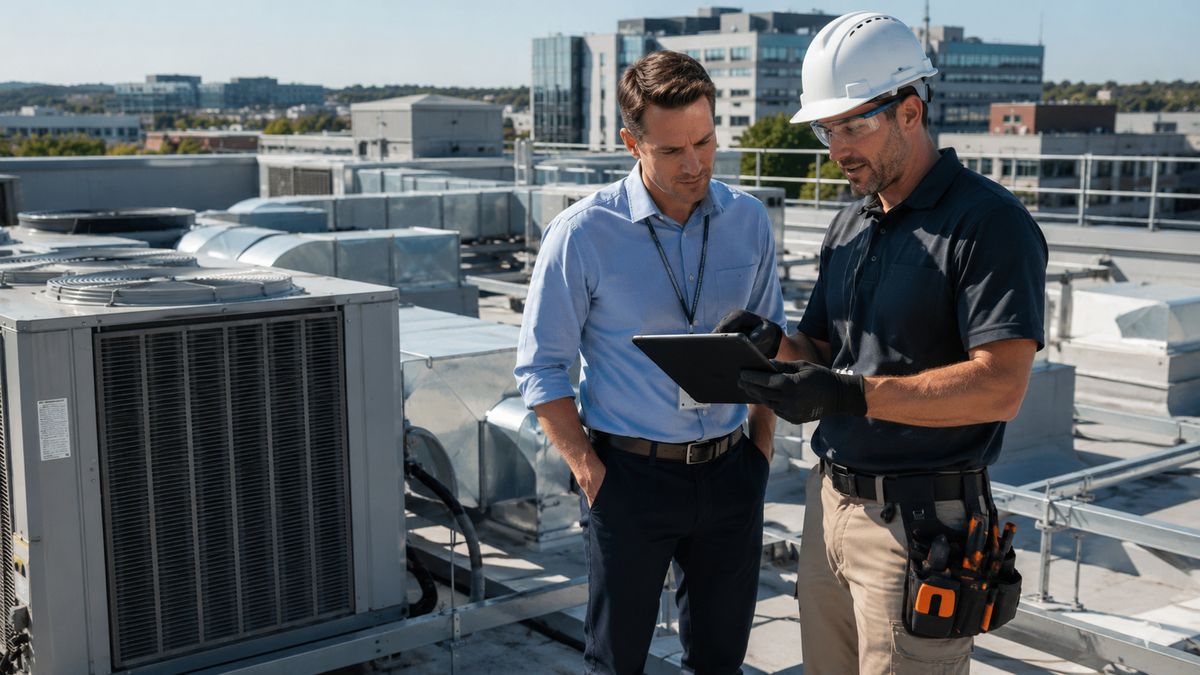
Residential and commercial HVAC lead generation share the same fundamental mechanics fast response, consistent follow-up, systematic reactivation but the timelines, decision processes, and outreach channels differ enough to require separate workflows.
Residential leads move quickly. A homeowner whose AC failed calls, gets a response, schedules a visit, receives an estimate, and makes a decision often within a week for emergency repairs, two to three weeks for system replacements. The automation that works here is speed-focused: instant call answering, same-day follow-up, estimate sequences that run daily in the first week.
Commercial leads move slowly. A facility manager evaluating HVAC contractors for a multi-building maintenance contract involves multiple stakeholders, formal budget approval processes, and decision timelines that stretch across weeks or months. The automation that works here is patience-focused: multi-week email nurture sequences, periodic check-ins that add value rather than just asking for a decision, and commercial outreach sequences that build familiarity over time before asking for a meeting.
The commercial channel that most residential HVAC contractors underutilize is proactive outreach to facility managers, property management companies, and commercial real estate operators. These decision-makers don't typically find HVAC contractors through the same channels homeowners use. They hire through professional relationships and referrals developed over time. An automated commercial outreach sequence targeted emails to defined lists of commercial property decision-makers, sent on a set cadence over several weeks builds that familiarity without requiring a dedicated business development hire.
What Qualified HVAC Lead Generation Actually Costs
Understanding what lead generation actually costs across different channels is what determines where to invest and what to cut.
Purchased leads from traditional vendors average $40 to $75 per lead, per HomeAdvisor and similar platforms. The conversion rate on purchased leads is typically 8% or below, per Contractor Magazine benchmarks. At $50 per lead and 8% conversion, the cost per qualified opportunity is $625. At a 30% close rate from qualified opportunity to completed job, that's over $2,000 in marketing cost per booked job before factoring in the dispatcher time spent working through dead-end leads.
Google LSA leads convert at significantly higher rates because the homeowner self-qualified through the search they're in-market and chose to reach out. Depending on the market and service type, LSA cost per booked job typically runs 150 to 500 dollars.
Local SEO and organic search have essentially zero cost per lead once rankings are established the marketing investment is in building and maintaining the foundation, not in paying for each lead generated. Over time, this is the lowest-cost lead source available to HVAC businesses.
Dormant CRM reactivation and referral programs produce leads at the lowest cost of any channel, because the acquisition cost is already paid. Reaching back out to a past customer who had a good experience, or asking a satisfied customer for a referral, costs nothing but the automated message that initiates it.
The practical conclusion is that HVAC businesses generating leads through purchased lists or broad advertising while neglecting local SEO, review generation, and CRM reactivation are paying 10 to 20 times more per lead than necessary for leads that convert at lower rates than the channels they're ignoring.
Read More: Best HVAC Marketing Strategies to Generate More Leads (That Actually Work in 2026)
How FatCamel AI Runs HVAC Lead Generation Automation
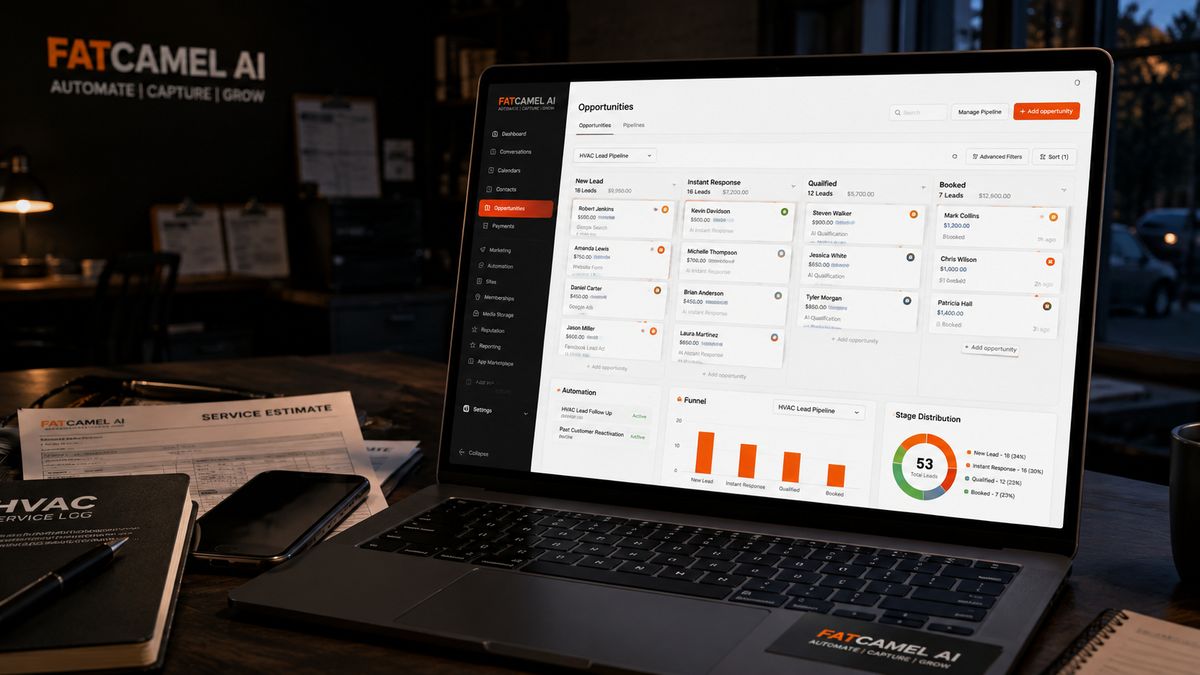
FatCamel AI builds and operates the complete HVAC lead generation automation stack not as a collection of separate tools that each handle one piece, but as a connected system where every layer shares data and each stage's output feeds the next.
RealtorVoiceAI handles the capture and instant response layer. Every inbound call gets answered immediately at any hour. The qualification conversation happens automatically. The appointment books directly into the scheduling system. The CRM record is created before anyone on the team has seen the lead.
The Lead Activation Engine handles the follow-up, estimate chasing, and reactivation layers. Multi-touch follow-up sequences run across every active lead simultaneously. Estimate follow-up triggers automatically when an estimate status updates. Dormant contacts enter reactivation campaigns based on inactivity thresholds, with messages personalized using the actual service history from the CRM.
CRM Automation ensures every interaction every call, every message, every job outcome is logged in real time without manual entry. The pipeline the team sees in the morning reflects what actually happened overnight, not what someone remembered to update before leaving.
For commercial lead generation, FatCamel AI's outreach automation builds and runs targeted email sequences to commercial property decision-makers facility managers, property management companies, commercial real estate operators on a set cadence, with responses escalated to the sales team with full conversation history attached.
The result is a lead generation system that works at the same level of consistency during a July heat wave as it does on a slow Tuesday in February. Not because everything goes perfectly but because the process doesn't depend on everything going perfectly to capture and convert leads.
👉 Get a Free AI Revenue Audit for Your HVAC Business at https://www.fatcamel.ai/contact
FAQ
1. What is HVAC lead generation automation?
HVAC lead generation automation is the combination of systems that handle lead capture, instant response, qualification, follow-up, estimate chasing, and customer reactivation automatically based on CRM data and customer behavior without requiring manual initiation from the dispatcher or sales team at each step. It covers every stage from the first contact through converted job and returning customer, running consistently regardless of how busy the team is.
2. Which channels generate the most qualified HVAC leads?
Google Local Services Ads and local organic search generate the highest-intent leads because the homeowner is actively searching for the specific service. LSA leads self-qualify through the search, while organic leads come from homeowners researching problems related to services the business offers. Referrals and repeat customers convert at the highest rates of any channel. Dormant CRM contacts are the most cost-effective source because the acquisition cost is already paid they just need to be systematically re-engaged.
3. Why do HVAC leads go cold before converting?
The most common causes are slow initial response and inconsistent follow-up. Homeowners searching for HVAC services often contact multiple businesses simultaneously, and the first to provide a useful, organized response typically gets the appointment. When a response takes hours or arrives the next business day, a significant portion of those leads have already booked elsewhere. After the initial response, most HVAC businesses deliver one or two follow-up touches before stopping far fewer than the five to eight typically needed to reach a buying decision.
4. How much does HVAC lead generation automation cost?
The cost varies by scope. A single AI voice agent for after-hours call capture typically runs 200 to 500 dollars per month for subscription-based tools, or 3,000 to 8,000 dollars for a custom build with direct CRM integration. A complete automation stack covering capture, follow-up, estimate chasing, and reactivation typically runs 15,000 to 40,000 dollars for a full implementation. Most businesses see positive ROI on the voice answering component within the first month through recovered after-hours calls.
5. How does residential HVAC lead generation differ from commercial?
Residential leads move quickly a homeowner with a failed system makes a decision within days. The automation that works here is speed-focused: instant call answering, same-day follow-up, rapid estimate sequences. Commercial leads move slowly a facility manager evaluating maintenance contracts involves multiple stakeholders and weeks or months of decision time. The automation that works here is patience-focused: multi-week nurture sequences, periodic value-adding check-ins, and proactive outreach sequences that build familiarity over time before requesting a meeting.
6. What results can HVAC businesses expect from lead generation automation?
The most immediate and measurable result is recovered after-hours call revenue calls that previously went to voicemail and were lost to competitors that answered. Beyond that, structured follow-up sequences improve overall conversion rates by ensuring every lead receives the contacts needed to reach a decision rather than going cold after one or two manual attempts. Dormant CRM reactivation generates revenue from the existing database at near-zero additional cost. The compounding effect of all three running simultaneously produces significantly higher revenue from the same marketing investment.
7. How does FatCamel AI generate qualified HVAC leads?
FatCamel AI runs the complete HVAC lead generation automation stack RealtorVoiceAI for instant call capture and booking, Lead Activation Engine for multi-touch follow-up, estimate chasing, and dormant reactivation, CRM Automation for real-time data logging, and commercial outreach sequences for B2B pipeline building. Every component connects to the existing field service CRM rather than replacing it, and every stage's output feeds the next so the lead that arrived at 11 PM on Friday is followed up on Tuesday, chased on Friday, and reactivated three months later if it didn't convert, all without anyone on the team initiating any of it.
References
https://payaca.com/us/blog/hvac-lead-generation
https://www.fieldpulse.com/resources/blog/hvac-lead-generation-strategies
https://www.convex.com/blog/the-modern-hvac-lead-generation-playbook-from-cold-lists-to-warm
https://www.webfx.com/blog/home-services/hvac-lead-generation-guide/
https://www.callrail.com/blog/missed-calls-stats
https://www.brightlocal.com/research/local-consumer-review-survey/
https://www.artifactaisolutions.com/blog/hvac-revenue-lost-from-missed-calls
https://www.fatcamel.ai/services/crm-automation