


When people first hear that n8n can be self-hosted, many ask a simple question:
“Does it cost money?”
The immediate answer most expect is “no,” since n8n’s core automation engine is open-source and free to install on your own server. However, the full answer is more than that, while the software itself does not incur direct costs, running n8n in a production context does entail real expenses, including servers, backups, maintenance, database hosting, security, and performance tuning.
In this guide, we’ll break down what you can realistically expect to spend when you choose to self-host n8n. We’ll also compare this with the official n8n Cloud pricing so you can decide which path makes sense for your business.
Read more here about Free LinkedIn Automation Tool
What “Self-Hosted n8n” Means
The n8n project provides a Community Edition that is free to use under its fair-code license. You can run it locally on your machine or on a server, and gain full access to unlimited workflows, executions, and users.
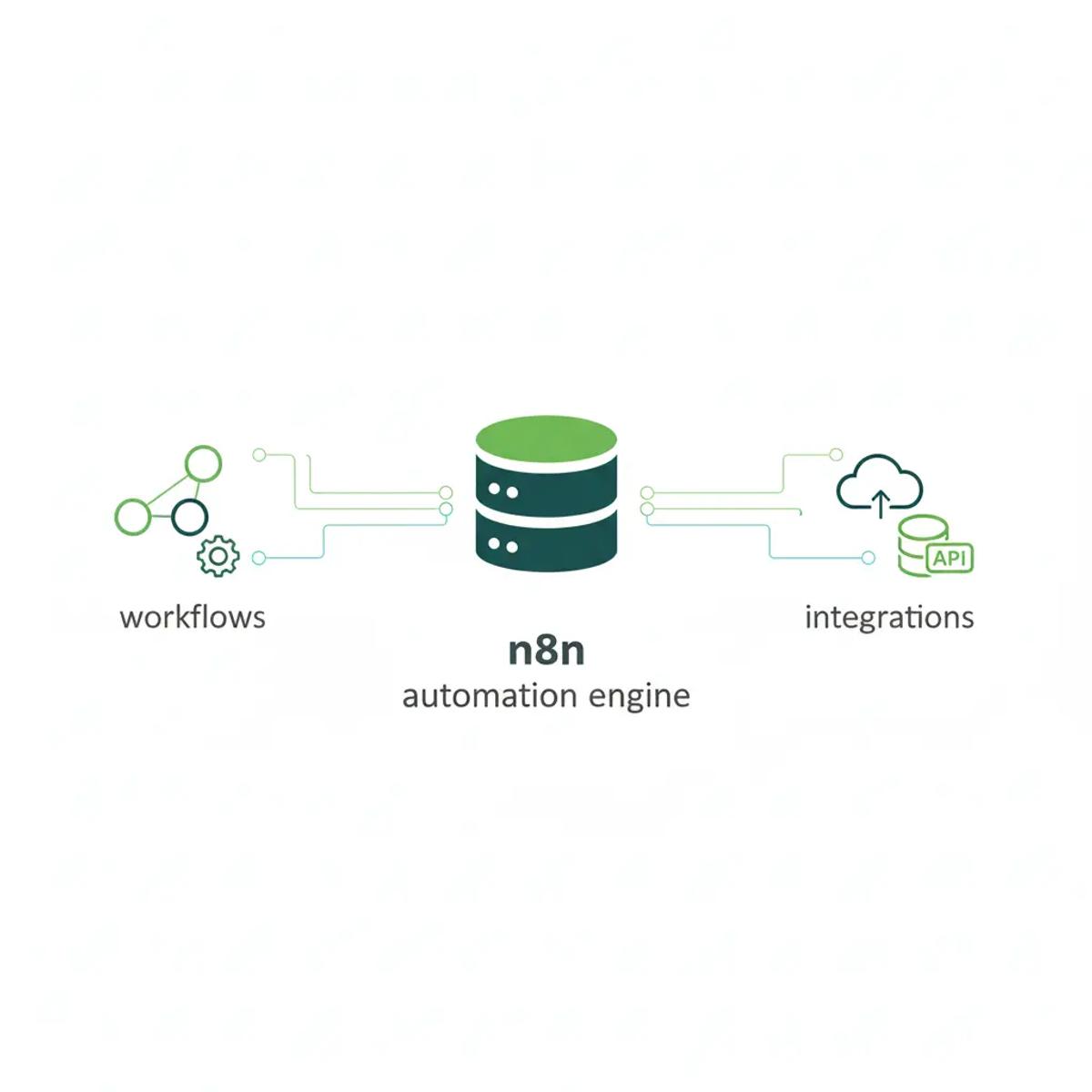
So the answer to “does it cost money?” is technically:
No, the software itself does not cost money if you install it on your own server.
But that is only one part of the picture.
You still need infrastructure, and infrastructure always costs something.
Where the “Free” Part Comes From and How Far It Goes
The core n8n application (the open-source engine) remains free forever if you decide to self-host. You can run unlimited workflows, steps, and users without paying n8n a single cent for licensing.
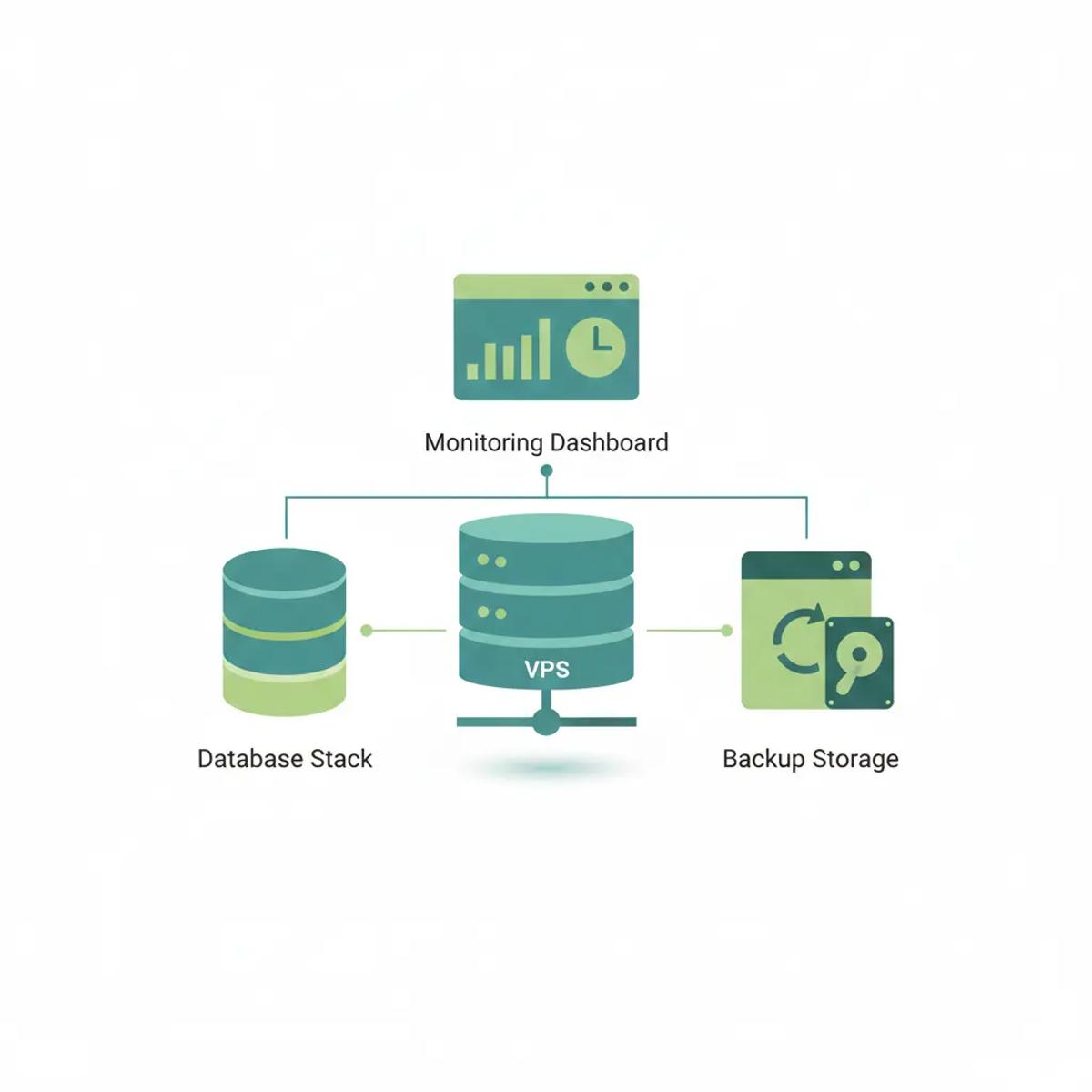
However, hosting means more than just the application:
Server / VPS Costs - Your server needs CPU, RAM, and storage that stay online.
Database Costs - n8n typically runs with a database (like PostgreSQL), which may be managed or self-hosted.
Backups & Monitoring - Keeping automation data safe requires backups; process uptime involves monitoring.
Security - SSL certificates, firewalls, and patching must be managed.
Maintenance & Updates - Self-hosting means you handle updates and troubleshooting.
So while it doesn’t cost money to install n8n locally, you still pay for the environment it runs in.
Read more here about n8n Cloud Plans
Typical Infrastructure Costs for Self-Hosting
Let’s break down the main categories of costs you’ll see in practice.
1. Virtual Private Server (VPS) Hosting
To run n8n reliably 24/7, most people host it on a VPS rather than a personal computer. There are many providers with affordable options.
Typical starting prices for a small VPS usable for n8n are:
$4.80–$6/month - Providers like UltaHost, DigitalOcean, or similar entry-level VPS plans.
$15/month - More powerful VPS with better RAM and storage.
$50/month or more - If you need increased performance, managed VPS, or production-level specs.
The exact cost depends on how many workflows you run, how complex they are, and how much memory/CPU you need.
Many users report that even a basic VPS for preliminary self-hosting is feasible at around $5–$10 per month if usage is modest.
Read more here about n8n Pricing in 2026
2. Database Hosting (PostgreSQL, Redis)
n8n typically relies on a database. If you use a managed database service, that adds cost:
- Managed PostgreSQL: $10–$25/month
- Redis for queue mode (optional): $5–$15/month
If you host both on the same VPS, the incremental cost may be absorbed into the VPS bill, but larger setups benefit from dedicated database services.
3. Backups, Monitoring, and Security
Keeping your automation system safe and reliable also costs money:
- Backup services: $5–$10/month
- Monitoring tools: $5–$15/month
- Paid SSL certificates (optional): up to $10/month
Many people use free certificates (Let’s Encrypt) to reduce this cost.
4. Data Transfer / Network Costs
Some cloud providers charge for bandwidth or data transfer. This is often modest (a few dollars per month) but worth accounting for in a production environment.
So What’s the RealCost ofn8n Self-Hosted?
Putting it all together, a basic self-hosted n8n stack typically costs:
$30–$100+ per month
This includes VPS, database, backups, and monitoring. If your setup is higher-performance, you may spend more.
Some setups with minimal usage can run for as little as $5–$20 per month (especially on lightweight cloud platforms), but these are typically used for testing or light workloads.
This range doesn’t include your time investment, which can be significant if you manage, update, and troubleshoot the system yourself.
Why Self-Hosting n8n Is Still Worth It for Many Teams
A few things make self-hosting attractive despite these costs:
- Unlimited executions - No artificial billing based on how many times workflows run.
- Full control over data - Your data never leaves your infrastructure.
- No execution caps - Unlike cloud plans that charge by executions, self-hosting lets you scale based on resource availability.
However, self-hosting also means you handle everything from patching to uptime monitoring, which is a real cost in time and effort.
Maintenance: The Cost That Doesn’t Show Up on Invoices
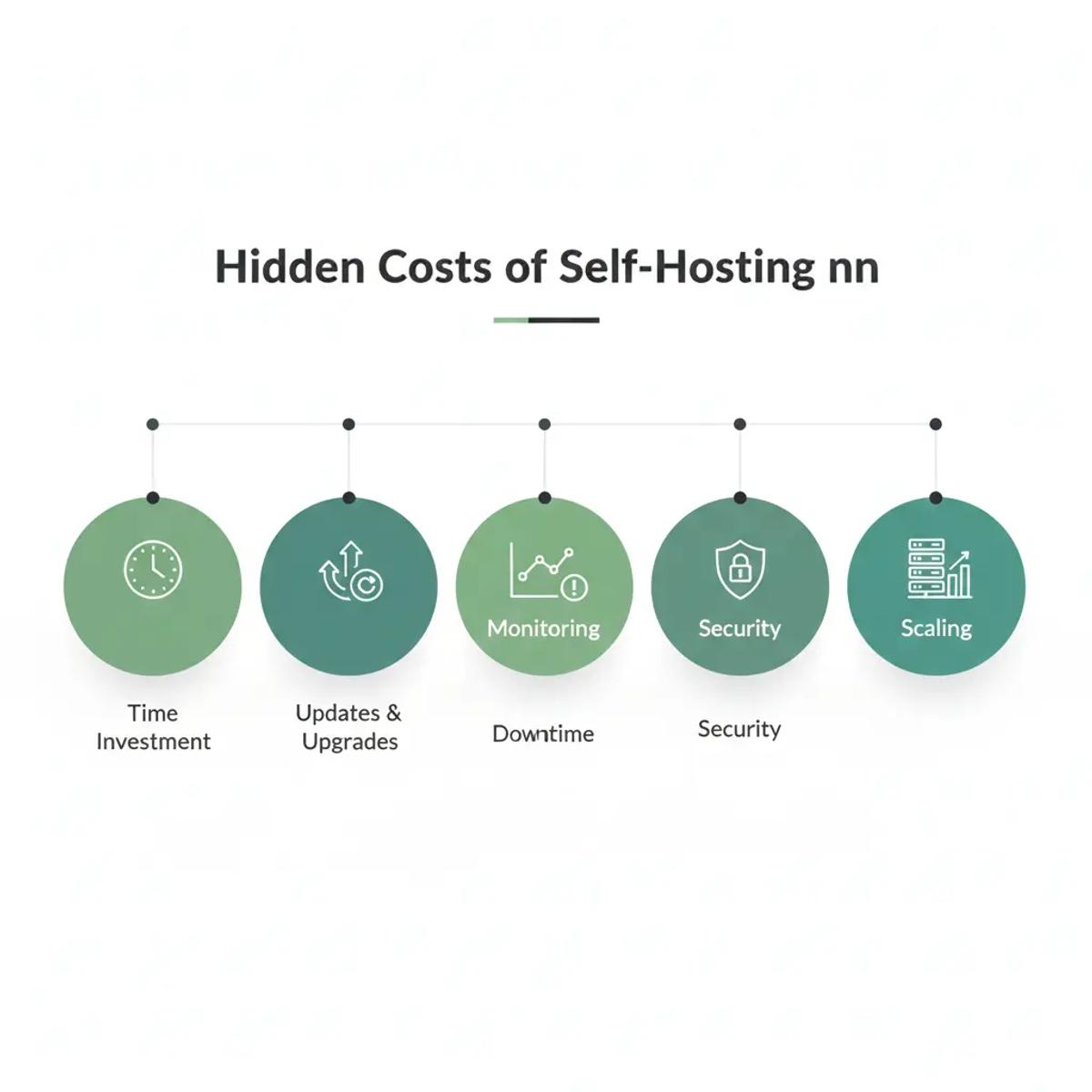
When people calculate the n8n self-hosted cost, they usually start with VPS pricing and stop there. That’s where the biggest mistake happens.
The most expensive part of self-hosting is rarely the server.
It’s maintenance.
Self-hosting means you are responsible for keeping n8n running smoothly day after day. That includes software updates, security patches, database health, disk usage, logs, and uptime.
None of these things is optional in a real production setup.
Updates and Version Management
n8n releases updates frequently. Some updates add features, some fix bugs, and some patch security issues.
When you self-host:
You must monitor new releases
Decide when to upgrade
Test workflows after upgrades
Roll back if something breaks.
Skipping updates is risky. Updating too fast can also cause issues. Either way, time is spent.
That time has a cost, even if no money leaves your bank account.
Downtime Is Also a Cost
With n8n Cloud, uptime is managed for you. With self-hosting, downtime is your problem.
Downtime can come from:
- Server crashes
- Disk space is filling up.
- Database corruption
- Failed updates
- Network issues
Even a short outage can break workflows, delay operations, or cause data loss.
If n8n is handling critical automation such as leads, follow-ups, or internal processes, downtime directly impacts the business.
This is an indirect but very real cost of self-hosting n8n.
The Ownership Cost
Every self-hosted setup needs an owner.
That might be:
- A founder
- A developer
- An ops engineer
- An external consultant
Whoever it is, they will spend time on:
- Monitoring the system
- Fixing issues
- Responding to alerts
- Planning upgrades
Even if this takes only a few hours a month, those hours have value. For many businesses, that time is more expensive than the VPS itself.
This is why the n8n cost self-hosted calculation is incomplete without considering human effort.
Read more here about Free WhatsApp Automation Using n8n
Scaling: Where Costs Quietly Increase
Self-hosting feels cheap at the beginning. Problems usually appear when automation grows.
As workflows increase:
- CPU usage goes up
- Memory usage increases
- Database size grows
- Logs consume disk space.
At some point, the original VPS is no longer enough.
Scaling usually means:
- Upgrading to a larger VPS
- Moving databases to managed services
- Adding Redis for queue mode
- Splitting workloads across services
Each step increases cost and complexity.
This doesn’t mean self-hosting is bad. It means cost grows in steps, not gradually, which can surprise teams that planned only for the early stage.
Security: Cheap to Ignore, Expensive to Fix
Security is another hidden cost.
Self-hosting n8n responsibly requires:
- HTTPS and SSL certificates
- Firewall rules
- Credential security
- Regular patching
You can cut corners here, but that usually comes at a higher cost later.
A security issue doesn’t just cost money. It costs trust, time, and peace of mind.
Backups: The Cost You’ll Be Glad You Paid
Backups often seem optional, until they’re not.
Good backups require:
- Storage space
- Automation
- Regular testing
Many teams only realise the importance of backups after data is lost.
Even a simple backup setup adds a small but recurring cost. Still, it’s far cheaper than rebuilding broken workflows from scratch.
Local Hosting vs VPS: Is Running n8n Locally Really Free?
This brings us back to a common question:
Does it cost money to run n8n locally?
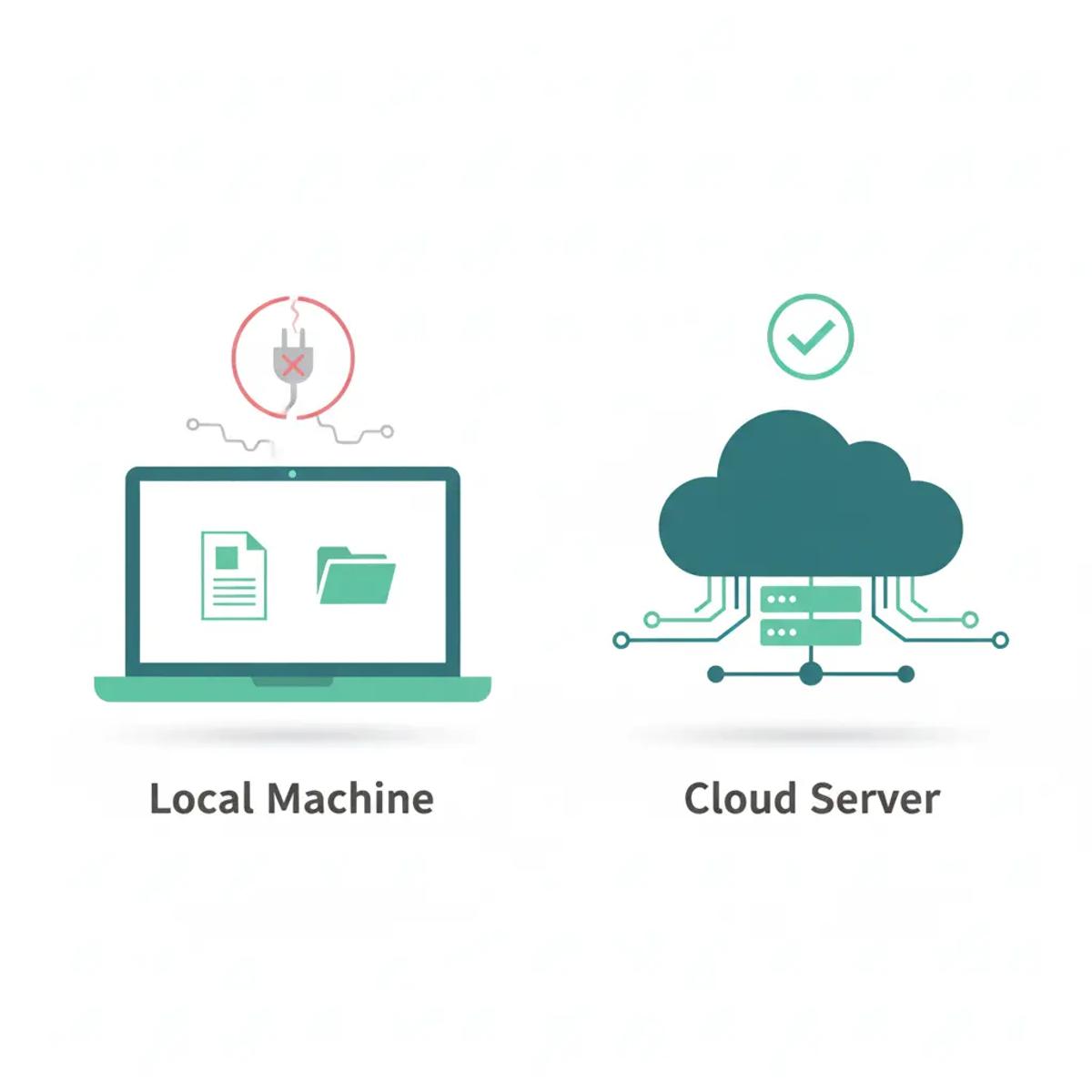
Technically, no. You can run n8n on your laptop for free.
But locally hosted n8n:
- Stops when your system shuts down
- Isn’t reliable for production
- Has no redundancy
- Isn’t accessible to teams easily
Local hosting is great for learning and testing. It is not a realistic production option for most businesses.
The moment reliability matters, local hosting turns into VPS hosting, and costs return.
When Self-Hosting Makes Financial Sense
Despite these hidden costs, self-hosting is often the better option when:
Workflow execution volume is very high
Cloud execution limits become restrictive.
Data control is critical.
You have technical ownership available.
In these cases, the n8n self-hosted cost is usually lower in the long run, even if it feels heavier operationally.
Read more here about Free Telegram Automation Using n8n
A Simple Way to Think About the Trade-Off
Instead of comparing numbers alone, it helps to ask one simple question:
Do we want to pay with money, or do we want to pay with effort?
n8n Cloud is paying with money.
Self-hosted n8n is paying with effort.
Cloud reduces mental load. Self-hosting increases control.
If your team is small and focused on growth, Cloud often feels lighter. If your team is technical and automation-heavy, self-hosting often feels empowering.
When n8n Cloud Is Usually the Better Choice
n8n Cloud tends to make more sense when:
You don’t want to manage servers or infrastructure
Automation is important, but not your core product.
You want predictable monthly costs.
You don’t have someone dedicated to system maintenance.
You value reliability and uptime over fine-grained control.
For many startups and growing teams, the Cloud plans are a reasonable trade-off. Even if the monthly bill is higher than a basic VPS, the time saved on maintenance often justifies the cost.
This is especially true when automation is still evolving, and workflows change frequently.
When Self-Hosting n8n Is Usually the Better Choice.
Self-hosting usually makes more sense when:
- Execution volume is very high
- Cloud execution limits become restrictive or expensive.
- You need full control over data and security.
- You already have DevOps or engineering capacity.
- Automation is core to how your business operates.
In these cases, the n8n self-hosted cost is often lower over time, even after accounting for infrastructure and maintenance.
Self-hosting shines when automation becomes infrastructure rather than a tool.
The Breakpoint Most Teams Eventually Reach
Many teams start on n8n Cloud and move to self-hosted later. This is not a failure or a mistake. It’s a natural progression.
Early on, speed and simplicity matter more than optimization. Cloud helps you move fast.
Later, when workflows stabilize and execution volume grows, predictability and control matter more. Self-hosting becomes attractive.
The important thing is knowing that you can switch. n8n does not lock you into one model forever.
Answering the Big Question Clearly
Let’s answer the core question directly.
Does it cost money to run n8n locally?
The software itself is free.
Running it reliably is not.
If you run n8n locally on your laptop, you pay nothing, but you also get no reliability, no uptime guarantees, and no scalability. That setup is fine for learning and testing.
The moment you want n8n to run continuously for a real business, you will spend money on servers, storage, backups, and maintenance.
So yes, n8n cost for self-hosted is real, even if it doesn’t look like a traditional subscription.
The Costs People Regret Ignoring
Looking back, most teams that struggle with self-hosting didn’t fail due to a lack of money. They failed because they underestimated responsibility.
They ignored:
Update management
Monitoring
Backup testing
Scaling planning
These aren’t technical details. They’re operational realities.
Self-hosting works best when treated as a system, not a side project.
Choosing Based on Your Current Reality
Instead of asking “Which option is best?”, a better question is:
Which option fits us right now?
If your reality is speed, experimentation, and limited technical bandwidth, Cloud is often the right answer.
If your reality is scale, stability, and long-term automation maturity, self-hosting may be the better fit.
What matters most is choosing consciously, not accidentally.
Final Thoughts
The real cost of self-hosting n8n is not limited to VPS bills or database charges. It also includes the ongoing responsibility of keeping the system healthy, secure, and running without interruptions. For some teams, this level of control feels empowering. For others, it becomes a distraction that pulls focus away from core business work. This is where n8n’s flexibility stands out. It gives you the freedom to choose how much responsibility you want to take on. Self-hosting n8n is not free, but it can be a smart option if you have the technical setup and time to manage it properly. It offers full control and flexibility, but requires consistent effort. On the other hand, n8n Cloud is not expensive simply because it charges a monthly fee. It provides simplicity, reliability, and peace of mind by handling infrastructure and maintenance for you. With Cloud, you trade some control for convenience. With self-hosting, you trade convenience for flexibility. The right choice depends on your team, your workload, and your priorities. What matters most is choosing the model that allows your automation to support your business and helps your team focus on what truly matters.
FAQs: n8n Self-Hosting Cost
1. Does it cost money to run n8n locally?
Running n8n on your local machine is free, but it is only suitable for learning or testing. For real business use, you need a server, backups, and monitoring, which do cost money.
2. What is the real n8n self-hosting cost per month?
The cost depends on your setup. A basic self-hosted n8n setup usually costs between $30 and $100 per month, including VPS, database, backups, and monitoring. Larger or high-traffic setups may incur higher costs.
3. Is self-hosting n8n cheaper than n8n Cloud?
Self-hosting can be more cost-effective in the long run if you have high execution volume and technical ownership. n8n Cloud is often cheaper early on because it saves time, effort, and maintenance work.
4. What hidden costs should I consider when self-hosting n8n?
Hidden costs include time spent on updates, resolving issues, monitoring uptime, managing backups, addressing security concerns, and scaling infrastructure as usage increases.
5. Do I need technical knowledge to self-host n8n?
Yes. Self-hosting n8n requires basic to intermediate technical skills or access to someone who can manage servers, updates, and troubleshooting.
6. Can I start with n8n Cloud and move to self-hosted later?
Yes. Many teams start with n8n Cloud for simplicity and move to self-hosting later when their automation volume grows, and they want more control.
7. Is self-hosting n8n safe for production use?
It can be safe if set up properly with adequate security, regular backups, and effective monitoring. Without these, self-hosted setups can be risky for business-critical workflows.