
Almost every painting business has a social media presence. An Instagram account with before-and-after photos. A Facebook page with sporadic posts. Maybe a few reels that took two hours to film and edit, and got forty-seven views.
The effort goes in. The results do not come back.
And yet the advice from every marketing guru is the same: post more, be consistent, engage with your audience, grow your following. So, painting business owners keep posting. Keep filming. Keep hoping that the next piece of content will be the one that finally brings in real commercial jobs.
It rarely does.
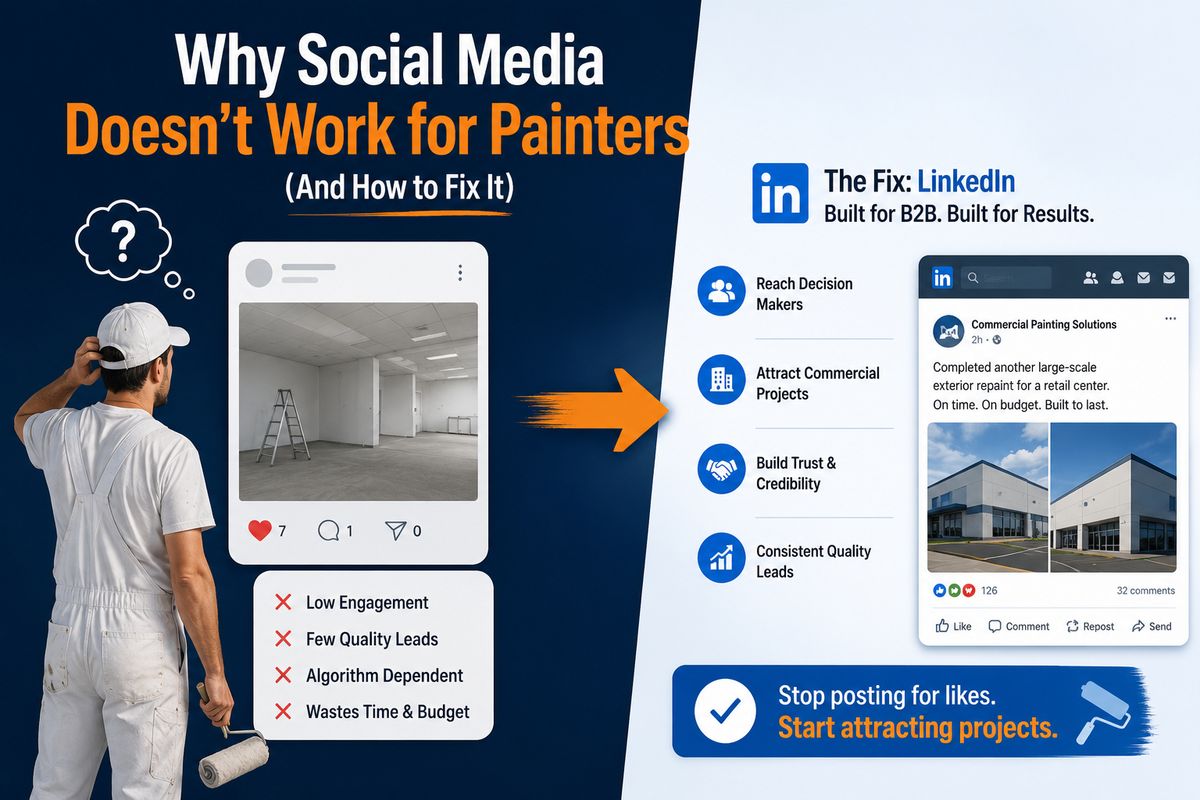
The problem is not that social media does not work. The problem is that the platforms most painters are spending their time on are built for the wrong audience. Instagram and Facebook are consumer platforms. They are built for reaching homeowners browsing on their phones in the evening. They are not built to reach property managers, facility directors, and commercial real estate decision-makers during their workday.
There is a platform built for exactly that audience. Most painters are not on it. And in 2026, the ones who get there first will have a significant and lasting advantage over every competitor who is still posting reels and waiting for likes.
That platform is LinkedIn. And this guide explains why it changes everything for painting businesses willing to make the shift.
Table of Contents
Why Social Media Feels Like a Waste of Time for Painters
The Platform Mismatch Problem
What Instagram and Facebook Actually Deliver for Painters
Why LinkedIn Is Different
Who Is Already on LinkedIn Waiting to Hire You
Why 2026 Is the Year to Move First
How to Build a LinkedIn Presence That Generates Commercial Leads
AI Automation: The Reason LinkedIn Became Scalable in 2026
How FatCamel AI Makes LinkedIn Work for Painting Businesses
Making the Shift: What to Do This Week
FAQ
References
Why Social Media Feels Like a Waste of Time for Painters
If you have ever spent a weekend putting together content for Instagram and gotten nothing back, you are not alone. Painting business owners across the industry report the same experience. Time invested, energy spent, results missing.
The frustration usually leads to one of two conclusions. Either the content is not good enough, and you need to try harder, or social media simply does not work for trades businesses, and you should stop wasting time on it.
Both conclusions miss the real problem.
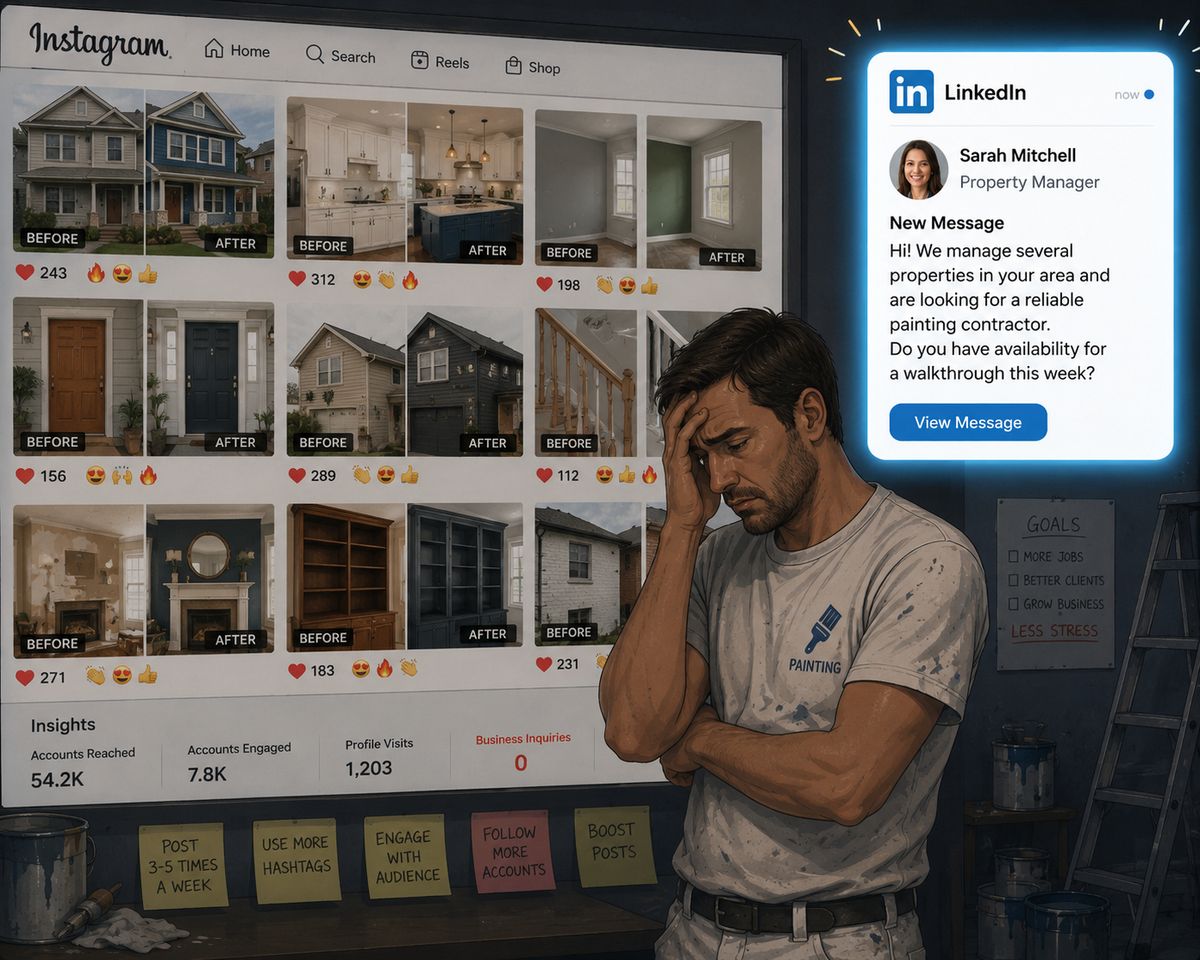
The real problem is not your content quality, and it is not that social media is ineffective for contractors. The real problem is that you are showing up in the wrong room. You are spending hours creating content for a platform full of people who either are not your clients or are not in a position to make a buying decision when they see your post.
Think about who actually sees your Instagram content. Friends, family, past clients, other painters, and a rotating set of strangers the algorithm serves your posts to based on engagement signals. Of that entire audience, what percentage are property managers with a commercial painting budget to spend? A fraction of a fraction.
You are not failing at social media. You are succeeding at reaching the wrong people.
The Platform Mismatch Problem
Every social media platform is built around a specific audience and a specific behavior. Understanding this is the key to understanding why most painters are wasting their time on the wrong channels.
Instagram is built for visual discovery and consumer entertainment. Its algorithm rewards content that generates rapid engagement: likes, saves, shares, and comments. The audience is primarily consumers browsing for inspiration, entertainment, and products. A painting business can build a following on Instagram. The following will be mostly homeowners, design enthusiasts, other painters, and curious scrollers. The conversion rate to commercial contracts is close to zero because that audience does not contain commercial buyers in any meaningful volume.
Facebook is built for community and consumer connection. Its organic reach has declined dramatically over the past several years. Without paid advertising, a painting business's Facebook page reaches almost no one outside of existing followers. With paid advertising, it reaches a broader consumer audience, but again, the commercial decision maker is not the primary Facebook user profile.
TikTok is built for viral short-form entertainment. It can generate enormous reach for the right content, but the audience is skewed young, and the platform is built around entertainment consumption, not professional vendor discovery. A painting business going viral on TikTok generates attention, not commercial contracts.
LinkedIn is built for professional networking and B2B connections. Its audience is working professionals, business owners, and decision makers who are on the platform specifically in a professional capacity. They are thinking about their businesses, their vendors, and their operational challenges when they use it. This is a fundamentally different mindset from someone scrolling Instagram for entertainment.
The platform mismatch problem is simple: most painters are investing their social media time on consumer platforms while their best potential clients are spending their professional time on a B2B platform that almost no painter is using.
Read More: How AI Can Eliminate Manual Work in Painting Businesses
What Instagram and Facebook Actually Deliver for Painters
This is not an argument to abandon Instagram and Facebook entirely. They have a role. But it is important to be clear about what that role actually is, so you stop expecting them to deliver something they are not designed for.
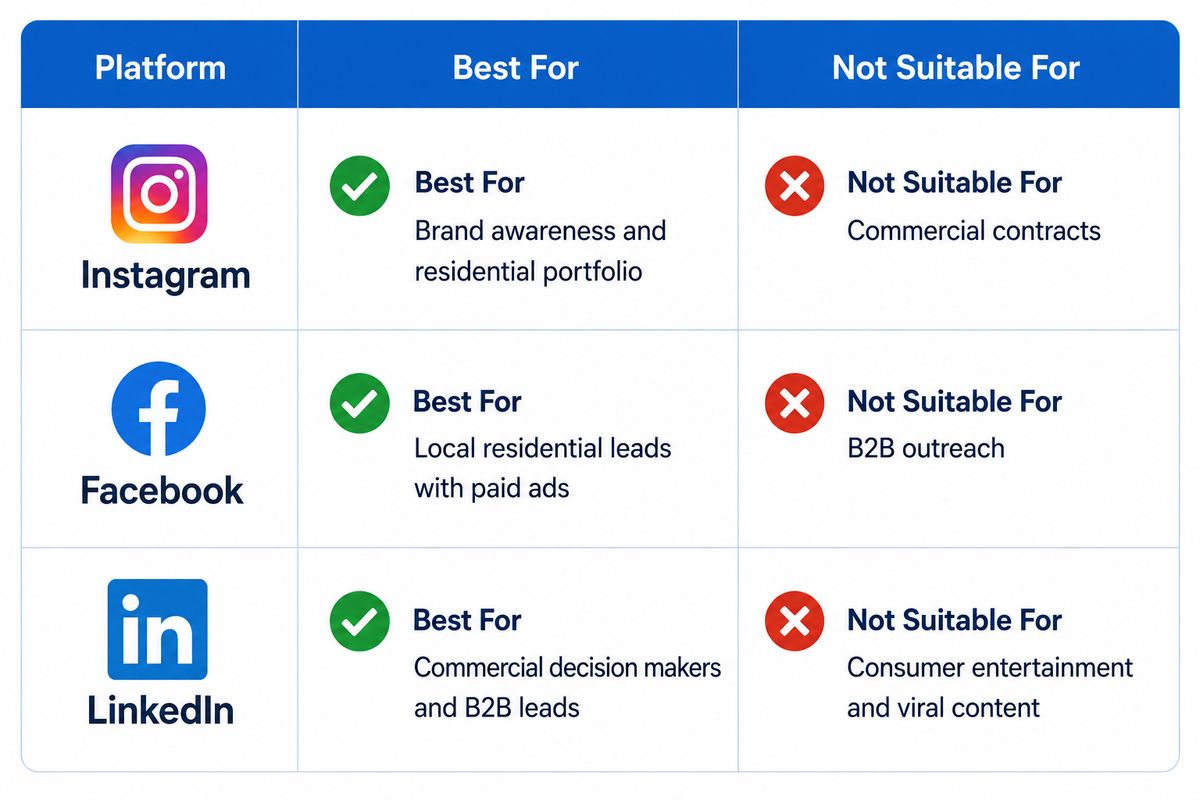
What Instagram can realistically deliver for a painting business:
Brand awareness among homeowners in your local area. A portfolio that supports the sales process when a residential prospect looks you up after a referral. Recruitment visibility for painters looking for work. Community presence that supports word-of-mouth referrals.
What Instagram cannot reliably deliver for a painting business:
Commercial painting contracts. Property manager leads. Facility director inquiries. Large-scale B2B painting opportunities. Consistent, predictable pipeline of high-value commercial work.
What Facebook can realistically deliver:
Local community presence. Residential homeowner leads through paid advertising if you are willing to spend. Customer reviews and social proof.
What Facebook cannot reliably deliver:
Commercial decision makers. B2B outreach that converts. Professional credibility with property management companies, real estate firms, or corporate facility teams.
Knowing what each platform actually delivers lets you use each one appropriately rather than pouring time and energy into expecting outcomes the platform is not built to produce.
Read More: How to Build a Commercial Lead Generation System for Your Painting Business
Why LinkedIn Is Different?
LinkedIn operates on a completely different model from every other social media platform, and that difference matters enormously for painting businesses targeting commercial clients.
On Instagram, people are in entertainment mode. They are scrolling to relax, be inspired, or pass the time. Buying decisions are not on their mind.
On LinkedIn, people are in professional mode. They are thinking about their work, their business problems, and the vendors and partners who can help them solve those problems. When a property manager opens LinkedIn during their working day, they are in a completely different mental state than when they open Instagram in the evening.
This professional mindset is what makes LinkedIn outreach convert. A message that would feel intrusive on Instagram feels relevant and professional on LinkedIn because both parties are there for professional reasons.
LinkedIn also has a structural advantage that no other platform offers for B2B outreach: searchable professional profiles with job titles, company names, and career history all publicly available. You can find every property manager in your city, every facility director at a hospital network, every asset manager at a commercial real estate firm, and reach out to them directly. No other platform gives you that level of targeted access to commercial decision makers.
And unlike paid advertising, where you pay for every impression, LinkedIn lets you build a network of commercial decision makers that stays in your sphere permanently. A connection made today is reachable next year when they have a new project, without paying for the access again.
Who Is Already on LinkedIn Waiting to Hire You
The commercial painting clients you want are already on LinkedIn. They are active, they are reachable, and they are not being approached by your competitors because almost no painting businesses are on the platform.
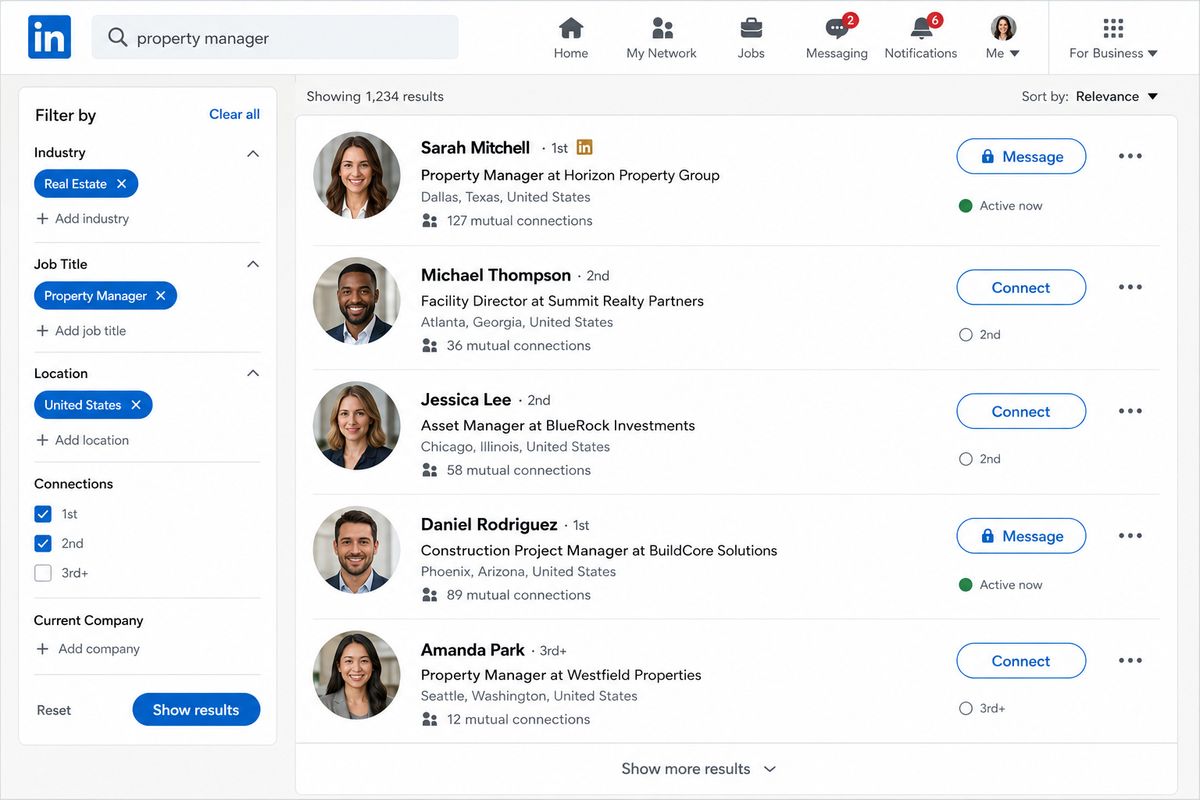
Here is who you will find there:
Property Managers who oversee portfolios of commercial buildings, office towers, retail spaces, and residential apartment complexes. Painting is a recurring maintenance expense for every building they manage.
Facility Managers at hospitals, schools, corporate campuses, government buildings, and large retail chains. They manage vendor relationships across all trades and have painting budgets built into their annual maintenance plans.
Commercial Real Estate Asset Managers who manage building portfolios on behalf of investors. Property condition and curb appeal directly affect asset value, which means painting is always on their radar.
Construction Project Managers who oversee commercial fit-outs, renovations, and new builds. They need painting subcontractors on every project.
Hotel and Hospitality Operations Directors who manage the appearance of properties that compete on guest experience. Regular repainting of common areas, rooms, and exteriors is a standard operational requirement.
Retail Operations Managers at chain retailers who maintain branded store environments across multiple locations.
Every one of these decision makers is on LinkedIn right now. They are posting, commenting, connecting, and looking for reliable vendors in their professional network. The painting contractor who shows up consistently in their feed and reaches out professionally has access to commercial contracts that their competitors will never even know existed.
Read More: How to Build a Commercial Lead Generation System for Your Painting Business
Why 2026 Is the Year to Move First
LinkedIn has existed for over two decades. So why is 2026 specifically the year that painting businesses need to be on it?
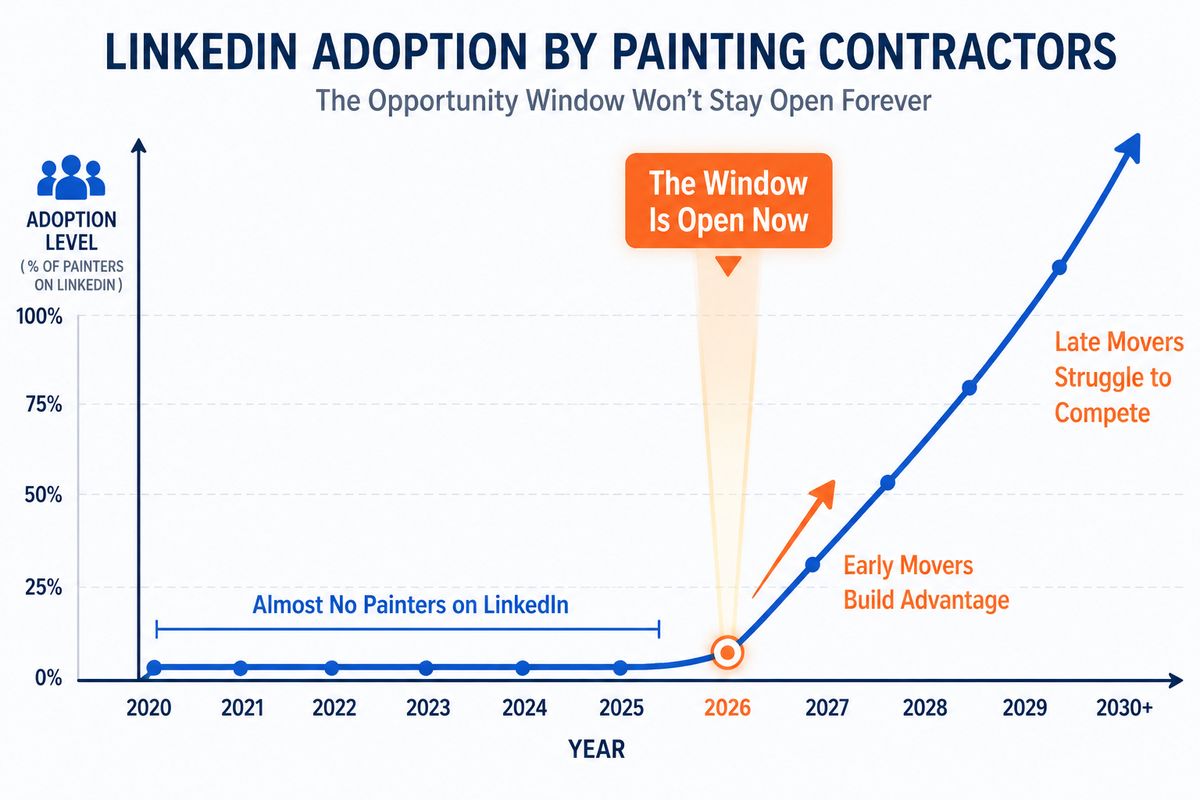
Three things have converged to make 2026 the inflection point.
First, AI automation has made LinkedIn outreach scalable for small businesses. Until recently, running a serious LinkedIn outreach program required dedicated sales development staff who spent hours every day finding profiles, sending connection requests, managing message sequences, and booking meetings. That was not realistic for a painting business with a lean team. AI tools now handle all of that automatically, making a sophisticated LinkedIn outreach system accessible to a one or two-person operation.
Second, commercial property decision makers have shifted their professional networking to LinkedIn in a significant way. Post-pandemic, the professional world moved more of its networking online. LinkedIn's active user base among commercial real estate, property management, and facility management professionals has grown substantially. The audience is larger and more engaged than it has ever been.
Third, the channel is still almost entirely uncontested for painting contractors. Go to LinkedIn right now and search for painting contractors in your city. You will find almost no one with an active presence, a professional profile, and a consistent content strategy. The window to be the first mover in your market is open right now. It will not stay open indefinitely. The contractors who build their LinkedIn presence in 2026 will have a network, a reputation, and a pipeline that will be extremely difficult for late movers to compete with.
First mover advantage on LinkedIn for painting contractors is real, and it is available right now. The question is whether you act on it before your competitors do.
How to Build a LinkedIn Presence That Generates Commercial Leads
Getting results from LinkedIn is not about posting motivational quotes and hoping for the best. It requires a deliberate strategy built around the commercial clients you want to attract.
Start with a professional profile. Your LinkedIn profile is the first thing a property manager sees when you connect with them or when they search for painting contractors. It needs to be complete, professional, and written for your ideal commercial client. Your headline should speak to what you do for commercial clients, not just your job title. Your about section should address the problems commercial property managers face and how your business solves them.
Post consistently around commercial painting topics. Regular content positions you as a knowledgeable, active professional rather than a dormant account. Post about topics your target clients care about: how to plan commercial repaints around tenant schedules, the cost of delaying exterior maintenance, what to look for in a commercial painting contractor, and after showcases from commercial jobs. Two to three posts per week are enough to build meaningful visibility over time.
Engage with your target audience's content. Like, comment on, and share posts from property managers, facility directors, and commercial real estate professionals in your area. Genuine engagement builds familiarity before you ever send a message. It also puts your name in front of their network, extending your reach beyond your direct connections.
Send targeted connection requests. Use LinkedIn's search function to find decision makers in your target verticals and location. Send personalized connection requests that reference their role or a specific aspect of their industry. A targeted, personalized request converts significantly better than a generic one.
Run an outreach sequence after connecting. Once a connection is accepted, follow up with a structured sequence of messages that build the relationship before asking for anything. Value first, ask second. This is where commercial meetings get booked.
AI Automation: The Reason LinkedIn Became Scalable in 2026
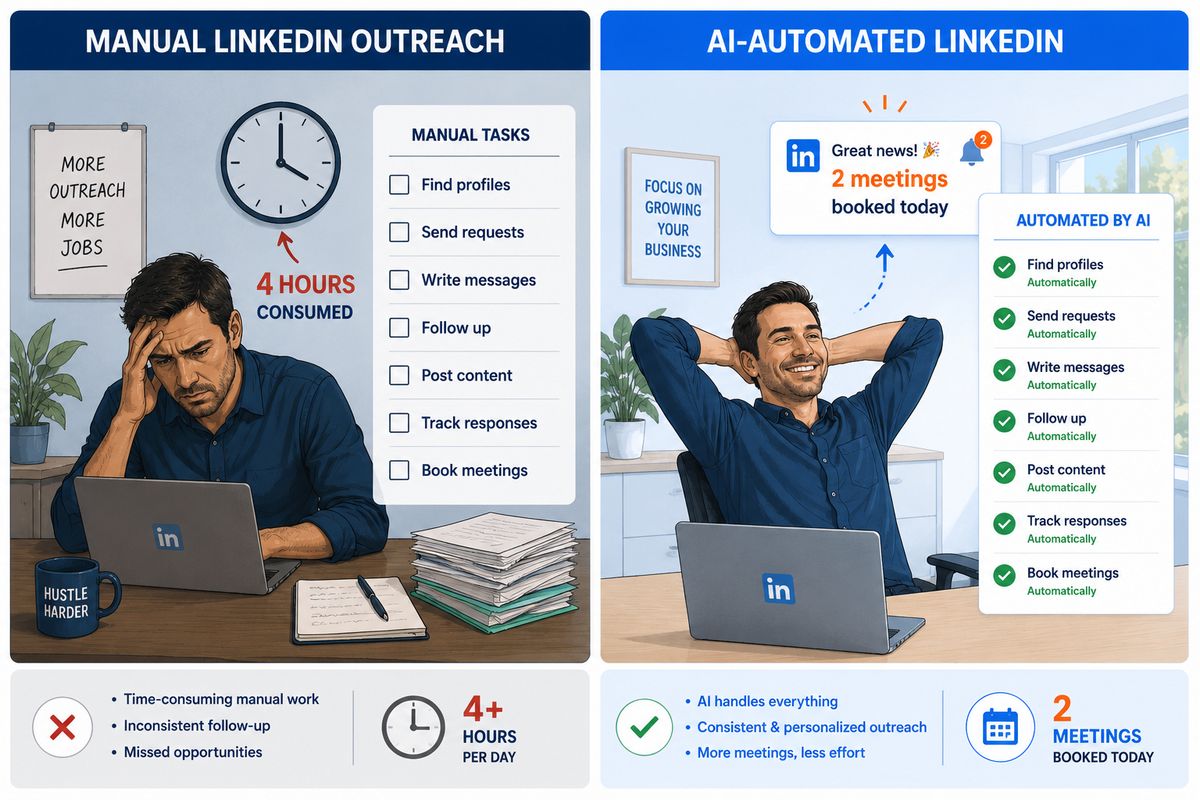
The strategy above works. The challenge is that, done manually, it is time-consuming. Finding profiles, sending connection requests, managing message sequences, posting content consistently, tracking responses, and booking meetings. A painting business owner already stretched across operations, sales, and management does not have four hours a day to run a LinkedIn outreach program manually.
AI automation removes that barrier entirely.
In 2026, AI tools can handle every repetitive element of the LinkedIn strategy automatically. Daily engagement with target profiles runs in the background. Connection requests go out on a set schedule. Message sequences trigger and follow up without any manual management. Content is planned and posted automatically. Meeting bookings happen through automated calendar links. CRM entries are created without manual data entry.
What would require a dedicated sales development representative running LinkedIn manually for four hours a day now runs automatically in the background while your team is on the job site.
This is the specific reason why 2026 is the inflection point. The combination of a wide-open channel and the AI tools to work it at scale without adding headcount is available right now in a way it simply was not two or three years ago.
How FatCamel AI Makes LinkedIn Work for Painting Businesses
The LinkedIn strategy and AI automation described in this guide are not theoretical. FatCamel AI is built to run exactly this system for painting businesses and trade contractors, combining every piece into a single automated workflow.
Here is what FatCamel AI handles for painting businesses on LinkedIn:
Automated daily engagement. FatCamel AI identifies posts from property managers, facility directors, and commercial real estate professionals in your target area and engages with their content daily on your behalf. Your name builds familiarity with your target clients before any direct outreach begins.
Targeted ICP list building. FatCamel AI continuously builds and updates a list of your ideal commercial clients on LinkedIn based on the job titles, industries, company sizes, and locations you define. The list stays current as new decision makers enter your market.
Personalized connection requests. Connection requests go out automatically to profiles on your ICP list, each one personalized based on the contact's profile data. Acceptance rates are significantly higher than generic requests because the outreach feels specific and deliberate.
Automated outreach sequences. Once a connection is accepted, FatCamel AI manages a multi-step message sequence that builds the relationship and moves toward a meeting booking without any manual follow-up from your team.
LinkedIn content scheduling. FatCamel AI plans and schedules your LinkedIn posts around commercial painting topics, keeping your profile active and authoritative without anyone on your team having to manage the content calendar.
Meeting booking and CRM entry. When a prospect shows interest in a call, FatCamel AI sends a booking link, confirms the meeting, and adds the contact to your CRM with full conversation history attached. Your sales team shows up to a warm call with complete context.
Pipeline reporting. A live dashboard shows every metric across the LinkedIn system: engagement activity, connection requests sent and accepted, outreach sequence performance, meetings booked, and commercial pipeline value generated.
FatCamel AI is not a general tool adapted for painting. It is built around how painting businesses sell and how commercial property clients buy. That specificity is what makes the results show up in your pipeline rather than just your activity metrics.
👉 See how FatCamel AI builds your commercial pipeline on LinkedIn
Making the Shift: What to Do This Week
You do not need to overhaul your entire marketing strategy overnight. Here is a simple sequence to start moving toward LinkedIn this week while keeping whatever is working on other channels running.
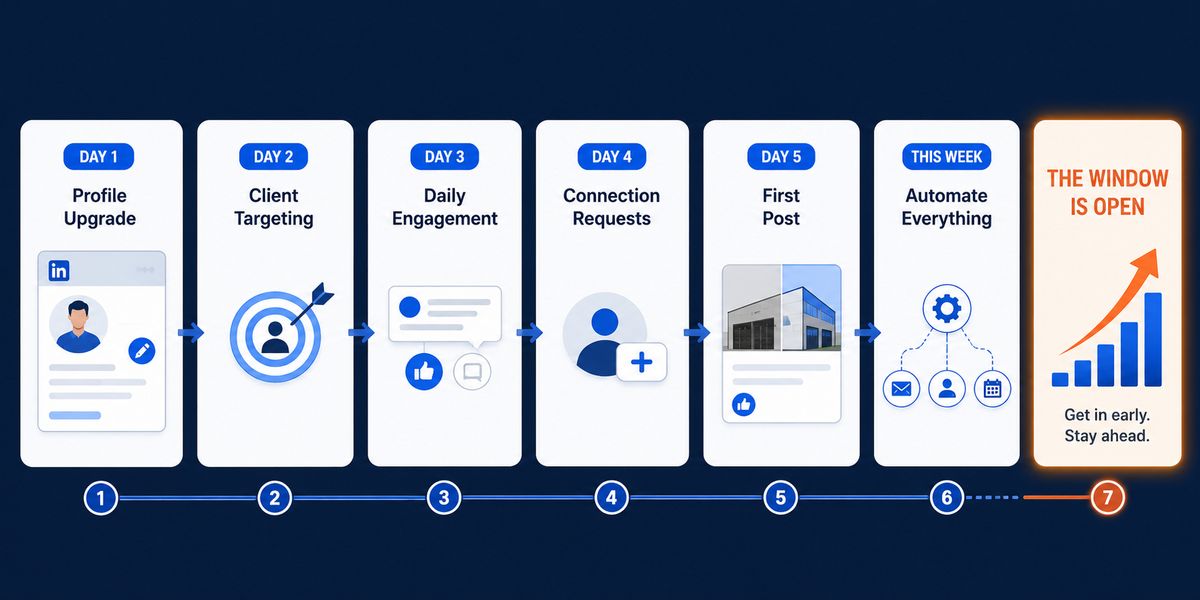
Day 1: Audit your current LinkedIn profile. Update your headline, about section, and featured section to speak directly to commercial painting clients. Add recent project photos from commercial jobs.
Day 2: Define your ideal commercial client. Job titles, industries, company sizes, and locations. This becomes the targeting criteria for your LinkedIn outreach.
Day 3: Start engaging manually with content from property managers and facility directors in your area. Like posts, leave genuine comments. Do this for ten minutes every morning to start building familiarity.
Day 4: Send five to ten personalized connection requests to decision makers in your target market. Write a short, specific note for each one.
Day 5: Write and publish your first LinkedIn post aimed at a commercial audience. A before-and-after from a commercial job, a tip for property managers planning annual repaints, or a brief case study from a recent project.
This week: Talk to FatCamel AI about automating the full system so the manual work you have started doing this week runs automatically from here forward.
The window to be the first painting contractor in your market with a serious LinkedIn presence is open right now. Every week you wait is a week a competitor could be using to build the network, the reputation, and the pipeline that you could have had.
FAQ
1. Why does social media not work for painting businesses?
Most painting businesses use consumer social media platforms like Instagram and Facebook that are built for reaching homeowners, not commercial decision makers. The audience on these platforms does not contain property managers and facility directors in meaningful volume. The platform mismatch means the effort goes in, but the commercial results do not come back.
2. Is LinkedIn worth it for a painting contractor?
Yes, significantly so for painting contractors targeting commercial clients. LinkedIn is the only social platform where property managers, facility directors, and commercial real estate professionals are active in a professional mindset. It offers direct access to commercial decision makers that no other social platform provides, and almost no painting contractors are currently using it, making it an open field for early movers.
3. What should a painting business post on LinkedIn?
Post content that speaks directly to the problems and priorities of commercial property decision makers. Before and after photos from commercial jobs, tips for property managers planning painting schedules, insights about coating longevity and maintenance planning, case studies from specific commercial verticals like hospitality or office buildings, and seasonal reminders about the best times to schedule exterior repainting.
4. How is LinkedIn different from Instagram for a painting business?
Instagram is a consumer entertainment platform where the audience is in a browsing and relaxation mindset. LinkedIn is a professional networking platform where the audience is thinking about their business, their vendors, and their operational challenges. The same painting business content that gets ignored on Instagram gets noticed on LinkedIn because the audience is different, and the professional context makes the outreach relevant.
5. Why is 2026 the right time to start using LinkedIn for commercial painting leads?
Three factors converge in 2026: AI automation makes LinkedIn outreach scalable for small painting businesses for the first time, the commercial property decision maker audience on LinkedIn is larger and more engaged than ever, and the channel is still almost entirely uncontested by painting contractors. The first movers in each local market will build a network and reputation that late movers will struggle to compete with.
6. How long does it take to generate commercial leads from LinkedIn?
With a consistent engagement and outreach strategy, most painting businesses start seeing connection acceptances and message replies within the first two weeks. Booked meetings typically follow within three to six weeks as outreach sequences run their full course. The results compound over time as your network grows and your content builds authority with the commercial audience.
7. How does FatCamel AI help painting businesses use LinkedIn for commercial leads?
FatCamel AI automates the full LinkedIn system for painting businesses: daily engagement with target decision maker content, personalized connection requests to ICP profiles, automated multi-step outreach sequences, LinkedIn content scheduling, meeting booking, and CRM entry. Everything that would require hours of manual daily work runs automatically in the background while your team focuses on painting.
References
https://business.linkedin.com/sales-solutions/sales-navigator
https://www.linkedin.com/business/marketing-solutions/blog/linkedin-b2b-marketing
https://www.hubspot.com/marketing-statistics
https://www.salesforce.com/research
https://www.forbes.com/business-council
https://www.paintcontractormag.com