

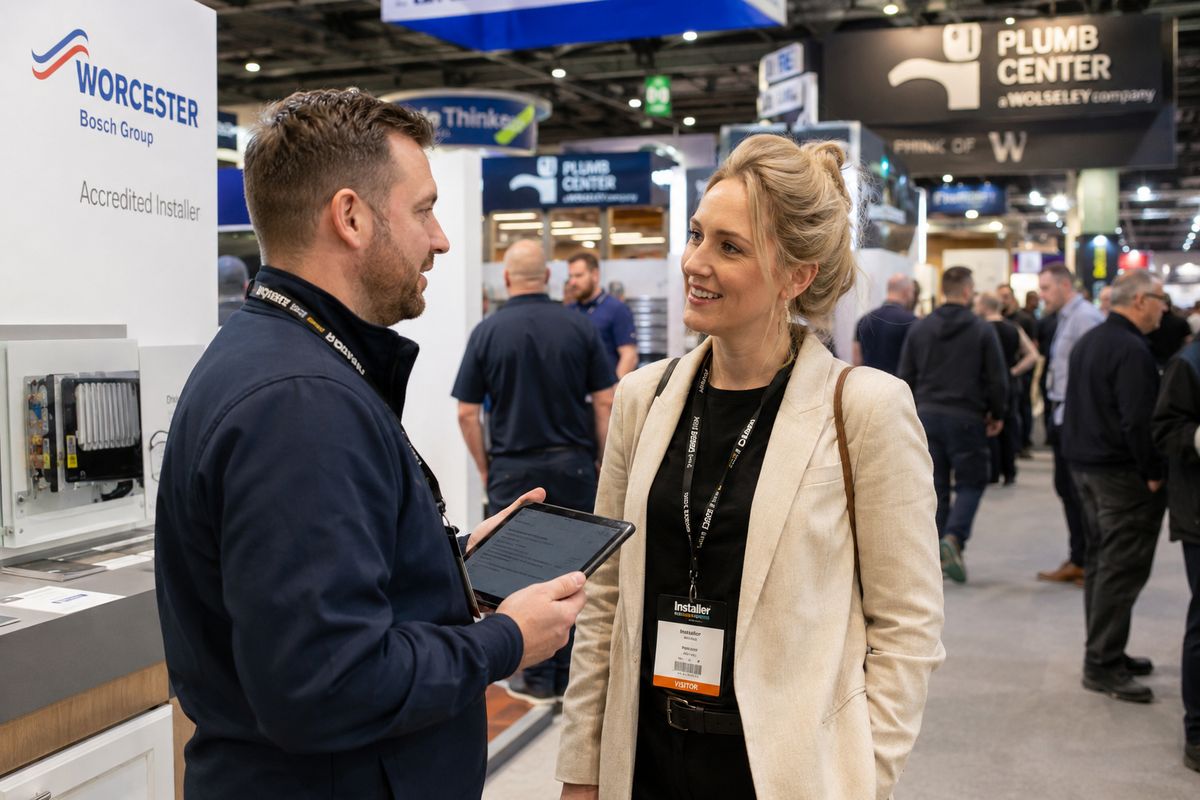
We spent three days at InstallerSHOW 2026 at the NEC Birmingham. Not on a stand. Not launching a product. Just talking.
We spoke with business owners running teams of five. We spoke with operations managers overseeing hundreds of engineers across multiple locations. We spoke with HVAC companies, plumbing businesses, electrical contractors, solar installers, and general home service companies at every stage of growth.
Some were doing well. Some were struggling. Some were growing fast and still felt like they were barely keeping up.
But what struck us most was not how different these businesses were. It was how similar their problems sounded. Across every conversation, regardless of size, sector, or geography, the same frustrations kept coming up. And after three days of listening, a very clear picture emerged.
Table of Contents
The Biggest Challenges We Heard
- Missed Leads
- Poor CRM Adoption
- Slow Response Times
- Manual Processes
How Technology Solves These Problems
- Automated Follow-Up
- AI Chat Systems
- CRM Automation
- Lead Reactivation
Conclusion
Frequently Asked Questions
The Biggest Challenges We Heard
There was no shortage of challenges raised across the conversations we had at InstallerSHOW 2026. But four themes came up so consistently, across so many different types of businesses, that they deserve to be addressed directly.
Missed Leads
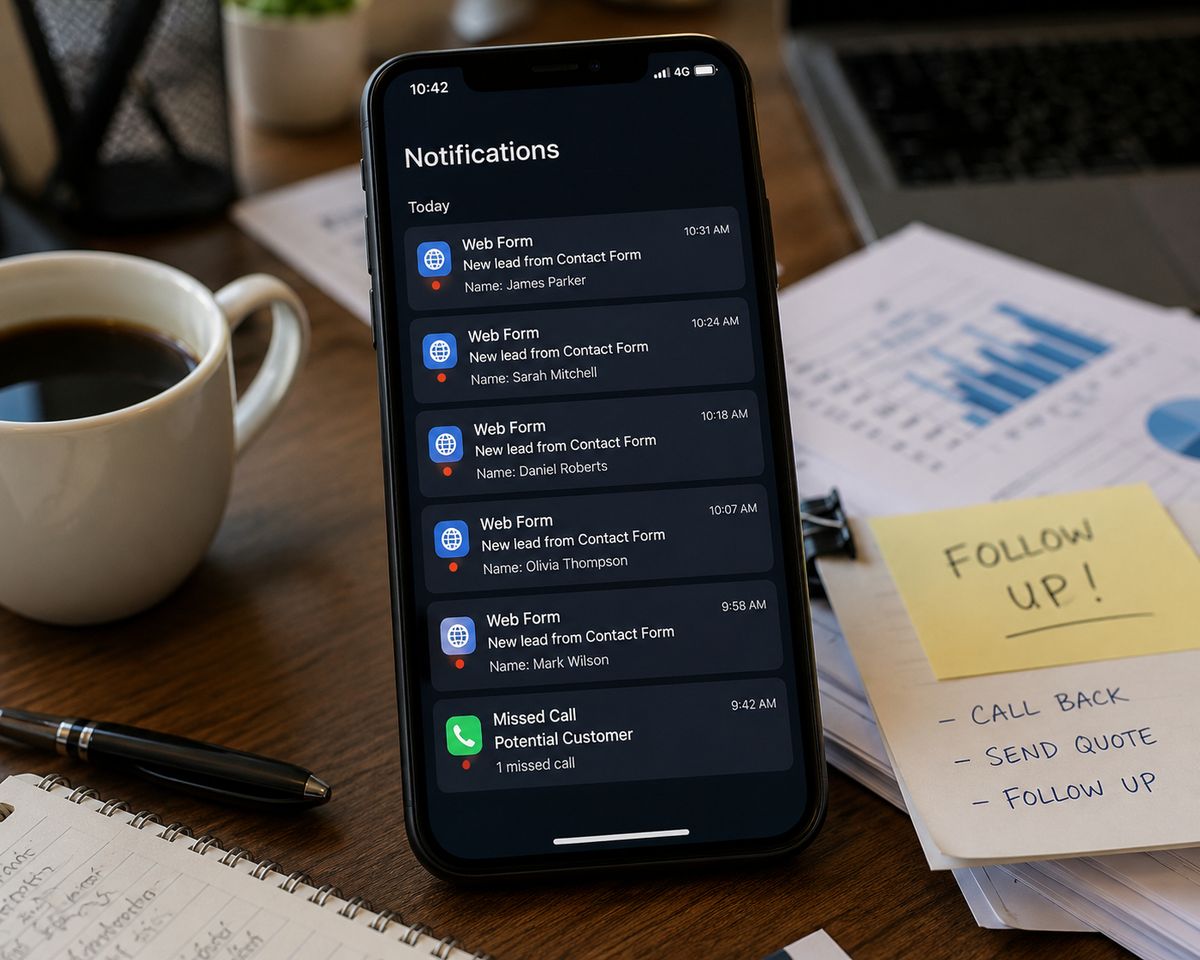
The most common frustration we heard at InstallerSHOW 2026 had nothing to do with generating leads. It had to do with losing them.
Business after business told us the same story. A customer submits a form online. The office is busy. A technician calls in sick. An urgent job comes in. Before anyone realises it, three hours have passed. Then six. By the time someone picks up the phone to follow up, the customer has already spoken to two or three competitors and booked with one of them.
The business did not lose that lead because it was too expensive, or because the competition was better. It lost because it was slow.
One owner we spoke to told us he estimated his team was losing somewhere between 20 and 30 percent of inbound enquiries simply because nobody responded quickly enough. He had no way to verify that number precisely, but he was certain the problem was real. And based on how many other business owners said something almost identical, we believe him.
The painful part is that these businesses had already paid to generate those leads. The marketing cost had been spent. The only thing standing between that investment and a booked job was a timely response, and the systems were not in place to deliver one consistently.
Read More: How Renovation Companies Can Get More Commercial Clients Using AI
Poor CRM Adoption

The second theme that came up again and again was the gap between having a CRM and actually using it.
Almost every business we spoke to had some form of CRM in place. Many had invested significantly in platforms, setup, and training. But when we asked how consistently the team was actually using it, the answers told a different story.
One owner told us his CRM contained more than 12,000 contacts. When we asked how many had been contacted in the last six months, he paused and then laughed. Less than five percent, he thought. The rest were just sitting there. Quotes that had been sent and never followed up. Enquiries that had gone cold. Past customers who had not been contacted since their last job.
This pattern was not unusual. Across multiple conversations, we heard the same thing: the CRM exists, the data is in there, but it is not being used as a live sales tool. It has become an archive rather than an asset.
Part of the problem is adoption. When systems are complicated, or when the team does not see the immediate value, usage drops off. And once a CRM is not being used consistently, the data inside it becomes unreliable, which makes people trust it even less, which leads to even lower adoption. It becomes a self-reinforcing problem.
Slow Response Times
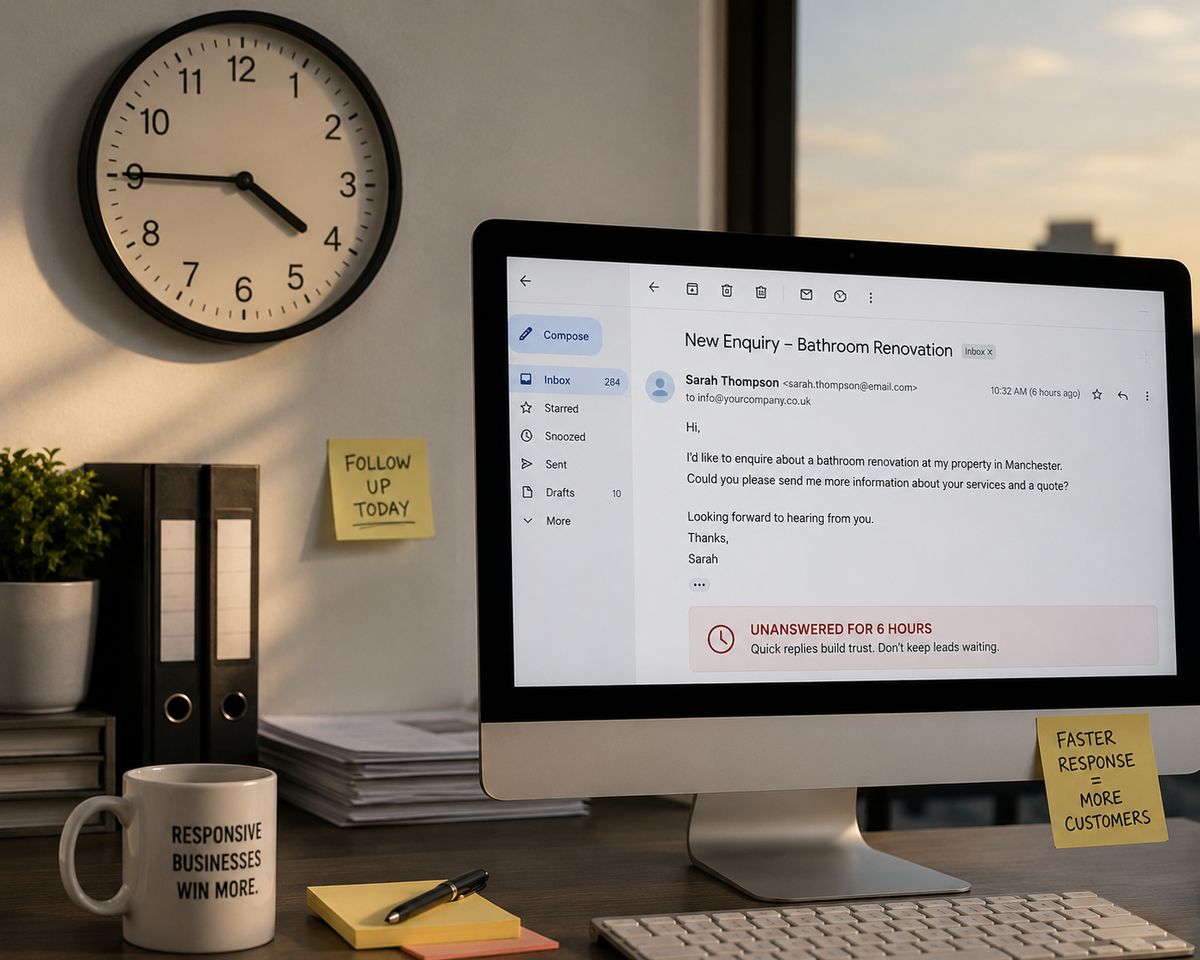
Closely related to the missed lead problem, but distinct enough to deserve its own discussion, was the issue of response times.
Speed matters more than most business owners realise. Research across the home services industry consistently shows that the first company to respond to an enquiry wins the majority of the time, even if a competitor is cheaper or more experienced. Customers making enquiries about heating, plumbing, solar, or electrical work are often making decisions quickly. They want reassurance. They want someone to respond.
The businesses we spoke to knew this. They all wanted to respond faster. But they were running lean teams, managing active jobs, and handling everything manually. The reality was that a new enquiry coming in at 5 pm on a Friday might not get a response until Monday morning. By that point, the customer had moved on.
Several owners told us that their average response time was somewhere between two and six hours during the working day. A few were honest enough to admit it could stretch to 24 hours or more during busy periods. When we pointed out that studies suggest conversion rates drop by more than 80 percent when response time exceeds five minutes, the reaction was a mix of recognition and frustration. They knew. They just did not have a system that could do anything about it.
Read More: Why Fast Response Wins Renovation Projects (And How to Automate It)
Manual Processes
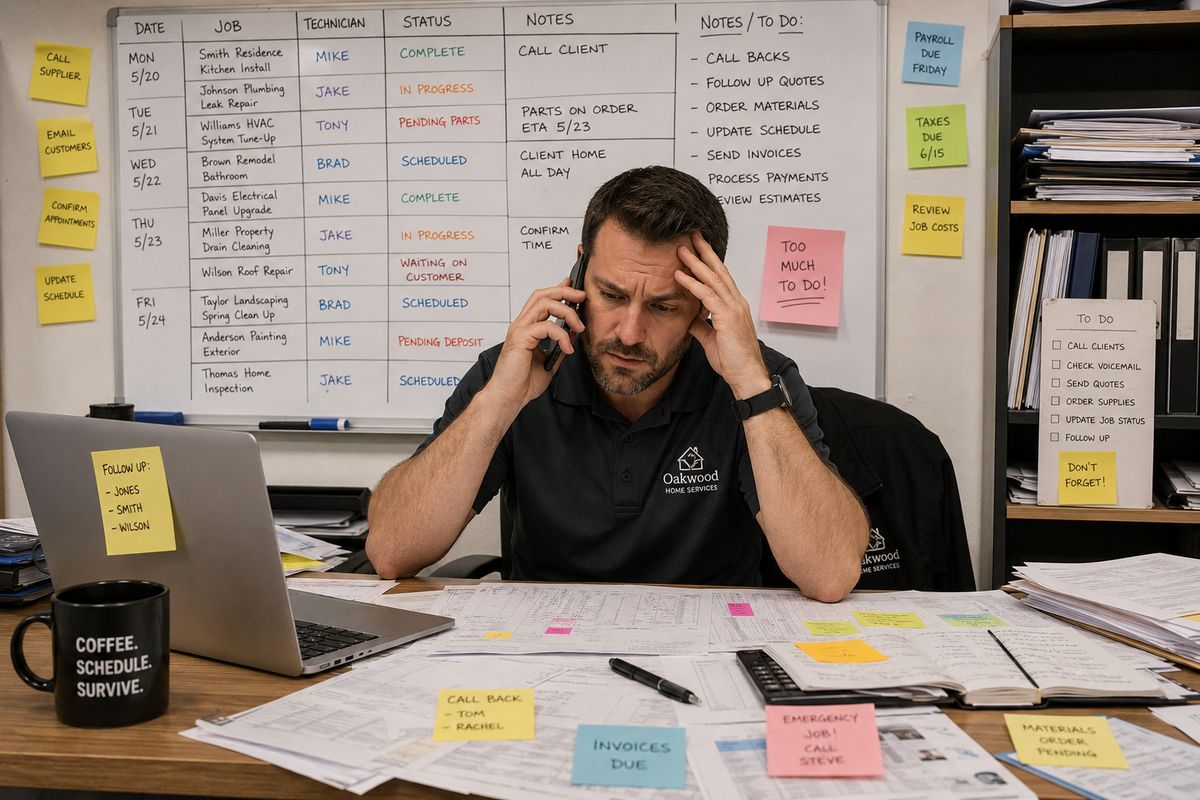
The fourth challenge was one that cut across every aspect of how these businesses operated: an over-reliance on manual, time-consuming processes that were holding growth back.
Spreadsheets tracking leads. Sticky notes with callback reminders. WhatsApp groups being used to coordinate jobs. Quote follow-ups handled through individual phone calls that had to be made one at a time. Customer communication relying entirely on the memory and availability of whoever was in the office that day.
These are not bad solutions for a business with ten customers. But for businesses managing hundreds of enquiries a month across multiple engineers and service types, they create a ceiling. Growth becomes harder because every new customer or job adds more manual work. The team gets busier. Things get missed. Quality drops. And the business owner ends up doing more admin than actual leadership.
What struck us across these conversations was how many of these business owners were aware of the problem. They knew they needed better systems. They had often tried to implement them. But between running the business day to day, managing staff, and dealing with customer issues, finding the time to set up and adopt new processes felt impossible. The urgency of today always beat the importance of tomorrow.
Read More: 9 Best AI Tools for Home Renovation Contractors in 2026
How Technology Solves These Problems
The good news is that every challenge described above has a practical, proven solution. None of it requires a major overhaul of how the business operates. It requires the right systems, set up correctly, running in the background while the team focuses on the actual work.
Automated Follow-Up
The single highest-impact change most home service businesses can make is setting up automated lead follow-up.
When a new enquiry comes in through a website form, a missed call, or a social media message, an automated system can send an immediate response within seconds. Not a generic reply, but a personalised message that acknowledges the enquiry, confirms the business has received it, and sets expectations for next steps. This alone puts the business ahead of the majority of competitors, who are still relying on someone in the office to find a free moment to respond manually.
Beyond the initial response, automated sequences can send follow-up messages over the following hours and days, keeping the business front of mind without anyone on the team having to lift a finger. If the lead does not respond, the system keeps trying. If they do respond, the conversation can be handed to the team to handle personally. The manual effort only starts once the lead is engaged.
AI Chat Systems
Many of the businesses we spoke to at InstallerSHOW 2026 were losing leads simply because enquiries were coming in outside of working hours and nobody was there to respond.
AI-powered chat systems solve this by handling initial customer conversations 24 hours a day, seven days a week. A homeowner searching for a boiler repair at 9 pm on a Sunday can start a conversation, get their questions answered, and book an appointment without anyone from the business being available. The system qualifies the lead, collects the relevant information, and passes it to the team ready to act on the next working day.
This is not about replacing the human relationship that home service businesses are built on. It is about making sure that relationship starts before the customer gives up and calls someone else.
CRM Automation
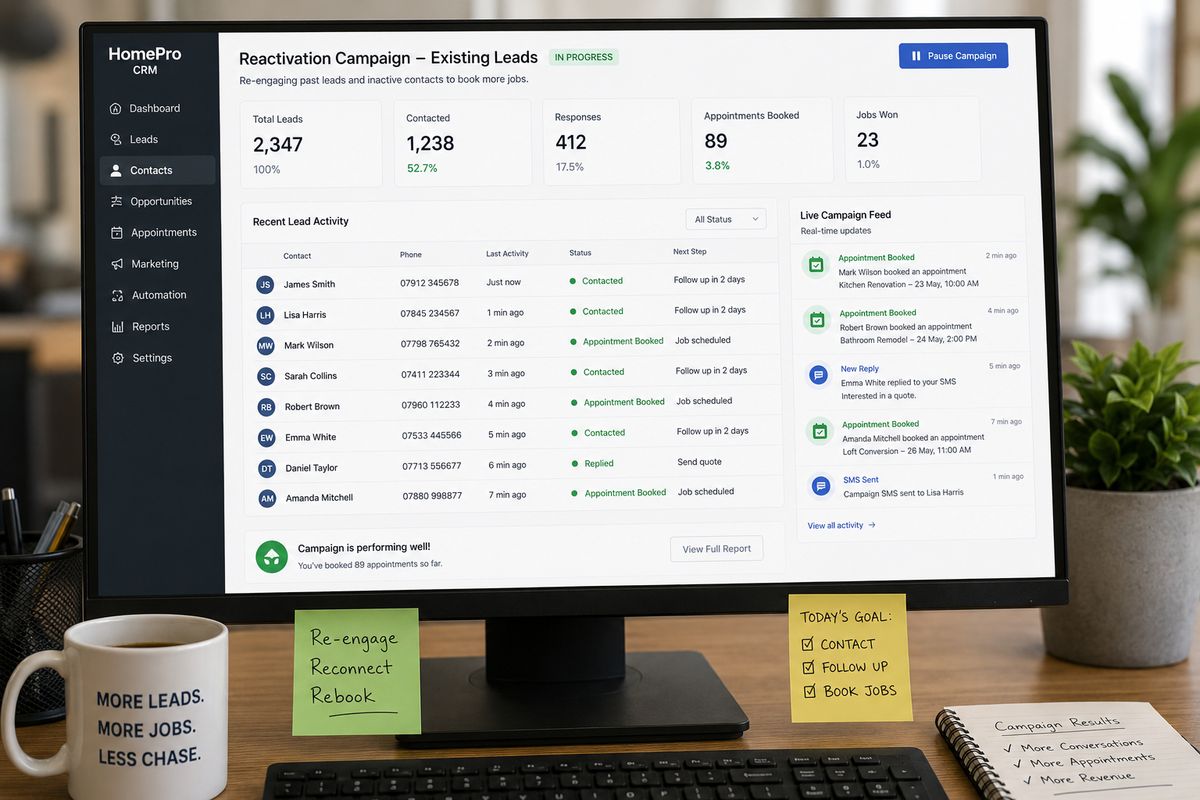
Businesses with 12,000 untouched contacts in their CRM do not have a data problem. They have an activation problem.
CRM automation tools can take a dormant database and turn it into an active revenue source. By setting up automated reactivation campaigns that reach out to old contacts with relevant, timely messages, businesses can generate new bookings from enquiries and customers they had essentially written off. A contact who requested a quote 18 months ago and never converted might be ready to book now. Without automation, nobody would ever know. With it, that contact gets a message at the right time, and the business gets another chance to win the job.
Beyond reactivation, CRM automation keeps the pipeline moving automatically. Quote reminders go out on a schedule. Job completion messages are sent. Review requests follow up at the right moment. All of this happens without anyone on the team managing it manually.
Lead Reactivation
One of the most overlooked revenue opportunities in any home service business is the leads that did not convert first time around.
Most businesses spend the majority of their marketing budget chasing new leads. But sitting inside their CRM are hundreds or thousands of people who already expressed interest, received a quote, or booked a service. Some of them went cold because the timing was not right. Some of them forgot. Some of them chose a competitor but may not have been happy with the experience.
A structured lead reactivation campaign reaches back out to these contacts with a specific message designed to restart the conversation. Done well, these campaigns consistently generate booked jobs at a fraction of the cost of acquiring new leads, because the groundwork has already been done. The business is already known to these people. It just needs to show up again at the right moment.
Read More: How to Build a Commercial Lead Generation System for Your Painting Business
Conclusion
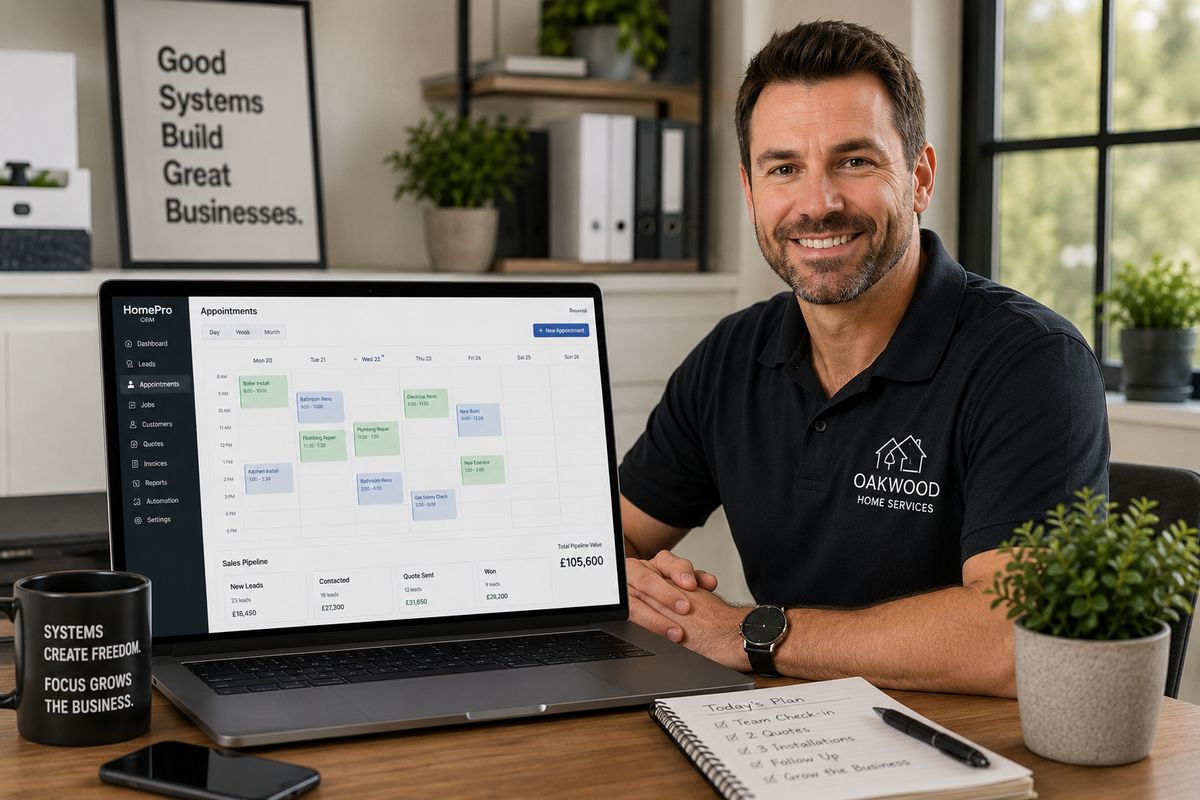
InstallerSHOW 2026 gave us three days of honest, unfiltered conversations with the people running home service businesses across the UK. The challenges they described were real, and they were consistent. Leads being missed. CRMs going unused. Response times too slow to compete. Teams buried in manual admin that leaves no room for growth.
None of these problems are unique to any one business or sector. They are the natural result of growing without the systems to support that growth. And the encouraging thing is that every single one of them is solvable. The technology exists, it is affordable, and businesses that implement it are already seeing the difference in their conversion rates, their customer retention, and their ability to scale without simply working longer hours.
What InstallerSHOW 2026 reinforced for us is that the gap between businesses that grow and businesses that struggle is increasingly a systems gap, not a skills gap. The work is there. The leads are there. The customers are ready to book. The question is whether the business is set up to capture them.
Frequently Asked Questions
What challenges do home service businesses most commonly face?
The four most common challenges we hear from home service businesses are missed leads due to slow follow-up, poor CRM adoption where data goes unused, response times that are too slow to compete effectively, and an over-reliance on manual processes that create a ceiling on growth.
How big a difference does response time make to lead conversion?
Research across the home services sector consistently shows that conversion rates drop significantly the longer a business takes to respond. Leads contacted within the first few minutes convert at a far higher rate than those followed up hours later. In a competitive market where multiple businesses are receiving the same enquiry, the first to respond almost always wins.
What is lead reactivation and why does it matter?
Lead reactivation is the process of re-engaging contacts in your CRM who previously enquired, received a quote, or booked a service but have since gone quiet. These contacts already know your business and have shown interest at some point, which makes them significantly easier and cheaper to convert than a cold lead. Automated reactivation campaigns can turn a dormant database into a consistent source of new bookings.
Can small home service businesses benefit from automation?
Yes. Automation tools are not exclusive to large companies with big budgets. Many of the highest-impact systems, such as automated lead follow-up, SMS responses, and CRM reactivation campaigns, can be implemented by businesses of any size. The return tends to be proportionally even higher for smaller teams, because every lead that would otherwise have been missed represents a meaningful share of revenue.
How does FatCamel AI help home service businesses?
FatCamel AI designs and implements automation systems built specifically for home service businesses. This includes automated lead follow-up, CRM reactivation campaigns, AI chat systems for out-of-hours enquiries, quote reminders, and appointment booking workflows. The goal is to ensure that no lead is lost to slow response times, no dormant contact goes untouched, and no manual admin task holds the business back from growing.