
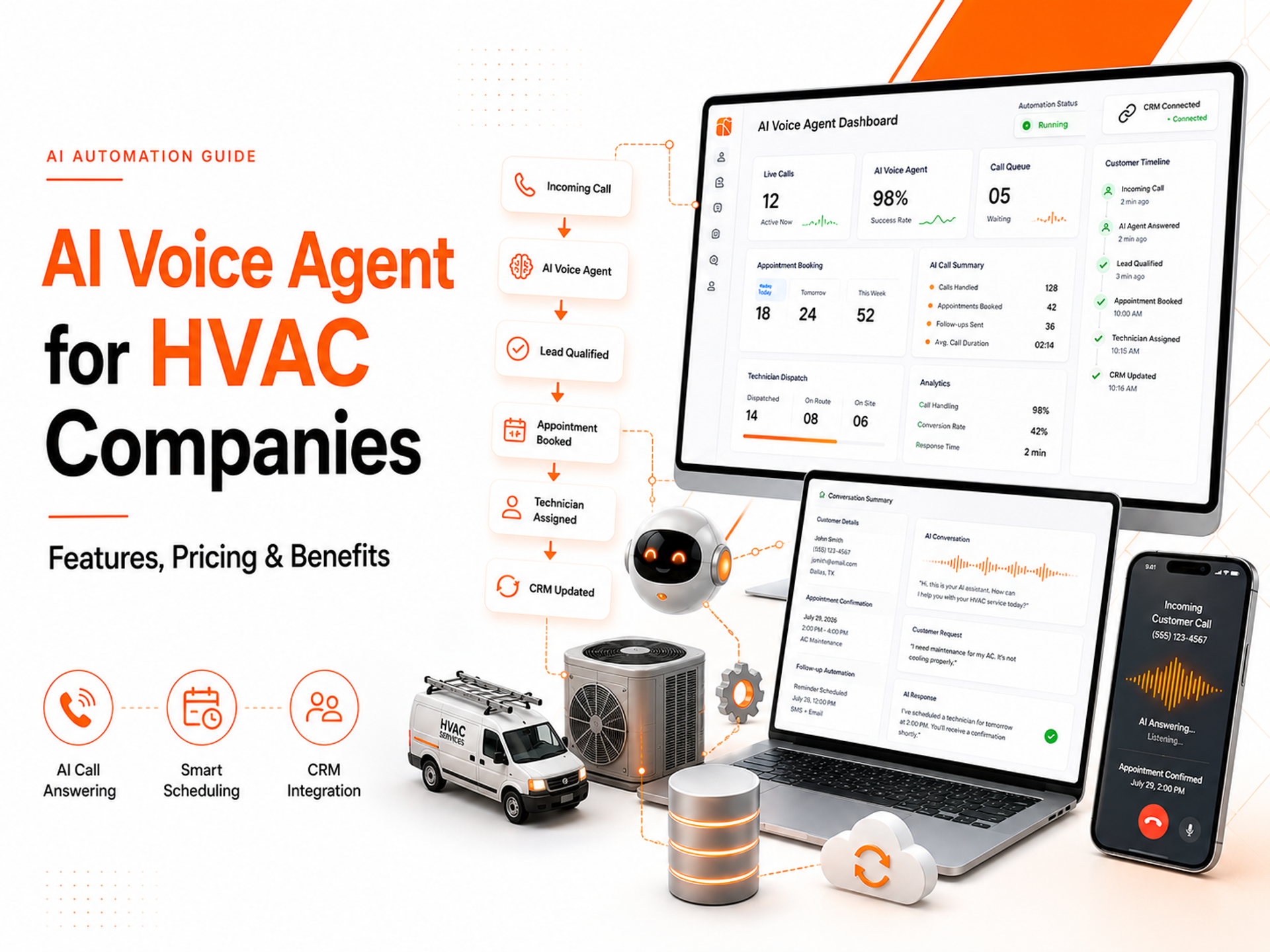
HVAC businesses lose an average of 37% of after-hours calls to competitors not because their service is worse, but because nobody picked up. The homeowner called, got voicemail, and moved to the next number on the list. By the time your team called back, the job was already booked. An AI voice agent for HVAC changes that equation completely. It answers every call, at any hour, conducts a real conversation, qualifies the lead, and books the appointment all without anyone on your team being involved.
This guide covers exactly how AI voice agents work for HVAC companies, what features actually matter, what they cost, and what a realistic business should expect from deploying one.
Table of Contents
- The Problem an AI Voice Agent Actually Solves
- How an AI Voice Agent Works on an HVAC Call
- The Features That Matter for HVAC Businesses
- What AI Voice Agents Can and Cannot Do
- Pricing: What HVAC Companies Actually Pay
- Real Results: What HVAC Businesses Report After Deployment
- How FatCamel AI's RealtorVoiceAI Works for HVAC Companies
- FAQ
- References
The Problem an AI Voice Agent Actually Solves
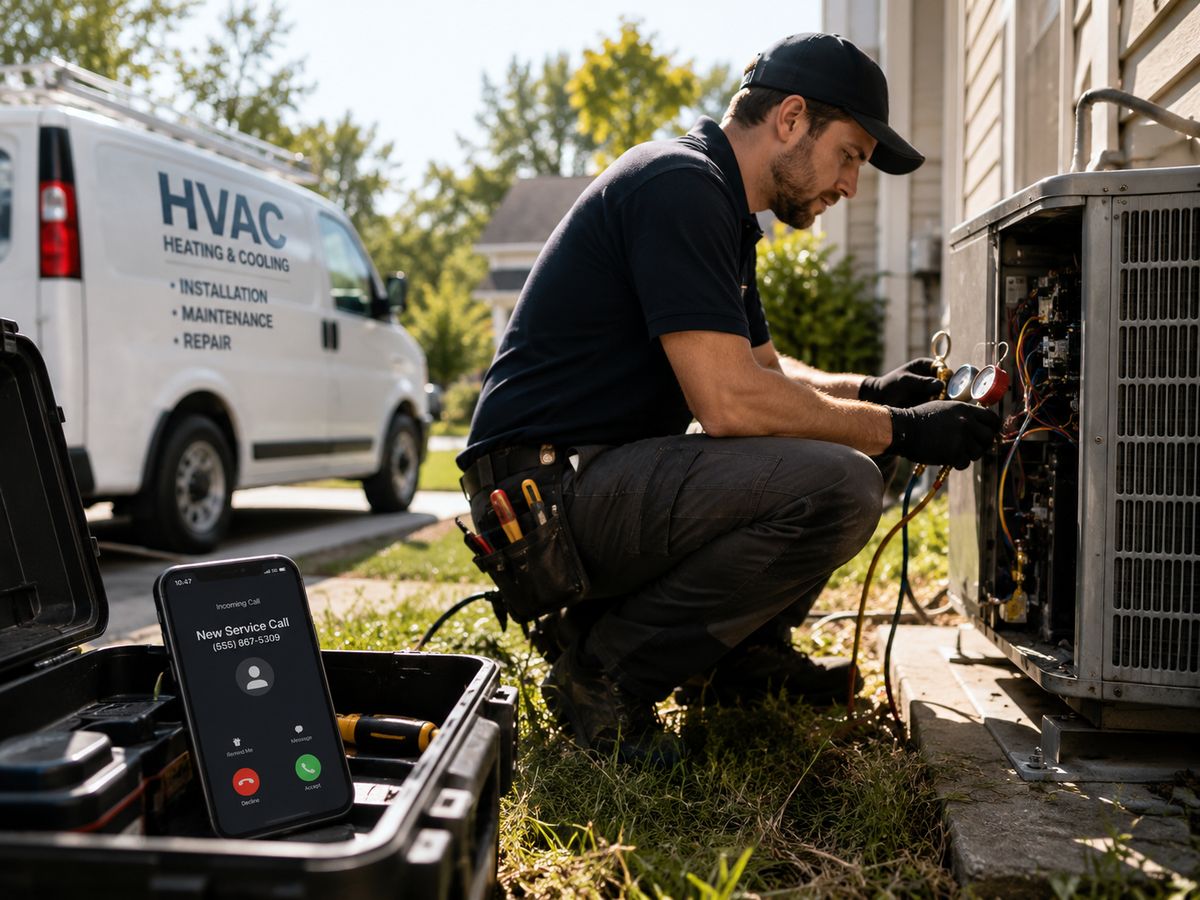
Here's what actually happens when an HVAC business misses a call. The homeowner's AC stopped working on a Wednesday evening. It's 91 degrees outside. They go to Google, find the top three HVAC companies in their area, and start calling. The first goes to voicemail. The second rings out. The third picks up not because they're better, not because they're cheaper, but because they answered. That's the job booked.
Industry data is consistent on this. Home services businesses miss around 27% of inbound calls, according to Invoca research. Data across more than 1,200 contractors shows the average HVAC company loses between 45,000 and 120,000 dollars per year to unanswered phone calls. And roughly 78% of callers who reach voicemail don't leave a message they hang up and call the next contractor on the list.
The problem isn't just after-hours either. ServiceTitan data shows that HVAC companies miss up to 74% of calls when technicians are in the field and nobody's left at the office. That's not an after-hours problem. That's an all-hours problem. During a summer heat wave when call volume spikes 300%, the exact moment demand is highest is the exact moment your team is least able to answer every call.
An AI voice agent closes this gap by answering every call immediately, at any hour, with a real conversation not a phone tree, not a recording and booking the appointment before the caller has a reason to call anyone else.
Read More: AI Automation for HVAC Companies: Benefits, Process, Pricing & ROI
How an AI Voice Agent Works on an HVAC Call
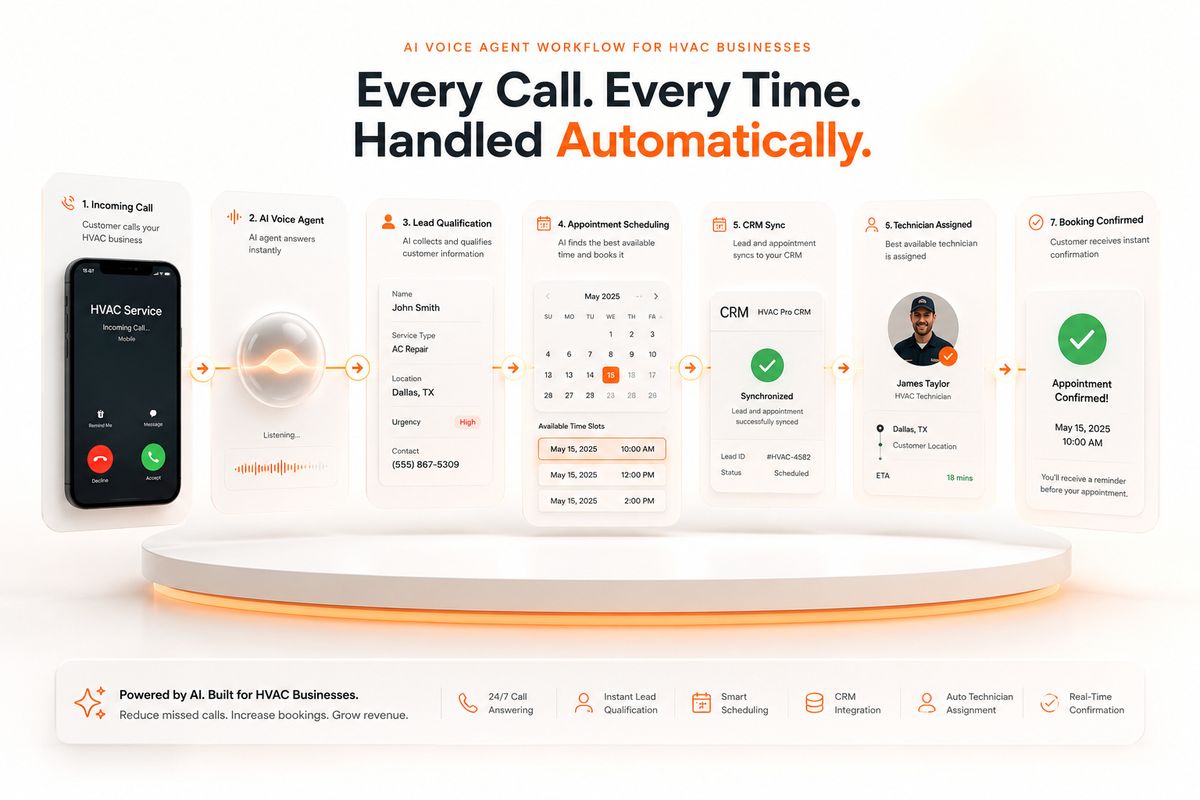
The experience from the caller's side is a natural conversation. They call your HVAC business number. The AI answers in your company name within one ring. It asks about the issue AC not cooling, furnace making noise, system not turning on. It assesses urgency asking about smoke, burning smells, or complete failures versus intermittent issues. It collects the service address, confirms availability, and books the appointment directly into your scheduling system. The whole interaction takes under 90 seconds.
On the back end, the technology stack running this conversation involves several components working together. Automatic Speech Recognition (ASR) transcribes the caller's voice in real time. A large language model (LLM) processes the transcription to understand intent differentiating "my AC is making a loud noise" from "there's burning smell coming from my unit" and responding appropriately to each. Text-to-speech (TTS) converts the AI's response back into a natural voice that doesn't sound robotic. The entire round-trip hear, process, respond happens in under 500 milliseconds for well-built systems. That's fast enough that the conversation feels natural.
What matters for HVAC specifically is how the AI handles the situations that actually come up in HVAC calls. Emergency recognition detecting keywords like "no heat," "burning smell," "gas smell," or "water leaking" and escalating those calls immediately rather than routing them through a standard booking flow. Urgency triage separating a same-day emergency from a routine maintenance request and handling scheduling accordingly. And CRM integration pushing the call outcome, the customer's details, the problem description, and the booked appointment directly into Service Titan, Jobber, or House call Pro without any manual entry required.
The Features That Matter for HVAC Businesses
Not all AI voice agent features are equally relevant for HVAC. Some are genuinely useful. Others are impressive in a demo and irrelevant in practice. Here's what actually matters when evaluating an AI voice agent for an HVAC business.
24/7 availability with emergency call handling The most important capability for HVAC is availability during the hours when your team isn't. But availability alone isn't enough the AI needs to recognize HVAC emergencies specifically. A homeowner calling at 2 AM because they smell gas needs a different response than someone calling at the same hour because their AC is running warm. Good HVAC AI voice agents are configured to detect emergency language and trigger immediate escalation text alerts to on-call technicians, direct transfer to an emergency line, or explicit assurance that help is dispatched rather than routing every after-hours call through the same booking flow.
HVAC-specific lead qualification Generic AI voice agents ask generic questions. An HVAC-specific configuration asks the questions that actually determine how to handle the call system type (central air, heat pump, mini-split), issue description, when the problem started, whether the system is running at all, service address and whether it's residential or commercial. This qualification data determines urgency level, dispatching requirements, and what the technician needs to bring. It should land in the CRM automatically before anyone on your team sees the lead.
Direct scheduling integration The booking should happen during the call, not after. An AI voice agent that collects information and creates a lead for someone to follow up on later isn't solving the problem it's creating a different version of the same problem. The appointment should be confirmed with the caller before they hang up, a confirmation SMS should go to their phone immediately, and the booking should appear in the dispatch system without manual entry.
Call recording and transcription Every call should be recorded and transcribed automatically. This serves two purposes: quality assurance (you can review how the AI handled any call) and CRM documentation (the full context of what the caller said is captured, not just the fields the AI extracted). When a technician shows up to a job, they should be able to read the call transcript and understand exactly what was reported.
Human handoff When a call falls outside what the AI can handle a complex technical question, an upset customer, a billing dispute the AI should transfer to a live person seamlessly. The best implementations send the technician or dispatcher a summary of the call before they pick up, so the handoff feels continuous rather than starting from zero.
Read More: How HVAC Businesses Can Grow Faster Using AI (Without Changing Their CRM)
What AI Voice Agents Can and Cannot Do
Being honest about the limitations of AI voice agents is important, because unrealistic expectations lead to poor deployments.
What they do well: Answering calls immediately at any hour. Collecting lead information consistently and completely. Booking routine appointments directly into scheduling systems. Handling high call volume simultaneously during peak periods something no human team can do. Sending automated confirmations and reminders. Logging every interaction to the CRM without manual entry.
Where they still have limits: Complex troubleshooting conversations require technical knowledge that general AI voice agents don't have by default. A homeowner trying to diagnose a refrigerant issue over the phone needs a technician, not an AI conversation. Highly agitated or distressed callers a family with no heat in January, for example — often need a human voice quickly. Well-configured HVAC AI agents recognize these situations and transfer rather than pushing through the standard booking flow, but this requires proper setup.
The honest comparison: An AI voice agent is not a replacement for a great dispatcher. It's a replacement for voicemail, for calls that go unanswered, for leads that slip through because everyone was busy. The jobs your team would handle personally if they had unlimited availability that's what an AI voice agent captures.
Read More: How to Add AI to Your HVAC CRM Without Replacing It
Pricing: What HVAC Companies Actually Pay
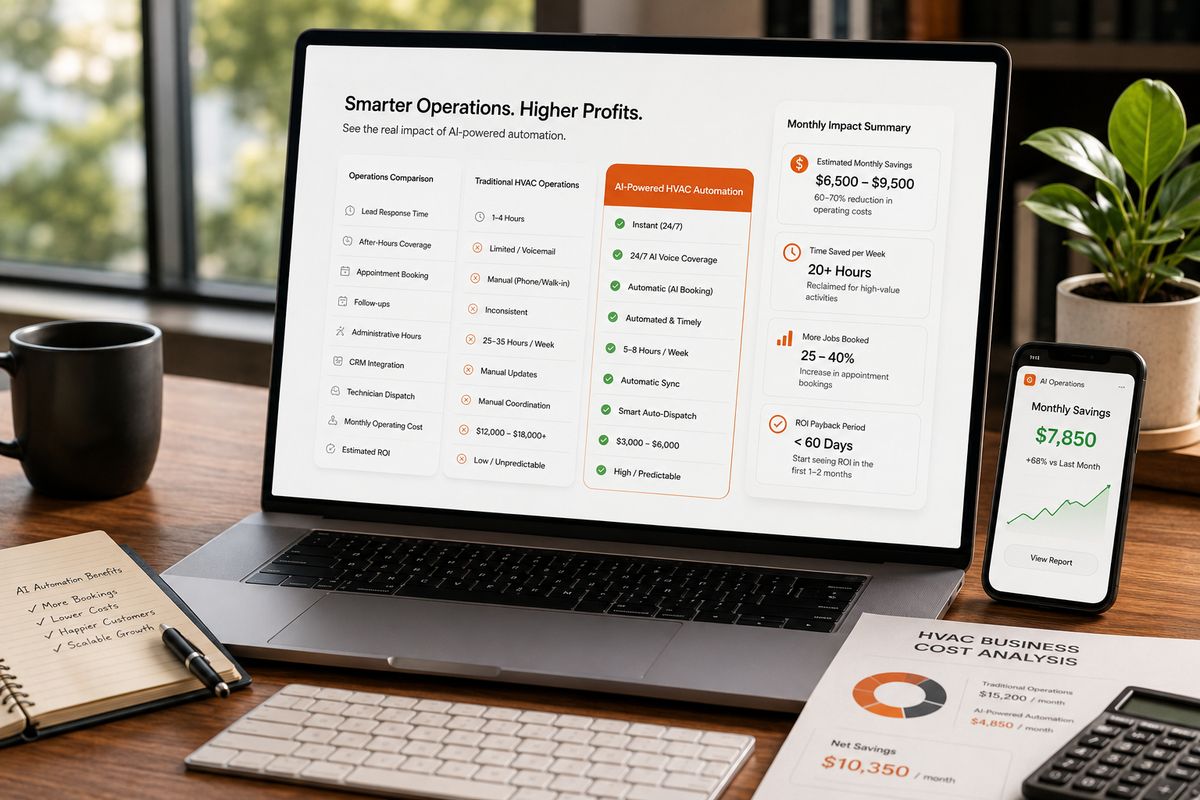
AI voice agent pricing for HVAC businesses varies significantly based on how the solution is built and what's included.
Subscription-based AI voice agents designed for home service businesses typically range from 149 to 500 dollars per month for entry-level plans. CallSphere, for example, starts at 149 dollars per month with no per-minute charges and includes CRM integrations. Usage-based pricing models common with developer-first platforms typically charge 0.05 to 0.15 dollars per minute of AI call time, which adds up to 150 to 400 dollars monthly for average HVAC call volumes.
Custom-built AI voice agents configured specifically for an HVAC business with HVAC-specific call flows, branded voice, direct scheduling integration, and CRM customization typically cost 3,000 to 8,000 dollars to build and configure, with monthly operating costs of 200 to 500 dollars. This is the approach that produces the strongest outcomes because the system is built around how the specific business actually operates, not around a generic home services template.
The comparison that matters financially is against the alternatives. An overnight answering service costs 500 to 800 dollars per month and takes messages without booking appointments. Overnight staff coverage costs approximately 2,880 dollars per month at 20 dollars per hour for full coverage. An AI voice agent at 297 to 500 dollars per month, converting at 82% of after-hours calls per GrowwStacks data, costs approximately 7 to 20 dollars per booked appointment. For HVAC businesses where the average job value runs 350 to 600 dollars, the math is straightforward.
Read More: Why HVAC Companies Lose Leads After Hours (And How to Fix It With an AI Answering Service)
Real Results: What HVAC Businesses Report After Deployment
An HVAC company in Arizona, documented by IVA (Intelligent Voice Agents), was losing an estimated 45,000 dollars per month in revenue to missed calls and after-hours gaps. Within 30 days of deploying an AI voice agent, their missed call rate dropped to zero. The AI booked 38 new service calls after business hours in the first month, representing 41,800 dollars in additional revenue. The office manager's time on manual scheduling dropped by 57%.
Bonney Plumbing, a well-known HVAC and plumbing contractor, deployed AI-powered call handling and reported a 60% reduction in missed calls, with the AI handling the large majority of routine scheduling and booking without human involvement.
GrowwStacks data across HVAC deployments shows an 82% conversion rate on after-hours calls handled by AI, compared to a 63% conversion rate when calls go to a human answering service. The AI's consistency asking the same qualification questions every time, never getting tired or distracted, never missing a call because it's already on another line produces better conversion than human alternatives at lower cost.
How Fat Camel AI's Realtor VoiceAI Works for HVAC Companies
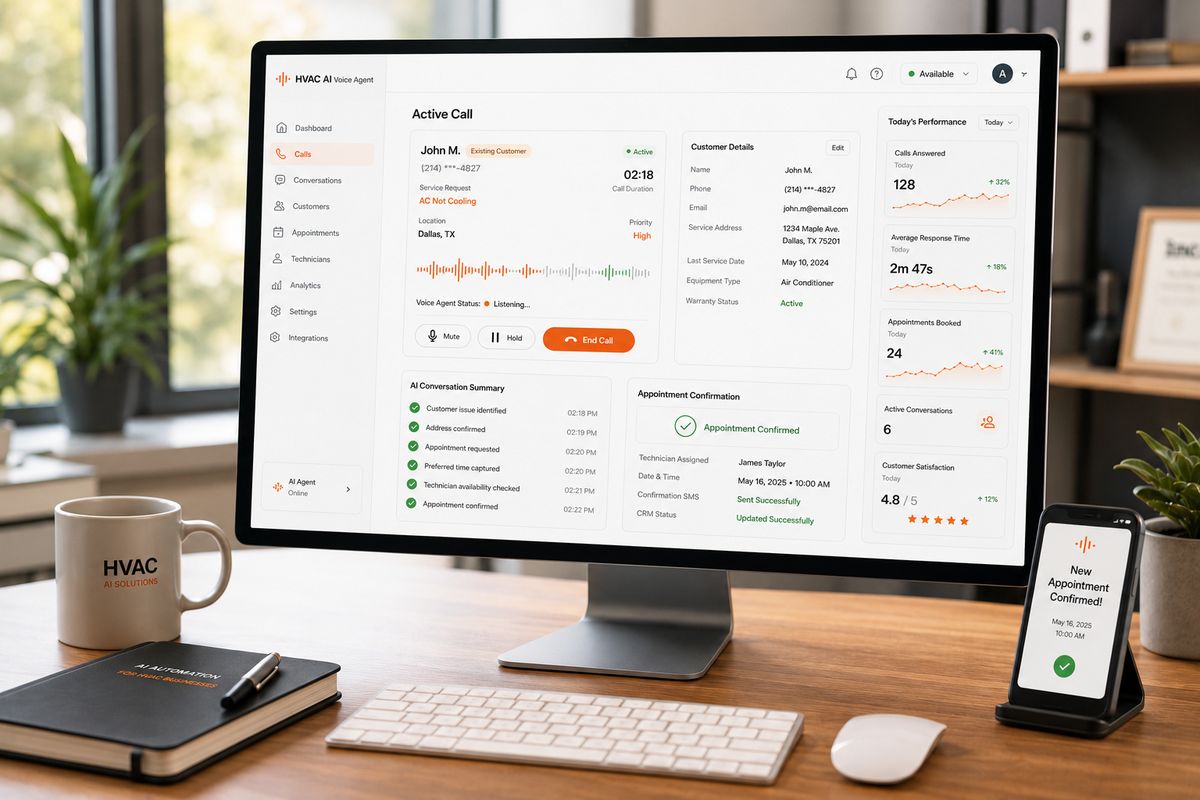
FatCamel AI's RealtorVoiceAI is the AI voice agent component of the complete HVAC automation stack. It's built specifically for home service contractors, configured to handle HVAC call types emergency triage, routine booking, maintenance inquiries, commercial service requests rather than applying a generic business template.
The call flow is configured around how the specific HVAC business operates. Business hours, service area, emergency protocols, scheduling rules, and CRM integration are all set up before the system goes live. When a call comes in, the AI answers in the business's name, conducts the qualification conversation using HVAC-specific language, books the appointment directly into the scheduling system, sends the caller a confirmation SMS, and logs the full call transcript and extracted data to the CRM all without any human being involved in the process.
For emergency calls the homeowner with no heat in January, the family with a suspected gas leak the system recognizes the urgency language and immediately alerts the on-call technician via SMS while keeping the caller on the line. The caller knows help is coming. The technician knows the situation before they pick up the phone.
The integration with FatCamel AI's broader automation stack means that calls captured by RealtorVoiceAI that don't convert immediately the caller who books and then cancels, the lead who asks for a quote and needs time to decide automatically enter the follow-up and reactivation workflows managed by the Lead Activation Engine. Nothing falls through the cracks just because the first call didn't result in a completed job.
👉 Get a Free AI Revenue Audit for Your HVAC Business at https://www.fatcamel.ai/contact
FAQ
1. What is an AI voice agent for HVAC companies? An AI voice agent for HVAC companies is a system that answers inbound calls automatically, conducts a natural conversation with the caller, qualifies the service request using HVAC-specific questions, and books the appointment directly into the scheduling system without any human involvement. It operates 24/7, handles multiple simultaneous calls, and logs every interaction to the CRM automatically. The difference from a standard IVR or answering service is that it has a real conversation rather than offering menu options or taking a message.
2. How much does an AI voice agent cost for an HVAC business? Subscription-based AI voice agents for home service businesses typically range from 149 to 500 dollars per month. Custom-built solutions configured specifically for an HVAC business with HVAC-specific call flows, direct CRM integration, and branded voice typically cost 3,000 to 8,000 dollars to build, with monthly operating costs of 200 to 500 dollars. Most HVAC businesses recover this cost within the first month through captured after-hours bookings that would otherwise have been lost to voicemail.
3. Can an AI voice agent handle HVAC emergency calls? Yes and emergency handling is one of the most important configuration points for HVAC deployments. A properly configured HVAC AI voice agent recognizes emergency language (no heat, gas smell, burning smell, water leaking) and responds accordingly alerting on-call technicians immediately via SMS, prioritizing dispatch, and communicating clearly to the caller that help is coming. This requires HVAC-specific configuration, not a generic voice agent template.
4. How long does it take to deploy an AI voice agent for HVAC? Most implementations go live in three to five business days. Day one covers call flow configuration and service area setup. Day two covers the HVAC-specific qualification script and emergency protocols. Day three covers CRM and scheduling system integration. Days four and five cover test calls and refinement. The system works with the existing business phone number no hardware or new phone lines required.
5. Will an AI voice agent sound robotic to callers? Modern AI voice agents using current text-to-speech technology from providers like ElevenLabs or Cartesia sound significantly more natural than what most people associate with AI on the phone. The conversations use natural phrasing, handle interruptions appropriately, and adapt based on the caller's responses. Whether callers can tell they're speaking to an AI varies, but the response rates 82% conversion on after-hours calls per GrowwStacks data suggest the experience is positive enough to drive bookings.
6. Does the AI voice agent integrate with ServiceTitan, Jobber, and Housecall Pro? Yes. The major HVAC field service platforms all support API integrations that allow the AI voice agent to read scheduling availability in real time and write appointment records, customer details, and call transcripts back to the CRM immediately after each call. The specific integration approach varies by platform, but all three support the connectivity needed for full AI voice agent integration.
7. How does FatCamel AI's RealtorVoiceAI differ from generic AI answering services? FatCamel AI's RealtorVoiceAI is configured specifically for home service contractors rather than built as a generic business phone answering product. It handles HVAC-specific call types, integrates with field service platforms, connects to the broader FatCamel automation stack so that unconverted calls automatically enter follow-up and reactivation workflows, and is configured around the specific operational profile of each business rather than applied as a template. The difference in outcomes between a generic AI answering service and an HVAC-specific implementation is significant in qualification accuracy, booking conversion rate, and emergency handling reliability.
References
https://www.servicetitan.com/blog/ai-voice-agents-in-hvac
https://getivai.com/hvac
https://growwstacks.com/blog/ai-voice-agent-hvac-appointments
https://callsphere.ai/blog/ai-voice-agents-for-hvac-the-complete-guide-for-2026
https://myquoteiq.com/best-ai-assistant-software-hvac-businesses-2026/
https://lunacal.ai/blogs/ai-receptionist-for-HVAC
https://www.invoca.com/blog/inbound-call-statistics
https://www.callrail.com/blog/missed-calls-stats
https://www.servicetitan.com/blog/success-story-bonney-plumbing-contact-center-pro
https://www.fatcamel.ai/services/voice-assistant
https://www.fatcamel.ai/