
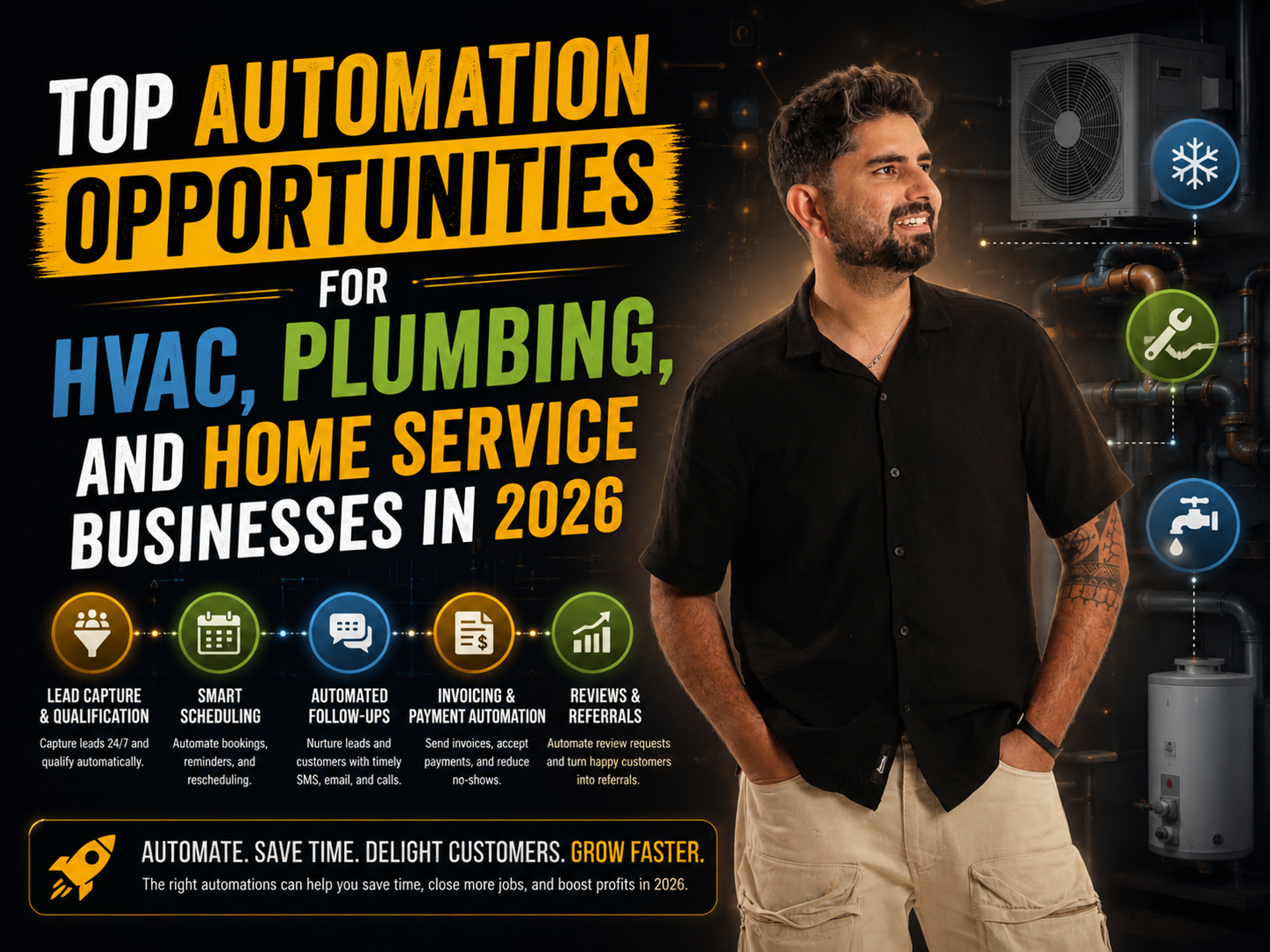
One of the clearest shifts we observed at InstallerSHOW 2026 was not on the exhibition floor. It was in the conversations happening around it.
A few years ago, most discussions at industry events like InstallerSHOW centred on products. Which boiler was most efficient. Which heat pump brand had the best warranty. Which fittings were easiest to install. The product was the centre of gravity.
This year was different. Business owners were talking about operations. How to manage more enquiries without hiring more staff. How to make sure every lead gets followed up. How to keep customers coming back without relying on word of mouth alone. How to grow without the business breaking under the weight of its own admin.
Automation came up in almost every conversation. Not as a future possibility, but as something businesses were actively trying to implement or already seeing results from. The question had shifted from whether to automate to which parts of the business to automate first.
This article answers that question directly. Here are the five highest-impact automation opportunities for HVAC, plumbing, and home service businesses in 2026, ranked by the speed and scale of the results they typically deliver.
Table of Contents
Opportunity 1: Lead Reactivation
Opportunity 2: Automated Appointment Booking
Opportunity 3: Sales Follow-Up Automation
Opportunity 4: Customer Support Automation
Opportunity 5: CRM Automation
Conclusion
Frequently Asked Questions
Opportunity 1: Lead Reactivation
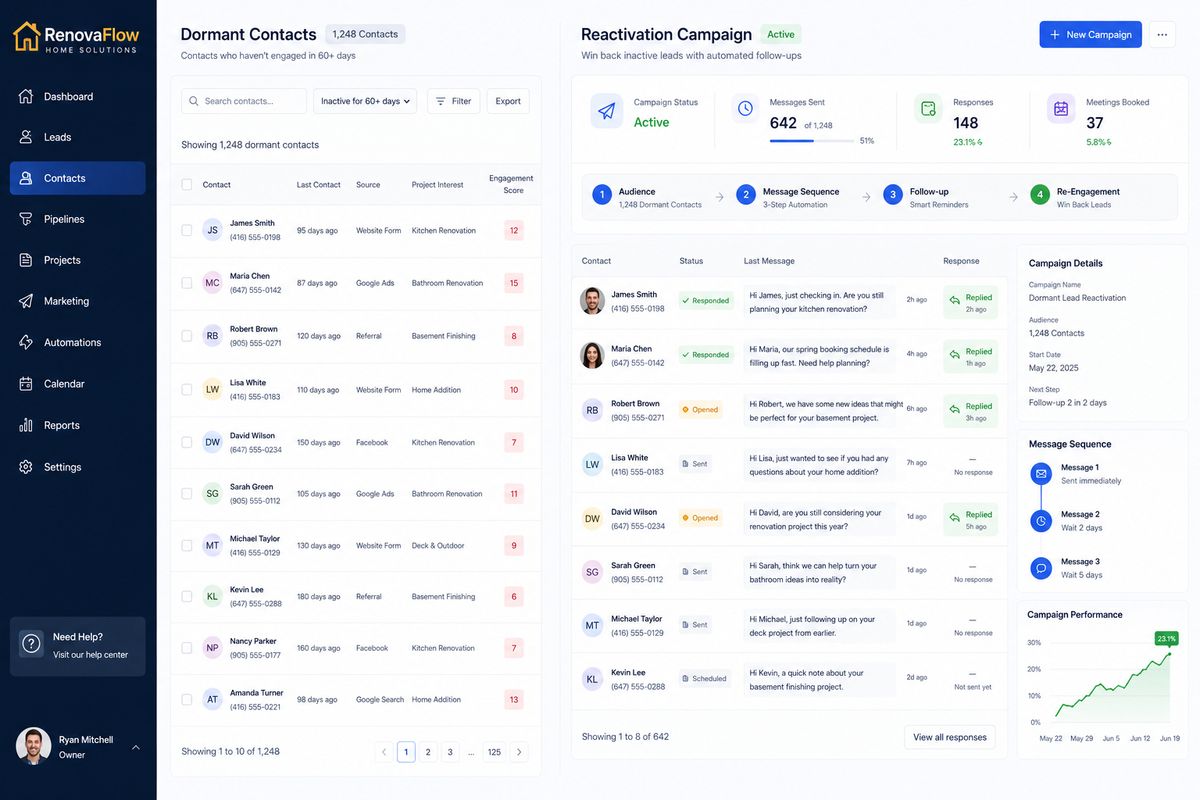
If there is one automation opportunity that delivers results faster than almost any other for home service businesses, it is lead reactivation. And it is the one that most businesses are not using.
Every HVAC company, plumbing business, and home service contractor that has been operating for more than a year has a database of contacts that have gone quiet. Homeowners who requested a quote but never confirmed. Customers who used the business once and have not returned. Prospects who enquired during a busy period, received a slow response, and moved on to a competitor. People who said they would think about it and were never followed up with again.
These contacts are not lost. They are dormant. And the difference matters enormously.
A dormant contact already knows the business. They have already expressed some level of interest. The work of making them aware of the company has already been done and paid for. Reactivating them costs a fraction of what it costs to acquire a brand new lead, and because they already have a degree of familiarity, they convert at a significantly higher rate than cold outreach.
A well-structured lead reactivation campaign uses automated SMS and email sequences to reach out to dormant contacts at scale with personalised, relevant messages. A prospect who enquired about a heat pump installation six months ago might receive a message about current government incentives. A former boiler customer approaching their annual service date might receive a timely reminder. These messages feel personal even though they are entirely automated, because they are triggered by information already held in the CRM.
The results are consistently strong. Businesses running structured reactivation campaigns regularly generate booked jobs from contacts they had written off entirely, at a cost per booking that is substantially lower than paid advertising. For a business sitting on a database of several thousand dormant contacts, this represents a significant and largely untapped revenue stream that can be activated within days.
Read More: The Hidden Cost of Missed Leads in the Home Service Industry
Opportunity 2: Automated Appointment Booking
The second highest-impact automation opportunity for home service businesses is one that most customers now actively expect: the ability to book an appointment without having to call during office hours.
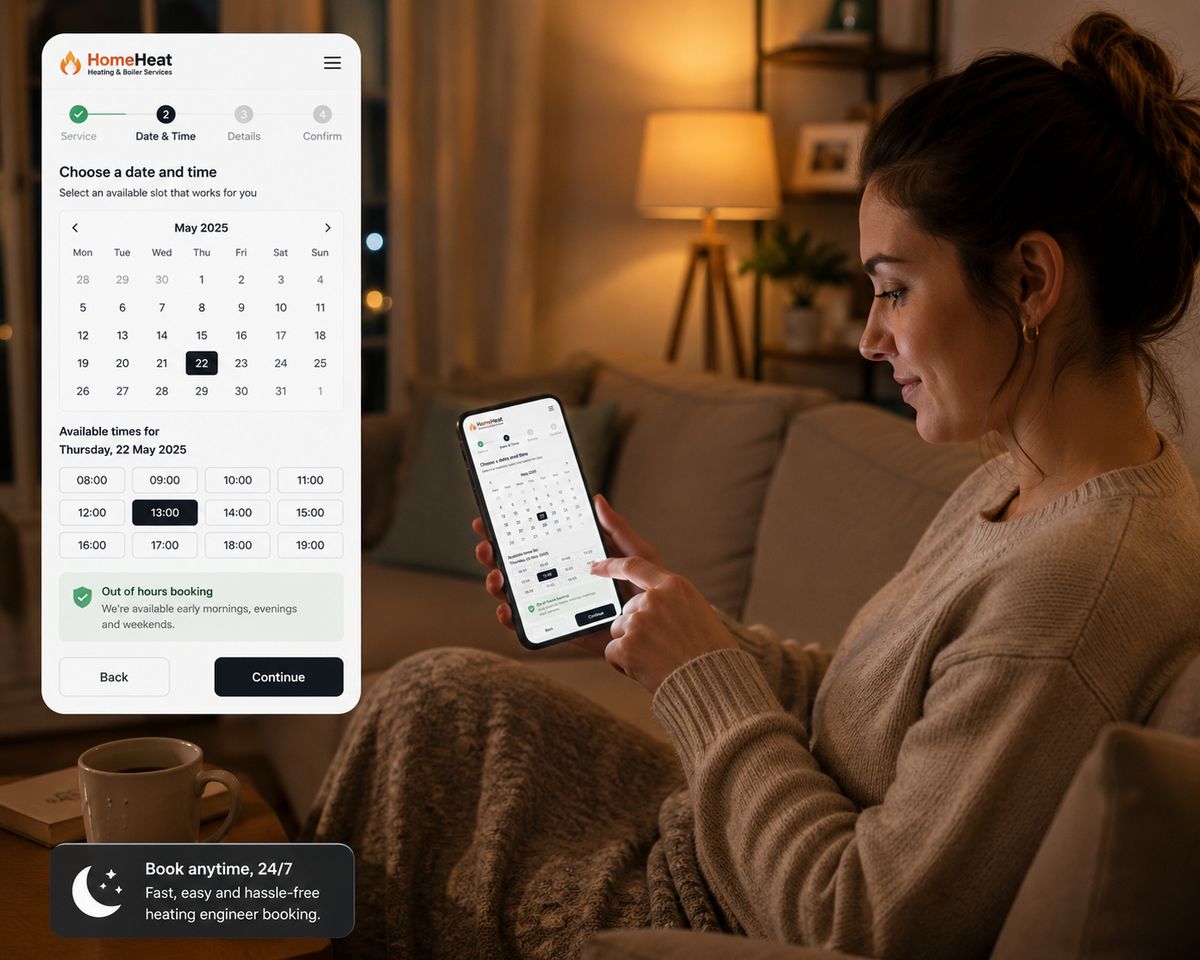
The way customers search for and book home services has changed. A homeowner noticing a leak on a Saturday evening, or researching solar installation options at 10 pm, does not want to leave a voicemail and wait until Monday. They want to take action in the moment. If the business makes it easy to book immediately, they will book. If it does not, they will find one that does.
Automated appointment booking systems remove the friction entirely. Connected to the business calendar and field team availability, they allow customers to select a time that works for them, confirm their details, and receive an automatic booking confirmation, all without anyone in the office being involved. The business receives a new booked appointment. The customer receives immediate confirmation. And it can happen at any hour, on any day.
For HVAC businesses handling heating emergencies, this is particularly valuable. A customer with a broken boiler in January is not going to wait until 9 am to book. The business that offers immediate online booking will win that customer over the one that requires a phone call.
Beyond the initial booking, automation can handle the entire communication sequence around the appointment. Reminder messages go out 48 hours and 24 hours before the visit. Confirmation of the engineer's arrival time is sent on the day. A follow-up message requesting a review or asking about additional services goes out after the job is completed. All of this happens automatically, creating a professional and consistent customer experience without any manual effort from the team.
Read More: Why Renovation Businesses Lose Leads (And How to Fix It with AI)
Opportunity 3: Sales Follow-Up Automation
The third opportunity is the one that addresses the most common and costly problem in home service sales: leads and quotes that are not followed up consistently.
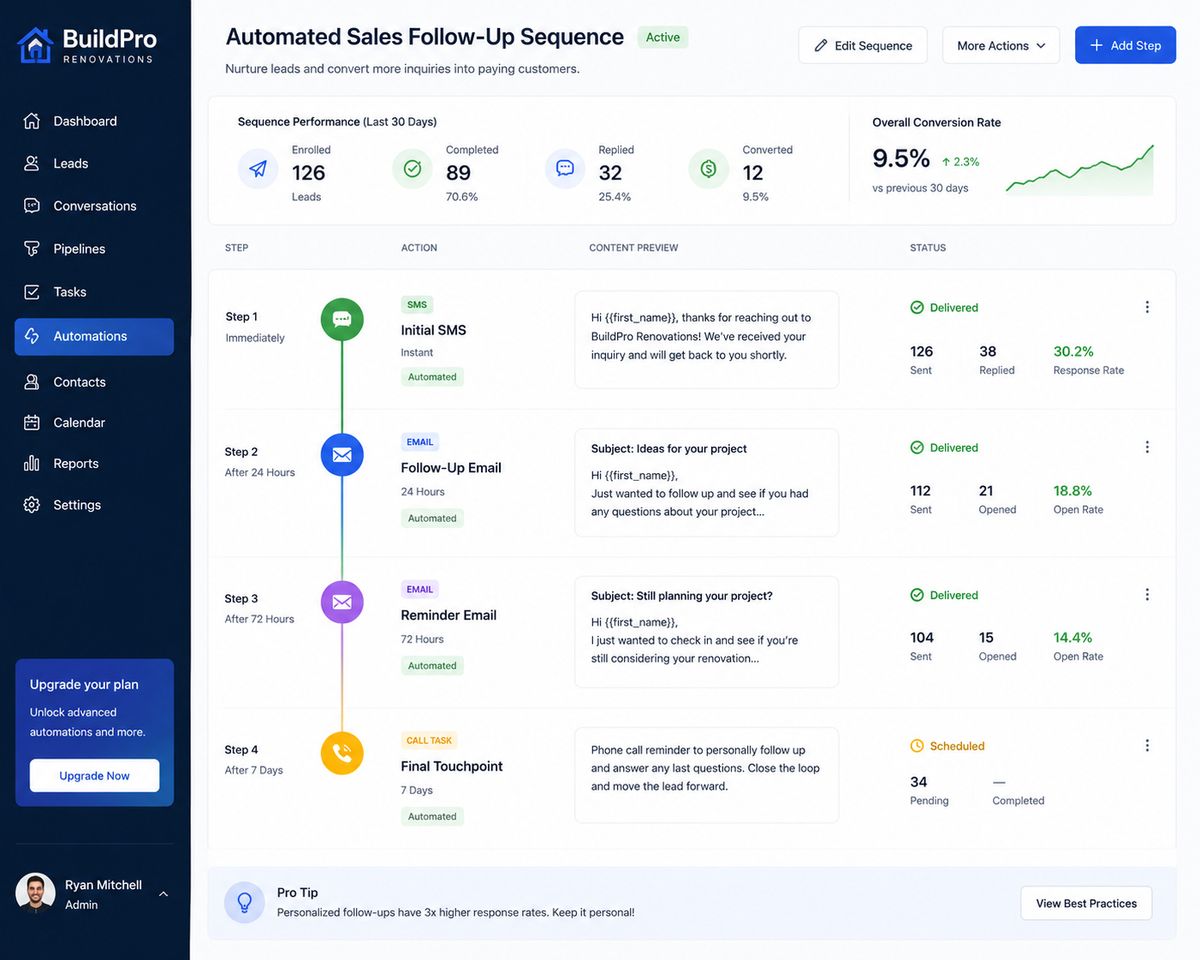
Most home service businesses follow up on new leads and sent quotes manually. A team member makes a call, sends an email, or sends a text when they have time to do so. On busy days, follow-up gets pushed back. On very busy days, it does not happen at all. Over the course of a month, a meaningful percentage of leads and quotes simply never receive adequate follow-up, and the revenue that could have resulted from them disappears quietly.
Sales follow-up automation solves this by removing human availability from the equation. When a new lead comes in, an automated sequence begins immediately. An SMS goes out within seconds. A follow-up message is sent the next morning if there has been no response. A further touchpoint follows 72 hours later. The sequence continues on a defined schedule until the lead either engages or is moved to a longer-term nurture list.
The same logic applies to quotes. The moment a quote is sent, an automated reminder sequence is triggered. The customer receives a message 48 hours later asking if they have any questions. Another follows at five days. Another at ten. Each message is brief, professional, and non-pushy, but together they ensure that the quote stays front of mind and that the customer has multiple opportunities to respond.
The consistency that results from this approach is what drives the improvement in conversion rates. Every lead gets the same treatment regardless of how busy the team is. Every quote receives the same structured follow-up regardless of its value or when it was sent. The businesses that implement this consistently report significant improvements in quote-to-booking conversion rates within the first few months.
Read More: AI Systems to Get Repeat Painting Jobs Automatically
Opportunity 4: Customer Support Automation
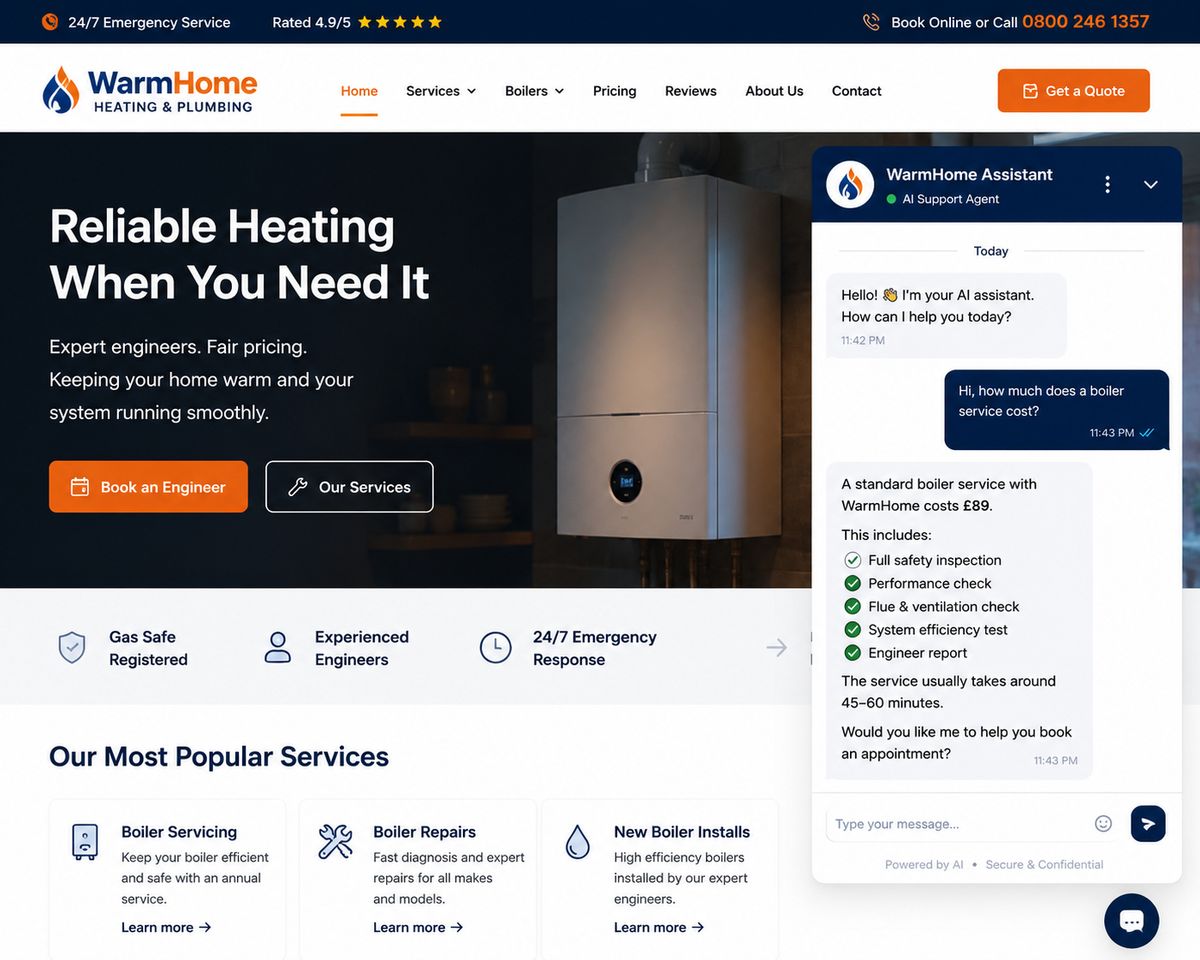
Customer support is one of the most time-consuming parts of running a home service business, and it is also one of the areas where automation can deliver the most immediate relief for the team.
A significant proportion of inbound customer calls and messages in the home services sector are routine. Customers asking whether an engineer is on the way. Customers requesting a quote for a standard service. Customers asking what is included in a maintenance plan. Customers wanting to rebook or reschedule an appointment. Each of these interactions takes time to handle manually, time that is often pulling a member of the team away from higher-value tasks.
AI-powered customer support tools can handle the majority of these routine enquiries automatically. A chatbot or conversational AI deployed on the business website or through a messaging channel can answer frequently asked questions, provide quotes for standard services, check appointment status, and facilitate rebooking, all without human involvement. When an enquiry is too complex or specific for the automated system to handle, it is escalated to the team with the relevant context already collected.
For home service businesses operating with lean office teams, this can make a meaningful difference to daily workload. The team spends less time answering the same questions repeatedly and more time handling the enquiries and situations that genuinely require a human response.
Beyond efficiency, automated customer support also improves customer experience. A homeowner who submits an enquiry at 11 pm and receives an immediate, helpful response is more impressed than one who submits the same enquiry and hears nothing until the next morning. Speed and availability are increasingly part of what customers judge a business on, even before the first engineer visits.
Read More: How to Automate Your Painting Business (Step-by-Step System)
Opportunity 5: CRM Automation
The fifth opportunity underpins all of the others: getting the CRM working properly as a live operational tool rather than a passive data store.
Most home service businesses have a CRM. Many have invested significant time and money into setting one up, importing contacts, and training the team. But a CRM that is not being consistently used and actively managed is not an asset. It is a liability. The data inside it becomes unreliable over time. Contacts fall through the cracks. The team loses confidence in the system and begins working around it. And the business ends up managing leads and customer relationships in the same fragmented, manual way it was before the CRM was introduced.
CRM automation addresses this by removing the reliance on manual data entry and manual task management. When a new lead comes in, it is automatically created as a contact in the CRM, tagged with the relevant source and service type, and assigned to the appropriate follow-up sequence. When a quote is sent, the CRM automatically tracks its status and triggers the follow-up workflow. When a job is completed, the customer record is updated, and the post-job communication sequence begins.
For HVAC businesses, this means service due dates, warranty expiry dates, and maintenance intervals can all be tracked automatically, with reminder campaigns triggered when the time is right. For plumbing companies, previous job history and customer preferences are always visible and up to date. For general home service businesses, the full customer lifecycle from first enquiry through to repeat booking is managed and recorded without anyone on the team needing to update the system manually.
The result is a CRM that the team actually trusts and uses, because it is doing the heavy lifting automatically. Leads do not fall through the cracks. Customer records stay current. And the business has a clear, accurate picture of its pipeline and revenue opportunities at any given moment.
Conclusion
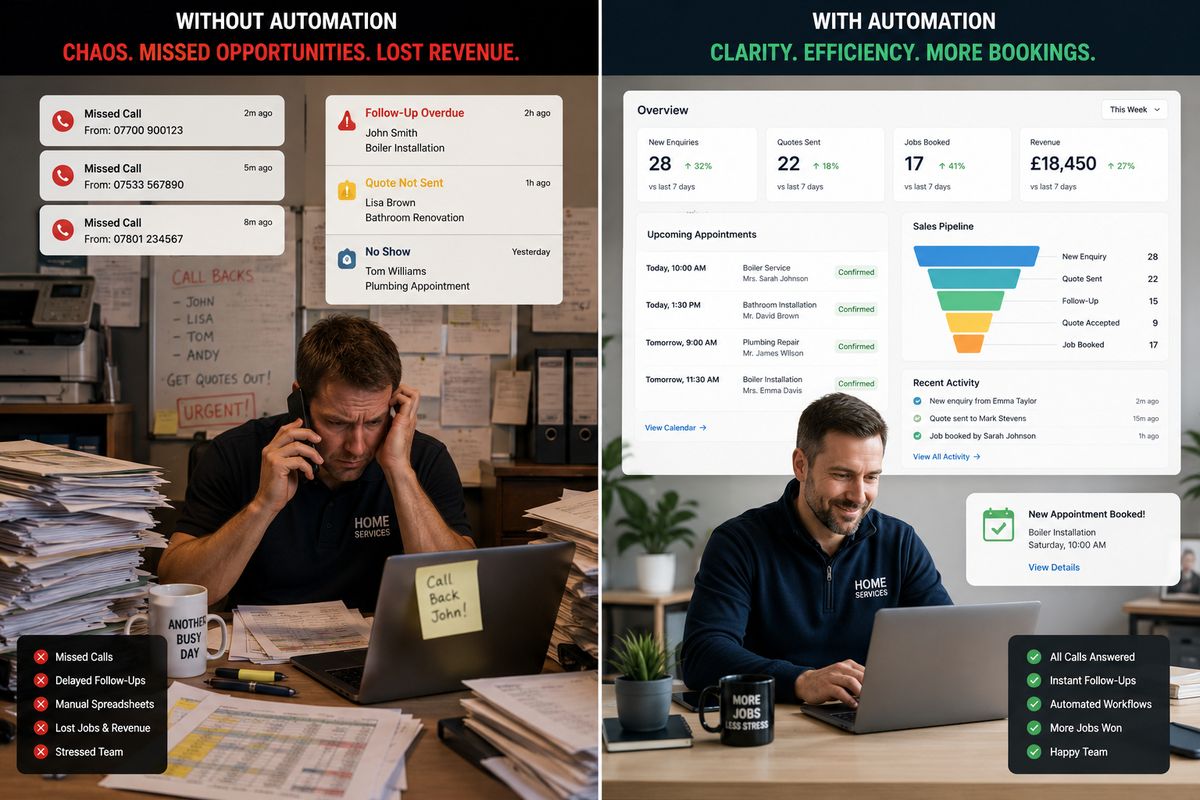
The home service businesses that will grow most consistently over the next few years will not necessarily be the ones with the largest teams or the biggest marketing budgets. They will be the ones that have built the most efficient systems around what they are already doing.
The five automation opportunities described in this article- lead reactivation, automated appointment booking, sales follow-up, customer support, and CRM automation- are not experimental ideas. They are practical, proven tools that businesses across HVAC, plumbing, electrical, and home services are already implementing and seeing results from. Each one addresses a specific, measurable gap between the leads a business generates and the revenue it actually collects.
What became clear at InstallerSHOW 2026 is that the industry is aware of these gaps. Business owners know that leads are being missed, that follow-up is inconsistent, and that their CRM data is underused. The challenge is not awareness. It is implementation. Finding the time to build these systems while running the day-to-day business is genuinely difficult, which is why so many businesses continue operating with the same manual processes long after they know better ones are available.
The competitive advantage of automation is not permanent. As more home service businesses implement these tools, they will become the baseline rather than the differentiator. The businesses building these systems now are getting ahead of that shift. The ones waiting will find themselves catching up to competitors who respond faster, follow up more consistently, and convert more of the same leads, without working any harder to do it.
Frequently Asked Questions
Which automation should a home service business implement first?
Lead reactivation delivers results fastest for most businesses because it works with contacts the business already has. There is no new marketing spend required and no new traffic needed. A reactivation campaign can generate booked jobs within days of being set up, making it the highest-priority starting point for most HVAC, plumbing, and home service companies.
How difficult is it to set up automated appointment booking?
Most modern automated booking systems are designed to be straightforward to implement and integrate with existing calendars and job management tools. The setup process typically involves connecting the booking system to the business calendar, defining available appointment types and time slots, and embedding the booking link on the company website. For most businesses, this can be operational within a few days.
Will CRM automation work if the team has not been using the CRM consistently?
Yes, and this is one of the most significant benefits of CRM automation. When the system handles data entry and task management automatically, the reliance on the team to manually update records is removed. Adoption improves because the system stays accurate without manual effort, which gives the team more confidence in the data and more reason to use the platform.
Does automation make home service businesses feel less personal to customers?
When implemented well, automation makes the customer experience feel more attentive, not less personal. Immediate responses, timely reminders, and relevant follow-up messages all give the impression of a business that is highly organised and on top of every detail. The personal element comes in when the engineer arrives and the work is carried out. Automation handles everything around that interaction to ensure it happens smoothly and professionally.
How does FatCamel AI help home service businesses implement automation?
FatCamel AI designs and builds automation systems specifically for home service businesses, covering all five of the opportunities described in this article. This includes setting up lead reactivation campaigns, connecting automated booking systems, building sales follow-up sequences, implementing AI customer support tools, and integrating CRM automation workflows. The goal is to have the right systems running quickly, without the business owner needing to figure out the technical setup alone.